 Reading Ants
The Catcher in the Rye
After being expelled from his boarding school, a lonely, sarcastic sixteen-year-old wanders New York City for three days, struggling with grief, phoniness and the frightening idea of growing up.
Overview
The Catcher in the Rye, published in 1951, is narrated by Holden Caulfield, a boy of sixteen at the time of the events, telling his story at seventeen from a place where he is resting, apparently a hospital or sanatorium, some months afterward. Just before Christmas, Holden has been expelled from Pencey Prep, an expensive school in Pennsylvania, for failing almost all his classes. Rather than go home and face his parents, he spends a few days alone in New York City, staying in hotels, visiting bars, meeting old friends and strangers, and growing more lonely and depressed. Holden hates “phonies,” people he sees as fake and shallow, and he longs to protect innocence. His honest, funny and troubled voice made the book one of the most famous coming-of-age novels ever written.
Main Characters
- Holden Caulfield: a sensitive, cynical and lonely teenager.
- Phoebe Caulfield: Holden’s smart, lively ten-year-old sister, whom he adores.
- Allie Caulfield: Holden’s younger brother, who died of leukemia.
- D. B. Caulfield: Holden’s older brother, a writer in Hollywood.
- Stradlater: Holden’s handsome, self-confident roommate.
- Ackley: an annoying boy who lives next door at school.
- Jane Gallagher: a girl Holden cares about deeply.
- Sally Hayes: a girl Holden dates in New York.
- Mr. Antolini: Holden’s former English teacher.
Full Summary
Leaving Pencey
Holden begins his story at Pencey Prep on the Saturday of a big football game. He has just been expelled and is supposed to leave when the Christmas break begins. He visits his history teacher, Mr. Spencer, who tries to give him advice, but Holden finds him depressing. Back in the dormitory, he deals with Ackley, a rude, unwashed neighbor, and Stradlater, his handsome roommate, who asks Holden to write an essay for him while he goes on a date.
Holden writes about the baseball mitt of his younger brother, Allie, who died of leukemia three years earlier. Allie’s mitt is covered with poems he wrote in green ink. When Stradlater returns, he complains that the essay isn’t what he wanted. Holden, who already knows that Stradlater’s date was Jane Gallagher, a girl Holden cares about, is upset, fearing Stradlater took advantage of her. He attacks Stradlater and is beaten. That night, Holden decides to leave Pencey early and go to New York.
Alone in New York
On the train, Holden tells a classmate’s mother a string of lies about her son. In New York, he checks into a shabby hotel. From his window, he sees strange behavior in other rooms. He goes to nightclubs, trying to seem older than he is, and dances with women who aren’t interested in him. He keeps thinking about Jane but never calls her.
Back at the hotel, the elevator operator, Maurice, offers to send a prostitute to his room. Holden agrees, but when the girl, Sunny, arrives, he feels sad and just wants to talk. He pays her, but Maurice later returns, demands more money and punches Holden in the stomach.
The Ducks and the Museum
Throughout the novel, Holden wonders where the ducks in the lagoon in Central Park go when the water freezes in winter. He asks taxi drivers, who think he is strange. The question reflects his worry about change and survival.
He meets Sally Hayes for a date and takes her to a play and ice-skating. Suddenly, he suggests they run away together to live in a cabin in New England. When Sally says it’s unrealistic, he insults her, and she leaves in tears. Later, he meets an old school acquaintance, Carl Luce, for drinks, but Luce finds him childish and leaves early. Drunk and lonely, Holden wanders to Central Park in the cold.
Phoebe
Holden sneaks into his family’s apartment at night to see his sister Phoebe. She guesses immediately that he has been expelled and is upset. She challenges him to name one thing he really likes. Holden can hardly think of anything, except Allie and talking with her.
Holden tells her the only thing he would really like to be is a “catcher in the rye.” He imagines thousands of little children playing in a big field of rye near a cliff, and he would stand at the edge and catch any child who was about to fall off. Phoebe points out that he has misremembered the words of the poem he is thinking of, by Robert Burns.
Mr. Antolini
Holden visits his former English teacher, Mr. Antolini, who lets him sleep on his couch. Antolini warns Holden that he is heading for a terrible fall, and tells him that education can help him discover that many people have felt as confused as he does. Holden wakes in the night to find Antolini patting his head. Uncertain of what it means, Holden feels frightened and leaves.
The Carousel
The next day, Holden decides to run away and hitchhike west. He arranges to say goodbye to Phoebe at the museum, but she arrives with a suitcase, wanting to go with him. He refuses, and she becomes angry. To make peace, Holden says he won’t leave, and takes her to the zoo and the carousel in Central Park. As he watches Phoebe ride around in the rain, reaching for the gold ring, he realizes he must let children take their chances, even if they fall. He feels so happy he could almost cry.
In the last chapter, Holden says he got sick and is now resting. He will go to a new school in the fall. He doesn’t want to say more, except that telling his story has made him miss everybody he has talked about.
Why It Matters
The Catcher in the Rye became a sensation when it was published in 1951 and has sold tens of millions of copies. Holden’s voice, honest, funny, angry and full of teenage slang, spoke directly to young readers who felt misunderstood by adults, and the book became a symbol of teenage rebellion and alienation.
It has also been one of the most banned and challenged books in American schools and libraries, because of its language, sexual references and rebellious attitude. Despite or because of this, it remains widely taught. Salinger, who became famously private and never allowed a film adaptation, influenced generations of writers who tell coming-of-age stories in a personal, conversational voice.
Key Takeaways
- Growing up is frightening. Holden fears losing innocence, his own and others’.
- Grief can shape behavior. Allie’s death underlies much of Holden’s pain.
- Loneliness hides behind cynicism. Holden’s criticism of “phonies” masks his need for connection.
- We can’t protect everyone from falling. Holden learns that children must take risks.
- Honesty matters. Holden values authenticity, even while he often lies.
What We Can Learn
Holden’s story reminds us that people who seem rude or cynical may be hurting inside. Grief, loneliness and depression can show up as anger or withdrawal. Being patient and kind with friends who are struggling can help.
It also shows the importance of reaching out for help. Holden’s feelings grow worse while he is alone. Talking to family, friends, teachers or counselors, as he finally begins to do, can make an enormous difference.
Finally, the book encourages us to accept change. Growing up means losing some things, but it also brings new experiences and relationships. Like Phoebe on the carousel, we all have to reach for the gold ring sometimes.
Criticism and Counterpoints
Many readers find Holden annoying, whiny or self-absorbed, and some feel the novel has little plot, consisting mostly of his complaints and wanderings. Others argue that this is the point: the book is a portrait of a troubled teenager, not an adventure story.
The book has been banned for its frequent swearing and sexual content, and some critics question whether it glamorizes rebellion or depression. Its legacy was also darkened when the man who murdered John Lennon in 1980 was found carrying a copy, claiming it explained him. Most readers see the book as a compassionate portrait of grief and alienation rather than a call to violence.
Who Should Read It
This book suits teenagers and adults, especially those who have felt out of place or misunderstood. Its language and themes are mature, so it is best for older teens. Readers who enjoy strong, personal narrative voices will find Holden unforgettable.
Want the whole book?
A summary is a taste, not the meal. Here is where to find the full book.
You reached the end 🎉
Nicely done. Mark this one as read, and we will suggest what to read next.
Read this next
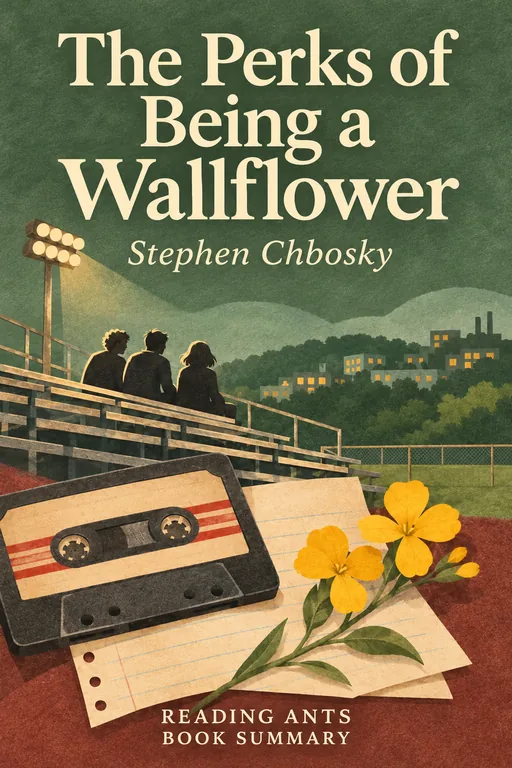
The Perks of Being a Wallflower
Stephen Chbosky
A shy, thoughtful boy writes letters about his first year of high school, in which he finds friends and love, and must face the painful secret of his past.
🎒 Young Adult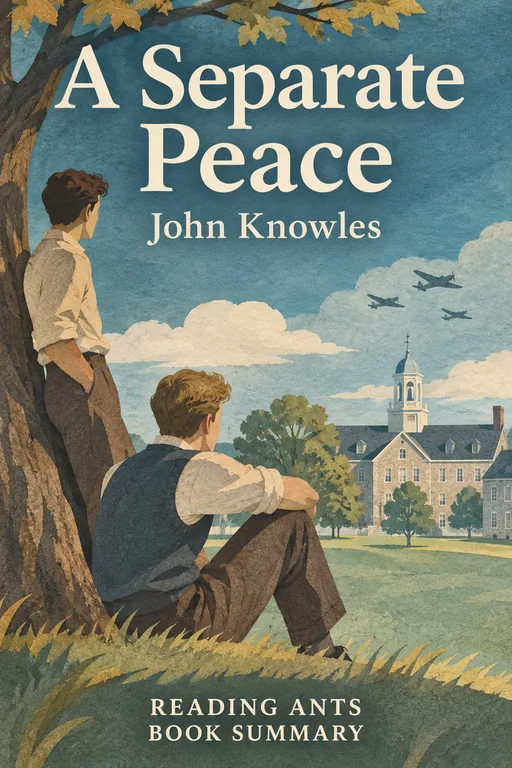
A Separate Peace
John Knowles
Looking back from adulthood, a man recalls the summer of 1942 at a New England boarding school, when a moment of jealousy led him to injure his best friend, and how that act haunted his youth.
📜 Classics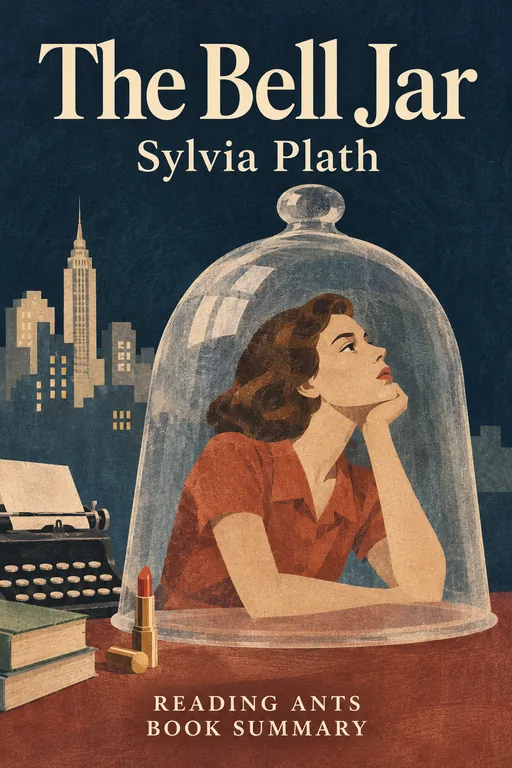
The Bell Jar
Sylvia Plath
A talented young woman named Esther Greenwood, who seems to be on the path to success in 1950s America, sinks into depression and a suicide attempt, and slowly begins to recover.
📜 Classics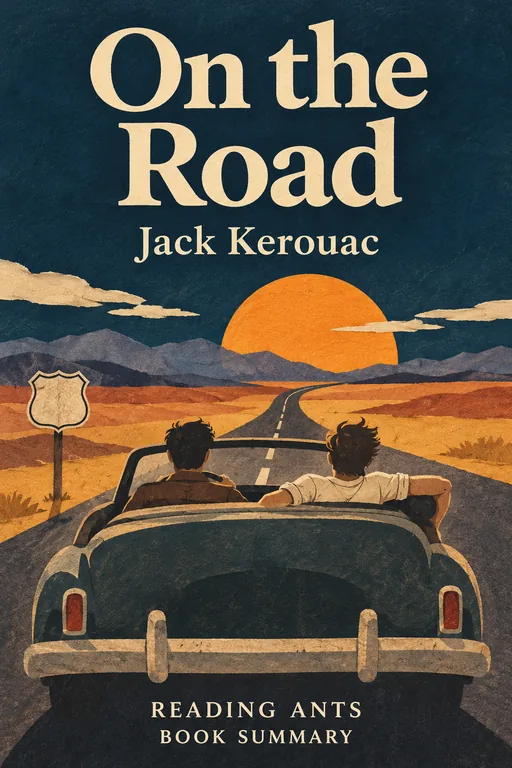
On the Road
Jack Kerouac
A young writer named Sal Paradise hitchhikes and drives across America and into Mexico with his exuberant, restless friend Dean Moriarty, searching for kicks, meaning and a sense of belonging.
📜 Classics
The Great Gatsby
F. Scott Fitzgerald
A mysterious millionaire throws lavish parties on Long Island in the hope of winning back the woman he loved years ago, but his dream collides with the careless cruelty of the rich.
📜 Classics
Pride and Prejudice
Jane Austen
Quick-witted Elizabeth Bennet and the proud, wealthy Mr. Darcy badly misjudge each other, and only by facing their own faults do they find their way to love.
📜 ClassicsWant something different?
Pick another topic and we will show you three books to start with.