
The Bell Jar
A talented young woman named Esther Greenwood, who seems to be on the path to success in 1950s America, sinks into depression and a suicide attempt, and slowly begins to recover.
Overview
The Bell Jar is a novel by the American poet Sylvia Plath, published in 1963 under the pseudonym Victoria Lucas, shortly before Plath’s death. It is semi-autobiographical: Plath, like her heroine, won a summer guest editorship at a New York magazine, suffered a breakdown and attempted suicide, and was treated in psychiatric hospitals. The title refers to the feeling of being trapped under glass, unable to breathe or connect with the world. The novel is told in the first person in a witty, sharp and intimate voice, and it explores the pressures on young women in a society that expected them to marry and have children, and its portrayal of mental illness is honest and unsparing.
Main Characters
- Esther Greenwood: the narrator, a bright, ambitious college student who feels out of place.
- Mrs. Greenwood: Esther’s mother, who wants her to learn shorthand and be practical.
- Buddy Willard: Esther’s boyfriend, a medical student whose hypocrisy disillusions her.
- Doreen: a sophisticated, rebellious friend in New York.
- Betsy: an innocent, wholesome girl from the Midwest.
- Jay Cee: Esther’s editor, a smart, supportive woman.
- Dr. Nolan: a compassionate psychiatrist who treats Esther.
- Joan Gilling: a friend at the hospital.
Full Summary
A Summer in New York
In the summer of 1953, Esther Greenwood is one of twelve young women who have won a month-long internship at a fashion magazine in New York. She is supposed to be having the time of her life, but she feels detached and uneasy. She goes to parties and fashion shows with her friend Doreen, who is sophisticated and wild, and contrasts with Betsy, a sweet, wholesome girl. Esther gets food poisoning at a luncheon, and finds herself unable to engage with the glamorous life that others envy.
Esther writes a few pieces and attends events, but her sense of detachment grows. She tosses her fashionable clothes off the roof of her hotel one by one, a symbolic act of rejecting the role she was expected to play. When the month ends, she is exhausted and confused about what she wants.
Memories and Doubts
Esther thinks back to her boyfriend Buddy Willard, a medical student, whom she once thought she loved. She found out that he had an affair while professing to be pure, and realized that he held a double standard for men and women. She also remembers her father’s death, when she was nine. In New York, she meets a man who treats her badly, and she becomes more disillusioned. Her editor, Jay Cee, urges her to think about her future and learn languages, but Esther feels that she has no direction.
Collapse
When she returns home to the suburbs of Boston, Esther learns that she has not been accepted to a writing course that she was counting on. She cannot sleep, cannot read and feels like she is in a bell jar. Her mother takes her to a psychiatrist, who is cold and prescribes electric shock treatment, which is painful and frightening. Esther’s condition worsens, and she begins to think about killing herself.
Her family does not understand her condition. Her mother is worried and wants her to behave normally, and the neighbors are curious. Esther, who once loved to read and write, finds that words look like black marks on paper, and she begins to think that she is no good at anything.
The Attempt
After earlier failed attempts, Esther tries to end her life at home. She is found after a few days, barely alive, and is taken to the hospital. She is moved to a state hospital and then a private asylum, where a wealthy benefactor pays. She is numb and does not feel like herself.
Recovery
At the private hospital, Esther meets Dr. Nolan, a woman psychiatrist who is warm and listens, and who provides her with better care, including carefully administered shock treatment that does not hurt. Esther gradually begins to improve. She befriends other patients, including Joan, whom she knew in college. She begins to see her illness as something that can be managed, and to take control of her future and her body: she obtains contraception, has her first sexual experience with a professor, Irwin, and hemorrhages afterward, and needs hospital care. Joan, who is more troubled, takes her own life, which shocks Esther.
Dr. Nolan tells her that she can talk about her anger at her mother, and Esther begins to articulate feelings that she has been unable to express. There are setbacks and frightening moments, but her sense of herself returns, little by little, with the help of friends, a good doctor and the passage of time.
Return to the World
Esther is about to be discharged from the hospital, though she knows that her recovery is fragile, and that the bell jar could descend again. She faces an interview before a board of doctors who will decide whether she can go. The novel ends as she walks into the room, with a sense of cautious hope and uncertainty.
Why It Matters
The Bell Jar has become a classic of twentieth-century American fiction and a key text in the conversation about women’s lives and mental illness. It has sold millions of copies, and is widely read by teenagers and young adults who see themselves in Esther’s voice. Plath’s poetry, such as Ariel, has also made her one of the most famous poets of the century.
The novel was among the first to portray depression from the inside, with honesty and dark humor, and it helped to break the silence about mental illness and the limited roles for women in postwar America. It was adapted into a film in 1979.
Key Takeaways
- Success does not guarantee happiness. Esther has achievements but feels empty.
- Mental illness is real and complex. The novel portrays it with honesty.
- Gender expectations can be suffocating. Women’s choices were limited.
- Good care matters. Dr. Nolan helps where others fail.
- Recovery is uncertain. The ending is hopeful but fragile.
What We Can Learn
The novel helps us understand what depression can feel like: not just sadness, but numbness, isolation and loss of meaning. This can make us more compassionate toward people with mental illness.
It also shows the importance of good treatment and understanding. Esther’s recovery begins when someone listens and treats her with respect.
Finally, it reminds us that society’s expectations can create pressure that harms mental health. Esther’s feelings are partly a response to a world that offered her limited roles.
Criticism and Counterpoints
Some critics say that Esther’s perspective is self-absorbed and bitter, and that she treats others harshly. Others say that the novel’s portrait of mental illness is limited by its time, and that its descriptions of shock treatment and hospitals reflect 1950s practices, which have since changed. There is also debate about the novel’s relationship to Plath’s real life, and the way that people she knew were thinly disguised.
Some readers worry that the book may romanticize suicide, or that it is too bleak for vulnerable readers. Still, the book is regarded as a landmark.
Who Should Read It
This book suits older teenagers and adults. It deals with depression, suicide and mental illness in an honest, sometimes graphic way. Readers who are struggling should reach out for help and may want to approach it with support.
Want the whole book?
A summary is a taste, not the meal. Here is where to find the full book.
You reached the end 🎉
Nicely done. Mark this one as read, and we will suggest what to read next.
Read this next
The Catcher in the Rye
J. D. Salinger
After being expelled from his boarding school, a lonely, sarcastic sixteen-year-old wanders New York City for three days, struggling with grief, phoniness and the frightening idea of growing up.
📜 Classics
Mrs Dalloway
Virginia Woolf
On a June day in 1923, Clarissa Dalloway prepares to host a party in London, while the shell-shocked war veteran Septimus Smith moves toward a crisis, and the two lives touch only at the story's end.
📜 Classics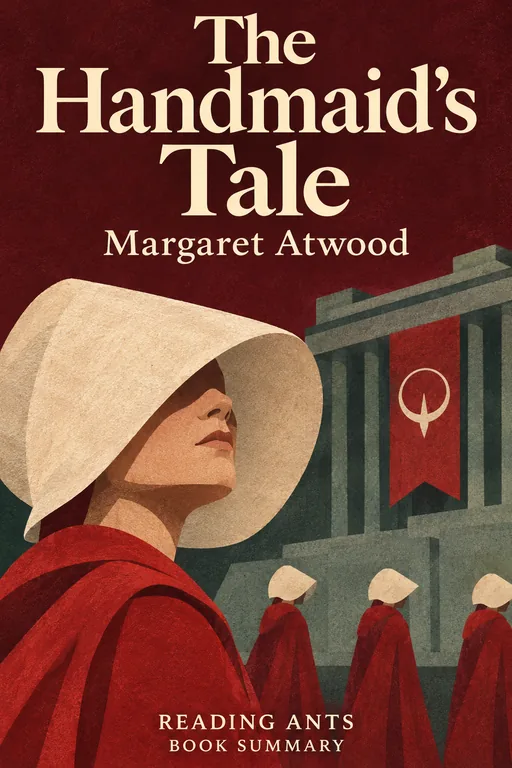
The Handmaid's Tale
Margaret Atwood
In a near-future United States taken over by a religious dictatorship that strips women of their rights, a woman forced to bear children for a powerful couple secretly remembers her old life and searches for a way to survive.
✨ Modern Fiction
Pride and Prejudice
Jane Austen
Quick-witted Elizabeth Bennet and the proud, wealthy Mr. Darcy badly misjudge each other, and only by facing their own faults do they find their way to love.
📜 Classics
Nineteen Eighty-Four
George Orwell
In a future Britain ruled by an all-seeing Party, one man secretly rebels by keeping a diary and falling in love, and discovers just how completely a totalitarian state can crush the human mind.
📜 Classics
To Kill a Mockingbird
Harper Lee
In a small Alabama town in the 1930s, young Scout Finch watches her father, a lawyer, defend a Black man falsely accused of a crime, and learns hard lessons about prejudice, courage and seeing the world through other people's eyes.
📜 ClassicsWant something different?
Pick another topic and we will show you three books to start with.