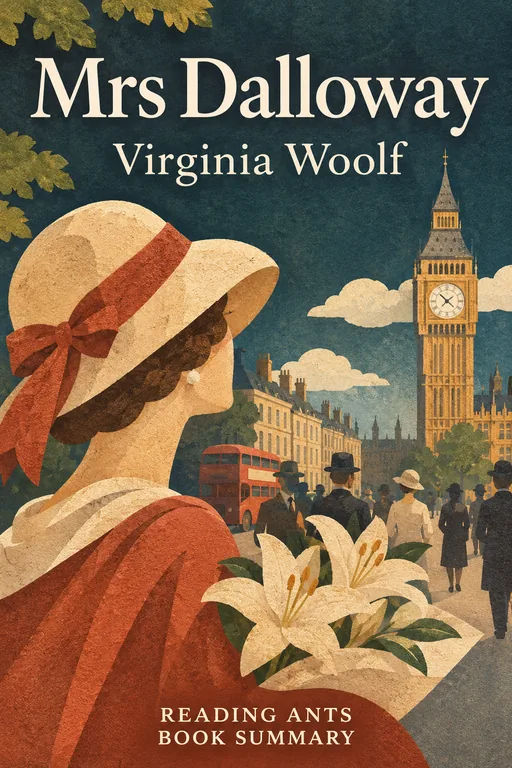
Mrs Dalloway
On a June day in 1923, Clarissa Dalloway prepares to host a party in London, while the shell-shocked war veteran Septimus Smith moves toward a crisis, and the two lives touch only at the story's end.
Overview
Mrs Dalloway is a novel by Virginia Woolf, published in 1925. It takes place on a single day in London, five years after the end of World War I, and moves from one character’s thoughts to another’s as they walk, remember and notice the city around them. Woolf had earlier written a short story about Clarissa Dalloway, and she built the novel around the contrast between her and a young man who is broken by the war. Instead of a traditional plot, the book uses stream of consciousness, and the striking of Big Ben marks the passing hours. It is a study of memory, class, sanity and the choice between life and death.
Main Characters
- Clarissa Dalloway: the wife of a Member of Parliament, in her fifties, a charming hostess who looks back with mixed feelings on her choices.
- Richard Dalloway: her steady, well-meaning husband.
- Septimus Warren Smith: a young veteran haunted by the death of his friend Evans.
- Lucrezia (Rezia) Smith: his Italian wife, lonely and worried.
- Peter Walsh: Clarissa’s former suitor, who has just returned from India.
- Sally Seton: Clarissa’s close friend in her youth.
- Elizabeth Dalloway: Clarissa’s teenage daughter.
- Dr. Holmes and Sir William Bradshaw: doctors who treat Septimus.
Full Summary
A Morning in June
Clarissa Dalloway leaves her house in Westminster to buy flowers for her party that evening. She enjoys the bright June morning, and feels a rush of memories of her youth at Bourton, where she once felt alive and free. She thinks of Peter Walsh, who once wanted to marry her, and of Sally Seton, whom she loved and who once kissed her. She chose Richard Dalloway, a safe and kind man, and sometimes wonders whether she made the right choice. A loud noise, perhaps a car backfiring, draws the attention of everyone in the street.
Septimus and Rezia
Not far away, Septimus Smith and his wife Rezia sit in Regent’s Park. Septimus fought in the war and saw his friend Evans killed. He feels numb, and sees visions and hears voices. Rezia, who is far from her family in Italy, is afraid for him. Dr. Holmes says there is nothing wrong with him, and tells him to take an interest in things. Septimus, who fears the doctors, begins to feel that human nature is cruel, and that people who tell him to “be normal” cannot see what he has seen.
Peter Returns
Peter Walsh, back in London after years in India, visits Clarissa and finds her sewing. They talk awkwardly, and he bursts into tears, which she finds embarrassing. He had been in love with her, and she had refused him, and he is struggling with his own failures and a new passion for a married woman in India. After leaving, he walks around London, remembering their past.
Sir William Bradshaw
Rezia takes Septimus to see a famous specialist, Sir William Bradshaw, who believes in rest and discipline and in the control of patients. He tells them that Septimus must go to a nursing home, away from his wife. Septimus feels that he is being forced to submit to a harsh form of “proportion” that crushes the individual. The doctor’s confidence and his power over patients are criticized by the narrative as a form of cruelty.
Septimus’s Choice
Back in their rooms, Septimus and Rezia sit together, and for a moment, he is calm. When Dr. Holmes arrives to take him away, Septimus, determined not to give in, throws himself from the window to his death. Rezia, in shock, is looked after by the neighbors. Later, Peter Walsh hears the ambulance that carries Septimus away, and reflects on the order and civilization of the city. His act is an escape from a world that will not understand him, and Clarissa, when she later hears of it, thinks of it as a way of keeping something of his soul untouched.
The Party
In the evening, Clarissa’s party fills the house with guests: politicians, old friends and even the Prime Minister. Sally Seton, now Lady Rosseter, arrives unannounced, and Peter is there too. In the middle of the party, Sir William Bradshaw arrives and tells of a young man who killed himself. Clarissa, who hears about it, retreats to a small room and thinks about the man she never knew. She feels, strangely, that she understands his act as a defiance of a world that would have crushed him. She sees an old woman across the way, getting ready for bed, and then returns to her guests. Peter, who sees her enter the room, feels a rush of excitement as the book ends.
Why It Matters
Mrs Dalloway is one of the landmarks of modernist fiction, and a model of how a novel can capture the movement of thought. Woolf’s technique of passing from one mind to another, and of showing how time is both public, with Big Ben’s strokes, and private, with memory, has influenced many writers. It has been adapted for film, and inspired the 1998 novel The Hours by Michael Cunningham and its film version.
It is also an early and powerful portrayal of post-traumatic stress, long before the term existed, and a critique of the way that society treated mental illness. It remains a favorite in classrooms.
Key Takeaways
- Inner life matters as much as events. The novel follows thoughts and feelings.
- War leaves lasting wounds. Septimus is destroyed by what he saw.
- Society can crush the individual. The doctors impose a rigid idea of normal.
- Memory shapes the present. Clarissa’s youth colors her day.
- Life is fragile and precious. News of a death makes Clarissa value her own life.
What We Can Learn
The novel invites us to listen to people who are suffering, instead of telling them to snap out of it. Septimus’s despair is made worse by doctors who dismiss his experience, which is a reminder to take mental health seriously and to listen.
It also teaches us to notice small moments: a flower, a street sound, a memory. Woolf shows that a day filled with ordinary actions contains deep feelings, and that attention can make life richer.
Finally, it asks us to think about the choices we have made. Clarissa wonders if she should have chosen differently, and the book suggests that regret is natural, but so is finding meaning in the life we have.
Criticism and Counterpoints
Some readers find the novel hard to follow, because of its lack of chapters and its constant shifts between minds and times. Others feel that the characters are limited to a narrow upper-class world, with servants and poor people in the background, and that the book’s attitude toward class is ambiguous. Some find Clarissa shallow or snobbish.
Critics have also discussed whether Septimus’s death is presented as a tragedy or a kind of triumph, and some worry that it may seem to glorify suicide. Still, the book is widely admired for its beauty.
Who Should Read It
This book suits mature teenagers and adults. It is fairly short, but demands attention because of the shifts in perspective. It deals with mental illness and suicide, though not graphically. Readers may wish to try a few pages aloud to catch its rhythm.
Want the whole book?
A summary is a taste, not the meal. Here is where to find the full book.
You reached the end 🎉
Nicely done. Mark this one as read, and we will suggest what to read next.
Read this next
To the Lighthouse
Virginia Woolf
A family spends a summer holiday on the Isle of Skye, a planned trip to a lighthouse is canceled, and ten years later, after a war and several deaths, some of them finally make the journey.
📜 Classics
Ulysses
James Joyce
On a single day in Dublin, 16 June 1904, an advertising salesman named Leopold Bloom and a young teacher named Stephen Dedalus wander the city, and their paths finally cross in a novel that recasts Homer's *Odyssey* in everyday life.
📜 Classics
A Room of One's Own
Virginia Woolf
Virginia Woolf argues that a woman needs money and a room of her own, meaning independence and privacy, in order to write fiction, and explains why women writers have been held back through history.
⚖️ Politics & Society
The Bell Jar
Sylvia Plath
A talented young woman named Esther Greenwood, who seems to be on the path to success in 1950s America, sinks into depression and a suicide attempt, and slowly begins to recover.
📜 Classics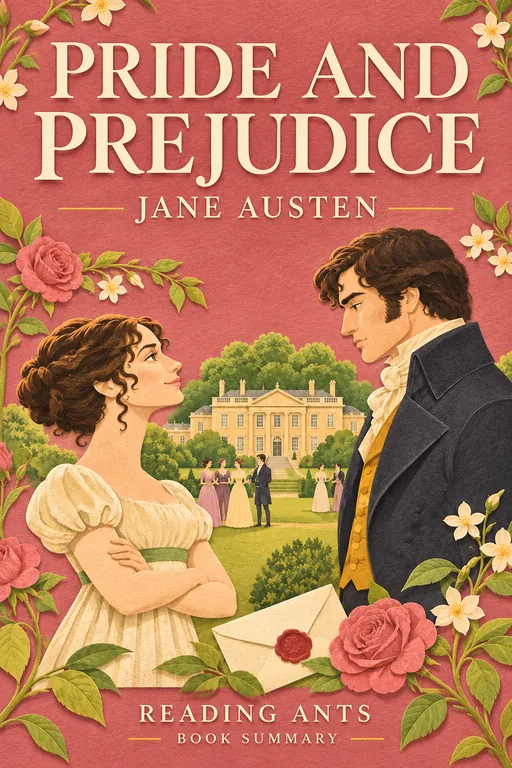
Pride and Prejudice
Jane Austen
Quick-witted Elizabeth Bennet and the proud, wealthy Mr. Darcy badly misjudge each other, and only by facing their own faults do they find their way to love.
📜 Classics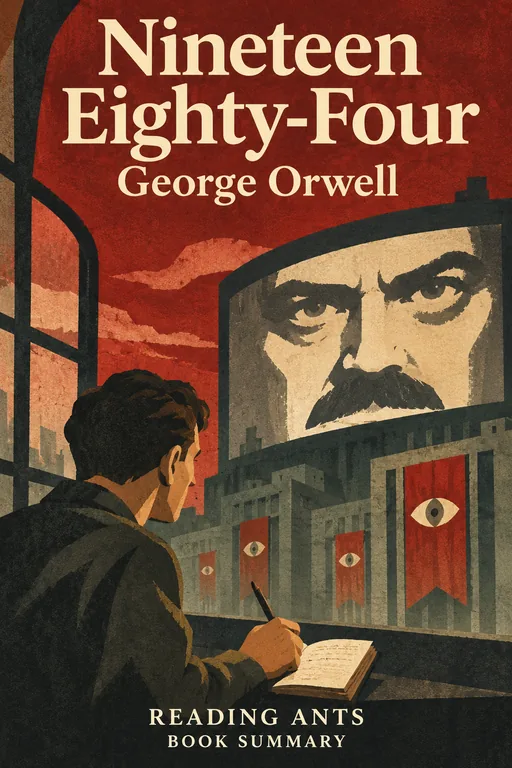
Nineteen Eighty-Four
George Orwell
In a future Britain ruled by an all-seeing Party, one man secretly rebels by keeping a diary and falling in love, and discovers just how completely a totalitarian state can crush the human mind.
📜 ClassicsWant something different?
Pick another topic and we will show you three books to start with.