A Separate Peace
Looking back from adulthood, a man recalls the summer of 1942 at a New England boarding school, when a moment of jealousy led him to injure his best friend, and how that act haunted his youth.
Overview
A Separate Peace is a novel by John Knowles, published in 1959, and it is set at the fictional Devon School in New England during World War II. It is narrated by Gene Forrester, who returns to the school fifteen years after graduation, and recalls the events of the summer of 1942 and the school year that followed. The book is a study of friendship, envy and the loss of innocence, and a quiet portrait of boys on the edge of war. It has been widely read in schools and has remained popular for decades.
Main Characters
- Gene Forrester: the narrator, a bright, introspective boy, who is a strong student.
- Phineas (Finny): his best friend, an athletic, charming, rule-breaking boy.
- Brinker Hadley: a classmate who strives for order and wants to get to the bottom of Finny’s accident.
- Elwin “Leper” Lepellier: a gentle, nature-loving boy, who joins the army’s ski troops.
- Mr. Prud’homme: a substitute master in charge of the boys’ dormitory during the summer session, who is too charmed by Finny to enforce the rules.
- Dr. Stanpole: the school physician.
- The Devon boys: classmates who form the community of the school.
Full Summary
A return to the school
Gene Forrester, now an adult, returns to Devon School, to visit two places that he has long found fearful: a flight of marble stairs and a big tree by the river. He is struck by how small and ordinary they look, and, remembering his time there, he finds himself recalling the summer of 1942, when he was sixteen. The memory of what happened at these places has stayed with him, and he has come back to the school to confront it at last.
Summer session
During the summer session, the boys have a relaxed time, since the war seems far away. Gene is a brilliant student, and his best friend Finny is a brilliant athlete, who is bold, innocent and loved by all. Finny invents games, such as blitzball, and leads the boys on adventures, including jumping from a tall tree into the river, and founding a mock secret club whose members must leap from the tree. Gene admires him but also resents his easy charm and the way he gets away with breaking rules. Gene works to outdo Finny in his studies, and he comes to feel that Finny is trying to outdo him in sports.
The fall
One day, Gene and Finny climb the tree to jump, and, as they stand on the limb, Gene’s envy of his friend comes to a head. In a moment of impulse, he jounces the branch, and Finny falls and shatters his leg. Gene does not fully understand why he did it, and he is filled with guilt at once. Finny, who will never be able to play sports again, is sent home to recover, and Gene is left to live with what he has done.
Autumn and Finny’s return
When school resumes in autumn, Gene stops at Finny’s home on the way back and confesses that he caused the accident, but Finny denies it. Back at school, Finny returns, and the boys, who are being drafted or are enlisting, face the war. Finny pretends that the war is not real, and insists that it is a fake meant to keep people in their place. He trains Gene as an athlete, in his place, and Gene becomes a runner. They enjoy a winter carnival, which Finny organizes, a moment of perfect joy.
Leper and the war
The idyll is broken when Leper, who has enlisted, goes AWOL to avoid a discharge for mental instability, and sends Gene a telegram. Gene travels to Leper’s home in Vermont and finds him changed and unwell. Leper accuses Gene of having caused Finny’s injury, and Gene is shaken. Back at school, Finny gives up his pretense that the war is a fake, and Brinker organizes a mock trial one night, to find out the truth about Finny’s accident. He brings in Leper as a witness, and Finny is forced to face what he has been avoiding.
The end of Finny
Finny, shocked, rushes out, and falls down the marble stairs, breaking his leg again. Later Finny asks Gene whether he did it out of hatred, and Gene says that it was a blind impulse, and Finny believes him. During surgery to set the leg, he dies, when bone marrow enters his bloodstream. Gene is stunned, and does not weep, feeling that Finny has become part of him. He recognizes that his jealousy, which he had thought was only in himself, is something that all people share, and that this knowledge is what he had to come to terms with. Gene, looking back, says that the enemy he had to face was within himself, and that he fought his war at Devon, so that in the end he has made his own separate peace.
Why It Matters
A Separate Peace has been a staple of school reading lists for decades, and it is admired for its economy and its psychological insight. It explores how envy and ambivalence can lurk in even the closest friendships, and how war casts a shadow on youth. The novel shows a young man coming to terms with his own capacity for harm, and with the loss of a friend. It has been discussed in terms of its symbolism, with the tree, the river, and the school, and has been adapted for film and television.
Key Takeaways
- Envy can hide in friendship. Gene’s jealousy leads to harm.
- Self-knowledge is painful. Gene must face what he did.
- War affects the young. The boys are shadowed by the draft.
- Innocence is fragile. The idyllic summer cannot last.
- Peace is personal. Gene finds his own way to reconciliation.
What We Can Learn
You can learn from Gene that jealousy is a normal, human feeling, but that acting on it can have lasting consequences, and that it is better to admit such feelings and talk about them. The novel also shows that denying the truth, as Finny does about the war, offers only temporary protection. If you read it, you might think about friendships in which you have felt both affection and rivalry, and how you handled those feelings. It encourages honesty with oneself and others, and compassion for the flaws of those we love.
Criticism and Counterpoints
Some readers find the novel’s pace slow, and its symbolism heavy-handed, with the tree and the river taking on too much meaning. Others feel that Gene’s motive is unclear, and that the narrator is too self-absorbed, and that Finny is too idealized. A few critics point out that the book’s setting, an elite boys’ school, is narrow, and that the female characters are absent. The scene of the mock trial, and Finny’s death, may seem melodramatic. Despite this, many readers remain drawn to its themes.
Who Should Read It
This book is for readers from about thirteen or fourteen who enjoy school stories and coming-of-age novels, and for those who are interested in the effects of war on young people. It is short and clear. Readers who like it might enjoy The Catcher in the Rye or Lord of the Flies.
Want the whole book?
A summary is a taste, not the meal. Here is where to find the full book.
You reached the end 🎉
Nicely done. Mark this one as read, and we will suggest what to read next.
Read this next
The Catcher in the Rye
J. D. Salinger
After being expelled from his boarding school, a lonely, sarcastic sixteen-year-old wanders New York City for three days, struggling with grief, phoniness and the frightening idea of growing up.
📜 Classics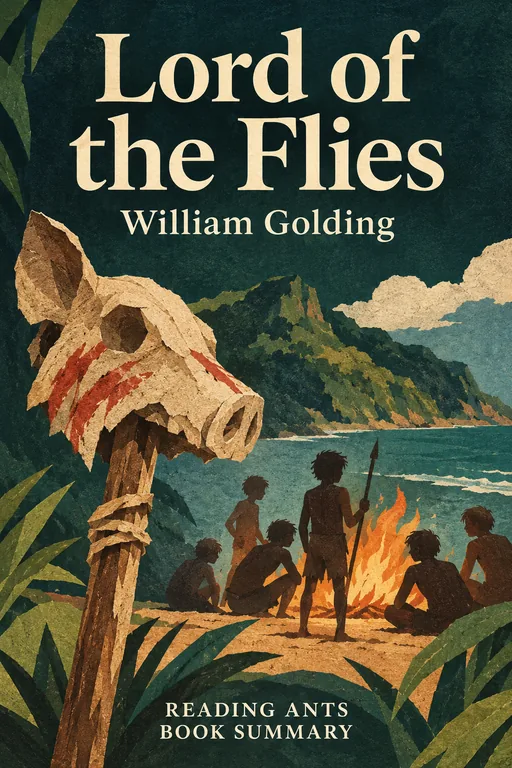
Lord of the Flies
William Golding
A group of British schoolboys stranded on a deserted island try to govern themselves, but fear and the desire for power slowly turn them into savages, revealing the darkness inside human nature.
📜 Classics
The Bell Jar
Sylvia Plath
A talented young woman named Esther Greenwood, who seems to be on the path to success in 1950s America, sinks into depression and a suicide attempt, and slowly begins to recover.
📜 Classics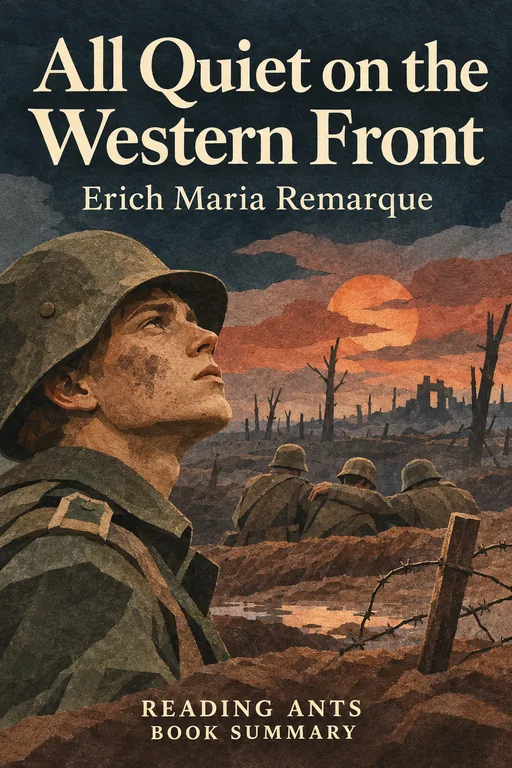
All Quiet on the Western Front
Erich Maria Remarque
A young German soldier discovers that modern war destroys not only bodies but also the beliefs, relationships and futures of those forced to fight it.
🌍 World Literature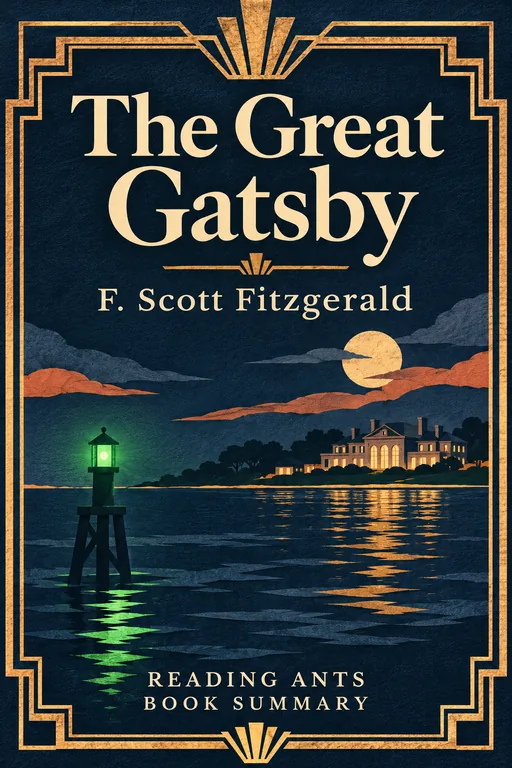
The Great Gatsby
F. Scott Fitzgerald
A mysterious millionaire throws lavish parties on Long Island in the hope of winning back the woman he loved years ago, but his dream collides with the careless cruelty of the rich.
📜 Classics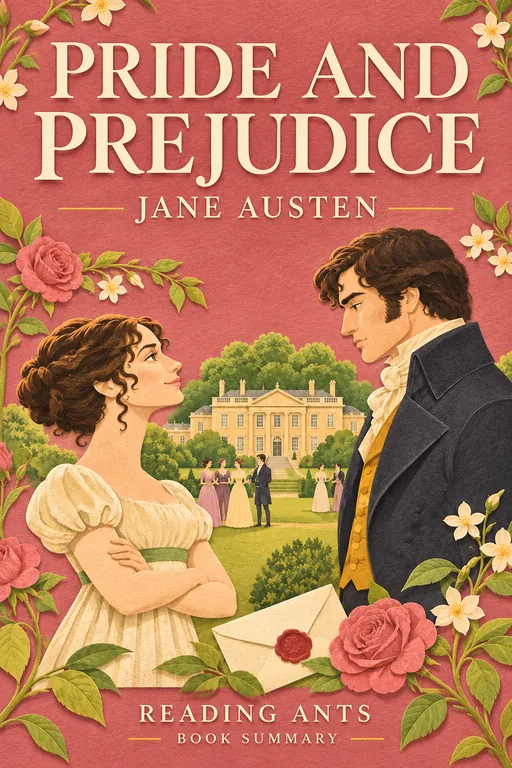
Pride and Prejudice
Jane Austen
Quick-witted Elizabeth Bennet and the proud, wealthy Mr. Darcy badly misjudge each other, and only by facing their own faults do they find their way to love.
📜 ClassicsWant something different?
Pick another topic and we will show you three books to start with.