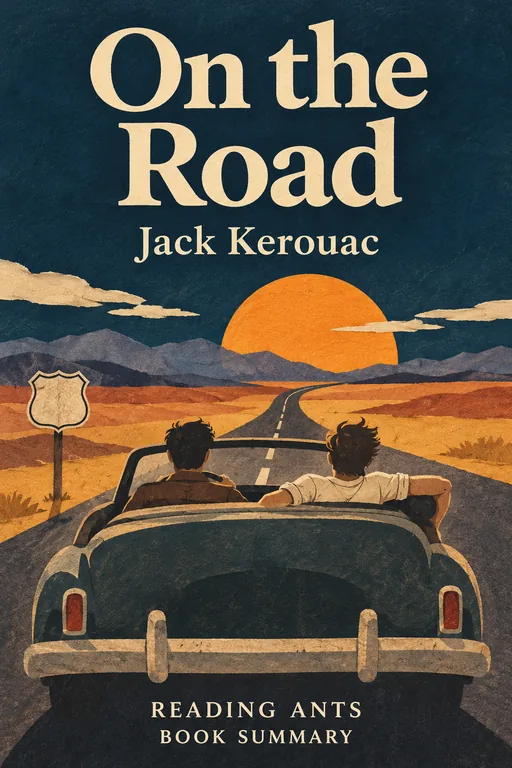
On the Road
A young writer named Sal Paradise hitchhikes and drives across America and into Mexico with his exuberant, restless friend Dean Moriarty, searching for kicks, meaning and a sense of belonging.
Overview
On the Road is a semi-autobiographical novel by Jack Kerouac, published in 1957. It is based on trips that Kerouac made with his friend Neal Cassady in the late 1940s. He reportedly wrote the first version in about three weeks on a single roll of paper, which became legendary, though he had been working on the material for years. That scroll has since been displayed in museums, and an edition of the original text was published in 2007. The book is narrated by Sal Paradise, and Dean Moriarty is based on Cassady. In a rushing, jazz-like style, it describes a restless generation that looks for freedom and experience outside the conventions of postwar America, and it became the defining novel of the Beat Generation.
Main Characters
- Sal Paradise: the narrator, a young writer from New York who longs for adventure.
- Dean Moriarty: a charming, fast-talking, reckless drifter who lives for the moment.
- Carlo Marx: a poet and friend based on Allen Ginsberg.
- Marylou, Camille and Inez: the women who marry or live with Dean.
- Old Bull Lee: a drug-using writer based on William S. Burroughs.
- Terry: a Mexican American woman whom Sal meets in California.
Full Summary
Meeting Dean
In 1947, Sal Paradise, who lives with his aunt in New Jersey, meets Dean Moriarty, a young man just out of reform school, who is full of energy and talks excitedly about everything. Sal is fascinated by Dean’s passion for life, and by his reckless freedom. Dean’s talk of the road, and the places he has been, attracts Sal, who has been reading about the American West. Sal decides to travel across the country for the first time.
Dean arrives with his young wife, Marylou, and the two of them talk without stopping. Sal, who is recovering from a divorce, feels that his life is dull by comparison. He also befriends Carlo Marx, a poet, and the three of them share a fascination with jazz, poetry and the idea of living intensely.
The First Trip
Sal hitchhikes across the country, hoping to get to Denver, where Dean is. The trip is a mixture of excitement and disappointment. He gets stuck in the rain, rides with truckers and farmers, and works for a time in a cotton field in California, where he lives with a Mexican American woman, Terry, and her child. Eventually, he goes back home, having seen the vast size of the country and its different people.
Dean and the Road
On the next trips, Sal and Dean drive across the country together in a series of cars, with a sense of speed and freedom. They stop in Denver, San Francisco and New Orleans, meet friends and drink and talk through the night. Dean leaves behind a trail of wives and children, and cannot settle down. He is both charming and selfish, and sometimes his actions hurt those around him. Sal admires him, but begins to see his flaws.
In one scene, they speed across the Plains at over a hundred miles an hour, singing, laughing and talking about everything. They listen to bebop in clubs in San Francisco and Denver, and Sal feels that he has finally found people who share his hunger for experience. At the same time, Dean’s relationships with women are chaotic, and his friends pay the price.
Mexico
In the final journey, Sal and Dean travel to Mexico, where they experience a wilder land, with exotic landscapes and a sense of freedom. They visit towns and marketplaces, and enjoy the cheap food and drink. Sal gets sick with fever, and Dean abandons him, going back to the United States to be with another wife. This betrayal shows the limits of Dean’s loyalty.
The End of the Road
Sal returns to New York, where he starts a relationship with a girl, Laura, and begins to settle down. Some time later, Dean turns up again in New York, and Sal cannot help him, since he is going to a concert with friends. Dean is left behind, as Sal goes on with his life. The book ends with Sal sitting on an old pier in the evening, thinking of America and its promise.
He remembers the open country and the many faces he has seen, and he knows that he can never go back to the person he was before the trips. The book closes on a bittersweet note of loss and longing, as he thinks about Dean, who has become a sort of ragged, wandering ghost.
Why It Matters
On the Road became a cultural landmark and a bible for the Beat Generation and, later, for the counterculture of the 1960s. Its spontaneous prose style and celebration of freedom inspired musicians such as Bob Dylan and the Doors, and writers and filmmakers. The 2012 film adaptation brought new attention to the story.
The book remains one of the most widely read American novels, and the “road trip” is now a staple of American literature and film. Its influence can be seen in everything from folk songs to television shows, and many young readers have said that it made them want to travel. It also gave a voice to a restless generation.
Key Takeaways
- Freedom and restlessness drive the story. The characters search for experience.
- Friendship can be both inspiring and painful. Sal admires and is hurt by Dean.
- The road is a symbol of possibility. Travel offers a sense of escape.
- Living for the moment has costs. Dean leaves a trail of broken ties.
- Growing up involves choices. Sal eventually chooses a more settled path.
What We Can Learn
The novel shows the allure and the limits of living without commitments. Dean’s energy is thrilling, but it also hurts the people around him, which suggests that freedom needs to be balanced with responsibility.
It also reminds us that adventures, like trips with friends or journeys to new places, can shape our sense of who we are.
Finally, it invites us to see America as a place of both great beauty and loneliness.
It also shows that friendships can be uneven: one person may give more than the other. Sal’s admiration for Dean is tested when Dean fails him at a moment of need.
Criticism and Counterpoints
Many critics, including the writer Truman Capote, dismissed Kerouac’s spontaneous style as typing, not writing. Others find the book self-indulgent, with its characters irresponsible and exploitative, particularly in their treatment of women, who are often left behind. The portrayal of non-white people, such as Mexicans and African Americans, is seen as romanticizing and stereotyping.
The glorification of drug use and reckless driving, as well as the neglect of children, have drawn criticism. Some readers also find the book repetitive. Still, many readers love its energy and spirit.
Who Should Read It
This book suits mature teenagers and adults. It contains drug and alcohol use and sexual themes, and its attitudes about women and race may need discussion. It is a good read for those who love travel and a sense of adventure.
Want the whole book?
A summary is a taste, not the meal. Here is where to find the full book.
You reached the end 🎉
Nicely done. Mark this one as read, and we will suggest what to read next.
Read this next
The Great Gatsby
F. Scott Fitzgerald
A mysterious millionaire throws lavish parties on Long Island in the hope of winning back the woman he loved years ago, but his dream collides with the careless cruelty of the rich.
📜 Classics
Into the Wild
Jon Krakauer
Jon Krakauer investigates the story of Christopher McCandless, a young man who gave away his money, abandoned his family and walked alone into the Alaskan wilderness, where he died in 1992.
👤 Real Lives
The Grapes of Wrath
John Steinbeck
Driven off their Oklahoma farm by drought and the banks during the Great Depression, a poor family travels west to California in search of work, only to find exploitation and hunger, yet they hold on to their dignity and compassion.
📜 Classics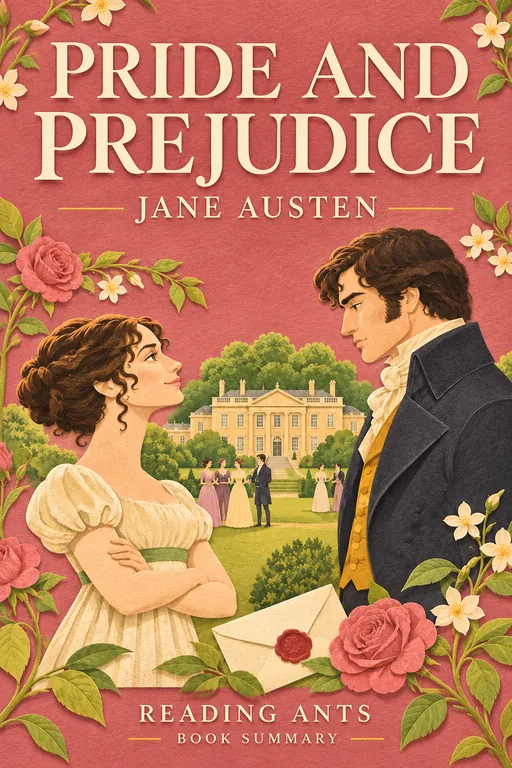
Pride and Prejudice
Jane Austen
Quick-witted Elizabeth Bennet and the proud, wealthy Mr. Darcy badly misjudge each other, and only by facing their own faults do they find their way to love.
📜 Classics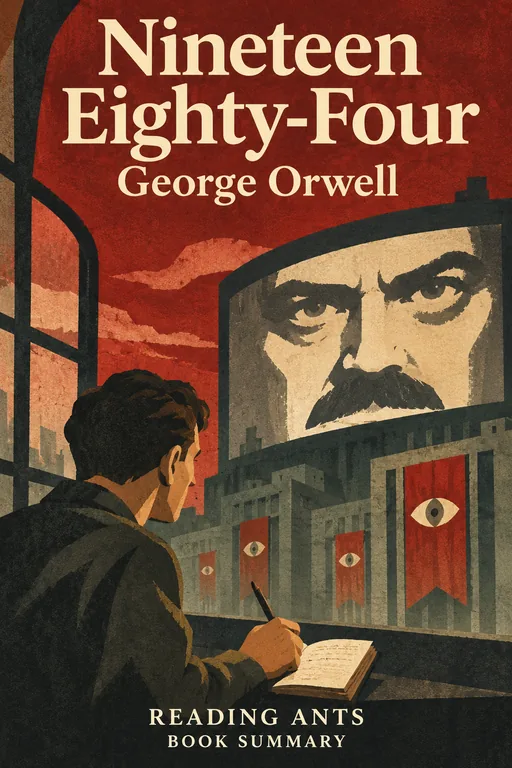
Nineteen Eighty-Four
George Orwell
In a future Britain ruled by an all-seeing Party, one man secretly rebels by keeping a diary and falling in love, and discovers just how completely a totalitarian state can crush the human mind.
📜 Classics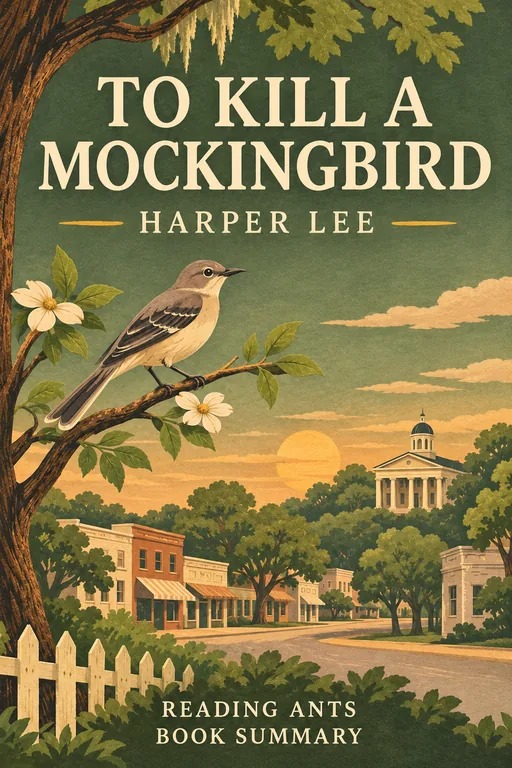
To Kill a Mockingbird
Harper Lee
In a small Alabama town in the 1930s, young Scout Finch watches her father, a lawyer, defend a Black man falsely accused of a crime, and learns hard lessons about prejudice, courage and seeing the world through other people's eyes.
📜 ClassicsWant something different?
Pick another topic and we will show you three books to start with.