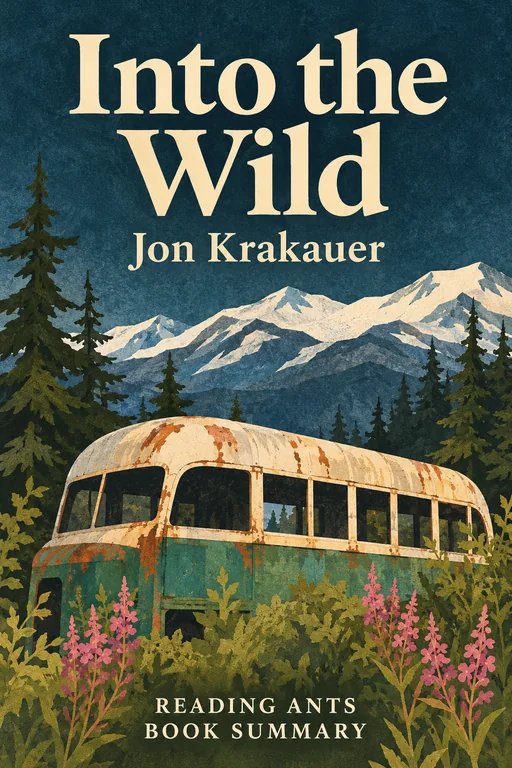
Into the Wild
Jon Krakauer investigates the story of Christopher McCandless, a young man who gave away his money, abandoned his family and walked alone into the Alaskan wilderness, where he died in 1992.
Overview
Into the Wild was written by Jon Krakauer and published in 1996, after he had first written about the story for Outside magazine. Christopher McCandless, a bright young graduate from a comfortable family, left his life behind in 1990 and spent two years wandering North America under the name “Alexander Supertramp.” In April 1992 he walked into the Alaskan interior to live off the land. His body was found by moose hunters in an abandoned bus in September 1992. Krakauer retraced his travels, interviewed those who knew him and added his own experiences as a young man who also took risks. The book became a bestseller and was made into a film in 2007.
Full Summary
1. The death in Alaska
The idea: Krakauer begins with the discovery of McCandless’s body. In September 1992, hunters found the body in an old bus, abandoned on the Stampede Trail near Denali National Park. Earlier, a man named Jim Gallien had picked McCandless up as a hitchhiker in April and driven him to the trailhead. He recalls that the young man was poorly prepared, with a small bag of rice, a rifle and a few supplies, but certain of his plan. The mystery of who he was and why he went there drives the book.
In real life: Before trying a risky adventure, careful preparation and local knowledge can mean the difference between life and death.
2. A young man, a family and a decision
The idea: McCandless grew up in Virginia, a clever and idealistic boy, and graduated from Emory University in 1990. He admired authors such as Jack London, Leo Tolstoy and Henry David Thoreau, and he was disturbed by the materialism around him and by discovering some painful facts about his father’s past. After college, he donated nearly all his savings to a charity that fights hunger, burned the cash in his wallet, abandoned his car and left without telling his family. He cut off contact with his parents and his sister Carine, who was close to him.
In real life: Strong ideals and strong feelings can lead young people to dramatic decisions that hurt those who love them.
3. Years on the road
The idea: In his wanderings, McCandless worked odd jobs, such as at a grain elevator in South Dakota, and traveled by hitchhiking, canoeing and walking. He made friends with many people, including Wayne Westerberg, who gave him work, Jan Burres and Ron Franz, an older man who grew so fond of him that he wanted to adopt him. People remembered him as kind, intense and a bit stubborn. Krakauer stresses that he was not only reckless: McCandless was resourceful and charming, but often refused help and advice.
In real life: Someone who seems self-reliant can still need and inspire care from others.
4. Comparisons and Krakauer’s own story
The idea: To understand McCandless, Krakauer compares him to other young men who sought out extreme challenges, including himself in his twenties, when he made a risky solo climb in Alaska, and who were driven by restless energy and conflict with their fathers. He suggests that McCandless was not simply suicidal or foolish, but a young man with high ideals and a need for a test. He also discusses the long history of people seeking transformation in nature.
In real life: Young people often seek challenges to find out who they are, and it matters how well they weigh the risks.
5. The final months
The idea: Using McCandless’s journal and photos found with his body, Krakauer reconstructs his last months. In the summer of 1992, McCandless lived in the bus, hunted small game and ate foraged plants. He killed a moose but could not preserve the meat, which spoiled, and he grew thin. He tried to leave in July, but the Teklanika River, swollen by meltwater, was too high to cross, and he returned to the bus, apparently unaware that a hand-operated cable car crossing existed a short distance downstream. Weakened, he wrote a farewell note and died in August, probably of starvation.
In real life: A small mistake, like not having a good map, can be deadly in a place with no help nearby.
6. The cause of death and its debate
The idea: Krakauer puzzles over what finally killed McCandless. He first proposed that McCandless had eaten the seeds of a wild plant, the wild potato, which contain a toxin, and that poisoning made it impossible for him to find food. Later, he suggested other explanations, such as a toxin from mold on the seeds, and the debate over the cause of death has continued. Whatever the exact cause, the story ends with the bleak fact of a young man dying alone, and with the grief of his family.
In real life: Even careful investigators may not be sure about the cause of a tragedy, and it is wise to stay open to new evidence.
Why It Matters
Into the Wild was a long-running bestseller and became a cultural touchstone about young people’s search for meaning and about the lure of the wilderness. The 2007 film, directed by Sean Penn, introduced it to a new generation. It also set off lively debates about whether McCandless was a courageous idealist or a naive risk-taker.
Visitors have made pilgrimages to the abandoned bus, which led to several rescues and, in 2020, to the removal of the bus by the Alaska National Guard because of safety concerns. The book also helped create a wider genre of modern adventure writing that mixes reporting, history and the author’s own reflections.
Key Takeaways
- Idealism has risks. Strong ideals need practical planning.
- Nature is unforgiving. Preparation and humility matter.
- Families feel loss deeply. Cutting ties hurts those left behind.
- The story is complex. Krakauer shows many sides of one person.
- Judge with care. Both hero and fool are too simple.
What We Can Learn
The story invites us to think about the pull of adventure and the need for meaning. Many young people feel the urge to break away, and McCandless’s story shows both the appeal and the dangers.
It also teaches the value of preparation and of listening to experienced people. Several locals offered advice or supplies to him, but he turned much of it down, and those choices proved costly.
Finally, it reminds us how much relationships matter. McCandless’s journal showed that he came to value other people, and one of his last notes said that happiness is best when shared.
Criticism and Counterpoints
Many Alaskans and experienced outdoor people have criticized McCandless as unprepared and arrogant, and said that Krakauer made him a hero. Others argue that Krakauer was too sympathetic and that the book romanticizes risky behavior. There is also disagreement about the cause of death, with some arguing that Krakauer’s theory about poisonous seeds was wrong.
Some critics feel that Krakauer’s speculation about McCandless’s inner life goes beyond the evidence. Defenders say that the book is fair, includes many views and invites readers to judge for themselves. It is best read as one reconstruction of a complicated story.
Who Should Read It
This book suits teenagers and adults who enjoy adventure and ask big questions about freedom and risk. It is gripping but ends sadly. Parents may wish to talk about how it presents dangerous choices.
Want the whole book?
A summary is a taste, not the meal. Here is where to find the full book.
You reached the end 🎉
Nicely done. Mark this one as read, and we will suggest what to read next.
Read this next
Into Thin Air
Jon Krakauer
Jon Krakauer, a journalist who climbed Mount Everest in 1996, recounts the storm that killed eight people on the mountain over a single day and night, and reflects on what went wrong and on his own survivor's guilt.
🏛️ History
Wild
Cheryl Strayed
At twenty-six, grieving her mother's death and her own reckless choices, Cheryl Strayed sets out alone to walk hundreds of miles of the Pacific Crest Trail, and finds a way back to herself along the way.
👤 Real Lives
Walden
Henry David Thoreau
Henry David Thoreau describes the two years he spent living simply in a small cabin by Walden Pond in Massachusetts, and argues that people should simplify their lives, spend time in nature and think for themselves.
🕊️ Philosophy & Religion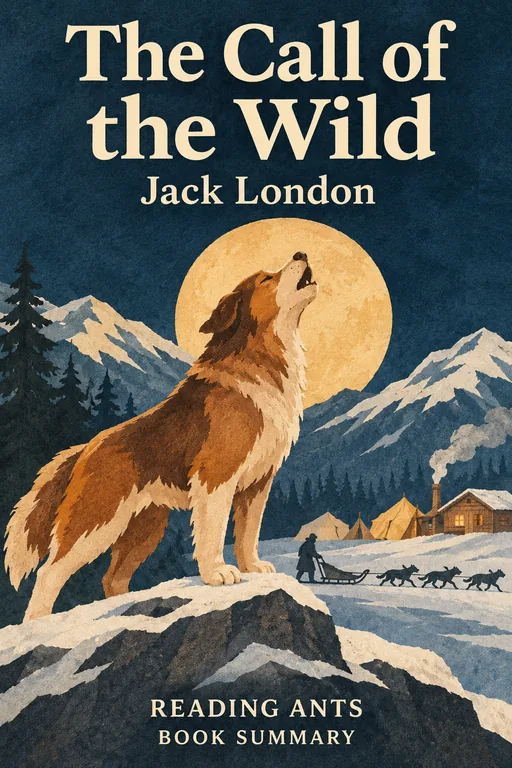
The Call of the Wild
Jack London
Buck, a big, pampered dog stolen from his comfortable California home, is sold into the freezing Yukon gold rush as a sled dog, where he learns to survive and eventually answers the call of the wild.
📜 Classics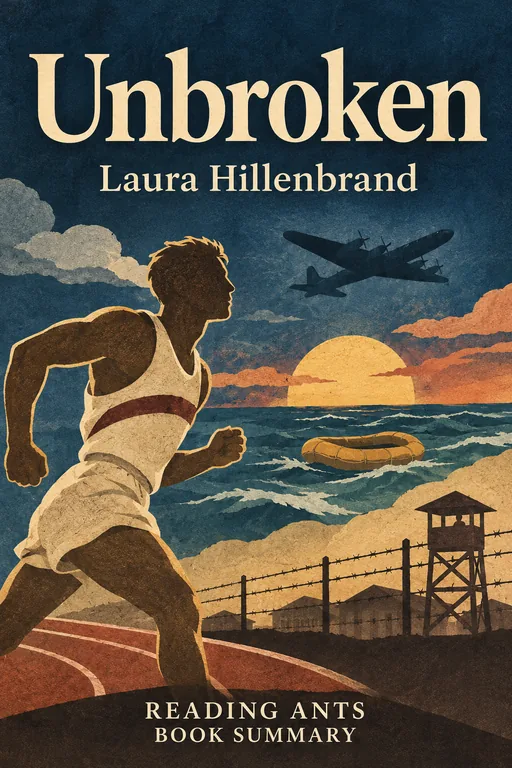
Unbroken
Laura Hillenbrand
This is the true story of Louis Zamperini, an Olympic runner who survived a plane crash, weeks adrift on the Pacific and years in brutal Japanese prison camps during World War II, then fought to rebuild his life.
🏛️ History
Man's Search for Meaning
Viktor E. Frankl
A psychiatrist who survived the Nazi concentration camps explains that even in the worst suffering, people can choose their attitude, and that finding a reason to live is what gives us the strength to endure.
👤 Real LivesWant something different?
Pick another topic and we will show you three books to start with.