 Reading Ants
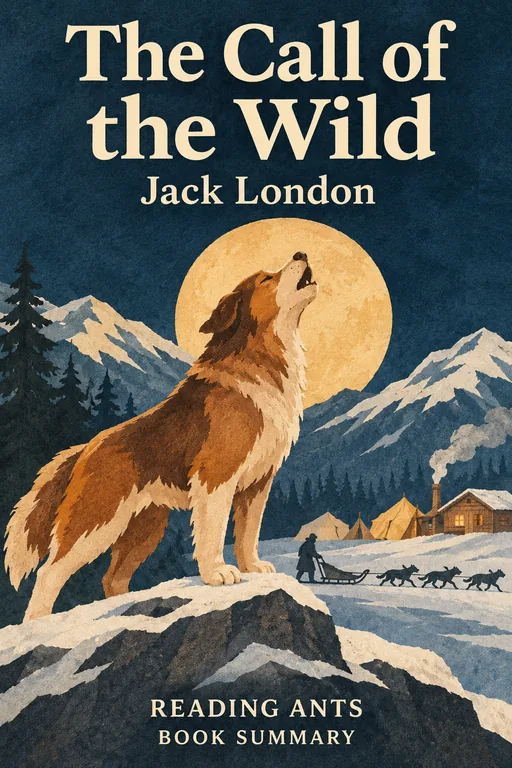
The Call of the Wild
Buck, a big, pampered dog stolen from his comfortable California home, is sold into the freezing Yukon gold rush as a sled dog, where he learns to survive and eventually answers the call of the wild.
Overview
The Call of the Wild is a short adventure novel by Jack London, published in 1903. It is set in the 1890s during the Klondike Gold Rush, when thousands of people rushed to northwest Canada to look for gold, and strong dogs were in great demand as sled animals. London himself traveled to the Yukon in 1897. Told from Buck’s point of view, the story shows how a civilized dog learns the law of “club and fang,” and how his instincts reawaken. It is a story about survival, natural selection and the pull of wildness, and it made London famous.
Main Characters
- Buck: a large St. Bernard and Scotch shepherd mix who is strong, intelligent and proud.
- Judge Miller: Buck’s kind first owner in California.
- The man in the red sweater: the man who trains Buck with a club.
- Spitz: the cruel, cunning lead dog who is Buck’s rival.
- François and Perrault: French-Canadian mail couriers who drive the sled.
- Hal, Charles and Mercedes: inexperienced and careless gold seekers.
- John Thornton: the kind man who saves Buck’s life and wins his love.
Full Summary
Stolen
Buck lives happily on Judge Miller’s estate in the Santa Clara Valley of California, ruling over the other dogs. But a gardener’s helper, who has gambling debts, sells him to a stranger. Buck is put in a crate and shipped north, where he is beaten with a club by a man in a red sweater, who teaches him that a man with a club is a master to be obeyed, but not necessarily befriended. Buck is sold to two couriers, Perrault and François, who take him to the frozen Yukon.
The Law of Club and Fang
In the north, Buck sees brutal sights. He watches in horror as a friendly dog, Curly, is killed by a pack of huskies in a few seconds. He learns that in this land, there is no mercy, and that the strong survive. He learns to sleep in the snow, to find food and to steal to stay alive. He pulls a sled, and learns to work in a team. His old instincts begin to wake up.
The Rivalry with Spitz
Spitz, the lead dog, resents Buck’s growing strength and leadership qualities. The rivalry grows, with Buck undermining Spitz’s authority, and eventually erupts in a fierce fight on the ice, in which Buck defeats Spitz, whom the rest of the pack then finishes off, and Buck takes his place as leader. He becomes the best lead dog in the north. When the two couriers are reassigned, the team is sold to other mail drivers, who are competent but work the dogs to exhaustion.
Hal, Charles and Mercedes
Buck’s team is then sold to three inexperienced travelers, Hal, Charles and Mercedes, who overload the sled, ignore the advice of others, feed the dogs badly and treat them cruelly. The dogs are starving and exhausted. When they reach the camp of John Thornton, he warns them that the ice is rotten, but they do not listen. Buck, too weak to rise, refuses to go onto the ice. Hal beats him, and Thornton cuts him free. The party continues and the sled breaks through the ice, and Hal, Charles, Mercedes and the dogs still harnessed to the sled are lost, while Buck stays behind with Thornton.
John Thornton
Thornton nurses Buck back to health, and Buck feels love for the first time since leaving California. He saves Thornton’s life, and Thornton, in turn, takes pride in Buck. In a bet, Buck pulls a sled loaded with a thousand pounds, breaking its runners free from the frozen snow and winning a large sum for Thornton, who uses it to search for a lost gold mine. Buck is devoted to him, but he begins to hear a call from the forest, and to roam out into the wild.
The Call
While Buck is away hunting, a group of Yeehat Indians attack the camp and kill Thornton. Buck, furious, kills several of them and finally wins revenge. With no ties to humankind, he answers the call of the wild and joins a pack of wolves. He becomes their leader, and in the years that follow, he is known as a legend, the Ghost Dog of the Yukon, who returns each summer to the valley where Thornton died.
Why It Matters
The Call of the Wild was an immediate bestseller, and made London one of the highest-paid writers of his time. It remains one of the most widely read American novels, and has been adapted for film and television many times, including a 2020 film with a computer-generated Buck, starring Harrison Ford. It is often used in schools as an introduction to adventure and naturalist writing.
Its themes of instinct, survival of the fittest and the thin layer of civilization have been studied by critics. It also influenced later animal stories and survival tales.
Key Takeaways
- Instinct runs deep. Buck’s wild nature emerges as he adapts.
- Survival requires adaptation. Buck learns quickly or dies.
- Cruelty and kindness shape character. Buck is changed by both.
- Loyalty and love are powerful. Buck is devoted to Thornton.
- Nature is harsh and beautiful. The Yukon tests those who enter it.
What We Can Learn
The story shows that adaptability is crucial. Buck’s comfortable life gives him no tools for the Yukon, and he survives because he learns fast and uses his intelligence.
It also invites us to think about our own relationship with nature and civilization. How much of our behavior is learned, and how much is instinct?
Finally, it shows that love can be the strongest bond. Buck’s affection for Thornton shows that even a hardened creature can feel deep loyalty, which is why his final choice feels both sad and inevitable.
Criticism and Counterpoints
Some critics say that the novel is simplistic in its ideas, and that its social Darwinism, the idea that the strongest and fittest naturally rule, is questionable. Animal-rights readers are disturbed by the cruelty, and some scholars criticize London’s depiction of Native Americans, as in the Yeehats, as savage.
Others object that Buck’s thoughts and feelings are humanized, which blurs the line between fiction and realistic animal behavior. Some readers feel the ending is abrupt. Still, the book has great narrative drive.
Who Should Read It
This book suits readers from about age ten up to adults. It is short and exciting, but it contains violent scenes and animal suffering. Younger readers may need a parent’s guidance.
Want the whole book?
A summary is a taste, not the meal. Here is where to find the full book.
You reached the end 🎉
Nicely done. Mark this one as read, and we will suggest what to read next.
Read this next
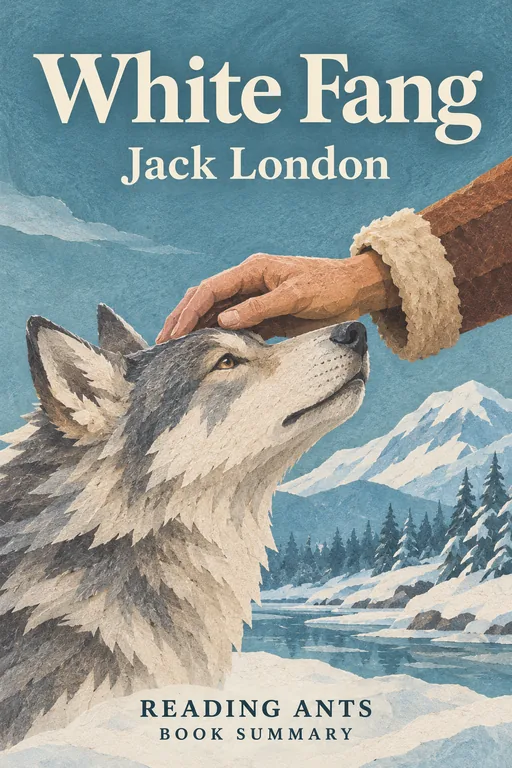
White Fang
Jack London
A wolf-dog born in the Yukon wilderness is hardened by cruelty and survival, and then, through the patient kindness of one man, learns to trust and love, and becomes a loyal family dog in California.
📜 Classics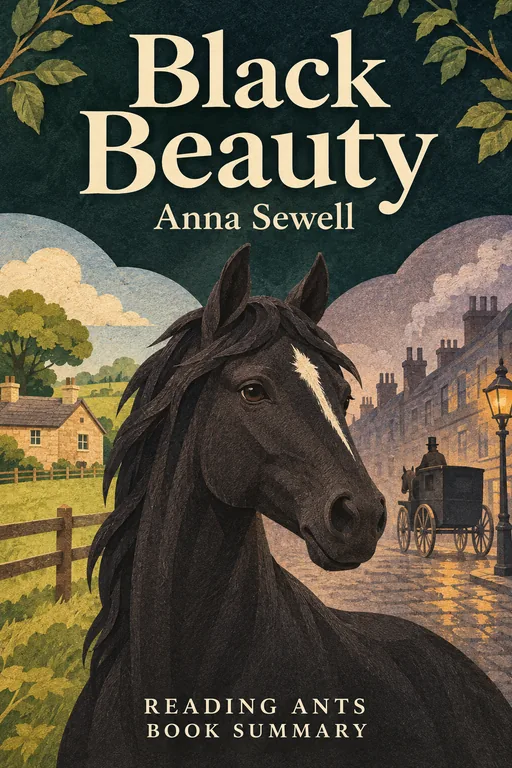
Black Beauty
Anna Sewell
A gentle black horse tells the story of his life, from a happy childhood to hard years pulling cabs, and shows how kindness or cruelty can change an animal's whole life.
🧸 Children's Books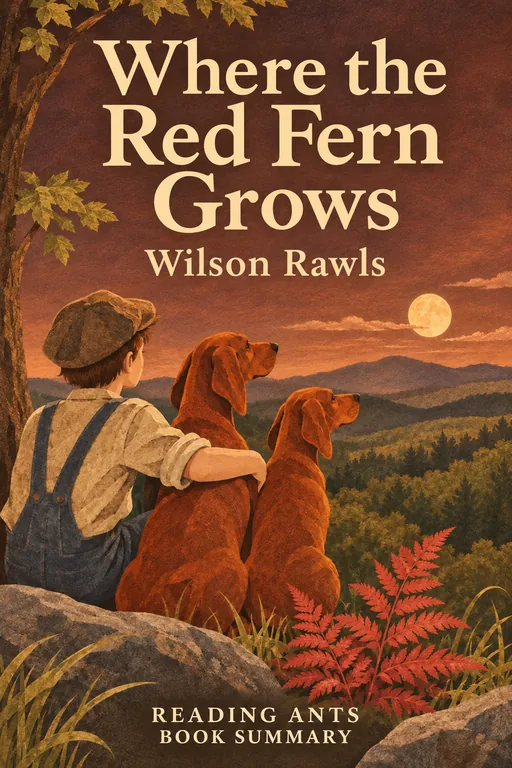
Where the Red Fern Grows
Wilson Rawls
A poor boy in the Ozark Mountains of Oklahoma works for two years to buy two redbone coonhound puppies, and the three become inseparable until a tragic ending.
🧸 Children's Books
Hatchet
Gary Paulsen
After a plane crash leaves him alone in the Canadian wilderness with only a hatchet, a thirteen-year-old boy must learn to survive, and grows from a frightened city kid into a patient, resourceful young man.
🧸 Children's Books
Into the Wild
Jon Krakauer
Jon Krakauer investigates the story of Christopher McCandless, a young man who gave away his money, abandoned his family and walked alone into the Alaskan wilderness, where he died in 1992.
👤 Real Lives
Pride and Prejudice
Jane Austen
Quick-witted Elizabeth Bennet and the proud, wealthy Mr. Darcy badly misjudge each other, and only by facing their own faults do they find their way to love.
📜 ClassicsWant something different?
Pick another topic and we will show you three books to start with.