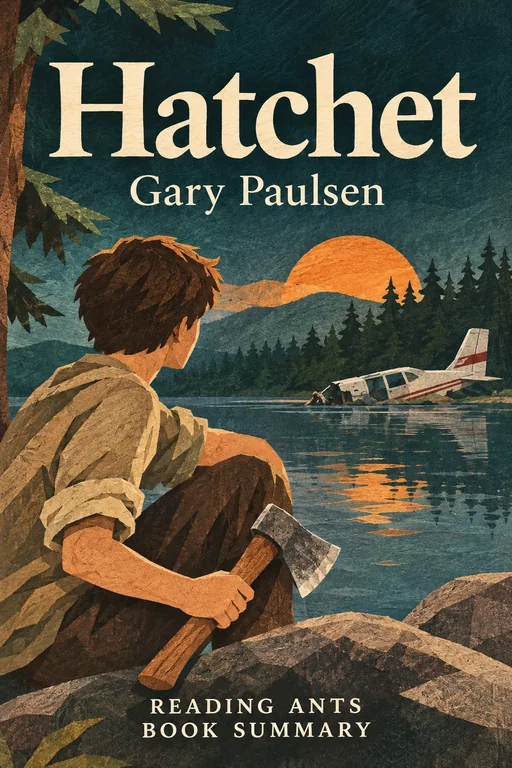
Hatchet
After a plane crash leaves him alone in the Canadian wilderness with only a hatchet, a thirteen-year-old boy must learn to survive, and grows from a frightened city kid into a patient, resourceful young man.
Overview
Brian Robeson, thirteen, is flying in a small plane to visit his father in the oil fields of northern Canada. His parents have recently divorced, and Brian carries a painful secret: he saw his mother with another man. Over the endless forests, the pilot suffers a heart attack and dies. Brian manages to crash-land the plane in a lake and swims to shore, alone in the wild with nothing but the clothes he is wearing and a hatchet his mother gave him. Gary Paulsen, who drew on his own experiences in the outdoors, tells a gripping, realistic survival story. Hatchet is one of the most popular adventure books for young readers in North America.
Main Characters
- Brian Robeson: a thirteen-year-old boy from New York stranded in the wilderness.
- The pilot: a friendly man who suffers a heart attack during the flight.
- Brian’s mother: who gave him the hatchet, and whose secret troubles him.
- Brian’s father: who lives in the Canadian oil fields.
Full Summary
The Crash
Brian is the only passenger in a small single-engine plane. The pilot lets him hold the controls for a few moments. Then the pilot is struck by terrible pain, and dies of a heart attack. Brian is terrified. He tries to call for help on the radio but loses contact. When the plane runs out of fuel, he steers it down toward a lake. The plane crashes into the water, and Brian struggles out and swims to shore, injured and exhausted.
Alone
Brian wakes up covered in mosquito bites, sore and hungry. He keeps remembering “the Secret”: he once saw his mother kissing a man who was not his father, which led to the divorce. Now he must think about survival. He remembers a teacher saying that the most important thing in survival is staying positive and that you are your own most valuable asset.
He makes a shelter under a rock overhang near the lake. Starving, he finds some berries he calls “gut cherries,” which make him sick when he eats too many. Then he discovers raspberries, and nearly runs into a bear, who leaves him alone.
Fire
One night, a porcupine wanders into his shelter. Brian throws his hatchet at it in the dark, and the hatchet strikes the rock wall, making sparks. That gives him an idea. After many failed attempts, using thin strips of birch bark, he finally manages to start a fire. Fire changes everything: it gives warmth, keeps away the mosquitoes and animals, and makes him feel he has a friend.
Learning the Wilderness
Brian learns patience and observation. He discovers turtle eggs buried in the sand and eats them raw. He makes a spear and then a bow and arrows to catch fish, learning that the water bends light so he must aim below the fish. Later he learns to hunt “fool birds,” a kind of grouse. Each success makes him more confident.
One day a search plane flies over, but it doesn’t see him and flies away. Brian falls into despair and tries to hurt himself. When he recovers, he feels like a new person, determined never to give up again.
Disasters
Brian’s wilderness life is full of dangers. A moose attacks him in the lake, and that same night a tornado hits, destroying his shelter and scattering his supplies. But the storm also shifts the plane, so that its tail now sticks up out of the water. Brian realizes the plane may hold a survival pack.
The Survival Pack
Brian builds a raft and paddles out to the plane. Working for hours, he cuts his way into the tail section with his hatchet and loses the hatchet in the water, but dives to recover it. Inside, he finds the survival pack. It contains food, a sleeping bag, cooking tools, a rifle and an emergency radio transmitter. That night, he cooks a real meal, and feels almost strange having such comforts.
Rescue
Not knowing how the transmitter works, Brian flips its switch and leaves it on. Within hours, a bush pilot lands on the lake, having picked up the signal. Brian has survived fifty-four days alone in the wilderness. In the epilogue, we learn that the experience changed him forever: he became more thoughtful and observant. He never told his father about the Secret, and his parents did not get back together.
Why It Matters
Hatchet won a Newbery Honor in 1988 and became one of the most widely read survival stories for young readers, especially in American schools. Paulsen, who had lived and worked in the wilderness, made Brian’s experiences feel real and practical, from building a fire to catching fish.
The book inspired four more novels about Brian, partly because readers wrote to Paulsen asking what would have happened if Brian had not been rescued so quickly. It is often used in classrooms to discuss perseverance, nature and problem-solving, and it has encouraged many young readers, especially reluctant readers, to fall in love with books.
Key Takeaways
- Patience and observation are survival skills. Brian succeeds by watching and learning from nature.
- Mistakes are part of learning. Each failure teaches him something new.
- Hope keeps us alive. After his lowest moment, Brian decides never to give up.
- Simple tools can be powerful. A hatchet gives him fire, shelter and food.
- Hardship can change us. Brian returns home stronger and more thoughtful.
What We Can Learn
Brian’s story teaches that we can handle more than we think. When faced with a big challenge, breaking it into small steps, like finding shelter, then food, then fire, makes it manageable.
It also shows the value of staying calm. Panic makes Brian’s problems worse, while patience and clear thinking help him solve them. When we feel overwhelmed, taking a deep breath and thinking things through can make all the difference.
Finally, the book reminds us to appreciate everyday comforts. After weeks alone, a simple meal feels like a miracle. Noticing what we already have can bring gratitude and contentment.
Criticism and Counterpoints
Some readers find the book slow in places, since much of it describes Brian’s thoughts and small tasks rather than dramatic action. A few survival experts have pointed out that some details are simplified or unrealistic, and Paulsen addressed some questions in later books.
The subplot about Brian’s mother’s affair and the divorce feels heavy or confusing to some younger readers. The brief moment when Brian tries to harm himself may also need discussion with an adult. Nonetheless, most readers find it a thrilling and inspiring story.
Who Should Read It
This book is ideal for readers aged about 10 to 14, especially those who love adventure, nature and survival stories. Reluctant readers often find it gripping. It also works well for classroom discussion about resilience and problem-solving.
Want the whole book?
A summary is a taste, not the meal. Here is where to find the full book.
You reached the end 🎉
Nicely done. Mark this one as read, and we will suggest what to read next.
Read this next
Island of the Blue Dolphins
Scott O'Dell
After her people leave their island and she is left behind, a Native American girl named Karana survives alone for years, learning to hunt, build and make friends with animals.
🧸 Children's Books
Robinson Crusoe
Daniel Defoe
After a shipwreck, an English sailor named Robinson Crusoe survives for twenty-eight years on a remote island, building a life with his own skill and faith, and eventually befriending a man he calls Friday.
📜 Classics
The Call of the Wild
Jack London
Buck, a big, pampered dog stolen from his comfortable California home, is sold into the freezing Yukon gold rush as a sled dog, where he learns to survive and eventually answers the call of the wild.
📜 Classics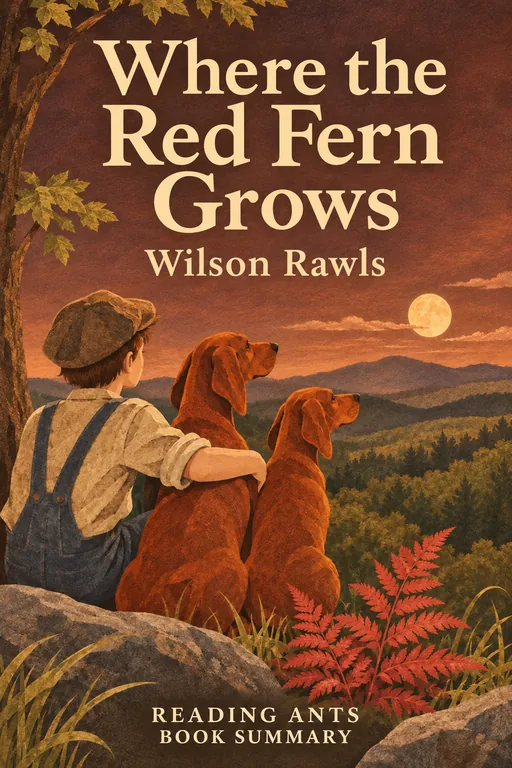
Where the Red Fern Grows
Wilson Rawls
A poor boy in the Ozark Mountains of Oklahoma works for two years to buy two redbone coonhound puppies, and the three become inseparable until a tragic ending.
🧸 Children's Books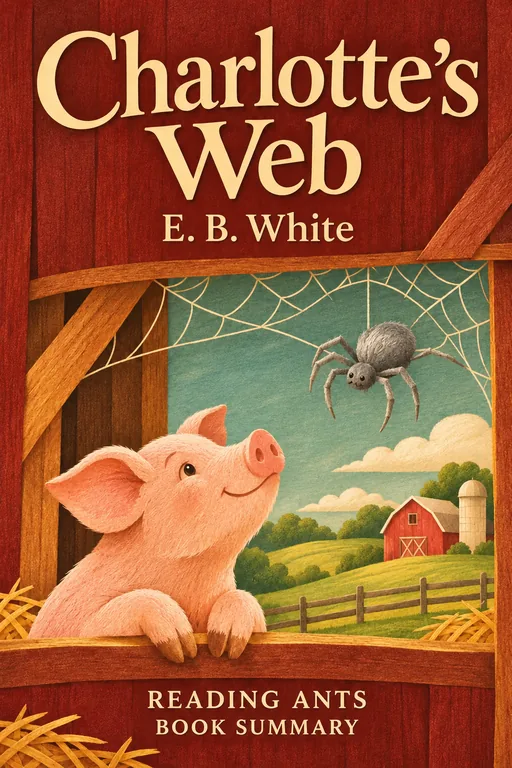
Charlotte's Web
E. B. White
A lonely pig named Wilbur learns he is going to be killed, and his clever friend Charlotte, a spider, comes up with an amazing plan to save his life.
🧸 Children's BooksHarry Potter and the Philosopher's Stone
J. K. Rowling
An unloved orphan boy discovers on his eleventh birthday that he is a famous wizard, and during his first year at a magical school he makes true friends and faces the dark wizard who killed his parents.
🧸 Children's BooksWant something different?
Pick another topic and we will show you three books to start with.