 Reading Ants
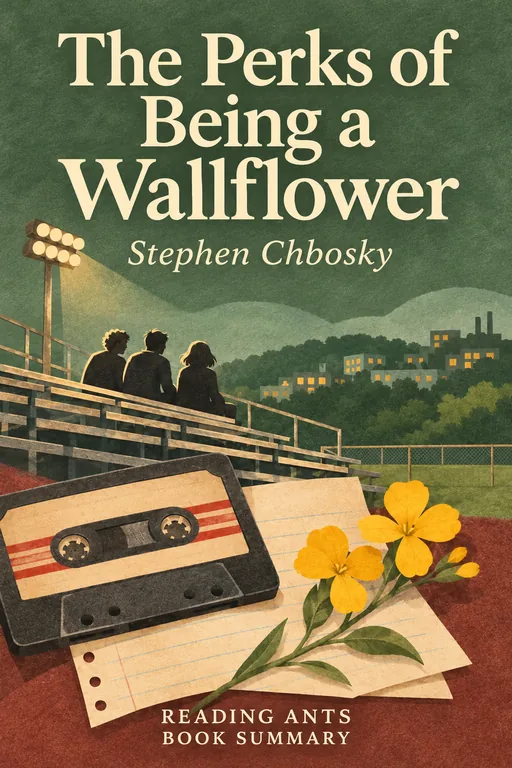
The Perks of Being a Wallflower
A shy, thoughtful boy writes letters about his first year of high school, in which he finds friends and love, and must face the painful secret of his past.
Overview
The Perks of Being a Wallflower is a young adult novel by Stephen Chbosky, published in 1999. It is set in a suburb of Pittsburgh, Pennsylvania, in the early 1990s. It is told in letters from a fifteen-year-old called Charlie to an unnamed person, whom he calls “friend,” but whom he has never met. The letters cover a school year in Charlie’s life, his freshman year of high school, in 1991 and 1992. The book deals openly with difficult subjects, including sexual abuse, mental illness, drugs and suicide, and it has been both widely loved and sometimes challenged in schools.
Main Characters
- Charlie: the narrator, a sensitive, intelligent boy who watches rather than joins in.
- Sam: a lively, kind older girl, who is his friend and crush.
- Patrick: Sam’s stepbrother, a senior, who is secretly dating a football player.
- Mr. Anderson: Charlie’s English teacher, whom Charlie is told to call Bill, who gives him books and encourages his writing.
- Aunt Helen: Charlie’s favorite aunt, who died in a car crash and who haunts his memories.
- Mary Elizabeth: a girl who becomes Charlie’s girlfriend for a time.
Full Summary
Letters to a Friend
Charlie begins by writing to a person he has heard of, who he believes will listen without judging. He tells of his first days at high school, where he feels alone. His only friend from middle school, Michael, killed himself, and Charlie is still affected. He also grieves for his Aunt Helen, who died in a car crash. At home, he sees his sister’s boyfriend hit her, and she makes him promise not to tell their parents.
Charlie’s English teacher, Mr. Anderson, notices his talent for reading and writing, and gives him extra books to read and reports to write. This becomes a lifeline for Charlie.
Sam and Patrick
At a football game, Charlie sees Patrick, a senior he knows from shop class, sitting with his stepsister, Sam. They take Charlie into their group of friends, who are misfits and artists, and who bring him to parties and to performances of a cult film, The Rocky Horror Picture Show. Charlie quickly falls for Sam, who is warm to him, but who has a boyfriend.
His new friends introduce him to music, to parties and to tobacco, alcohol and other drugs. He is, for the first time, part of a group, and he finds the feeling of belonging wonderful. Patrick is the first to call him a wallflower, a person who watches from the edge instead of joining in.
Ordinary Magic
Charlie also learns the small rituals of friendship. Sam and Patrick share music with him, and he makes mixtapes of his own. They drive through a tunnel with the radio playing loudly, and Charlie, for a moment, feels completely happy.
At one of the Rocky Horror shows, Charlie is asked to fill in for Sam’s boyfriend and play the part of Rocky on stage. His friend Mary Elizabeth is impressed, and she asks him to a school dance, and the two begin a hesitant relationship. Sam also kisses Charlie, so that his first kiss will come from someone who really loves him. These small scenes are the heart of the book.
Difficulties
Charlie’s relationship with Mary Elizabeth ends during a game of truth or dare. When he is dared to kiss the prettiest girl in the room, he kisses Sam, and Mary Elizabeth storms out. Patrick tells him to stay away from Sam for a while, and the rest of the group shuns him. Without his friends, Charlie’s painful memories of his aunt return.
Patrick has been secretly dating Brad, a football player, until Brad’s father finds out. Brad turns cold and cruel to Patrick, and when he insults Patrick in public, Patrick attacks him and other football players gang up on Patrick. Charlie steps in to defend Patrick and breaks up the fight, and he wins back the respect of Sam and her friends.
Graduation
As the school year ends, the seniors prepare to graduate, and Charlie is troubled by the loss of his friends, especially Sam. She has learned that her boyfriend was unfaithful, and she is about to leave for a summer college-preparation program. Charlie helps Sam pack, and they talk about how he feels about her.
A moment of physical closeness between them makes Charlie suddenly uncomfortable, and he stops. He feels a wave of memories rising up, which he does not understand, and he begins to have flashbacks.
The Secret
That moment of closeness has stirred up buried memories. Soon Charlie is found by his parents unable to move or respond, and he is taken to a hospital. There it comes out that his Aunt Helen, whom he loved, abused him sexually when he was a small child. He had blocked this memory out, and it explains the flashbacks and the numb, far-away spells that run through the book. She had died in a car crash on her way to buy him a birthday gift.
With the help of a doctor, Charlie begins to heal. After about two months he is released, and Sam and Patrick visit him. The three of them go through the tunnel again, and Charlie feels infinite. He writes his last letter, in which he says that he is ready to take part in life, not just to watch.
Why It Matters
The Perks of Being a Wallflower became a cult favorite among teenagers, and had well over a million copies in print by 2012. Its honest treatment of mental health, sexuality and trauma made it a book that many readers felt spoke for them. It has been among the most challenged books in American schools, because of its frank content, yet many teachers and librarians defend it. Chbosky wrote the screenplay and directed the 2012 film. Scholars and educators have argued that it matters to young readers who see themselves reflected in it. Its love of mixtapes, old songs and cult films became part of its appeal, and it is still passed from friend to friend, as a sign that one trusts them with something important.
Key Takeaways
- Belonging heals. Friends help Charlie to come out of his shell.
- Silence hides pain. Charlie’s trauma stays buried until he is ready.
- Participation matters. Watching is not the same as living.
- Books can be a lifeline. Reading helps Charlie to understand himself.
- It is okay to ask for help. Therapy helps him to recover.
What We Can Learn
The book is a reminder that people who seem quiet may be carrying heavy burdens, and that a little kindness can mean a lot. If you are going through a hard time, talk to someone you trust, a doctor or a counselor. Sharing a painful experience is a sign of strength.
It also shows the value of friendship, of mentors like Mr. Anderson, and of art, music and books. Finally, it encourages us to move from the sidelines into life, and to take part in it, even when it is scary.
Criticism and Counterpoints
Some critics find the book too sentimental and too crowded with issues, as if the author wanted to include every teen problem. Charlie’s voice, which is very simple, may seem unrealistic for a boy who reads so much. Some parents have objected to the book’s content on sex, drugs and abuse. Others say that the revelation of Charlie’s trauma at the end is a cliche, and that it explains too neatly his behavior. Still, many readers feel that it is honest.
Who Should Read It
This book is for older teens and adults who like emotional coming-of-age stories. It contains mature themes, including abuse and drug use, and readers who are sensitive to them should be careful. It is an easy and quick read, and many people read it more than once.
Want the whole book?
A summary is a taste, not the meal. Here is where to find the full book.
You reached the end 🎉
Nicely done. Mark this one as read, and we will suggest what to read next.
Read this next
The Catcher in the Rye
J. D. Salinger
After being expelled from his boarding school, a lonely, sarcastic sixteen-year-old wanders New York City for three days, struggling with grief, phoniness and the frightening idea of growing up.
📜 Classics
Speak
Laurie Halse Anderson
After a terrible event at a summer party, a high school freshman speaks less and less, and slowly finds her voice through art and courage.
🎒 Young Adult
The Fault in Our Stars
John Green
Two teenagers with cancer fall in love, travel in search of a novel's missing ending and discover that a short life can hold real meaning without becoming a sentimental lesson.
🎒 Young Adult
The Bell Jar
Sylvia Plath
A talented young woman named Esther Greenwood, who seems to be on the path to success in 1950s America, sinks into depression and a suicide attempt, and slowly begins to recover.
📜 Classics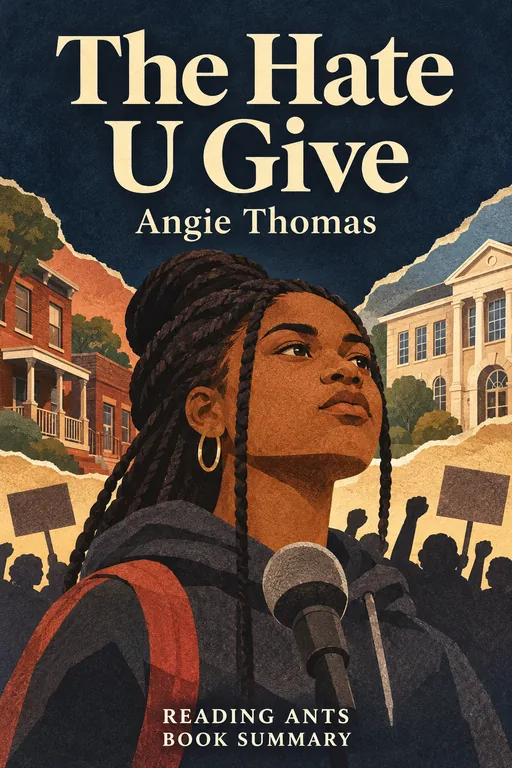
The Hate U Give
Angie Thomas
After witnessing a police officer kill her unarmed friend, a Black teenager finds her public voice while navigating grief, racism and the different expectations of her neighborhood and private school.
🎒 Young Adult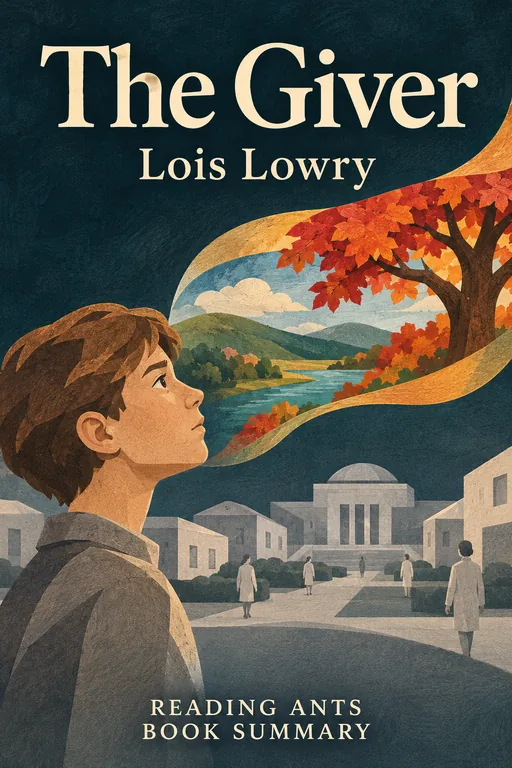
The Giver
Lois Lowry
In a perfectly controlled community with no pain, choice or color, a boy about to turn twelve is chosen to hold the memories of the past, and discovers the terrible price his people pay for their safety.
🎒 Young AdultWant something different?
Pick another topic and we will show you three books to start with.