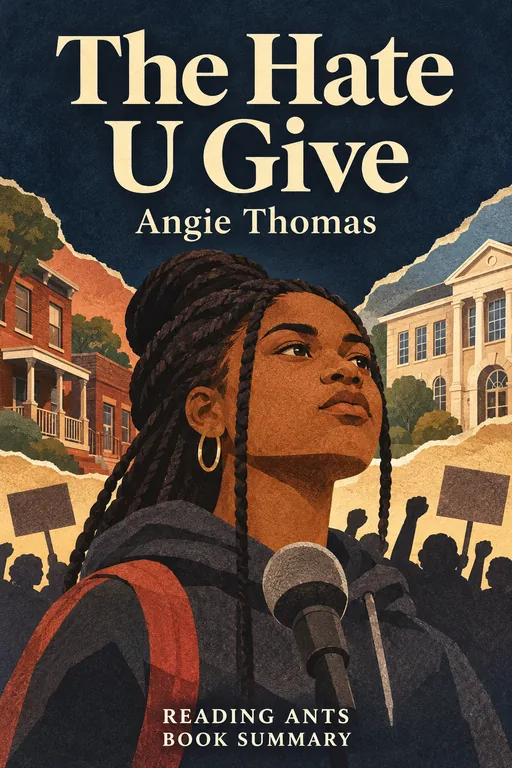
The Hate U Give
After witnessing a police officer kill her unarmed friend, a Black teenager finds her public voice while navigating grief, racism and the different expectations of her neighborhood and private school.
Overview
The Hate U Give follows sixteen-year-old Starr Carter after a white police officer shoots her childhood friend Khalil during a traffic stop. Starr lives in the predominantly Black neighborhood of Garden Heights but attends a mostly white private school, where she carefully changes her speech and behavior. As Khalil is stereotyped in the media and authorities decide whether to charge the officer, Starr must choose when and how to testify publicly. Her family also faces danger from local drug leader King. Angie Thomas connects police violence with housing, education, media framing and economic pressure while keeping family life central. Starr’s voice grows through collective support; the novel does not suggest that one brave speech alone can repair injustice.
Main Characters
- Starr Carter: the witness and narrator, skilled at moving between social worlds but tired of hiding parts of herself.
- Khalil Harris: Starr’s childhood friend, whose life is reduced to stereotypes after Officer One-Fifteen kills him.
- Maverick Carter: Starr’s father, a store owner and former gang member committed to Garden Heights.
- Lisa Carter: Starr’s mother, a nurse who balances family safety with respect for Maverick’s community ties.
- Seven Carter: Starr’s older half brother, protective of his sisters.
- Chris: Starr’s white boyfriend, who must listen beyond his own experience.
- Uncle Carlos: Starr’s police-officer uncle and another father figure.
- King: a violent gang leader who controlled Khalil and threatens witnesses.
Full Summary
The Traffic Stop
At a Garden Heights party, gunshots send Starr away with Khalil. A police officer identified as One-Fifteen stops their car. Khalil is unarmed. When he opens the driver’s door to check on Starr, the officer shoots him. Starr watches her friend die while the officer keeps his weapon trained on her.
The trauma recalls the earlier shooting death of their friend Natasha. Starr gives a statement but notices questions that focus on Khalil’s possible crimes rather than the officer’s choices. His body and history quickly become public evidence, while the officer receives privacy and institutional protection.
Two Versions of Starr
At Williamson Prep, Starr has not told friends that she knew Khalil. She avoids language or anger that classmates might label stereotypically Black. Her friend Hailey makes racist remarks and treats Starr’s objections as overreaction. Starr’s silence protects her temporarily but divides her from herself.
At home, Maverick explains Tupac Shakur’s idea that “THUG LIFE” describes how hatred given to children harms everyone. Starr learns Khalil sold drugs because King threatened his mother over debt. This context does not make Khalil perfect or irrelevant; it restores choices and pressures erased by the label “drug dealer.”
Testimony and Family
Starr speaks to investigators and later to a grand jury. She also gives a television interview with her identity hidden, describing Khalil as a person and challenging the focus on his alleged gang ties. Each act risks exposure and retaliation.
Family debates whether to leave Garden Heights. Lisa wants safety, while Maverick fears departure would mean abandoning the community. Their disagreement evolves rather than producing a simple winner. After King attacks their home, they arrange to move, but Maverick keeps his store and commitment to the neighborhood.
The Grand Jury Decision
Starr’s school relationships change as she speaks more openly. Chris learns she witnessed Khalil’s death and is hurt that she did not trust him, but begins to understand the code-switching and fear he had not seen. Hailey refuses to examine her racism, and Starr ends their friendship after escalating conflict.
The grand jury decides not to indict One-Fifteen. The announcement confirms Starr’s fear that formal testimony may be heard without producing accountability. Protests begin, alongside property destruction and aggressive policing. The novel distinguishes grief-driven protest from King’s effort to exploit disorder for his own power.
Starr Finds Her Voice
Starr joins activist April Ofrah, climbs onto a patrol car and addresses the crowd through a megaphone. Police use tear gas, and Starr throws a canister back. Her speech makes her identity as the witness public. She no longer lets fear or school respectability determine when Khalil can be named.
Voice does not mean acting alone. Her siblings, Chris, friends and community members stay with her amid danger. Starr’s growth consists partly in accepting that different relationships can coexist without requiring separate versions of herself.
The Store Fire
During the unrest, Starr and others shelter in Maverick’s store. King sets it on fire, trapping them, but Maverick and neighbors rescue them. The attack turns King’s private intimidation into an act the community is willing to report. DeVante, a young gang member the Carters have protected, helps expose him.
Neighbors identify King to police, and he is arrested. The store is damaged but can be rebuilt. This resolution offers accountability for one local source of violence while leaving the officer uncharged and broader injustice intact.
A Continuing Promise
The Carter family moves to a safer neighborhood, but Maverick rebuilds the Garden Heights store. Seven makes plans for college, and Starr’s family relationships remain a source of humor and argument rather than becoming symbols only.
Starr promises to continue speaking for Khalil and for other Black people killed by police. Her closing determination is not a claim that protest guarantees quick justice. It is a refusal of erasure. Khalil’s life, her witness and the community’s needs will remain part of what she says and does.
Why It Matters
The novel centers a young Black witness whose credibility is constantly tested by police procedure, media narratives, school expectations and her own trauma. By showing Starr in several communities, it explains code-switching as a response to unequal risk rather than dishonesty. Her eventual public voice matters because readers understand the labor and danger behind it.
Thomas also resists isolating a police shooting from other systems. Khalil’s economic vulnerability, King’s coercion, school resources and neighborhood disinvestment shape the story without making them excuses for One-Fifteen. The Carter family offers a rich counterimage to stereotypes: loving, politically varied, funny and imperfect. Community survival is shown as collective work, not as rescue by an outsider.
Key Takeaways
- A victim’s imperfections do not justify killing. Scrutiny of Khalil’s life diverts attention from the officer’s decision to shoot.
- Code-switching responds to power. Starr changes behavior because institutions punish the same actions differently across race and class.
- Speaking carries unequal risk. Public testimony can invite retaliation even when official systems produce no accountability.
- Community and safety need not be opposites. Moving home and investing in Garden Heights can be parts of one family strategy.
- Voice grows through support. Starr’s courage depends on people who listen, protect and act beside her.
What We Can Learn
When evaluating accounts of violence, ask whose history is being investigated and whose choices are treated as unquestionable. A person’s alleged wrongdoing elsewhere does not answer whether force was justified in the moment. Responsible media use requires separating verified evidence from stereotypes and anonymous framing.
Allies like Chris need to listen without demanding immediate trust or centering their hurt at not knowing. In schools and workplaces, inclusion requires changing the penalties that make people hide language, anger or identity, not merely inviting authenticity. The novel also models sustained civic action: testimony, organizing, legal attention, business investment and mutual aid continue even when one decision is unjust.
Criticism and Counterpoints
Some antagonists, particularly Hailey and King, can appear designed to embody specific social harms more than full complexity. The many issues and dramatic climax make the plot feel instructive at times. Readers should not treat one fictional family as representative of every Black experience or every police shooting.
The relatively quick arrest of King contrasts with the lack of accountability for One-Fifteen and may simplify how dangerous local power operates. The novel is a starting point for discussion, not a substitute for legal records, history, journalism or nonfiction by affected communities.
Who Should Read It
This novel suits readers from about thirteen upward interested in family, friendship, racism and civic voice. It includes a police shooting, trauma, domestic threats, gang violence, fire and racist language. It is especially useful for discussions when paired with careful listening and factual context.
Want the whole book?
A summary is a taste, not the meal. Here is where to find the full book.
You reached the end 🎉
Nicely done. Mark this one as read, and we will suggest what to read next.
Read this next
The Outsiders
S. E. Hinton
After a deadly clash between rival social groups, teenager Ponyboy Curtis learns that loyalty can sustain people without making violence noble or erasing their shared humanity.
🎒 Young Adult
To Kill a Mockingbird
Harper Lee
In a small Alabama town in the 1930s, young Scout Finch watches her father, a lawyer, defend a Black man falsely accused of a crime, and learns hard lessons about prejudice, courage and seeing the world through other people's eyes.
📜 Classics
Between the World and Me
Ta-Nehisi Coates
In a letter to his teenage son, Ta-Nehisi Coates describes what it means to live in a Black body in America, and reflects on fear, history and the struggle to be free.
⚖️ Politics & Society
The Giver
Lois Lowry
In a perfectly controlled community with no pain, choice or color, a boy about to turn twelve is chosen to hold the memories of the past, and discovers the terrible price his people pay for their safety.
🎒 Young Adult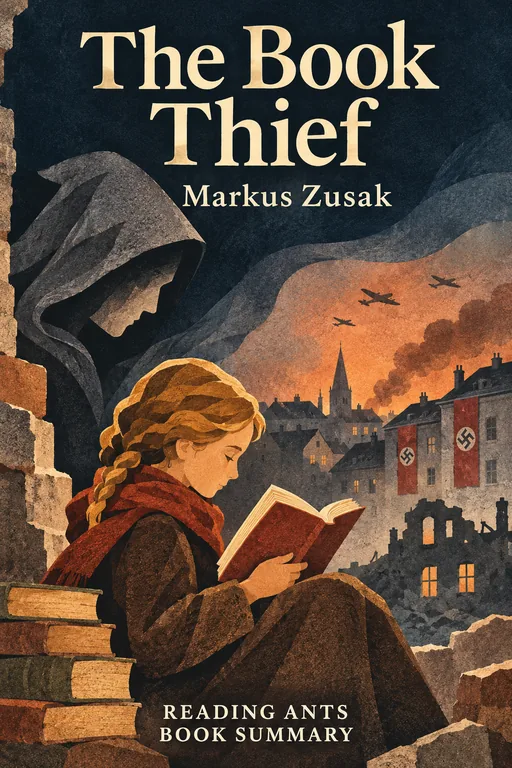
The Book Thief
Markus Zusak
Death narrates how a foster child in Nazi Germany steals books, learns the power of words and forms loving bonds that war eventually destroys.
🎒 Young Adult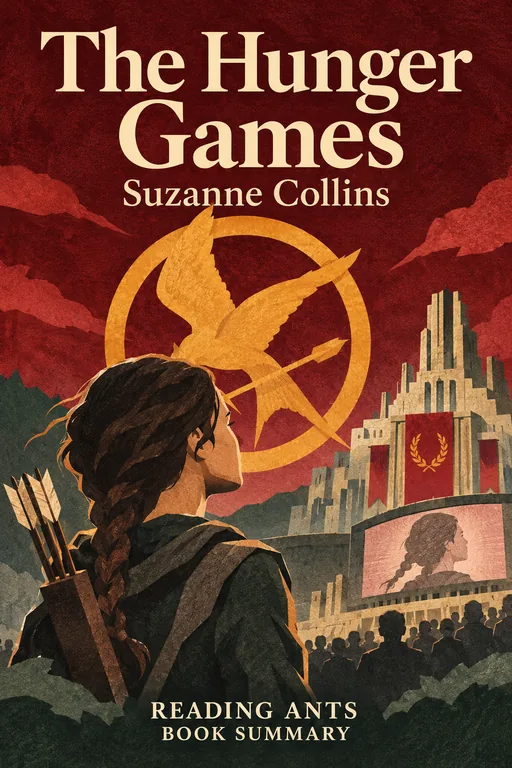
The Hunger Games
Suzanne Collins
A teenager volunteers for a televised fight to the death and learns to turn the regime's own spectacle into a fragile means of survival and defiance.
🎒 Young AdultWant something different?
Pick another topic and we will show you three books to start with.