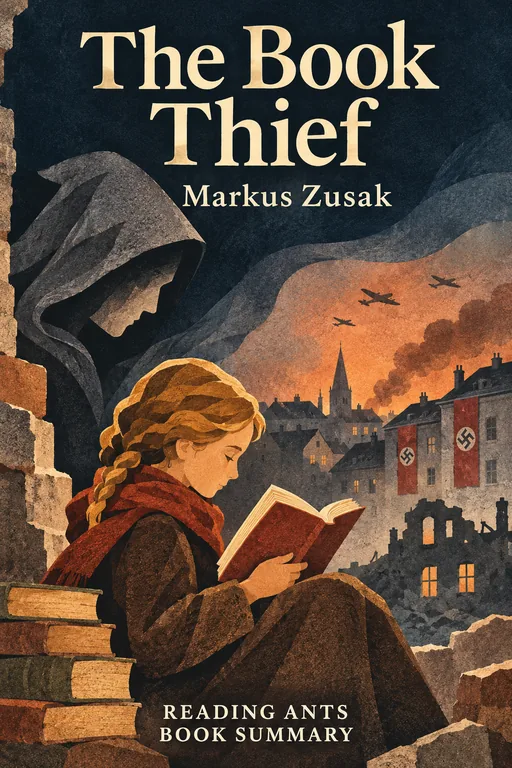
The Book Thief
Death narrates how a foster child in Nazi Germany steals books, learns the power of words and forms loving bonds that war eventually destroys.
Overview
The Book Thief follows Liesel Meminger in the fictional town of Molching during World War II. Its narrator is Death, who is exhausted and fascinated by human beings. After Liesel’s brother dies and her mother gives her to foster parents Hans and Rosa Hubermann, she learns to read and begins stealing books. The Hubermanns later hide Max Vandenburg, a Jewish man, in their basement. Liesel’s friendship with Max, her bond with neighbor Rudy Steiner and Hans’s quiet resistance unfold under Nazi rule and Allied bombing. The novel celebrates language while warning that words can create both solidarity and mass hatred. Its fictional story should accompany, not replace, survivor testimony and historical study of the Holocaust.
Main Characters
- Liesel Meminger: a foster child who becomes a reader, writer and thief of books.
- Death: the observant narrator who collects souls and repeatedly reveals future losses.
- Hans Hubermann: Liesel’s gentle foster father, an accordion player and house painter.
- Rosa Hubermann: Liesel’s abrasive but deeply caring foster mother.
- Rudy Steiner: Liesel’s loyal neighbor, friend and eventual love.
- Max Vandenburg: a Jewish fist-fighter hidden by the Hubermanns.
- Ilsa Hermann: the mayor’s grieving wife, whose library becomes important to Liesel.
Full Summary
The Gravedigger’s Handbook
On the journey to a foster home, Liesel’s younger brother dies. At his burial she steals The Gravedigger’s Handbook, although she cannot yet read it. Her communist-associated father is absent, and her mother soon leaves her with Hans and Rosa Hubermann on Himmel Street.
Liesel has nightmares, but Hans comforts her and gradually teaches her to read in the basement. Rosa’s insults mask practical devotion. At school Liesel is humiliated for her poor reading and fights classmates who mock her. Words become connected with shame, safety and growing control over her own story.
Rudy and the Fire
Liesel befriends Rudy, a fast runner who once covered himself in charcoal to imitate Jesse Owens. He repeatedly asks her for a kiss, but their relationship grows through races, thefts and shared danger. Rudy’s admiration for a Black athlete also exposes the absurdity and danger of Nazi racial doctrine.
At a Nazi book burning, Liesel recognizes that Hitler’s persecution helped destroy her original family. After the crowd leaves, she steals a book that survived the flames. Ilsa Hermann sees her. Rather than report Liesel, Ilsa later welcomes her into a private library, where the abundance of books fills Liesel with wonder.
Max in the Basement
Hans once promised to help the family of Erik Vandenburg, the Jewish friend who saved his life during World War I. Erik’s son Max arrives seeking refuge. The Hubermanns hide him in the basement, placing everyone at risk. Liesel is initially wary, but she and Max bond through nightmares, words and imagined fights against Hitler.
Max paints over pages of Mein Kampf to make illustrated stories for Liesel. The transformed pages embody the novel’s central conflict: hateful language can be covered and repurposed, though not simply erased. Illness nearly kills Max, and Liesel brings him small objects and weather reports from the outside world.
Words in the Shelter
Hans gives bread to an elderly Jewish prisoner being marched through town and is whipped beside him. Fearing a search, Max leaves the basement. Hans is drafted into an air-raid unit, while Rudy’s father is conscripted after refusing to surrender Rudy to a Nazi training school. Ordinary decency brings danger because the regime demands active conformity.
During air raids, Liesel reads aloud in a shelter and calms frightened neighbors. She also begins entering Ilsa’s library through a window after Rosa loses the mayor’s laundry business. Ilsa understands and eventually leaves a dictionary and thesaurus by the window for her. Theft evolves into a relationship in which grief, anger and permission overlap.
The Marches
Jewish prisoners are repeatedly marched through Molching toward Dachau. Liesel watches for Max. When she finally sees him among them, she enters the procession and embraces him. Guards whip them apart. Their public recognition of each other briefly rejects the system that reduces prisoners to an anonymous mass.
Rudy later places bread along the road for prisoners. His courage has grown beyond games, but the novel does not pretend such acts stop the machinery of persecution. Death gathers countless souls across Europe and describes carrying them with care, contrasting individual attention with industrialized murder.
Himmel Street
Ilsa gives Liesel a blank black notebook, and Liesel begins writing her own story in the basement. One night an air raid strikes Himmel Street without warning. Because she is below ground writing, Liesel survives. Hans, Rosa, Rudy and the neighbors are killed. She finds Rudy and finally kisses him after death, when he can no longer receive the answer he wanted.
Death retrieves Liesel’s abandoned manuscript, The Book Thief. The book that records her life also preserves the people the bombing erased. Liesel is taken in by the Hermanns. After the war, Max returns and reunites with her, both carrying losses the narrative cannot repair.
Death Returns the Book
Liesel later emigrates to Australia, has a family and lives to old age. When Death finally comes for her, he shows her the manuscript saved from the rubble. She is astonished that her words survived and asks about the people she loved.
Death cannot give a simple verdict on humanity. Human beings can create beauty and cruelty with the same capacity for language and attachment. The narrator’s final response is that humans haunt him. Liesel’s story does not defeat death, but it makes particular lives visible against statistics and forgetting.
Why It Matters
The novel uses an unconventional narrator and playful typography to approach grief, literacy and moral choice under dictatorship. Death’s spoilers shift suspense away from whether characters die toward how they live before known loss. Liesel’s reading develops from private survival into a communal act, while her writing gives form to memories otherwise buried with Himmel Street.
Its emphasis on words is deliberately double-edged. Hitler’s power depends partly on propaganda, labels and repeated stories about national purity. Liesel cannot answer that machinery merely by loving books; language has no automatic virtue. Its value depends on how people use it: to dehumanize, to comfort, to witness or to imagine another person’s full life.
Key Takeaways
- Words are tools, not inherently good. The same medium can spread hatred, preserve memory or comfort people in danger.
- Small resistance matters without becoming sufficient. Bread and shelter affirm humanity but do not dismantle the regime.
- Care often appears in imperfect language. Rosa’s harsh speech coexists with fierce protection and grief.
- Foreknown death can deepen attention. Death’s spoilers ask readers to value ordinary moments rather than wait for surprise.
- Writing preserves particular lives. Liesel’s manuscript carries names and relationships beyond the destruction of her street.
What We Can Learn
Literacy includes asking who created a message, whose interests it serves and whom its labels exclude. Reading widely is not enough if we never examine propaganda or act when people are dehumanized. Hans’s choices show both moral courage and the danger that resistance can bring to others; responsible action requires solidarity, planning and awareness of consequences.
When discussing historical atrocity, individual stories can build empathy, but they must connect to verified history and the voices of those targeted. Liesel’s losses deserve compassion without displacing Jewish victims from the center of Holocaust education. In personal grief, reading and writing may help preserve connection, though neither removes pain. Shared stories can make isolation more bearable.
Criticism and Counterpoints
The stylized narration, announced deaths and emotional imagery can feel manipulative. Some German civilians receive fuller fictional attention than Jewish victims, and Max sometimes functions mainly as a catalyst for Liesel’s growth. The novel should not be used as a sole introduction to the Holocaust.
Its fictional Molching setting and magical elements in Death’s voice may blur historical understanding for younger readers. Teachers and families should pair it with survivor accounts, documentation and explanation of Nazi persecution, war and genocide.
Who Should Read It
This suits mature readers from about thirteen upward who enjoy historical fiction, unusual narration and stories about language. It contains antisemitism, persecution, bombing, abuse and many deaths. Readers studying the Holocaust should pair it with accurate nonfiction and Jewish survivor testimony.
Want the whole book?
A summary is a taste, not the meal. Here is where to find the full book.
You reached the end 🎉
Nicely done. Mark this one as read, and we will suggest what to read next.
Read this next
The Diary of a Young Girl
Anne Frank
A Jewish teenage girl hiding from the Nazis in a secret apartment in Amsterdam records two years of fear, family quarrels, first love and big dreams in a diary that became one of the most famous books in the world.
👤 Real Lives
Night
Elie Wiesel
Elie Wiesel tells, in short and searing pages, how as a teenager he was taken from his hometown of Sighet to Auschwitz and Buchenwald, lost his family and watched his faith and childhood break apart.
👤 Real Lives
All the Light We Cannot See
Anthony Doerr
A blind French girl and a gifted German boy, on opposite sides of the Second World War, are drawn toward each other by a radio broadcast, and their paths cross in the besieged city of Saint-Malo.
✨ Modern Fiction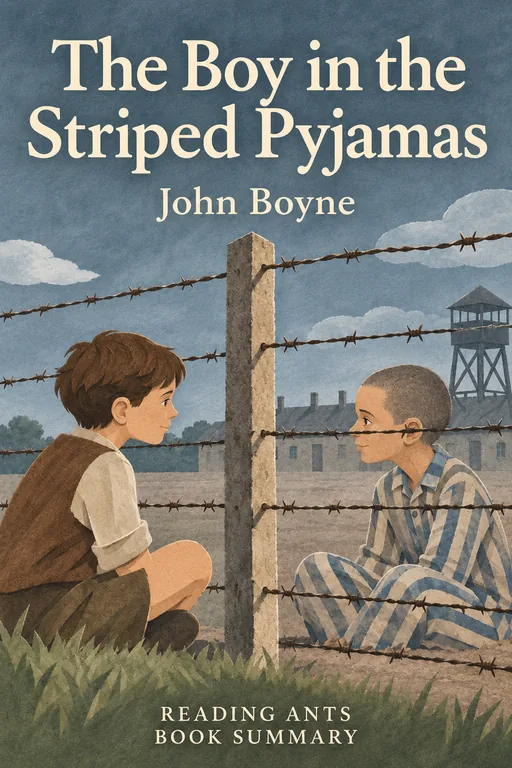
The Boy in the Striped Pyjamas
John Boyne
The nine-year-old son of a Nazi commandant befriends a Jewish boy on the other side of a camp fence, without understanding where he is, and their innocent friendship ends in tragedy.
🧸 Children's Books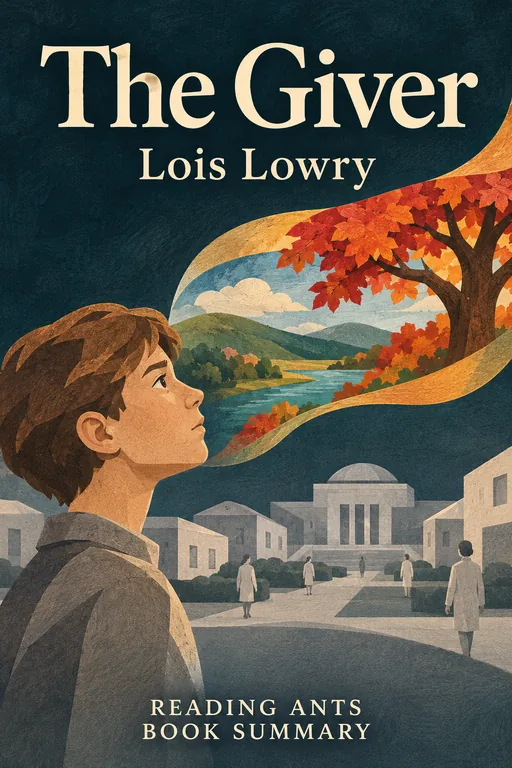
The Giver
Lois Lowry
In a perfectly controlled community with no pain, choice or color, a boy about to turn twelve is chosen to hold the memories of the past, and discovers the terrible price his people pay for their safety.
🎒 Young Adult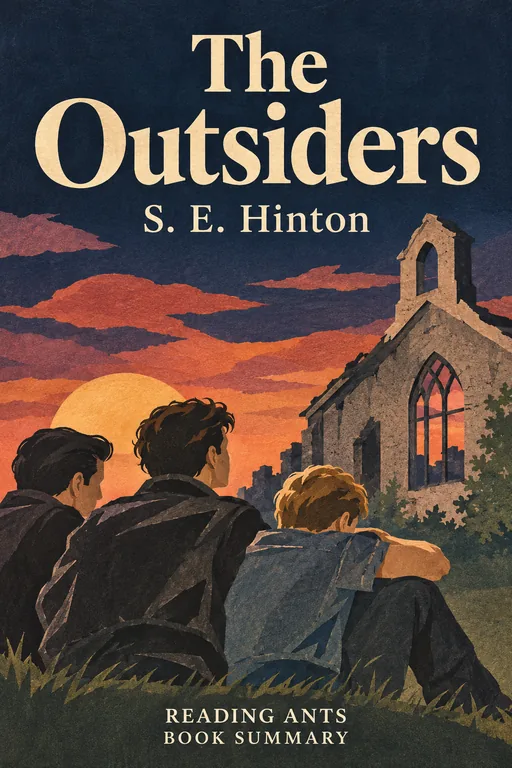
The Outsiders
S. E. Hinton
After a deadly clash between rival social groups, teenager Ponyboy Curtis learns that loyalty can sustain people without making violence noble or erasing their shared humanity.
🎒 Young AdultWant something different?
Pick another topic and we will show you three books to start with.