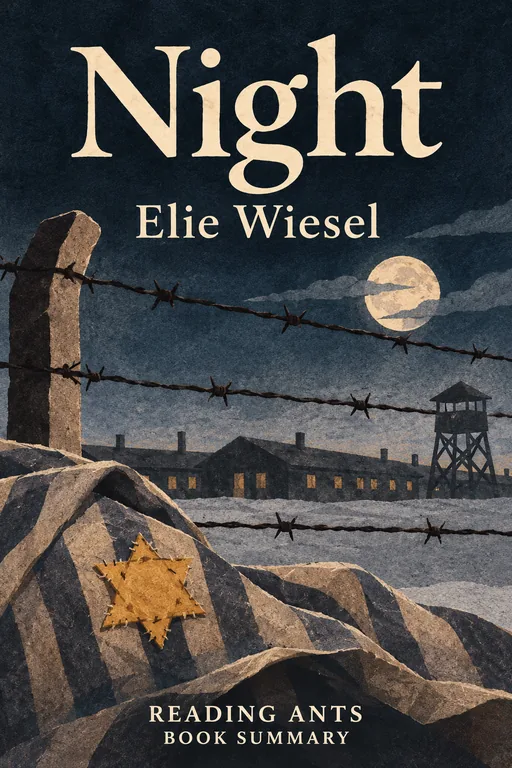
Night
Original title: Un di velt hot geshvign
Elie Wiesel tells, in short and searing pages, how as a teenager he was taken from his hometown of Sighet to Auschwitz and Buchenwald, lost his family and watched his faith and childhood break apart.
Overview
Night is a short memoir by Elie Wiesel, a Jewish writer born in 1928 in Sighet, a town in Transylvania, then part of Romania and later part of Hungary. He survived the Nazi concentration camps and became a writer and speaker who spent his life urging people never to forget. The book was first published in Yiddish in 1956 in a longer version, and later in French, then in English in 1960. It is only about a hundred pages long, and its plain, restrained style has made it one of the most widely read books about the Holocaust. It is told in the first person, from the point of view of the boy the author once was.
Full Summary
1. Sighet and the warnings
Eliezer lives in Sighet, studying religious texts and longing to learn the mystical tradition of Kabbalah. He asks Moishe the Beadle to teach him. Moishe is deported, then returns to the town with a terrible story: the Jews who were taken away were killed in a forest by the Nazis. People refuse to believe him. In 1944, the Germans occupy Hungary, and restrictions begin: Jews must wear the yellow star, are confined to ghettos, and then are told they will be moved. Even then, many of the town’s people cling to hope that it will pass.
2. The cattle cars and Auschwitz
The Jews of Sighet are crammed into cattle cars, with little air, water or space. During the journey, Mrs. Schächter loses her mind and screams about fire, and the others, in fear, try to silence her. When the train arrives at Auschwitz-Birkenau, the family is split: women and children are sent one way and men the other. Eliezer never sees his mother or little sister again. A prisoner whispers to him to say that he is eighteen, so as to be chosen for work and not for death. Eliezer sees flames and smoke and witnesses horrifying scenes, which begin to shake his faith.
3. Life in the camp
Eliezer and his father are held in Auschwitz and then in nearby Buna, where they do forced labor. Eliezer is given a number, tattooed on his arm. The prisoners are starved, beaten and humiliated, and many die. He witnesses the public hanging of a young boy, which is one of the most famous scenes in the book; as the child dies slowly, someone asks where God is, and Eliezer feels a voice inside answering that God is on the gallows. He also describes selections in which weak prisoners are chosen for death, and how he and his father cling to each other to survive.
4. The march and Buchenwald
As the Soviet army draws closer in early 1945, the Germans force the prisoners to leave the camp in a death march through snow and cold. Many collapse and are shot or die of exhaustion. The survivors are crowded into cattle cars again and taken to Buchenwald. During the trip, many die and are thrown from the train. Eliezer’s father, now very weak and sick with dysentery, is kept alive by Eliezer’s care, but the strain on the son is huge. He describes the worst of human behavior, as some prisoners fight and even kill each other for scraps of food.
5. The death of his father
At Buchenwald, Eliezer’s father, Shlomo, is beaten by an official and dies in January 1945. Eliezer, exhausted and numb, feels guilt as well as a terrible relief at being freed from the burden of protecting him, and then is horrified at himself for feeling that way. He is sent to the barracks. This moment is one of the book’s most painful: surviving costs him a part of himself, and he feels that he is no longer a child with faith but a person who has seen too much.
6. Liberation and the reflection in the mirror
In April 1945, as the Americans approach, a resistance organization among the prisoners takes control of the camp, and American troops then liberate Buchenwald. Eliezer, close to death, falls ill with food poisoning and spends days in the hospital. When he finally looks into a mirror, the book ends with a haunting image: a corpse gazes back at him. The final lines are brief and unadorned, and they leave readers with the sense that the young man who walked into the camps did not survive, even though his body did.
Why It Matters
Night is one of the most important memoirs of the Holocaust. It is taught in schools in many countries and has been read by millions. Wiesel received the Nobel Peace Prize in 1986 for his work as a “messenger to mankind,” and the book established him as a leading voice for memory and human rights.
Its short length and plain style make it easy to read, yet it conveys the scale of the loss by focusing on one boy and his father. As the number of survivors who can tell their stories decreases, books like this carry a special responsibility to preserve what happened and to warn against hatred.
Key Takeaways
- Bear witness. Telling what happened is a way of honoring victims.
- Disbelief can be deadly. Many people did not believe the warnings.
- Faith can be shaken. The book shows a young man’s crisis of belief.
- Survival has a cost. Even survivors carry loss and guilt.
- Indifference enables evil. Silence helps cruelty continue.
What We Can Learn
The book teaches us to listen to warnings and to take human suffering seriously, even when it is hard to believe. The people of Sighet could not imagine what was coming, and the lesson is to stay alert to hatred when it begins.
It also shows how humanity can survive in the smallest acts, such as a father and son keeping each other alive, and how it can be lost when fear takes over. Reflecting on that can help us think about the kind of person we want to be under pressure.
Finally, it is a call to remember and to speak. Wiesel believed that silence helps the oppressor, and that anyone who learns of injustice has a duty to say so.
Criticism and Counterpoints
Some readers have discussed how far the book is a strict record and how far it is shaped by memory and by literary form. Wiesel’s early Yiddish version was longer and more bitter, and the later versions were edited and shortened, leading some scholars to point out differences between editions. A few details, such as some dates, have been questioned by historians, though no serious scholar doubts the central truth of the book.
Other readers have criticized its very short length for not covering the full history of the Holocaust, or noted that the book’s religious questions may not resonate with everyone. Wiesel himself said that no book could fully capture the experience. It is still respected as a testimony.
Who Should Read It
This book suits teenagers and adults and is often assigned in schools. It is short, but the content is deeply disturbing and may be best read with a parent or teacher nearby to talk about it. It is a good first book for understanding the Holocaust through a personal story.
Want the whole book?
A summary is a taste, not the meal. Here is where to find the full book.
You reached the end 🎉
Nicely done. Mark this one as read, and we will suggest what to read next.
Read this next
The Diary of a Young Girl
Anne Frank
A Jewish teenage girl hiding from the Nazis in a secret apartment in Amsterdam records two years of fear, family quarrels, first love and big dreams in a diary that became one of the most famous books in the world.
👤 Real Lives
If This Is a Man
Primo Levi
Primo Levi, an Italian Jewish chemist, describes with clarity and restraint his eleven months as a prisoner in the Auschwitz camp, and asks what it means to remain human when everything is taken from you.
👤 Real Lives
Maus
Art Spiegelman
Art Spiegelman draws his father's story of surviving Auschwitz, with Jews as mice and Nazis as cats, and also shows the difficult relationship between a son and a father marked by the past.
👤 Real Lives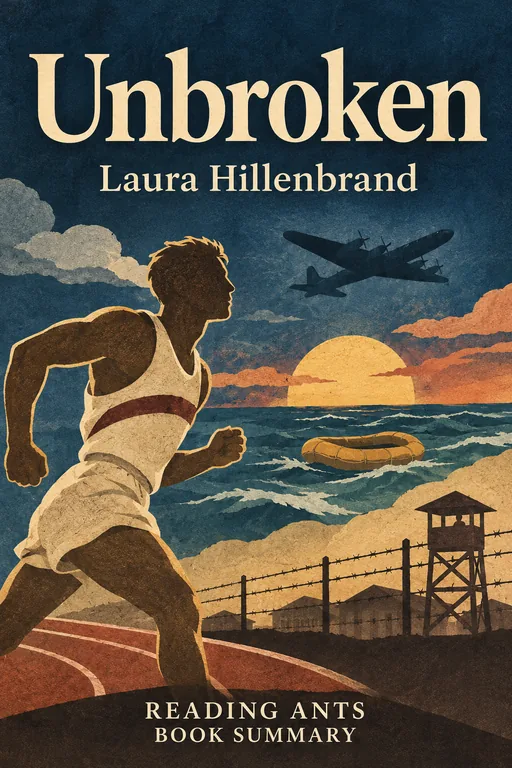
Unbroken
Laura Hillenbrand
This is the true story of Louis Zamperini, an Olympic runner who survived a plane crash, weeks adrift on the Pacific and years in brutal Japanese prison camps during World War II, then fought to rebuild his life.
🏛️ History
Man's Search for Meaning
Viktor E. Frankl
A psychiatrist who survived the Nazi concentration camps explains that even in the worst suffering, people can choose their attitude, and that finding a reason to live is what gives us the strength to endure.
👤 Real Lives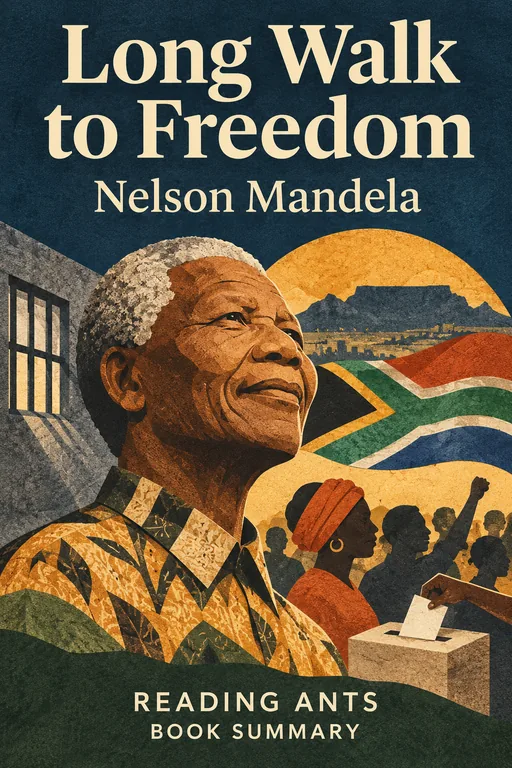
Long Walk to Freedom
Nelson Mandela
Nelson Mandela tells his own story, from a village childhood to twenty-seven years in prison to becoming South Africa's first democratically elected president, and shows how patience, courage and forgiveness helped end apartheid.
👤 Real LivesWant something different?
Pick another topic and we will show you three books to start with.