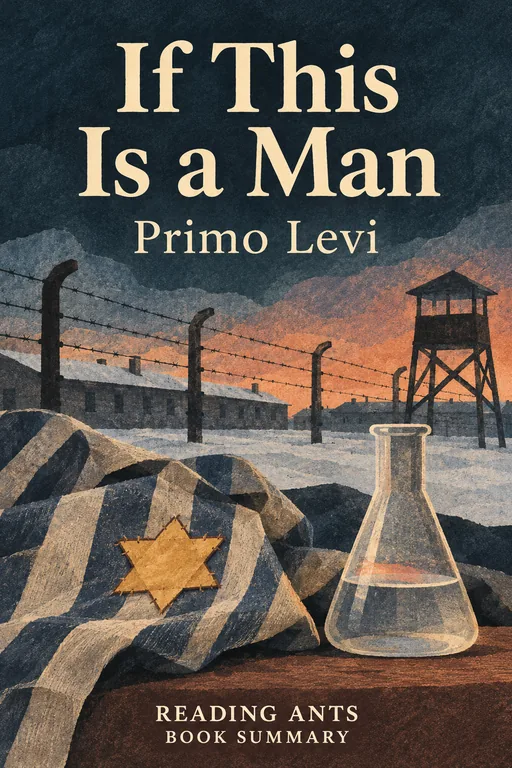
If This Is a Man
Original title: Se questo è un uomo
Primo Levi, an Italian Jewish chemist, describes with clarity and restraint his eleven months as a prisoner in the Auschwitz camp, and asks what it means to remain human when everything is taken from you.
Overview
If This Is a Man, also published under the title Survival in Auschwitz, is a memoir by Primo Levi, first published in Italy in 1947. Levi was a young chemist from Turin, who was captured in December 1943 while with a small partisan group in the mountains, and then sent, as a Jew, to the Nazi camp at Auschwitz in early 1944. He survived and wrote the book soon after his return. The style is calm and exact, like a scientist’s report. He wrote it, he said, to bear witness, and to explain to the world what such a camp did to people.
Full Summary
Arrest and Journey
Levi is captured in the mountains of northern Italy, where he had joined a small group of partisans, and, because he admits to being Jewish, is sent to a holding camp near Modena. In February 1944, about six hundred and fifty Jews are loaded into freight wagons for a journey of five days with little food or water. When the train arrives at night at Auschwitz, the doors open on shouting guards, and the families are split up. Most of the group, including women, children and the old, are taken away at once and killed. Only a few men and women are selected for labor.
Becoming a Number
The men who are kept are stripped, shaved, tattooed with a number and given striped clothes and wooden shoes. Levi is put in a barrack in the part of the complex called Monowitz, where prisoners work for a chemical company. When he asks a guard why something is done, he is told that in this place there is no why. Levi writes that in a few days they lose their names, their clothes and their pasts, and are reduced to what he calls hollow men, whose only thought is for bread and for avoiding blows.
The Daily Struggle
He describes the routine of the camp: the call to rise before dawn, the roll call in the freezing air, the long hours of heavy labor and the soup that is too thin. Hunger and cold rule everything, and prisoners learn to trade, steal and bargain for a spoon or a pair of shoes. Levi describes the “drowned,” who are destroyed by the camp, and the “saved,” who survive, often through luck or compromise. He argues that survival depended less on merit than on privilege, compromise and sheer luck, and he asks the reader to think carefully before judging what starving men did to stay alive.
Friends and Small Kindnesses
Even in this world, Levi finds moments of humanity. He forms a friendship with Alberto, a young Italian who has a gift for survival without losing his decency. An Italian civilian worker named Lorenzo brings him extra bread and soup for months, an act of ordinary kindness that, Levi says, reminded him that a good world still existed. In one of the best-known passages, Levi tries to recite part of Dante’s Inferno to Jean, a young Alsatian prisoner who wants to learn Italian, and for a moment he is back in a world of poetry.
Selections and the Chemist’s Fortune
Levi witnesses the “selections,” when prisoners who are too weak are chosen for the gas chamber, and the choice is so quick that it is almost a matter of chance. In the summer, because he is a chemist, he is called for an oral examination in German before a German chemist, though nothing comes of it for months. As a harsh winter weakens the prisoners further, he and two other men are chosen to work in a laboratory, which brings him indoor work and a slightly better chance of survival. He knows that luck and chance determine who lives. He also describes the hanging of a man who had taken part in an uprising, and the shame of the watching prisoners, who are too broken to do anything.
Liberation
In January 1945, as the Soviet army approaches, the Germans abandon the camp, forcing most prisoners to march away. Levi, who is ill with scarlet fever, is left behind in the infirmary with a few others. In the days that follow, the sick fight to stay alive with little food and in the freezing cold, and many die. Levi works with two companions, Charles and Arthur, to survive. Soviet soldiers arrive at the end of the month. The book ends there. His long journey home is told in a later book, The Truce.
Why It Matters
If This Is a Man is regarded as one of the most important works of Holocaust literature. Levi’s restraint and precision give it a moral power, and his analysis of how the camp stripped men of dignity, and how some held on, has been widely studied. The book was first published in a small edition, and only became widely known in later decades. It has been translated into many languages, and it is studied in schools and universities. It remains essential reading for anyone who wants to understand the human meaning of the Holocaust, and to be a witness for those who did not survive. It was followed by other works by Levi, including The Truce and The Drowned and the Saved.
Key Takeaways
- Dehumanization was deliberate. The camp system aimed to strip prisoners of identity.
- Survival involved luck. Chance and small circumstances often decided who lived.
- Kindness persisted. Acts of decency helped people to hold on.
- No easy judgment. Levi warns against condemning those who did what was needed to survive.
- Witness matters. Telling the story keeps the memory alive.
What We Can Learn
The book teaches us to value human dignity, and to notice how it is attacked when people are treated as numbers. It encourages us to remember, to listen to survivors and to teach others. Think about the small acts of kindness that can matter in a bleak setting, and how you might offer them. It also warns us to be wary of hatred against groups of people, since such hatred can grow in steps. Reading this book can be hard, and it is a good idea to discuss it with a teacher or a trusted adult.
Criticism and Counterpoints
Because the book is a memoir, there are few critics of its central account, which historians confirm. Some readers have noted that Levi’s tone is so calm that it can seem detached, but he said that this was intentional, to be an effective witness. A few scholars have pointed out small differences between the memoir and other records, or that Levi himself did not claim to know everything about the camp, only what he saw. Others have debated his later reflections on guilt and the “gray zone” of compromise. The book’s reputation as an honest and humane account remains high.
Who Should Read It
This book is for mature readers who want a first-hand account of life and death in Auschwitz. It is short, clear and deeply moving, but it contains scenes of suffering and cruelty. Younger readers should read it with guidance, and anyone who is struggling should take care while reading it.
Want the whole book?
A summary is a taste, not the meal. Here is where to find the full book.
You reached the end 🎉
Nicely done. Mark this one as read, and we will suggest what to read next.
Read this next
Night
Elie Wiesel
Elie Wiesel tells, in short and searing pages, how as a teenager he was taken from his hometown of Sighet to Auschwitz and Buchenwald, lost his family and watched his faith and childhood break apart.
👤 Real Lives
The Diary of a Young Girl
Anne Frank
A Jewish teenage girl hiding from the Nazis in a secret apartment in Amsterdam records two years of fear, family quarrels, first love and big dreams in a diary that became one of the most famous books in the world.
👤 Real Lives
Man's Search for Meaning
Viktor E. Frankl
A psychiatrist who survived the Nazi concentration camps explains that even in the worst suffering, people can choose their attitude, and that finding a reason to live is what gives us the strength to endure.
👤 Real Lives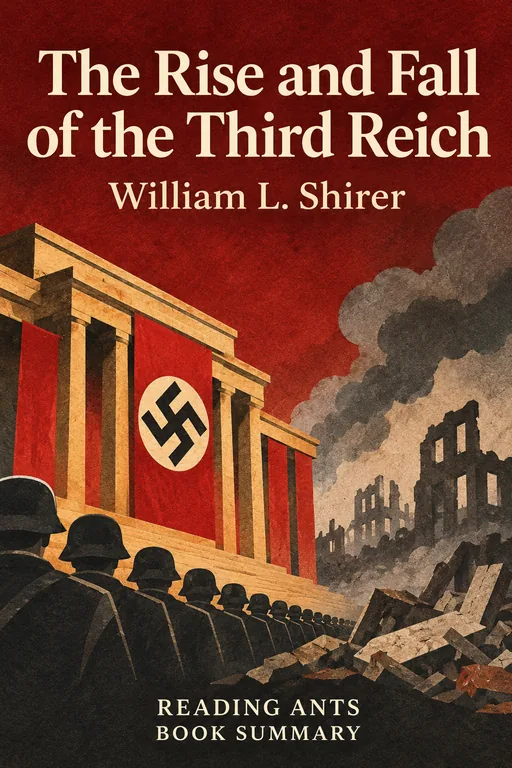
The Rise and Fall of the Third Reich
William L. Shirer
Journalist William Shirer tells the story of how Adolf Hitler came to power in Germany, built a dictatorship, started the Second World War and carried out genocide, until the regime's defeat in 1945.
🏛️ History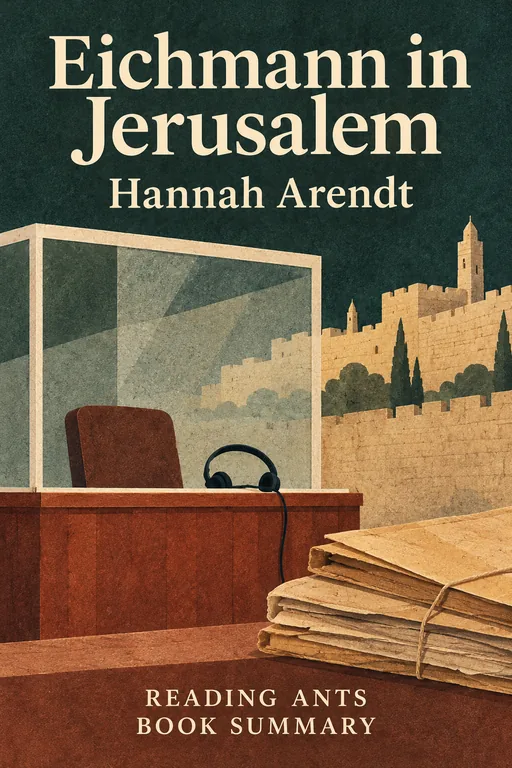
Eichmann in Jerusalem
Hannah Arendt
Hannah Arendt reports on the trial of the Nazi official Adolf Eichmann in Jerusalem and argues that he was not a monster but a thoughtless bureaucrat, which led her to the idea of the banality of evil.
🏛️ History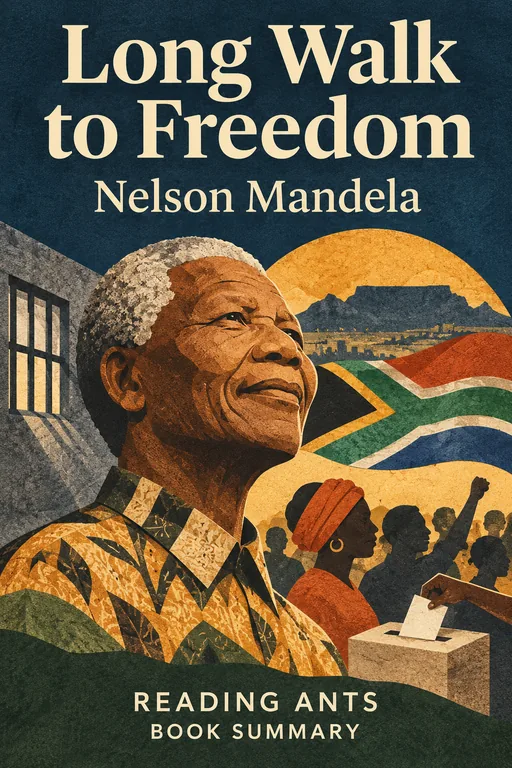
Long Walk to Freedom
Nelson Mandela
Nelson Mandela tells his own story, from a village childhood to twenty-seven years in prison to becoming South Africa's first democratically elected president, and shows how patience, courage and forgiveness helped end apartheid.
👤 Real LivesWant something different?
Pick another topic and we will show you three books to start with.