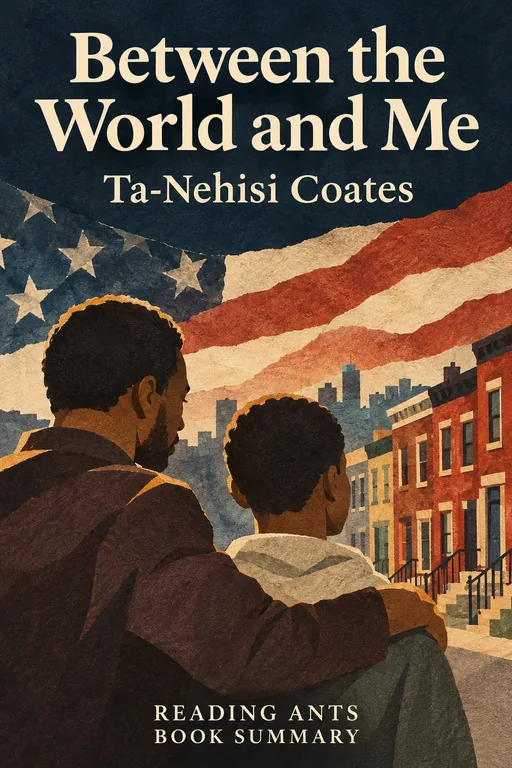
Between the World and Me
In a letter to his teenage son, Ta-Nehisi Coates describes what it means to live in a Black body in America, and reflects on fear, history and the struggle to be free.
Overview
Between the World and Me is a short book by the American writer and journalist Ta-Nehisi Coates, published in 2015. It is structured as a letter from Coates to his fifteen-year-old son, Samori, written after the 2014 grand jury decision in Ferguson, Missouri, not to charge the police officer who killed Michael Brown, which left Samori in tears. Coates draws on his childhood in Baltimore, his years at Howard University and his travels to Paris and elsewhere, to explain what he has learned about race and the way America treats Black people. He was inspired by James Baldwin’s The Fire Next Time. The book won the National Book Award for Nonfiction.
Full Summary
1. The Dream and the body
The idea: Coates begins by saying that he wants to tell his son what he has learned about the world. He argues that racism in America is not just a matter of attitudes but of the body: the physical vulnerability of Black people to violence, whether from the police or from the streets. He describes a nation built on the theft of labor and bodies, and says that many white Americans live inside what he calls the Dream, a comfortable story that hides the costs on which their lives rest.
In real life: A person who has never had to fear being hurt in public may not notice how much others plan their day around that risk, which is part of why two people can live in the same town and see very different worlds.
2. Fear in the streets of Baltimore
The idea: Coates recalls his childhood in West Baltimore in the 1980s, a place of both love and danger. He learned that fear shaped everything: how to walk, how to talk, how to read other boys. His father, who was strict and sometimes violent, tried to teach him discipline, because the street and the police could be worse. He describes school as another place where he felt controlled, and says he learned more from books and music than from classrooms.
In real life: Children who grow up in dangerous places often learn to read people’s moods quickly as a survival skill.
3. Howard University: “the Mecca”
The idea: Coates finds a new world at Howard University, a historically Black university in Washington, D.C., which he calls the Mecca. There he meets Black people from all over the world and from different backgrounds, discovers writers and thinkers, and begins to see Black life as many-sided and rich. He reads widely, asks questions and starts to understand his own history. He learns that the idea of “race” is a social creation but with real consequences.
In real life: Meeting a wide range of people from one’s own community can break stereotypes and create new possibilities.
4. The death of Prince Jones
The idea: One of the central stories is that of Prince Jones, a friend from Howard, a gentle, well-educated young man from a stable family. In 2000, Jones was shot and killed by a Prince George’s County, Maryland, police officer who was working undercover and had followed him in an unmarked car into Virginia. The officer was never criminally charged. For Coates, this showed that no amount of respectability could protect a Black person from being killed. He tells how he visited Jones’s mother, whose grief he cannot forget.
In real life: The case shows why many families worry about encounters with police, even when they have done everything right.
5. Paris and a different view
The idea: Coates describes visiting Paris, where he feels free for the first time of the weight of being watched. He sees that other worlds exist, that life does not have to be organized as it is in America, and that people everywhere have their own histories. At the same time, he does not romanticize it. The trip gives him a sense of the possibilities that his son might have, and of the importance of seeing beyond a single place.
In real life: Travel and exposure to other cultures can change what we think is normal or inevitable.
6. A message to his son
The idea: Coates ends by telling Samori that he cannot promise him safety or that the country will change. He tells him to struggle anyway, for the sake of struggle and dignity, and to resist the idea that the world’s cruelty is inevitable or deserved. He urges him not to hate individuals but to examine the system. He leaves him with the hope of a life lived with awareness, curiosity and love, in spite of fear.
In real life: A parent’s advice often combines worry for a child with hope that the child will do better.
Why It Matters
Between the World and Me was a major bestseller and brought national attention to questions of race, policing and history. It was praised by many critics, including the novelist Toni Morrison, who said it was essential reading. It was widely taught in schools and universities, and adapted for the stage at the Apollo Theater in 2018 and as an HBO television special in 2020.
The book has also contributed to ongoing discussions about reparations, since Coates’s essay “The Case for Reparations” is part of the same line of thought. It has drawn both admiration and debate, which shows how deeply it touches on hard issues.
Key Takeaways
- The body is at risk. Racism is physical as well as mental.
- The Dream hides costs. Comfortable stories ignore suffering.
- Education broadens vision. Howard changed the way he saw himself.
- Respectability does not guarantee safety. The story of Prince Jones shows this.
- Struggle matters. One should keep fighting even without a promise of victory.
What We Can Learn
The book invites us to listen to experiences we may not share. Coates’s honesty about fear can help readers understand why some people feel unsafe where others do not.
It also shows how history shapes the present. By linking slavery, segregation and current events, he asks us to see them as parts of one story rather than isolated episodes.
Finally, it models a way of speaking to the young: truthfully and lovingly, without false promises. That honesty may be one of the most valuable gifts a parent or mentor can offer.
Criticism and Counterpoints
Some critics argue that the book is too pessimistic, and that Coates leaves little room for hope or for the progress that has been made, or for religious faith and community strength. The philosopher Cornel West and others criticized its view of the possibility of change. Others say that the book focuses mostly on male experience and gives less attention to Black women.
Some commentators from the political right say it is unfair to the country or overstates police violence, while others feel the book’s tone is too personal and subjective to serve as an argument. Many readers, though, find its honesty and prose moving and thought-provoking.
Who Should Read It
This book suits older teenagers and adults. It is short but emotionally heavy, with discussion of violence and death, and includes some strong language. It is good for discussion and can be read alongside Baldwin’s The Fire Next Time.
Want the whole book?
A summary is a taste, not the meal. Here is where to find the full book.
You reached the end 🎉
Nicely done. Mark this one as read, and we will suggest what to read next.
Read this next
The Fire Next Time
James Baldwin
Through a letter to his nephew and a longer essay about religion and race, James Baldwin tells white and Black Americans the truth about racism and urges them to face it with love and courage before it destroys the country.
⚖️ Politics & Society
The Autobiography of Malcolm X
Malcolm X and Alex Haley
Malcolm X tells, with the help of the writer Alex Haley, how he moved from a troubled childhood and a life of crime to leadership in the Nation of Islam, and then to a broader view of race and faith before his death.
👤 Real Lives
Just Mercy
Bryan Stevenson
Lawyer Bryan Stevenson tells how he defended people condemned or imprisoned unfairly, especially a Black man named Walter McMillian who was sentenced to death for a crime he did not commit, and argues that mercy and justice must go together.
⚖️ Politics & Society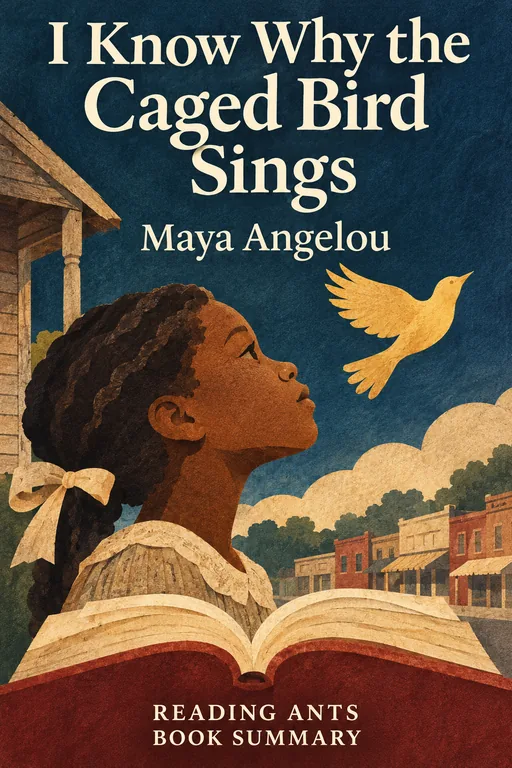
I Know Why the Caged Bird Sings
Maya Angelou
Maya Angelou tells of her childhood and youth in the segregated South and in California, a story of pain, silence and discovery in which words and books help her find her voice.
👤 Real Lives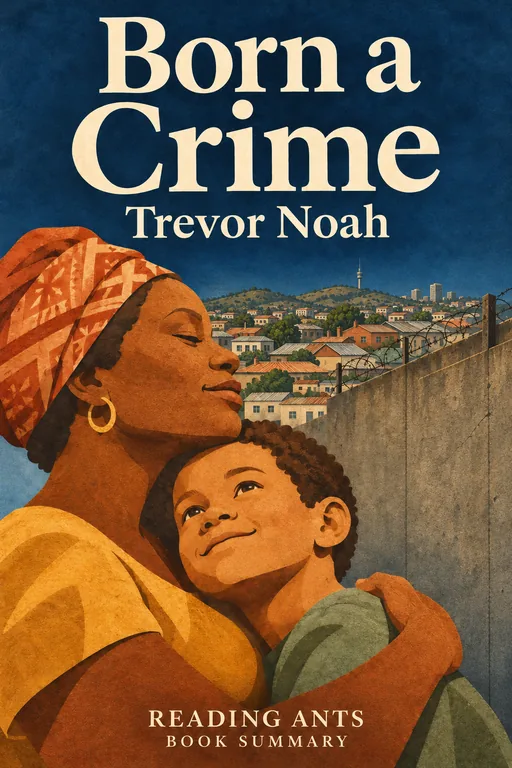
Born a Crime
Trevor Noah
Trevor Noah, the comedian, recounts growing up in South Africa as the child of a Black mother and a white father at a time when their relationship was a crime, and pays tribute to the mother who raised him.
👤 Real Lives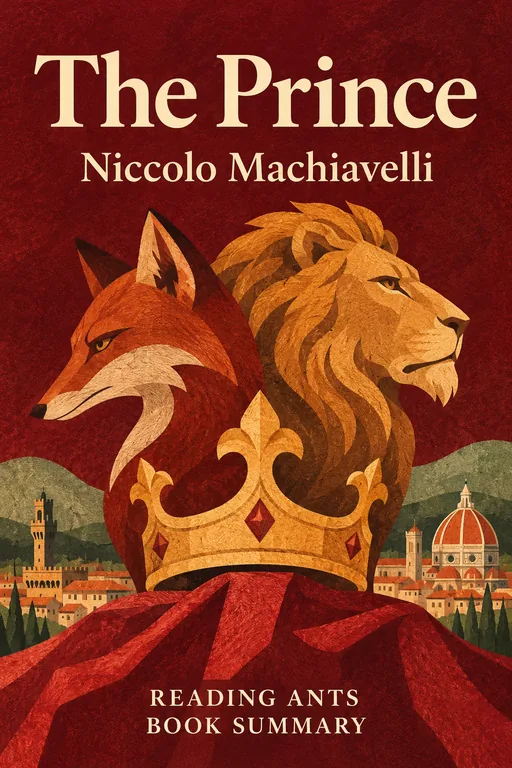
The Prince
Niccolo Machiavelli
A Renaissance diplomat advises rulers to judge their actions by results rather than morality, arguing that a successful leader must sometimes be cunning and ruthless to win and keep power.
⚖️ Politics & SocietyWant something different?
Pick another topic and we will show you three books to start with.