 Reading Ants
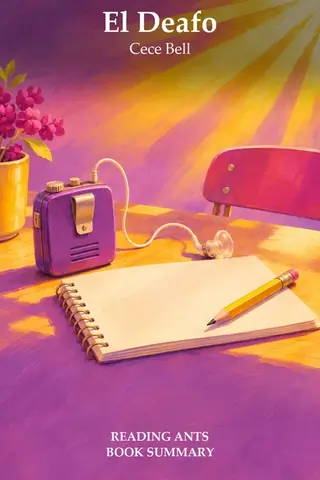
El Deafo
A girl who loses her hearing as a small child uses her bulky hearing aid as a secret superpower, and learns how to find a real friend.
Overview
El Deafo is a 2014 graphic memoir by Cece Bell. It tells, in comic-book panels with the characters drawn as rabbits, how the author lost most of her hearing to meningitis at age four and grew up wearing a large hearing aid called the Phonic Ear. The device helps her hear, but it also makes her stand out. At school she feels lonely and wants a true friend. Eventually she invents a secret identity, El Deafo, a superhero who can hear her teachers from almost anywhere in the school. The book is funny and honest about being different and was a Newbery Honor book in 2015.
Main Characters
- Cece Bell: the narrator and author as a child, called Cecilia, who loses her hearing.
- Cece’s family: her mother, her father and her older brother and sister.
- Emma Knight: her first best friend.
- Laura: her best friend in first and second grade, who likes to control what the group does.
- Ginny Wakeley: a friend who joins in third grade and talks to Cece in a normal way.
- Martha Ann Claytor: the friend who finally accepts her fully, from the end of fourth grade.
- Mike Miller: a neighbor and Cece’s first crush.
- Teachers: including Mrs. Lufton, Mrs. Ikelberry and Mrs. Sinklemann.
Full Summary
Losing Sound
At the age of four, Cece catches meningitis and loses most of her hearing. Her family is supportive, but her new situation is difficult. She has to learn to read lips and to speak in a world that does not always understand. After her family moves, she starts first grade at a school where she is the only deaf student. She is fitted with a big hearing aid, the Phonic Ear, which has a box she wears on a strap across her chest and a microphone that her teacher wears. It lets her hear her teacher, but the other children see it and stare, and she hates that it makes her look different. At first she does everything she can to hide it under her clothes.
The Superpower
At first Cece is embarrassed by the device. Then she discovers something surprising: the teacher’s microphone lets her hear the teacher from across the building, even from the bathroom, which leads to funny and awkward moments. She decides to treat this ability as a superpower, and she invents a secret identity for herself, El Deafo, a hero who is never defeated. As El Deafo she is brave and confident, everything that Cece sometimes does not feel, and the fantasy helps her to get through the day.
Friends Who Are Not Quite Friends
Cece wants a close friend more than anything. Over the years she makes friends with Emma, Laura and Ginny, but some of the children treat her as a novelty, or they try to boss her, or they talk too loudly or too fast for her to follow. She puts up with poor treatment to keep the few friends she has. Some adults are also thoughtless about her. She sometimes feels lonely and angry. She wants to be treated as an equal, not as someone’s special project, and she is not sure how to ask for that.
Growing Up
As she gets older, Cece becomes more assertive. She learns to tell people what she needs and discovers that many of them have no idea that they have been hurting her. She has a crush on a new neighbor, Mike Miller, and has to figure out how to talk to him. She also learns that her superpower does not always help, and that being special is not the same as being included. The same device that lets her hear the teacher also leaves her feeling different and lonely.
A True Friend
Near the end of fourth grade Cece gets to know Martha Ann, a girl who does not mind the hearing aid and sees past it. Cece trusts her enough to reveal her El Deafo secret, and Martha Ann agrees to be her sidekick. Cece realizes that she no longer needs to hide her superpower from the world, and that the thing she thought set her apart is part of what makes her herself. The book ends with her not hiding any longer, and with a friend who is glad to be her sidekick.
Why It Matters
El Deafo was a Newbery Honor book and won the Eisner Award for best publication for kids. It was widely praised, with starred reviews from Kirkus and Publishers Weekly, and it gave many deaf and hard-of-hearing children a character who was like them. Its use of rabbits and comic panels makes difficult feelings easy to approach.
It also shows hearing readers what it can be like to live with hearing loss. Reviewers note that the format shows details such as misheard speech, for example speech bubbles that are empty, faded or filled with nonsense words, which helps readers to understand what Cece misses without long explanations.
Key Takeaways
- A difference can be a strength. Cece turns her hearing aid into a superpower.
- Friends need to be chosen carefully. Cece learns to find people who treat her as an equal.
- Tell people what you need. Many hurt feelings are caused by ignorance, not malice.
- Humor helps. The book makes light of painful moments without ignoring them.
- Being yourself is the goal. Cece stops hiding and accepts who she is.
What We Can Learn
If you have a friend who is deaf or hard of hearing, the book gives simple ways to help: face them when you speak, do not shout, and do not turn away. Small habits make a big difference.
It also encourages us to be honest about what we need. Cece’s friendships improve when she speaks up.
Finally, it shows that everyone can invent a way to cope with the hard parts of life, whether through imagination, humor or a good friend.
Criticism and Counterpoints
The book shows one person’s experience of deafness. In an author’s note, Cece Bell says that she is not part of the Deaf community and that the story is her own, so members of that community, who often use American Sign Language, may see their own experience differently. Her uneasy feelings about sign language are her own and are not meant to speak for every deaf child. The hearing technology shown is from the 1970s and is no longer used, so adults may want to explain this to younger readers. The title “El Deafo” also puts some people off. Even so, many deaf readers and teachers praise it warmly.
Who Should Read It
This book suits readers from about eight to twelve, especially children who are deaf or hard of hearing, and their classmates and families. It is a good first graphic novel, with short scenes and clear pictures. It will appeal to anyone who has felt different or lonely.
Want the whole book?
A summary is a taste, not the meal. Here is where to find the full book.
You reached the end 🎉
Nicely done. Mark this one as read, and we will suggest what to read next.
Read this next
Wonder
R. J. Palacio
A ten-year-old boy born with a rare facial difference goes to school for the first time, and through bullying, friendship and courage he helps everyone around him learn to choose kindness.
🧸 Children's Books
Fish in a Tree
Lynda Mullaly Hunt
A sixth-grade girl who has hidden for years that she cannot read finds a teacher who sees her talents, learns she has dyslexia, and starts to believe in herself.
🧸 Children's Books
New Kid
Jerry Craft
A Black seventh grader who loves to draw is sent to an elite, mostly white private school, where he learns to deal with small daily slights and to find his own voice.
🧸 Children's Books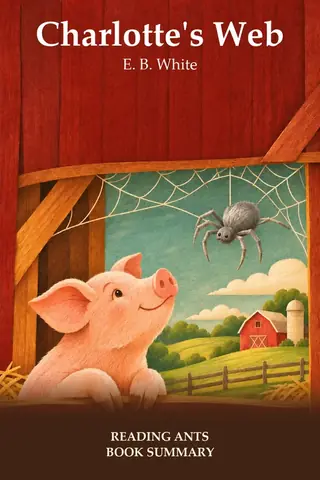
Charlotte's Web
E. B. White
A lonely pig named Wilbur learns he is going to be killed, and his clever friend Charlotte, a spider, comes up with an amazing plan to save his life.
🧸 Children's Books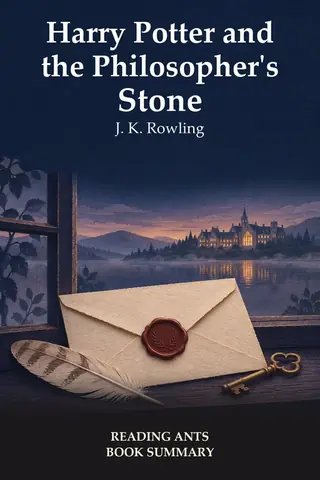
Harry Potter and the Philosopher's Stone
J. K. Rowling
An unloved orphan boy discovers on his eleventh birthday that he is a famous wizard, and during his first year at a magical school he makes true friends and faces the dark wizard who killed his parents.
🧸 Children's Books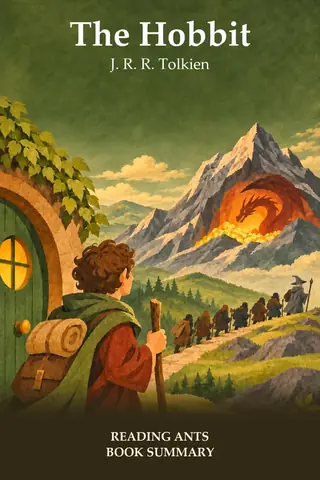
The Hobbit
J. R. R. Tolkien
A comfortable, home-loving hobbit is swept into a dangerous quest with thirteen dwarves to win back their treasure from a dragon, and discovers along the way that he is far braver and cleverer than he ever imagined.
🧸 Children's BooksWant something different?
Pick another topic and we will show you three books to start with.