 Reading Ants
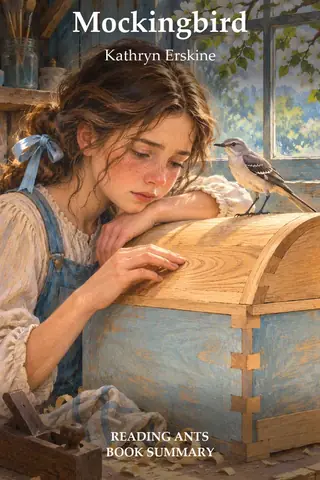
Mockingbird
A ten-year-old girl with Asperger's syndrome, whose older brother was killed in a school shooting, learns about empathy and closure as she tries to help her grieving father and her community.
Overview
Mockingbird is a 2010 novel by Kathryn Erskine, and it won the National Book Award for Young People’s Literature that year. Caitlin Smith is ten and has Asperger’s syndrome, a form of autism. She sees the world in black and white, and draws constantly. Her older brother Devon, who understood her better than anyone, has been killed in a school shooting, together with a teacher and another student. Caitlin calls him Devon who is dead, and she hides under his dresser, while her father is overwhelmed by grief. At school a counselor helps her to learn what empathy and closure mean, and she sets out to find some for herself. The book is told in Caitlin’s own direct, literal voice.
Main Characters
- Caitlin Smith: the ten-year-old narrator, who has Asperger’s and loves to draw.
- Devon: her older brother, who was killed at school.
- Caitlin’s father: who is grieving and helpless.
- Michael: a sad boy she meets at recess, whose mother, a teacher, was killed in the shooting.
- Josh: a school bully, who is a cousin of a shooter.
- Mrs. Brook: the school counselor, who works with Caitlin.
- Mr. Walters: the art teacher, who gives her pastels.
Full Summary
A Girl and Her Drawings
Caitlin draws constantly, in black and white, and she sees things as either right or wrong. Her brother Devon, who helped her to understand how to get along with other people, has been killed at school. She calls him Devon who is dead. Her classmates think she is odd, and she does not know how to talk to them. She spends time hiding under Devon’s dresser, where she feels safe.
The Counselor
Her school counselor, Mrs. Brook, has her spend recess with younger children, where she meets Michael, a sad boy who is also grieving. Caitlin learns that Michael’s mother, a teacher, was killed in the same shooting. She learns two words that she does not know: empathy and closure. She decides that she and her father need closure, and she wants to find out how to get it.
Devon’s Unfinished Work
Caitlin remembers that Devon was building a wooden chest for his Eagle Scout project, and that he did not complete it. She decides that finishing it will bring closure. She sets about it with determination, and pushes her father to join her. He often breaks down in tears and is slow to take part, and she has to be patient.
Michael and Josh
With help from Mrs. Brook and the art teacher, Mr. Walters, Caitlin helps her father, Michael and even the school bully, Josh, who is a cousin of a shooter, to cope with their grief. Josh has been hurt too, and he and Caitlin and Michael become friends. Caitlin begins to see people’s feelings in ways that she could not before.
The Memorial
Caitlin and her father finish the chest. The school holds a ceremony for those who died, and they donate it to the school. Caitlin attends with her father, Michael and Josh. At the end the art teacher gives Caitlin a box of pastels. It is a gift that suggests that she can draw in color.
The First Color
The book ends as Caitlin makes her first colored picture, after only drawing in black and white. It is a sign that she has begun to see the world, and her own feelings, in a new way.
Seeing Differently
Throughout the book, Caitlin explains how she sees the world. For her, things are black or white, true or false, and she finds it hard to understand why people say one thing and mean another. Her brother Devon was the one who translated for her, and without him she feels lost. Mrs. Brook does not try to make her like everyone else. She coaches Caitlin on social skills, teaches her a few useful words, like empathy, and lets her work out what they mean. Caitlin’s way of seeing is a strength as well as a difficulty, because it lets her notice things that others miss, such as the grief of a younger boy at recess.
Closure
Closure is the word that Caitlin chooses to focus on. She thinks of it as something that can be found, like a lost object, and she decides that finishing her brother’s chest will bring it. The path is not straight, and her father is slow to join her. But the effort draws in Michael, Josh and the adults around her, and each of them begins to heal in their own way. By the time of the ceremony, the idea of closure has shifted for Caitlin. It is not a single moment but a series of small acts of care, shared with others.
Why It Matters
Mockingbird won the National Book Award for Young People’s Literature in 2010. It deals with the aftermath of a school shooting from the point of view of a child who has lost a sibling. It is also notable for giving a voice to a character with Asperger’s syndrome, with a direct and honest narration. The author was inspired by her experience as the mother of a daughter on the autism spectrum.
The book received the Dolly Gray Children’s Literature Award in 2012. It is a good starting point for talking about empathy, grief and the way people with autism experience the world.
Key Takeaways
- Grief needs to be shared. Caitlin, her father and Michael help each other.
- Empathy can be learned. Caitlin practices understanding other people’s feelings.
- Closure is a process. Finishing Devon’s chest gives Caitlin a goal.
- Everyone is affected. Even the bully Josh has been hurt.
- Color can return. Caitlin’s first colored drawing marks her healing.
What We Can Learn
If someone you know has lost a family member, simple presence can help. Caitlin does not always know what to say, but she tries, and it matters to Michael and her father.
The book also teaches us to try to see the world through other people’s eyes, even when it is hard. Caitlin learns empathy by practice, and so can we.
Finally, it reminds us that creative work, such as drawing, can help us to express feelings that we cannot say. Caitlin’s pastels give her a new way to speak.
Criticism and Counterpoints
Some readers may find the subject very painful for a children’s book, especially the ceremony and the father’s grief. Caitlin is one character, and her literal way of seeing is not true of everyone on the autism spectrum. The adults are seen only through Caitlin’s eyes, and the bully’s change of heart may feel quick. Josh also calls Caitlin names, and a gym teacher speaks badly of her. Some parents will want to read it first. But reviewers praise its honesty and its picture of a community learning empathy.
Who Should Read It
This book suits readers from about ten to fourteen, and families who are dealing with loss. It is a good choice for classes on empathy. Because it deals with the aftermath of a shooting, it should be read with care and adult support.
Want the whole book?
A summary is a taste, not the meal. Here is where to find the full book.
You reached the end 🎉
Nicely done. Mark this one as read, and we will suggest what to read next.
Read this next
Wonder
R. J. Palacio
A ten-year-old boy born with a rare facial difference goes to school for the first time, and through bullying, friendship and courage he helps everyone around him learn to choose kindness.
🧸 Children's Books
A Monster Calls
Patrick Ness
A thirteen-year-old boy whose mother is dying is visited at night by a giant tree monster, who tells him three stories and demands that he tell a fourth: the truth.
🎒 Young Adult
Bridge to Terabithia
Katherine Paterson
A shy country boy and an imaginative new girl create a secret magical kingdom in the woods, and when tragedy strikes, he must find the courage to carry their friendship forward.
🧸 Children's Books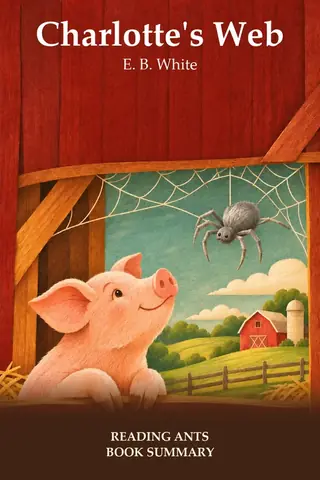
Charlotte's Web
E. B. White
A lonely pig named Wilbur learns he is going to be killed, and his clever friend Charlotte, a spider, comes up with an amazing plan to save his life.
🧸 Children's Books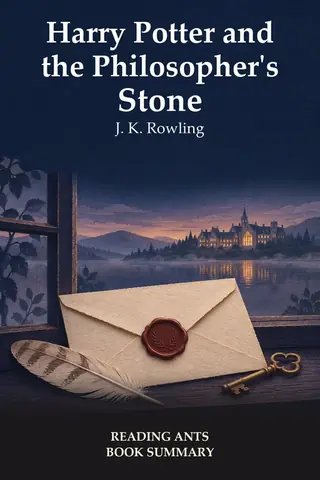
Harry Potter and the Philosopher's Stone
J. K. Rowling
An unloved orphan boy discovers on his eleventh birthday that he is a famous wizard, and during his first year at a magical school he makes true friends and faces the dark wizard who killed his parents.
🧸 Children's Books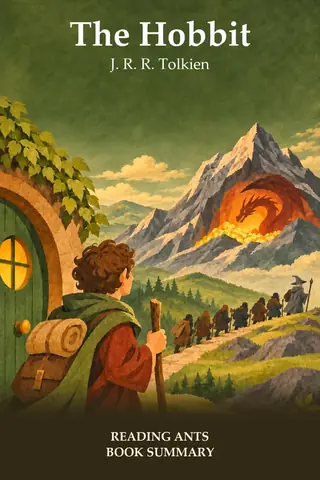
The Hobbit
J. R. R. Tolkien
A comfortable, home-loving hobbit is swept into a dangerous quest with thirteen dwarves to win back their treasure from a dragon, and discovers along the way that he is far braver and cleverer than he ever imagined.
🧸 Children's BooksWant something different?
Pick another topic and we will show you three books to start with.