A Monster Calls
A thirteen-year-old boy whose mother is dying is visited at night by a giant tree monster, who tells him three stories and demands that he tell a fourth: the truth.
Overview
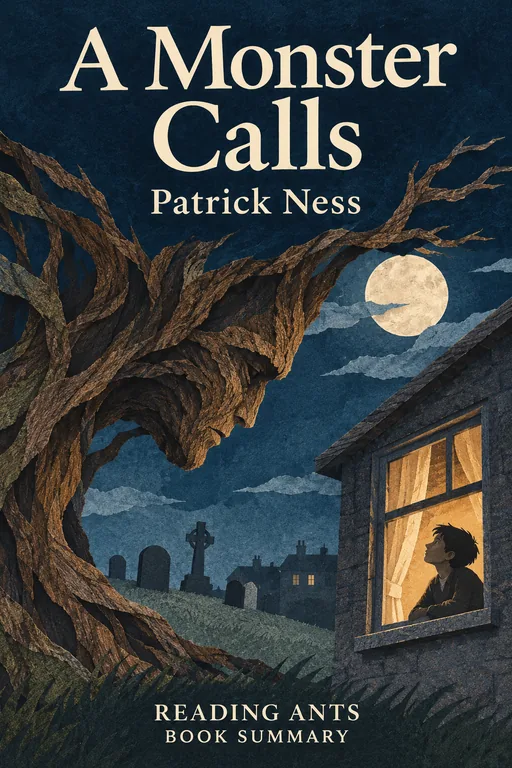
A Monster Calls is a novel by Patrick Ness, based on an idea by the late writer Siobhan Dowd, and published in 2011 with illustrations by Jim Kay. It is set in England, and tells of Conor O’Malley, a boy who is struggling with his mother’s illness. A monster, shaped like the old yew tree in the nearby graveyard, comes to his window at seven minutes past midnight. The book is a story about grief, honesty and the way that stories can help us to face what we fear. It is dark, moving and honest, and it won the Carnegie Medal and the Kate Greenaway Medal.
Main Characters
- Conor O’Malley: a thirteen-year-old boy, who is lonely and bullied.
- Conor’s mother: a woman who is terminally ill and in treatment.
- The monster: a huge, ancient creature, who takes the form of a yew tree.
- Grandma: Conor’s cold, reserved grandmother, who comes to help.
- Conor’s father: a man who lives in America with a new family.
- Lily: a former friend, who told everyone about his mother’s illness.
- Harry: a bully at Conor’s school.
Full Summary
Seven Minutes Past Midnight
Conor wakes at night, after a nightmare that he has been having for months, and he hears a voice at his window. Outside, the yew tree has come alive, and it takes the shape of a huge monster. The monster tells him that he will tell Conor three stories, and that after that Conor must tell a fourth, which will be the truth about his nightmare.
Conor is not afraid of the monster. He has a much worse thing to be afraid of, which is the nightmare. In the morning he is not sure that the visit was real, but there are yew leaves on his bedroom floor.
The Real World
During the day, Conor deals with his mother’s illness. She is going through treatment, and she is often too tired to do much. His grandmother, who is cold and reserved, comes to help, and the two do not get along. His father lives in America with a new family, and he visits from there.
At school, Conor is bullied by Harry and two other boys. Lily, his old friend, tries to defend him, but he pushes her away, because she told everyone about his mother’s illness and made everyone treat him strangely. He feels that nobody really sees him.
The Stories
The monster’s first story is about a prince who kills his young bride and blames the queen, so that the people will rise up against her. The monster rescues the queen from the mob. Conor is confused, because neither the prince nor the queen is good, and the monster says that people are rarely all good or all bad.
The second story is about an apothecary and a parson who quarrel over the yew tree. When the parson’s daughters fall ill, he begs the apothecary for help and offers to give up his beliefs, but the apothecary refuses and the daughters die. The monster destroys the parson’s house and says the parson, whose belief was only convenient, was the one at fault. The third story is about a man who felt invisible, and who made people see him.
The Nightmare
Conor’s nightmare comes again and again. He does not tell anyone about it. Conor asks the monster if he can heal his mother, and the monster says only that if she can be healed, she will be. Her new treatment, a medicine made from the yew tree, is her last hope. In time it becomes clear that the treatment is not working.
When Conor demands to know why the monster did not heal his mother, the monster answers that he came to heal Conor, not her.
Destruction
During the stories, Conor loses control. After his father’s visit, he angrily breaks an antique clock at his grandmother’s house. While the monster tells the second story, Conor joins in destroying the parson’s house, and he wakes to find that he has wrecked his grandmother’s sitting room. She is hurt and in tears, but she does not punish him.
During the third story, Conor attacks Harry and sends him to the hospital. The headmistress cannot bring herself to punish him because of what he is going through at home. Conor wishes to be punished, so that someone will take him seriously, but instead he feels further from the other students than ever.
The Truth
Conor’s mother tells him that the yew tree medicine did not work, and he asks his grandmother to take him home. There, the monster makes him enter the space of his nightmare. He is holding his mother’s hands as she hangs over a cliff, and he lets go.
The monster presses him to speak, and Conor finally admits that he wanted it to be over, because the waiting was too painful. The monster tells him that this is a normal human feeling, and that wanting an end to suffering does not mean that he did not love her.
Goodbye
Conor wakes on the hill to his grandmother’s voice, and she hurries him to the hospital, where he is not too late. With the monster standing behind him, Conor tells his mother that he does not want her to go. He holds her, and he finds that he can finally let her go. The book ends there, in the hospital room.
Why It Matters
A Monster Calls was widely praised as a moving and honest book about grief. It won both of the UK’s major children’s book prizes, the Carnegie Medal and the Kate Greenaway Medal, for the writing and for Jim Kay’s dark, powerful illustrations. It was made into a film in 2016 and a stage play in 2018. It is the only book to have won both medals, and it does not offer easy comfort to young people who are dealing with loss. Ness wrote the book from an idea by Siobhan Dowd, who died of cancer before she could write it.
Key Takeaways
- Grief is complicated. It includes anger, guilt and relief.
- Honesty heals. Conor must tell the truth to move on.
- Stories can teach. The monster uses stories to show how the world is.
- Feelings are not wrongs. Wanting an end to pain does not mean a lack of love.
- We are not alone. Conor finds support in his grandmother and in his mother.
What We Can Learn
The book reassures us that it is normal to have confusing feelings when someone we love is ill or dying. Anger, guilt and relief can all be part of grief, and they do not make us bad. It is important to talk about them with a trusted person.
It also shows us that facing the truth, even when it is painful, can bring release. Finally, it reminds us to be kind to people who are going through hard times, such as classmates and neighbors, as they may be carrying a heavy load.
Criticism and Counterpoints
Some readers find the book too sad, and some are upset by Conor’s violence. The monster’s stories can seem puzzling, and the grandmother and school are drawn in broad strokes. Others note that the book’s message about forgiveness is powerful, but may be hard for readers who are in the middle of grief. Because it deals with the death of a parent, it may be difficult for younger children. A few readers have said that the story’s message, that guilt and relief are normal, is clearer to adults than to young readers, and that the book might be best read together with a parent or teacher who can talk about it afterward.
Who Should Read It
This book is for readers from about ten or twelve upward, and for adults. It is a short, illustrated book that can be read in a few hours. Anyone who has lost someone, or who is facing a loss, may find it comforting, but it should be read with care.
Want the whole book?
A summary is a taste, not the meal. Here is where to find the full book.
You reached the end 🎉
Nicely done. Mark this one as read, and we will suggest what to read next.
Read this next
Bridge to Terabithia
Katherine Paterson
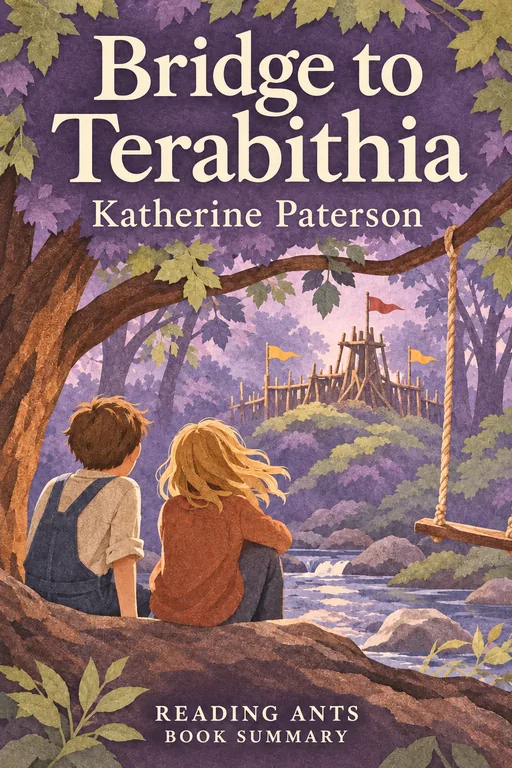
A shy country boy and an imaginative new girl create a secret magical kingdom in the woods, and when tragedy strikes, he must find the courage to carry their friendship forward.
🧸 Children's Books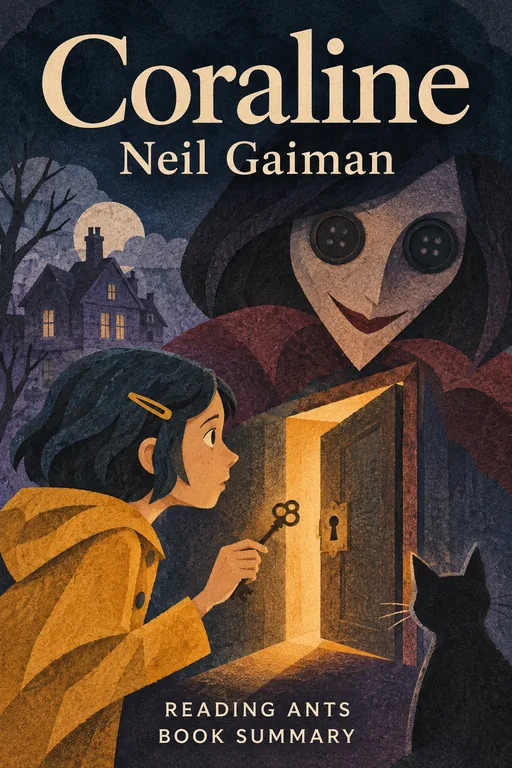
Coraline
Neil Gaiman
A bored, curious girl named Coraline finds a door to a parallel world where her "other mother" wants to keep her forever, and she must use courage and cleverness to rescue her parents and herself.
🧸 Children's Books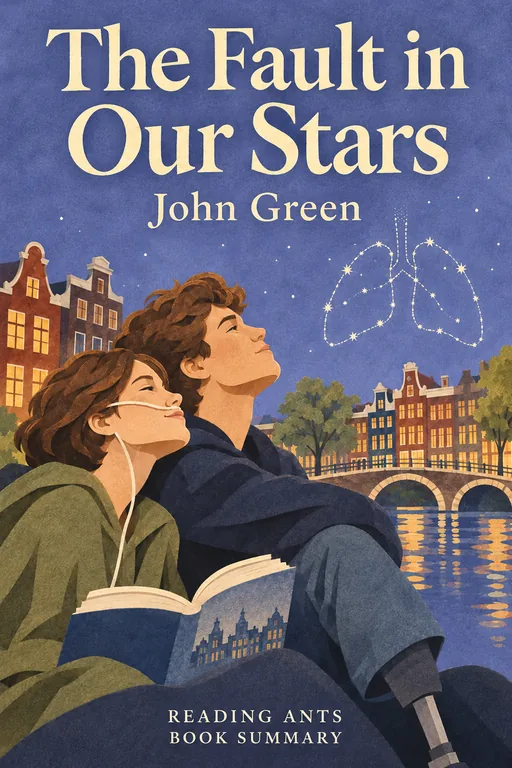
The Fault in Our Stars
John Green
Two teenagers with cancer fall in love, travel in search of a novel's missing ending and discover that a short life can hold real meaning without becoming a sentimental lesson.
🎒 Young Adult
The Book Thief
Markus Zusak
Death narrates how a foster child in Nazi Germany steals books, learns the power of words and forms loving bonds that war eventually destroys.
🎒 Young Adult
Wonder
R. J. Palacio
A ten-year-old boy born with a rare facial difference goes to school for the first time, and through bullying, friendship and courage he helps everyone around him learn to choose kindness.
🧸 Children's Books
The Giver
Lois Lowry
In a perfectly controlled community with no pain, choice or color, a boy about to turn twelve is chosen to hold the memories of the past, and discovers the terrible price his people pay for their safety.
🎒 Young AdultWant something different?
Pick another topic and we will show you three books to start with.