 Reading Ants
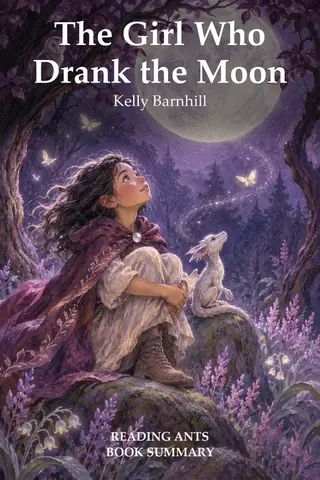
The Girl Who Drank the Moon
A kind witch accidentally feeds moonlight to an abandoned baby, giving her great magic, and years later the girl must help to break a town's cycle of fear and sorrow.
Overview
The Girl Who Drank the Moon is a 2016 fantasy by Kelly Barnhill, and it won the Newbery Medal in 2017. In the Protectorate, a town near a forest, the people believe that an evil witch demands a baby each year, and they leave the youngest child in the woods to keep her away. In fact the witch, Xan, is gentle, and she rescues the babies and brings them to families in other towns. The scary witch story was invented by those in power to keep people afraid and obedient. One year, Xan accidentally feeds a baby moonlight instead of starlight, which fills the girl with magic. Xan decides to raise her herself, with the help of a swamp monster and a tiny dragon. The story follows Luna, Xan and the people of the Protectorate as the secrets of the sacrifice come to light.
Main Characters
- Luna: the girl who drank the moon, raised by Xan, with dangerous magic.
- Xan: the witch who rescues the babies, and who raises Luna.
- Glerk: an ancient swamp monster and poet who helps to raise Luna.
- Fyrian: a tiny dragon who believes he is enormous.
- Antain: a young man who was training to be an Elder, and who is troubled by the town’s sacrifice. He becomes a carpenter.
- Ethyne: Antain’s wife, a former Sister who later leads a rebellion.
- Adara: Luna’s mother, who was locked away and went mad with grief.
- Ignatia: the head of the Sisters of the Star, who feeds on other people’s sorrow.
- Gherland: Antain’s uncle, the Grand Elder.
Full Summary
The Witch and the Babies
Every year the people of the Protectorate leave their youngest baby in the forest as an offering to the witch. The Elders have taught them that this is the only way to keep the witch away. In truth the witch, Xan, finds the babies and carries them to loving families in another town. She feeds them starlight on the journey. One year she accidentally feeds a baby moonlight instead, and the child is filled with powerful magic. Xan names her Luna and decides to keep her.
A Strange Family
Luna grows up in Xan’s cottage in the forest, with Glerk, a swamp monster who writes poems, and Fyrian, a very small dragon who is sure that he is enormous. When Luna is about five, her magic begins to burst out of control. Xan seals the magic away until Luna turns thirteen, because it is too dangerous. The spell also makes Luna forget that she ever had magic. But when the magic is freed on her thirteenth birthday, it will cost Xan her life.
The Boy Who Asked Why
In the Protectorate, a young man named Antain is training to be an Elder, and he is troubled by the sacrifice of babies. He visits a woman who is locked away in the Tower, Luna’s mother, Adara, who went mad with grief after her baby was taken. Her paper birds attack him and leave him with terrible scars. Antain gives up his place among the Elders and becomes a carpenter. He marries Ethyne, a young woman who has left the Sisters of the Star. When Ethyne is expecting their child, Antain decides to go into the forest and kill the witch so that his child will be safe.
Into the Forest
As Luna’s thirteenth birthday approaches, Xan leaves to rescue another baby. Antain meets her in the forest and accidentally wounds her. He does not know who she is, and they travel together. Luna follows with Glerk and Fyrian. Meanwhile a cloud of grief that has hung over the town begins to lift, and people start to question the sacrifices. Ethyne leads a rebellion with the Sisters.
The Truth About Sorrow
The truth comes out that the Elders and the Sisters invented the witch to control the town, and that Sister Ignatia has been feeding on the people’s sorrow. Luna meets Antain and Xan, and she changes Xan back into her true self. When Ignatia arrives, Luna sees that her heart is locked in a pearl full of sorrow, and she opens it. Fyrian, who blames Ignatia for the death of his mother, tries to attack her, but Xan and Glerk calm him.
The Volcano
The volcano near the town begins to erupt. At Xan’s urging, Luna uses her magic to shield the town and nearby villages from the eruption, and everyone survives. The Elders are imprisoned. Xan and Ignatia are dying, and Xan dies peacefully, and Glerk takes her body to the swamp. Luna discovers her mother’s name, Adara, and she goes to live with her mother and with Antain and Ethyne. Children who were taken from their families can meet their birth parents. Luna then travels with Fyrian to tell other towns the truth about Xan. The book ends as a poem that Glerk left for her turns into a bird and flies away.
The Stories Come Together
The ending brings the book’s several stories together. The town learns that the witch was never a monster, the mother recovers her daughter and the sorrow that kept the Protectorate in fear is named and faced. The deaths of Xan and Ignatia, and the eruption of the volcano, mark the end of the old order. Luna, who began as a baby left in a forest, becomes the one who carries the truth to other towns. The poem that turns into a bird at the end suggests that stories, like magic, can be set free.
Why It Matters
The Girl Who Drank the Moon won the Newbery Medal in 2017. It is admired as a modern fairy tale, with a lyrical style, well-developed characters and a message about the way fear and sorrow can be used to control people. It weaves several stories together, and rewards careful readers.
The book is also notable for its gentle monster and dragon, and for the idea that a villain can feed on grief. Many readers find in it a reflection on how communities deal with loss, and on the stories they tell to avoid it.
Key Takeaways
- Fear can be used to control. The town’s belief in an evil witch is a lie that benefits those in power.
- Sorrow needs to be faced. Ignatia feeds on grief that people refuse to face.
- Love makes a family. Luna’s guardians are a witch, a monster and a dragon.
- Stories matter. Glerk’s poems and the paper birds carry hope.
- Courage can mean questioning. Antain asks why the sacrifice must happen.
What We Can Learn
When everyone around you accepts a rule without question, it can help to ask why. Antain’s doubts begin the change in the Protectorate.
The book also invites us to think about how we handle sadness. Hiding from it, as the town does, only makes it stronger, while remembering and sharing it can bring relief.
Finally, it shows how a family can be formed by love, not by blood. Luna’s guardians are unusual, but they care for her deeply, and that is what makes them her family.
Criticism and Counterpoints
Some readers may find the plot complicated, with many characters and shifting viewpoints, and a slow start. Others may feel that the villain is less frightening than the idea behind her. Some parents find the abandoned babies, the mother’s madness and the scars that the paper birds leave upsetting for younger readers. The sorrow in the book, including Xan’s death, is real. But many readers praise its imagination and its language.
Who Should Read It
This book suits readers from about ten to fourteen who like fantasy and fairy tales, and adults who enjoy lyrical writing. It is a good choice for readers who liked The Wonderful Wizard of Oz. Sensitive readers should know that it includes grief, a death and the abandonment of babies.
Want the whole book?
A summary is a taste, not the meal. Here is where to find the full book.
You reached the end 🎉
Nicely done. Mark this one as read, and we will suggest what to read next.
Read this next
The Wonderful Wizard of Oz
L. Frank Baum
Swept by a cyclone to the magical Land of Oz, a Kansas girl follows the yellow brick road with three unusual friends to ask a great wizard for help, and learns they already had what they were seeking.
🧸 Children's Books
A Wrinkle in Time
Madeleine L'Engle
An awkward girl travels across the universe with her genius little brother and a new friend to rescue her scientist father from a dark planet ruled by a giant evil brain, and discovers that love is her greatest power.
🧸 Children's Books
The Giver
Lois Lowry
In a perfectly controlled community with no pain, choice or color, a boy about to turn twelve is chosen to hold the memories of the past, and discovers the terrible price his people pay for their safety.
🎒 Young Adult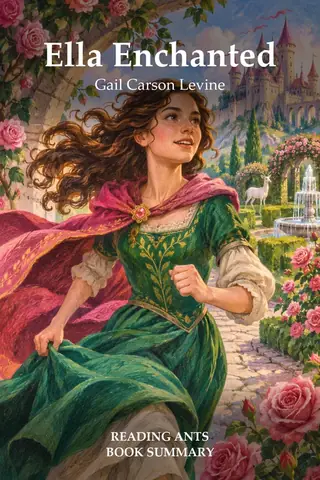
Ella Enchanted
Gail Carson Levine
A girl who has been cursed at birth to obey any order uses her wit and her heart to break the spell, in a funny retelling of the Cinderella story.
🧸 Children's Books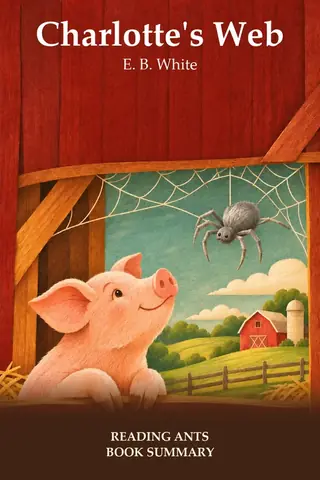
Charlotte's Web
E. B. White
A lonely pig named Wilbur learns he is going to be killed, and his clever friend Charlotte, a spider, comes up with an amazing plan to save his life.
🧸 Children's Books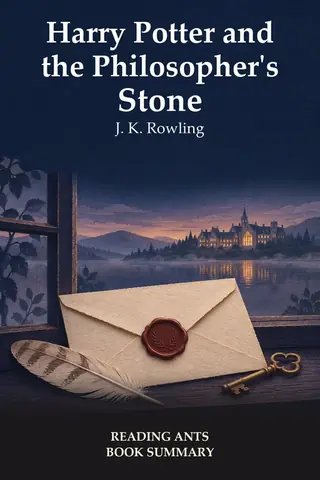
Harry Potter and the Philosopher's Stone
J. K. Rowling
An unloved orphan boy discovers on his eleventh birthday that he is a famous wizard, and during his first year at a magical school he makes true friends and faces the dark wizard who killed his parents.
🧸 Children's BooksWant something different?
Pick another topic and we will show you three books to start with.