 Reading Ants
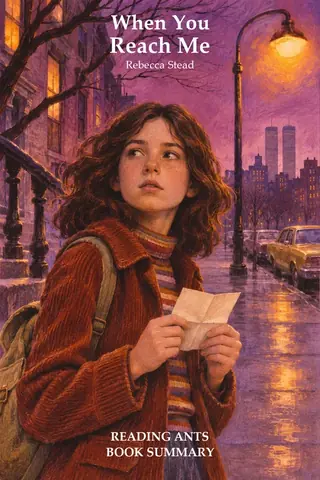
When You Reach Me
A sixth-grade girl in 1970s New York gets mysterious notes that predict the future, and slowly realizes they are tied to a homeless man on her corner and to a boy she hardly knows.
Overview
When You Reach Me is a 2009 novel by Rebecca Stead that won the Newbery Medal. It is set in Manhattan’s Upper West Side in 1978 and 1979, and it is told by Miranda Sinclair, a sixth grader who lives with her single mother. Miranda’s best friend, Sal, suddenly stops speaking to her, and then she starts receiving anonymous notes that seem to know things before they happen. The book is part friendship story, part puzzle, and it plays with time travel in a way that readers only understand at the end. It rewards careful reading, and it ties its mystery to Miranda’s favorite book, A Wrinkle in Time.
Main Characters
- Miranda Sinclair: the narrator, a sixth grader whose favorite book is A Wrinkle in Time.
- Miranda’s mother: a hardworking woman who is preparing to be a contestant on a TV game show.
- Richard: her mother’s kind boyfriend.
- Sal: Miranda’s longtime friend, who suddenly pulls away.
- Marcus: a new boy who punches Sal, and who later becomes a friend to Miranda and talks with her about time travel.
- The laughing man: a homeless man who sleeps under a mailbox on her street.
- Annemarie and Colin: new friends who work with Miranda at a sandwich shop. Annemarie has epilepsy.
- Julia: Annemarie’s best friend, who clashes with Miranda at first and later becomes her friend.
- Jimmy: the sandwich shop owner, who is prejudiced against Julia.
Full Summary
A Friend Goes Quiet
Miranda lives with her mother in a Manhattan apartment in the late 1970s. Her mother is preparing to appear on the TV game show $20,000 Pyramid, and her boyfriend Richard helps her practice every night. Miranda’s longtime best friend Sal lives downstairs, but after a bigger boy, Marcus, punches him in the street, Sal stops talking to her. A homeless man known as the laughing man lives on her block, and Miranda is a little afraid of him.
The Notes
Miranda begins to find unsigned notes addressed to her. They seem to know about events before they happen, and they ask her to write down an account of what is going on. The writer says that he is coming to save a life, and he asks for her help. Miranda is frightened, but she cannot ignore the notes, because the predictions keep proving correct. She tries to work out who could be writing them and why they chose her. Each message is short and puzzling, and each leaves her with more questions than answers.
The Sandwich Shop
Miranda makes new friends, Annemarie and Colin, and the three of them work at lunchtime in a sandwich shop run by Jimmy, who pays them with a sandwich and a soda. The shop has a ceramic bank full of folded two-dollar bills that the children are told never to touch. When the bank is stolen, Jimmy fires all three of them. Miranda also learns that Jimmy will not let Annemarie’s best friend Julia, who is Black, work there, and that his reason is racial prejudice. The friends decide that they do not want to work for him anyway. Miranda learns that Annemarie has epilepsy, and their friendship is strained because Miranda did not know about it. These events show Miranda how much she does not know about the people around her.
The Truck
Marcus becomes Miranda’s friend. They talk about time travel and about A Wrinkle in Time, and he tries to apologize to Sal. One day Sal runs into the street in front of a truck. The laughing man rushes out and pushes him to safety, but he is hit and killed himself. Afterward Miranda understands that the notes were tied to him and to a plan to save Sal’s life. The laughing man’s death weighs on Miranda, and she begins to think about what it means that a man everyone avoided gave his life for a boy he hardly knew.
The Answer
Miranda puts the clues together and realizes the truth: the laughing man was an older Marcus, who traveled back in time to save Sal’s life and needed Miranda’s help to reach his younger self. The notes asked her to write the story of her year as a letter for him. The book ends with Miranda preparing to give her written account to the young Marcus, which closes the loop. Details that seemed unimportant earlier now fall into place, and many readers go back to the beginning to see what they missed.
Why It Matters
When You Reach Me won the Newbery Medal in 2010 and reached several bestseller lists. It is admired for its tight plot, its realistic picture of New York, and for how it hides its central trick in plain sight. Because the solution depends on details that were present all along, many readers enjoy rereading the book to see what they missed.
It also treats an ordinary childhood with respect. The story is about friendship, independence and second chances, and the science fiction element supports those themes instead of replacing them. The book presents time travel as a way of fulfilling the future rather than changing it, and Miranda’s fluid, first-person voice helps young readers follow even a tricky plot.
Key Takeaways
- Pay attention to small things. The answer to the mystery is in details Miranda has noticed all along.
- Friendships take effort. Sal and Miranda drift apart, and Miranda learns that new friendships need understanding too.
- Prejudice causes harm. Jimmy’s refusal to let Julia work in his shop shows how unfair people can be.
- People can surprise you. The man everyone avoids turns out to be a hero.
- Small choices matter. A single letter, written with care, changes a life.
What We Can Learn
The book reminds us that people who seem strange or frightening, like the laughing man, may have a story we do not know. Before judging someone, it helps to pause and ask what we do not understand.
It also teaches the value of careful attention. Miranda solves her puzzle by putting together small clues and conversations, including her talks with Marcus about time. Readers can practice the same habit at school and in life: listen closely, take notes, and think about how separate facts fit together.
Lastly, the story shows that friendships take patience and curiosity about what a friend is going through. Miranda did not know that Annemarie has epilepsy, and she learns to ask and to listen.
Criticism and Counterpoints
Some readers find the book confusing, because the time travel explanation arrives late and requires careful attention to follow. Kirkus Reviews called the ending baffling yet satisfying, and said it sends readers back to the beginning. The publisher suggests ages 9 to 14, but Kirkus lists the book as 12 and up, and some parents may want to know about the death of the laughing man, a brief glimpse of a naked man running down the street, and the racist comments of the shop owner. Fans point out that the puzzle structure is exactly what makes the book memorable.
Who Should Read It
This novel suits readers from about ten to fourteen who enjoy mysteries and puzzles, and adults who like a clever, gentle story. It is a good choice for fans of A Wrinkle in Time, which is Miranda’s favorite book in the story. Readers who prefer fast action may find the pace slow at first, but the ending rewards patience.
Want the whole book?
A summary is a taste, not the meal. Here is where to find the full book.
You reached the end 🎉
Nicely done. Mark this one as read, and we will suggest what to read next.
Read this next
Wonder
R. J. Palacio
A ten-year-old boy born with a rare facial difference goes to school for the first time, and through bullying, friendship and courage he helps everyone around him learn to choose kindness.
🧸 Children's Books
A Wrinkle in Time
Madeleine L'Engle
An awkward girl travels across the universe with her genius little brother and a new friend to rescue her scientist father from a dark planet ruled by a giant evil brain, and discovers that love is her greatest power.
🧸 Children's Books
The Giver
Lois Lowry
In a perfectly controlled community with no pain, choice or color, a boy about to turn twelve is chosen to hold the memories of the past, and discovers the terrible price his people pay for their safety.
🎒 Young Adult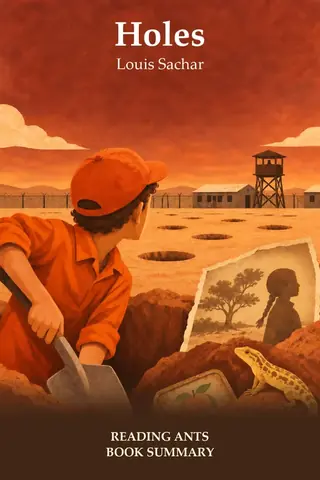
Holes
Louis Sachar
A boy with a family curse is wrongly sent to a desert detention camp where boys must dig holes all day, and he uncovers a buried secret that connects his family's past to the camp's cruel warden.
🧸 Children's Books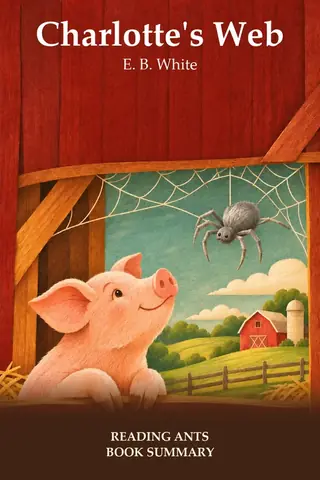
Charlotte's Web
E. B. White
A lonely pig named Wilbur learns he is going to be killed, and his clever friend Charlotte, a spider, comes up with an amazing plan to save his life.
🧸 Children's Books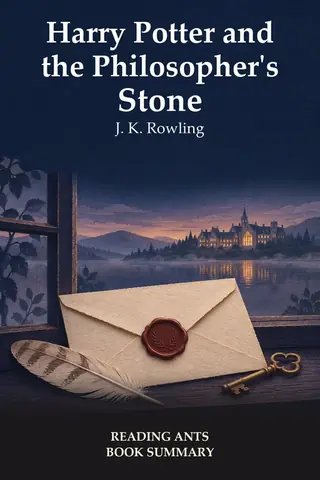
Harry Potter and the Philosopher's Stone
J. K. Rowling
An unloved orphan boy discovers on his eleventh birthday that he is a famous wizard, and during his first year at a magical school he makes true friends and faces the dark wizard who killed his parents.
🧸 Children's BooksWant something different?
Pick another topic and we will show you three books to start with.