 Reading Ants
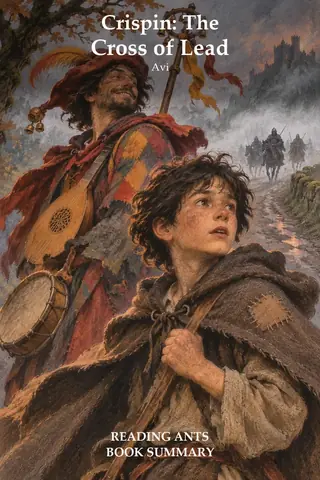
Crispin: The Cross of Lead
In fourteenth-century England, a poor orphan boy with no name falsely accused of a crime flees for his life and learns who he really is.
Overview
Crispin: The Cross of Lead is a 2002 historical novel by Avi that won the Newbery Medal in 2003. It is set in 1377 in a medieval English village, where most people are serfs who belong to their lord’s land and cannot leave. The narrator is a thirteen-year-old peasant boy who is known only as Asta’s Son. When his mother dies and a cruel steward falsely accuses him, he is declared an outlaw whom anyone may kill. He runs, and on the road he meets a traveling entertainer who changes his life. It is an adventure about freedom, identity and loyalty.
Main Characters
- Crispin (Asta’s Son): a thirteen-year-old serf, the narrator.
- Bear (Orson Hrothgar): a traveling jester who is secretly a spy for a brotherhood opposed to the feudal system.
- John Aycliffe: the steward of Stromford, the villain.
- Father Quinel: the village priest, who is murdered.
- Widow Daventry: the owner of a tavern in the city, and a friend of Bear’s.
- Lord Furnival: the lord whose land includes Stromford, who has died by the time Crispin reaches the city.
- Goodwife Peregrine: a kind villager who helps Crispin.
- John Ball: a real priest who appears in the story.
Full Summary
Asta’s Son
In 1377, Crispin lives in the village of Stromford, which belongs to Lord Furnival but is run by the steward, John Aycliffe, while the lord is away. After his mother, Asta, dies, Crispin has no family. Aycliffe falsely accuses him of stealing and declares him a Wolf’s Head, meaning that anyone may kill him for a reward. The village priest, Father Quinel, shows Crispin his mother’s lead cross and tells him his true name, Crispin. Before the priest can say more about Crispin’s parents, Aycliffe’s men murder him, and Crispin runs away. A kind villager, Goodwife Peregrine, gives him food and a pouch to carry the cross. Crispin goes into the woods hungry and alone, with a price on his head. Until the priest spoke, he had known himself only as his mother’s son.
The Bear
In an abandoned village, Crispin meets Bear, a traveling performer. Under the law of the time, Bear can claim Crispin as his servant, and he does. Slowly the two become friends, and Crispin becomes Bear’s apprentice. Bear turns out to be a spy for a secret brotherhood that wants a fairer society, and he talks about ideas Crispin has never heard, such as a fairer world for people like him. They travel as a pair of entertainers toward Great Wexly, the large city that belongs to Lord Furnival. Crispin has been taught to fear everyone, and he slowly learns to trust Bear, though Bear keeps many secrets.
The City
In Great Wexly, Crispin and Bear find that Lord Furnival has died, and that Aycliffe has come to the city with extra guards. They stay at the Green Man, a tavern run by the Widow Daventry, who is Bear’s friend. Soldiers raid a secret meeting where Bear meets the priest John Ball, and Bear is captured. Crispin learns that the words on his mother’s cross show he is Lord Furnival’s son, born outside marriage. That also explains why Aycliffe wants him dead, because Crispin could have a claim to Furnival’s property. The brotherhood will not help him, so Crispin decides to rescue Bear himself. He has already lost the priest and his mother, and he is determined not to lose a third person who has cared for him.
The Palace
Crispin sneaks into Lord Furnival’s palace alone. He takes a dagger and pins Aycliffe, but he spares the steward in return for a sworn promise that he and Bear may leave the city unharmed. In the cellar he finds Bear, who has been tortured. It is a dangerous plan for a thirteen-year-old, but Crispin has learned from Bear to think quickly and to use his nerve. Even afraid, he refuses to abandon the one person who has treated him as a friend.
At the City Gate
At the gates, Aycliffe breaks his promise and tries to kill Crispin. Bear fights Aycliffe, grips him from behind until he drops his weapons, and throws him into the soldiers. The soldiers’ swords kill Aycliffe. Crispin leaves the lead cross on the steward’s chest. Outside the walls, Bear and Crispin play music and sing. Bear sets Crispin free from his service, and for the first time Crispin feels that he is himself, not only his mother’s son. In the end Crispin keeps the name he was given by the priest and leaves the rest of his father’s world behind.
Why It Matters
Crispin won the Newbery Medal and is widely taught in schools as a way into medieval life. It shows how the feudal system worked from the viewpoint of a powerless boy, and it brings in the plague and a real historical figure, the priest John Ball, who belonged to the unrest of that age.
It is also an example of Avi’s fast, clear storytelling. The hero is easy to follow, and the mystery of his identity keeps the pages turning. Crispin was followed by two sequels, Crispin: At the Edge of the World and Crispin: The End of Time.
Key Takeaways
- A name and a place matter. Crispin’s search for who he is drives the whole book.
- Freedom is worth fighting for. The story shows what it means to belong to someone else’s land.
- Friendship can come from nowhere. Crispin and Bear begin as master and servant and end as friends.
- Power can be abused. Aycliffe uses his position to hurt people.
- Courage means acting despite fear. Crispin takes risks to save his friend.
What We Can Learn
The book invites us to be grateful for freedoms we may take for granted, such as moving where we want or choosing our work. Crispin’s life shows how limited most people’s choices once were.
It also teaches that a person’s value does not depend on family background. Crispin learns that his father was a lord, but what saves him is his own courage and his loyalty to Bear. Learning who you are comes from what you do.
Finally, Bear’s gruff manner is a reminder that some of the best mentors are not gentle at first. Pay attention to people who teach you real skills, even when they are tough.
Criticism and Counterpoints
Some readers find the plot predictable, with a young orphan who turns out to be of noble birth, a familiar idea in adventure stories, and one blogger guessed the secret of the cross early. Kirkus Reviews called it a solid adventure but felt that Crispin’s growth is driven more by the needs of the plot than by his own character. The violence, including a murder and a torture, may upset younger readers. Still, The Horn Book praised its fast pace and the way Bear’s arguments bring in new ideas, and many teachers admire its respect for young readers.
Who Should Read It
Crispin suits readers from about ten to fourteen who like historical adventure, and teachers who want a gripping way to introduce medieval England. It is a good choice for readers who enjoyed stories like Kidnapped or books about orphans finding their way. Sensitive readers should know that it contains a murder, a torture and some violence.
Want the whole book?
A summary is a taste, not the meal. Here is where to find the full book.
You reached the end 🎉
Nicely done. Mark this one as read, and we will suggest what to read next.
Read this next
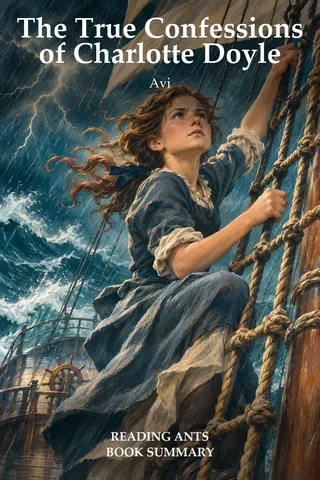
The True Confessions of Charlotte Doyle
Avi
A well-behaved thirteen-year-old girl sailing alone to America in 1832 finds herself at the center of a mutiny, a murder and a struggle against a cruel captain, and becomes a different person.
🧸 Children's Books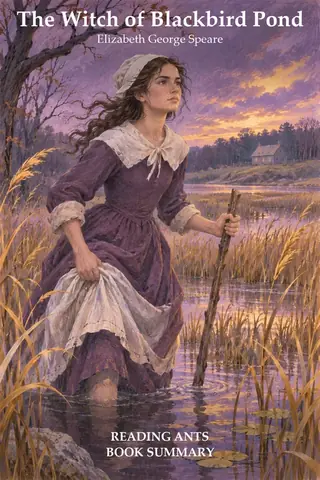
The Witch of Blackbird Pond
Elizabeth George Speare
A spirited sixteen-year-old girl from Barbados arrives in strict Puritan Connecticut in 1687, befriends an old Quaker woman, and is accused of witchcraft.
🧸 Children's Books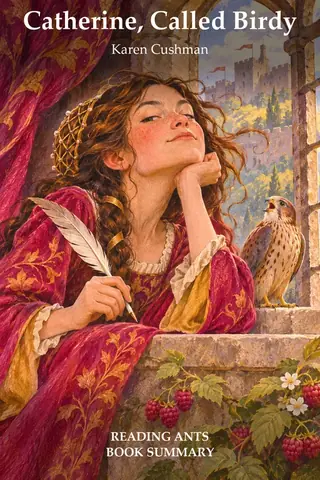
Catherine, Called Birdy
Karen Cushman
A spirited teenage girl in medieval England uses her diary and her wits to fight her father's plans to marry her off to a rich, ugly suitor.
🧸 Children's Books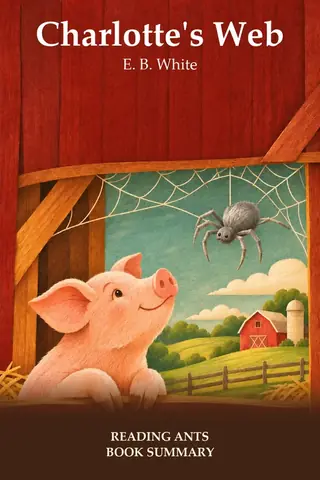
Charlotte's Web
E. B. White
A lonely pig named Wilbur learns he is going to be killed, and his clever friend Charlotte, a spider, comes up with an amazing plan to save his life.
🧸 Children's Books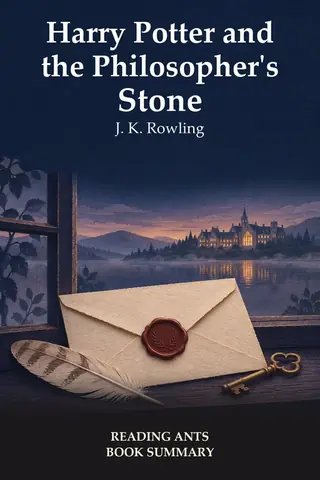
Harry Potter and the Philosopher's Stone
J. K. Rowling
An unloved orphan boy discovers on his eleventh birthday that he is a famous wizard, and during his first year at a magical school he makes true friends and faces the dark wizard who killed his parents.
🧸 Children's Books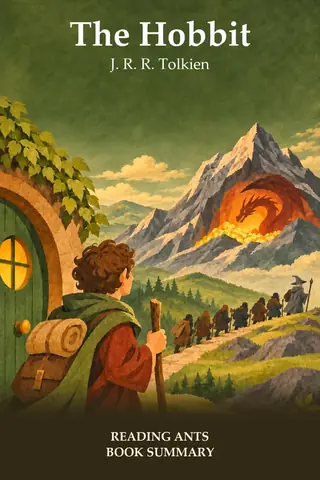
The Hobbit
J. R. R. Tolkien
A comfortable, home-loving hobbit is swept into a dangerous quest with thirteen dwarves to win back their treasure from a dragon, and discovers along the way that he is far braver and cleverer than he ever imagined.
🧸 Children's BooksWant something different?
Pick another topic and we will show you three books to start with.