 Reading Ants
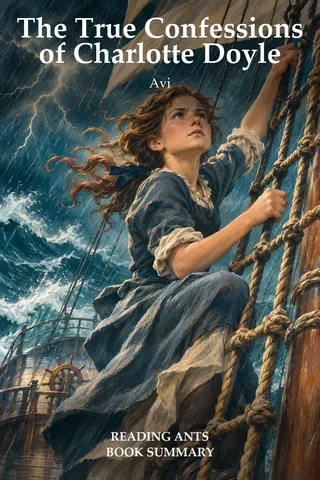
The True Confessions of Charlotte Doyle
A well-behaved thirteen-year-old girl sailing alone to America in 1832 finds herself at the center of a mutiny, a murder and a struggle against a cruel captain, and becomes a different person.
Overview
The True Confessions of Charlotte Doyle is a 1990 novel by Avi and a Newbery Honor book. It is set in the summer of 1832 aboard the sailing ship Seahawk, which is carrying Charlotte from England to Rhode Island to rejoin her family. She is the only passenger and the only girl on board, and she begins the voyage as a proper, obedient young lady. The story is told as if it were her own account of what happened, and she keeps a journal of the voyage. It is a sea adventure about courage, justice and growing up, and it turns a polite young woman into a sailor.
Main Characters
- Charlotte Doyle: the thirteen-year-old narrator, well-mannered at first and then bold.
- Captain Jaggery: the ship’s captain, charming at first and then cruel.
- Zachariah: an older Black sailor who gives Charlotte a dirk for protection and becomes her friend.
- Mr. Hollybrass: the first mate.
- Cranick: a sailor who leads a plot to mutiny, which means to take the ship from the captain.
- Mr. Grummage: the man who escorts Charlotte to the ship and insists that she sail.
- Charlotte’s father: a stern man who waits for her in Rhode Island.
Full Summary
Aboard the Seahawk
In 1832, thirteen-year-old Charlotte Doyle leaves Liverpool on the Seahawk, bound for Providence. She is the only passenger and the only woman. On her first day a sailor named Zachariah gives her a dirk for protection and warns her about the captain, Jaggery. Charlotte does not believe him. The captain is polite and charming to her, and she grows close to him, even agreeing to report anything suspicious among the crew. At first she enjoys the attention and thinks Zachariah is a superstitious troublemaker. She sees the crew only as rough men and is proud that the captain treats her like a lady and an equal.
The Round Robin
Charlotte notices a round robin, a circle of signatures that signals a plan to mutiny, and she warns Jaggery. He crushes the rebellion and kills its leader, Cranick. Charlotte begins to see how brutal the captain is. When Jaggery and the first mate begin to flog Zachariah, Charlotte seizes the whip to stop it and accidentally strikes the captain across the face. Enraged, Jaggery whips Zachariah mercilessly, and Zachariah seems to die and is given a burial at sea. Charlotte realizes that she has helped the wrong man and misjudged the crew, and she cannot forgive herself for the part she played.
Joining the Crew
Charlotte feels guilty. She joins the crew to take Zachariah’s place, even climbing the tallest mast, and she learns to work as a sailor. Slowly the sailors begin to accept her. She feels freer than she ever did in her father’s house, and she begins to see how little she knew about the world. Jaggery hits her for this, and she swears she will tell the truth about his cruelty when they reach port. During a hurricane she falls from the rigging and is saved by a figure she believes is Zachariah.
The Brig
After the storm the crew finds the first mate, Hollybrass, dead from a stab in the back with the dirk that Zachariah gave to Charlotte. She is thrown into the brig, a ship’s prison, where she finds Zachariah alive, hiding since his beating. Jaggery holds a trial and finds her guilty of murder. He offers to spare her if she will become a proper young lady again. With Zachariah’s help she escapes. The trial is a mockery, because the captain acts as judge and accuser at the same time, and Charlotte sees that the law on a ship is only whatever Jaggery says it is.
The Captain’s Fall
Charlotte confronts Jaggery, who confesses that he killed Hollybrass. He gives her three choices, and she refuses them all. He tries to kill her in front of the crew, but he falls from the ship and is crushed. The crew names Charlotte captain, though Zachariah does most of the real work of leading. Charlotte has changed from a girl who sought approval into someone who can act for herself. Twelve hours later they reach Providence.
Home and Back Again
In Rhode Island, Charlotte puts on her old clothes and tries to behave as she once did. Her father reads her journal of the voyage, burns it and grounds her. One night she slips out of the house and goes back to the Seahawk to sail again with Zachariah and the crew. She has found a life that suits her better than the one that was planned for her, and she is willing to give up comfort and respectability for it.
Why It Matters
The book won a Newbery Honor in 1991, along with several other awards, and is one of the best-known young adult sea stories. It is notable for its heroine, who grows from a sheltered girl into a capable and independent person at a time when girls were expected to be obedient.
It also takes on questions of justice and of how to treat people who have no power. The crew’s mistreatment, the trial and the issue of who is believed all raise problems that remain relevant today. It was written for readers in the upper elementary and middle school grades and is a popular classroom pick.
Key Takeaways
- Appearances can deceive. The kindly captain is truly cruel, and the crew she mistrusts proves loyal.
- Courage grows with action. Charlotte discovers her own strength as she faces danger.
- Justice is worth defending. She risks everything to oppose the captain’s treatment of the crew.
- People are not limited by what is expected of them. Charlotte shows that a girl can be a sailor.
- Honesty about the past matters. Her tale is her own account of what happened.
What We Can Learn
Charlotte teaches us to look carefully at people’s actions, not only at their charm. She trusts the captain because he is polite, and she learns that kindness in words is not proof of a good heart.
She also shows that bravery can be learned. Charlotte is afraid at first, but she takes small steps, climbing the mast and standing up to the captain, until she can do things she never imagined.
Finally, the book asks how we should respond when authority is unjust. Her choice to stand with the crew despite the risks makes readers think about what they would do.
Criticism and Counterpoints
Some readers may find the plot hard to believe, with its sudden twists, an almost entirely wicked captain and a heroine who learns a sailor’s skills quickly. Zachariah, the Black sailor who helps her, is a kind and generous friend, but the story is told from Charlotte’s point of view and we learn little about his own life. The violence, including a flogging, a murder and a death sentence, may be too intense for younger children, and a few mild swear words appear. Still, the book is praised for its pace and its strong heroine.
Who Should Read It
This book suits readers from about ten to fourteen who enjoy sea adventures and strong heroines, and fans of classics such as Treasure Island. Parents of sensitive children should know it includes violence, a murder and a trial that ends in a death sentence. Readers who dislike dramatic plots may find some events hard to believe.
Want the whole book?
A summary is a taste, not the meal. Here is where to find the full book.
You reached the end 🎉
Nicely done. Mark this one as read, and we will suggest what to read next.
Read this next
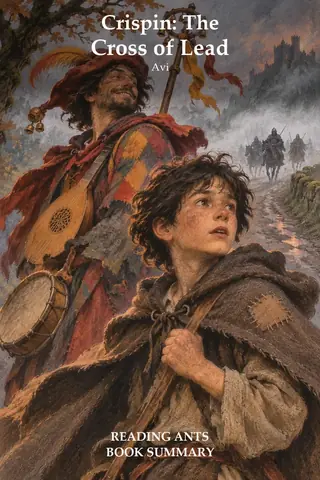
Crispin: The Cross of Lead
Avi
In fourteenth-century England, a poor orphan boy with no name falsely accused of a crime flees for his life and learns who he really is.
🧸 Children's Books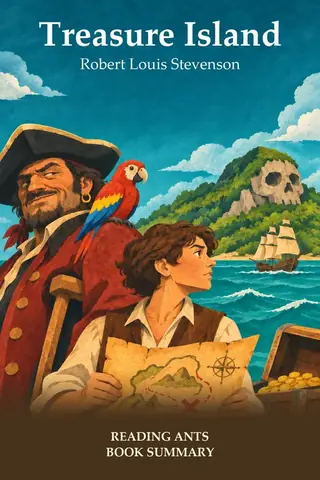
Treasure Island
Robert Louis Stevenson
A boy who finds a pirate's treasure map sails to a distant island, only to discover that the ship's charming one-legged cook is the leader of a band of pirates who want the gold for themselves.
🧸 Children's Books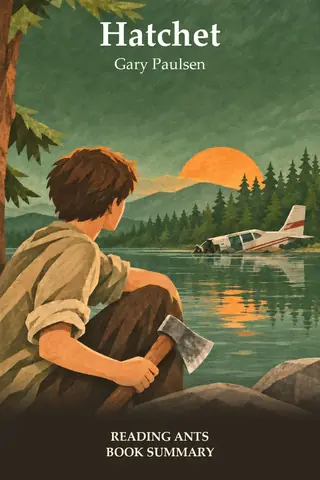
Hatchet
Gary Paulsen
After a plane crash leaves him alone in the Canadian wilderness with only a hatchet, a thirteen-year-old boy must learn to survive, and grows from a frightened city kid into a patient, resourceful young man.
🧸 Children's Books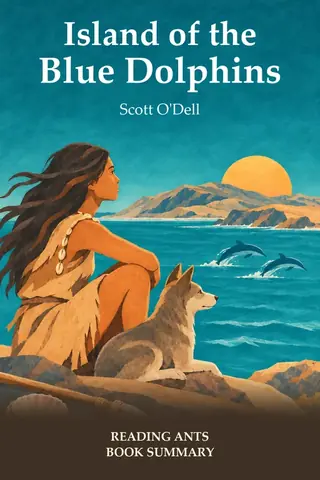
Island of the Blue Dolphins
Scott O'Dell
After her people leave their island and she is left behind, a Native American girl named Karana survives alone for years, learning to hunt, build and make friends with animals.
🧸 Children's Books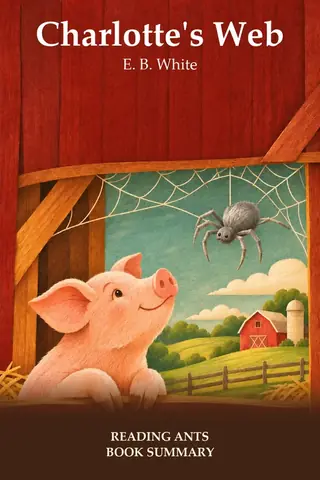
Charlotte's Web
E. B. White
A lonely pig named Wilbur learns he is going to be killed, and his clever friend Charlotte, a spider, comes up with an amazing plan to save his life.
🧸 Children's Books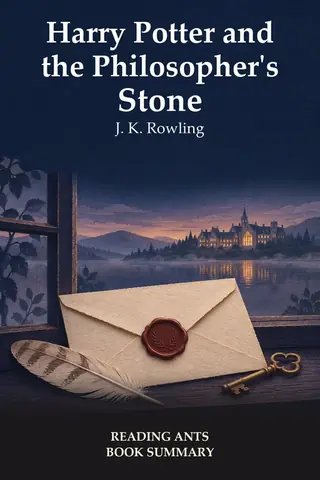
Harry Potter and the Philosopher's Stone
J. K. Rowling
An unloved orphan boy discovers on his eleventh birthday that he is a famous wizard, and during his first year at a magical school he makes true friends and faces the dark wizard who killed his parents.
🧸 Children's BooksWant something different?
Pick another topic and we will show you three books to start with.