 Reading Ants
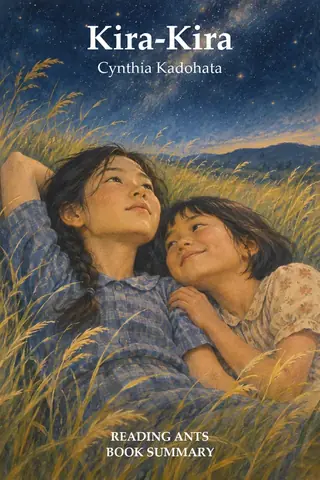
Kira-Kira
A Japanese American girl in the 1950s idolizes her older sister, who teaches her to see the world as glittering, and has to hold on to that vision when her sister becomes ill.
Overview
Kira-Kira is a 2004 novel by Cynthia Kadohata that won the Newbery Medal in 2005. The title is a Japanese word that means glittering or shining. Katie Takeshima is the narrator, the middle child of a Japanese American family that moves from Iowa to Georgia when Katie is about five, where her father sorts baby chicks at a hatchery and her mother cuts up chickens in a processing plant, both working long, hard hours. Her older sister Lynn is the smartest person she knows, and teaches her the word and a way of seeing the world as glittering. When Lynn falls ill, the family is tested. It is a gentle, sad story about sisterhood, work, prejudice and hope.
Main Characters
- Katie Takeshima: the narrator, who adores her sister.
- Lynn: Katie’s older sister, clever and loving, who becomes ill.
- Sammy: their younger brother, born when Katie is in first grade.
- Masao and Kiyoko Takeshima: Katie’s parents. They run an Asian foods grocery store in Iowa. In Georgia the father works at a hatchery and the mother in a poultry processing plant.
- Uncle Katsuhisa: Katie’s father’s older brother, a loud, funny man who thinks he is the best Japanese chess player in the country, and who gets the family their jobs in Georgia.
- Sylvia Kilgore (Silly): Katie’s friend in Georgia, whose mother helps organize a union at the plant.
- Amber and Gregg: Lynn’s friend and a popular boy she likes. Gregg moves away, and Amber drops Lynn when she is ill.
- Mr. Lyndon: the rich, unseen owner of the hatchery where Katie’s father works and of the processing plants.
Full Summary
Iowa and the Word
Katie is born in Iowa in 1951, where her parents run a small Asian foods grocery store. Lynn teaches her the word kira-kira when she is a baby, lying with her under the stars, and Katie soon uses it for everything she likes, from the blue sky to puppies to colored tissues. Lynn tells her that the sky, the ocean and people’s eyes are the most special things in the world, and she promises that one day the two of them will buy a house for their parents. Lynn is the one Katie looks up to, and she is also a gifted chess player. The day before the move south, she beats Katie’s loud uncle Katsuhisa, who says he is the best Japanese chess player in the country, three games in a row.
Moving South
The Iowa store goes out of business, because there are hardly any Asian customers. Katie’s father, who thinks for weeks before he makes any decision, then takes the family to Georgia, where Uncle Katsuhisa has found him work. Katie is about five. On the drive south a motel clerk assumes they are Native American or Mexican and gives them a back room that costs two dollars extra. In Georgia, Katie’s father works at a hatchery as a chicken sexer, sorting male chicks from female ones, and her mother works in a poultry processing plant. Both work very long hours. The family lives in a small apartment building with the other Japanese families of the town, where only thirty-one of about four thousand people are Japanese. Lynn becomes the leader of the apartment kids. Before Katie starts first grade, Lynn warns her that some people will not want to know them. Katie gets straight Cs, while Lynn earns straight As. Their little brother Sammy is born while Katie is in first grade. As Lynn grows older she becomes more interested in friends, boys and makeup, especially after a popular girl named Amber becomes her friend. Later Katie makes a friend of her own, Sylvia Kilgore, called Silly. The family is treated unkindly by some of the people around them, and Katie begins to understand the effects of prejudice.
Lynn Falls Ill
When Katie is ten and a half, Lynn gets dizzy and very tired. The doctor says she has anemia and puts her on iron pills, and Katie feeds her liver. Gregg moves away, and Amber drops Lynn as a friend, which hurts the whole family. Katie’s parents decide to take out a bank loan, and the three children add the money they have saved. Lynn picks out a small sky blue house, because Katie once said she wanted her first house to be that color. For a while Lynn seems to improve, and Katie’s mother thinks the house itself is healing her. Katie wants to believe that her sister is getting better.
The Trap
At the end of that summer the three children have a picnic in a field on the land of Mr. Lyndon, the rich man who owns the hatchery and the plants. Sammy, who is four, steps into a metal animal trap. Katie frees him and runs for help, and a kind stranger named Hank Garvin drives Sammy to the hospital. No bones are broken, but his ankle hurts for a long time and he limps a little at times. Lynn gets worse again. She spends part of October in the hospital and does not go back to school. Katie’s father tells her that Lynn has lymphoma, a very serious cancer, as well as anemia. Lynn grows weaker and more withdrawn, and one night she is so sick and cross that she and Katie say they hate each other, which Katie later feels terribly guilty about. Early on New Year’s Day, while Katie is outside watching the sunrise, Lynn dies in her bed.
After
On the evening Lynn dies, Katie’s normally calm father is overcome by grief and anger. He makes Katie show him the field where Sammy was hurt, and then he drives to Mr. Lyndon’s mansion and smashes the windshield of a red Cadillac with a board. A sheriff stops them later, but Katie says they are on their way to eat tacos, and he lets them go. Katie and her uncle make a small altar for Lynn, and Katie works harder at school, because that was one of Lynn’s last wishes. Her parents are so worn down by grief that she takes over much of the cooking and the dishes. That summer her father goes to the mansion with Katie, admits to Mr. Lyndon what he did and apologizes. Mr. Lyndon fires him from the hatchery, but he finds work at another hatchery farther away.
The Will and the Sea
Near the end of the year Katie’s father tells her that Lynn wanted her to have her diary. Katie reads it straight through and finds Lynn’s last entry, a short will written four days before she died. Lynn leaves her few dollars in the bank to her parents, her toys and some hidden money to Sammy, and her diary, dictionary and encyclopedia to Katie. On the last night of her life Lynn had also made Katie promise to get better grades, to think about college and to take care of the family. Katie tries to keep those promises. After Christmas her father decides to take the family to California, because Katie says that is where the sea is that Lynn always dreamed of living beside. They arrive on New Year’s Eve, almost a year after Lynn’s death. On New Year’s Day they walk along the Pacific, and Katie hears her sister’s voice in the waves, saying kira-kira.
Seeing the Shine
The book ends with the family together on a California beach, and with Katie hearing her sister’s word in the waves. On the trip even a cricket, some crows and the wind seem to say kira-kira to her. The ending is sad, but it is not hopeless. Katie has lost her sister, her father has lost one job and still works very hard, and the family is still paying Lynn’s medical bills, yet they are still together and still able to see something shining. Lynn’s last gift was not the will she wrote, but the habit of looking for beauty, even in hard places. Katie keeps that habit, and it carries her forward. The title therefore stands for more than a word. It is a way of living through loss.
Why It Matters
Kira-Kira won the Newbery Medal in 2005. It is a children’s novel about a Japanese American family in the 1950s, a time when families faced discrimination and struggled to find work. It also shows the long, hard labor of the poultry industry through a child’s eyes.
It is also a portrait of sisterhood. The word kira-kira runs through the book as a way of seeing, and its meaning becomes more powerful when Katie must keep it after Lynn is gone. Kirkus Reviews praised its vivid writing and its picture of a loving, honorable father.
Key Takeaways
- See the shine in the world. Lynn’s gift to Katie is a way of looking at life.
- Family holds together in hard times. The Takeshimas support one another.
- Work can be hard and unfair. Katie’s parents labor long hours in the poultry business.
- Grief changes people. Katie’s father’s anger and Katie’s new duties show it.
- Prejudice is part of daily life. The family meets it in small and large ways.
What We Can Learn
If you are going through something sad, it can help to remember the people who showed you how to see beauty. Katie keeps her sister’s lesson alive.
The book also encourages us to respect the work that others do. Katie’s parents work long hours in hard jobs so that their children can have more.
Finally, it shows that grieving takes time, and that it is natural to be angry as well as sad. Katie’s father shows how strong grief can be, and how an angry act can have costs. Talking about the person you have lost keeps their memory alive.
Criticism and Counterpoints
Some readers may find the book quiet and slow, with a gentle plot and a lot of daily detail, and its prose is plain and simple. The sad ending can be hard to read, and the death of a young person may be too heavy for sensitive children. Common Sense Media notes the racism the family meets and a little mild swearing. But many readers, and Kirkus Reviews, praise its clear, warm voice.
Who Should Read It
This book suits readers from about ten to fourteen who like quiet, emotional stories, and families who want to talk about grief and prejudice. It is a good choice for a unit on Asian American history. Because of Lynn’s death, it is best read with an adult nearby for younger or sensitive readers.
Want the whole book?
A summary is a taste, not the meal. Here is where to find the full book.
You reached the end 🎉
Nicely done. Mark this one as read, and we will suggest what to read next.
Read this next
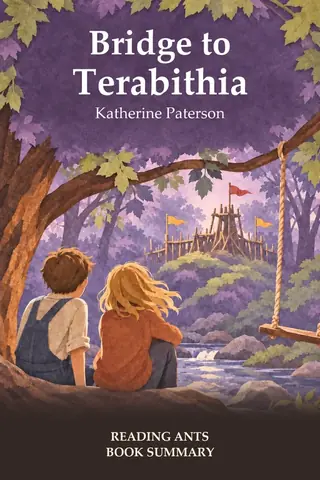
Bridge to Terabithia
Katherine Paterson
A shy country boy and an imaginative new girl create a secret magical kingdom in the woods, and when tragedy strikes, he must find the courage to carry their friendship forward.
🧸 Children's Books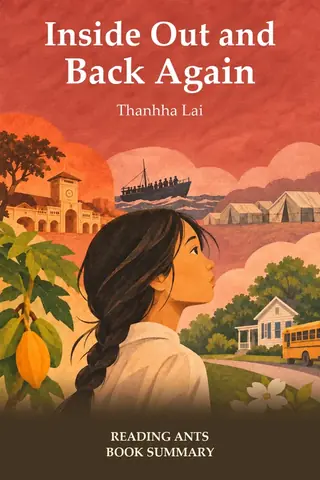
Inside Out and Back Again
Thanhha Lai
In short poems, a ten-year-old Vietnamese girl named Hà describes fleeing Saigon in 1975, living in a refugee camp and starting a new life in Alabama, where she learns a strange new language and a new way of life.
🧸 Children's Books
The War That Saved My Life
Kimberly Brubaker Bradley
A girl with a twisted foot, who has been kept shut in her mother's one-room flat, is evacuated from London in 1939, learns to ride a pony and to read, and finds out what being loved feels like.
🧸 Children's Books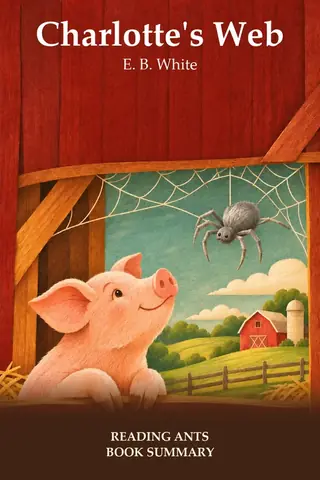
Charlotte's Web
E. B. White
A lonely pig named Wilbur learns he is going to be killed, and his clever friend Charlotte, a spider, comes up with an amazing plan to save his life.
🧸 Children's Books
Harry Potter and the Philosopher's Stone
J. K. Rowling
An unloved orphan boy discovers on his eleventh birthday that he is a famous wizard, and during his first year at a magical school he makes true friends and faces the dark wizard who killed his parents.
🧸 Children's Books
The Hobbit
J. R. R. Tolkien
A comfortable, home-loving hobbit is swept into a dangerous quest with thirteen dwarves to win back their treasure from a dragon, and discovers along the way that he is far braver and cleverer than he ever imagined.
🧸 Children's BooksWant something different?
Pick another topic and we will show you three books to start with.