 Reading Ants
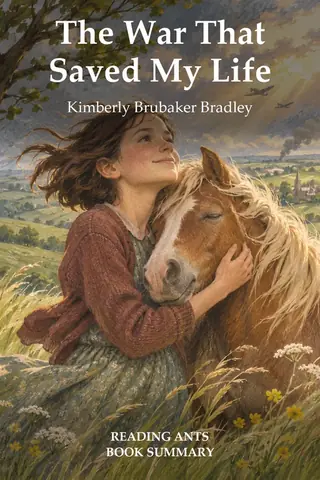
The War That Saved My Life
A girl with a twisted foot, who has been kept shut in her mother's one-room flat, is evacuated from London in 1939, learns to ride a pony and to read, and finds out what being loved feels like.
Overview
The War That Saved My Life is a 2015 novel by Kimberly Brubaker Bradley. It begins in London in the summer of 1939, just before the Second World War. Ada, who is ten although she does not know her own age, has a clubfoot and has almost never been allowed to go outside, because her mother is ashamed of her. When the city’s children are sent to the countryside to escape the bombing, Ada sneaks out with her younger brother Jamie and goes with them. They are taken in by a woman who does not want children and who is grieving, and the three must learn to trust each other while the war comes closer. It is a story about courage, healing and what makes a family.
Main Characters
- Ada: the narrator, a proud, determined girl with a clubfoot who has been kept hidden.
- Jamie: her younger brother, whom she looks after like a mother.
- Mam: their mother, who beats and insults Ada and keeps her locked in.
- Susan Smith: the lonely, grieving woman who takes the children in.
- Becky: Susan’s close friend, who died three years before and gave Susan the pony.
- Butter: the yellow pony that becomes Ada’s passion.
- Lady Thorton: the strict woman in charge of the evacuees in the village.
- Maggie Thorton: her daughter, who becomes Ada’s friend.
- Fred Grimes: the Thortons’ groom, who helps Ada learn to ride well.
- Dr. Graham: the village doctor.
- Colonel McPherson and Stephen White: an old blind man and a boy from London who lives with him.
Full Summary
Out of the Flat
Ada lives with Mam and Jamie in a single room above a pub in London. Mam calls her a cripple, hits her and shuts her in a dark cupboard under the sink. The one time Ada went outside, Mam beat her. She teaches herself to walk in secret, in pain, and she takes care of her little brother Jamie, who is six according to Mam. When she hears that children are leaving the city, Ada decides to go with Jamie. Early on Friday, September 1, 1939, she steals Mam’s shoes, slides down the stairs on her bottom and makes her way with Jamie to his school. On the train, she sees green fields for the first time. A girl on a pony races the train and jumps a stone wall.
Susan
In a small town in Kent, near the English Channel, nobody chooses Ada and Jamie. The woman in charge of the evacuees, Lady Thorton, drives them to the house of Susan Smith, who says that she does not know how to care for children. Susan is pale and untidy, and she is still deeply sad over the death of her friend Becky. Even so, she has the children bathe, feeds them eggs and bandages Ada’s foot. A doctor finds that they are underfed and that the foot could have been fixed when Ada was a baby. He also arranges crutches for her. England declares war on Germany that Sunday.
Butter
Ada creeps into the field to see the yellow pony, Butter, whom Becky gave to Susan. She finds Becky’s tack and a book that shows how to put on a bridle, and she teaches herself to ride, falling often. She also begins to learn, slowly, to trust Susan, who reads aloud to the children, discovers that Jamie’s teacher has tied his left hand to his chair, and picks birthdays for the two children so that they can have identity cards. Ada, who cannot read, is told by a teacher that she is not educable, but Susan teaches her letters and words, one at a time. A groom, Fred Grimes, trims Butter’s neglected hooves and teaches Ada to ride better, and later to take small jumps.
A Home and a War
On Christmas Eve Susan gives Ada a green velvet dress that she has sewn. Mam’s voice in Ada’s head makes her scream, and Susan holds her until dawn. The next morning there are stockings, presents and books. In the new year Ada learns that an operation might improve her foot, but it needs Mam’s permission. She writes to her mother, and the letter comes back unopened, because Mam has moved. In June, ships bring soldiers rescued from Dunkirk to the village, and Ada carries water to the wounded. That summer, German planes fly overhead and bombs fall at night. Ada panics in the air-raid shelter in the garden, which smells like her old cupboard, and Susan hangs herbs in it to change the smell.
The Spy and the Wall
One day Ada, riding on the hill, sees a man land on the beach from a rowboat and bury a suitcase. One policeman dismisses her, but another listens, and she points out the man’s wet, sandy trouser cuffs, so they arrest him. The suitcase holds a radio transmitter, and he is a German spy. In September she jumps the stone wall on Butter for the first time. But Mam turns up in the garden with one of Susan’s letters, and she drags Ada and Jamie back to London.
Home
In London, Mam takes Ada’s crutches and shoes and tells her she is nothing but a cripple. In a drawer Ada finds the children’s birth certificates, which give her real birthday. She tells Mam that she and Jamie will leave and Mam will not have to pay for them, and Mam agrees, saying she never wanted either of them. That night a bombing raid begins, and Ada takes Jamie to a shelter in the street. In the morning Susan appears in the rubble. She has taken the first train she could and searched the shelters, because she realized she should never have let them go. When they all return to Kent, they find that Susan’s house has been destroyed by a bomb, and the villagers are digging through the rubble to find them. The cat and the pony are safe, and Jamie says they have been shipwrecked. Ada feels joy.
Why It Matters
The War That Saved My Life won a Newbery Honor and the Schneider Family Book Award, and it was a bestseller. It was followed by a sequel, The War I Finally Won. It is notable for a heroine whose disability and abuse are shown honestly, without pity and without making her a saint, and for a picture of the home front that looks beyond heroes and battles.
It also shows how war can free a person as well as harm her. The title expresses the idea that the evacuation, a terrible event for the country, gave Ada the first chance of her life.
Key Takeaways
- Abuse is not a child’s fault. Ada has been taught that her foot is her fault and a shame, and Susan tells her that it is not.
- Trust takes time. Ada flinches at touch and has panic attacks, and Susan’s patient care slowly changes this.
- Learning is freedom. Reading and riding give Ada a way out of her fear.
- Family is made by care. Susan, who never wanted children, becomes their parent.
- Courage takes many forms. Ada shows it by learning to jump, and by serving the wounded.
What We Can Learn
If someone has been treated badly, patience and steady kindness matter more than grand gestures. Susan does not hit Ada, and she keeps on showing up. She makes tea, reads aloud, wraps Ada in a blanket when she panics and stays nearby, and that is what slowly heals.
The book also reminds us to look at what a person can do, not what they cannot. Ada’s foot is the thing everyone sees, yet she rides, spots a German spy and learns to read.
Finally, it shows that being brave includes asking for help. Ada’s decision to trust Susan is as courageous as anything she does on a horse.
Criticism and Counterpoints
Some readers find the early chapters about Mam’s cruelty very painful, and a few parents find them too intense for a ten-year-old. Readers may feel that the book makes a long recovery seem quick, and that Susan, with her Oxford education and her roomy house, is a lucky rescuer for Ada. The foot is not fixed in this book, which some readers may find frustrating, and Ada’s story continues in the sequel. Still, the novel is admired for the honesty of its emotions.
Who Should Read It
This book suits readers from about ten to fourteen who enjoy historical fiction, horses or stories of healing. It is also a good choice for readers who have faced hard times themselves. Because of the abuse and the war scenes, it is best read with some support for sensitive children.
Want the whole book?
A summary is a taste, not the meal. Here is where to find the full book.
You reached the end 🎉
Nicely done. Mark this one as read, and we will suggest what to read next.
Read this next
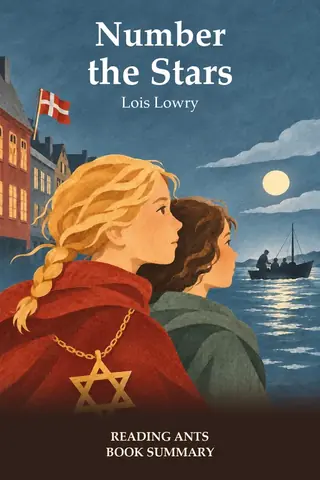
Number the Stars
Lois Lowry
In 1943, a ten-year-old Danish girl named Annemarie helps her Jewish best friend Ellen escape from Nazi-occupied Copenhagen by pretending that Ellen is her sister and by helping with a daring rescue.
🧸 Children's Books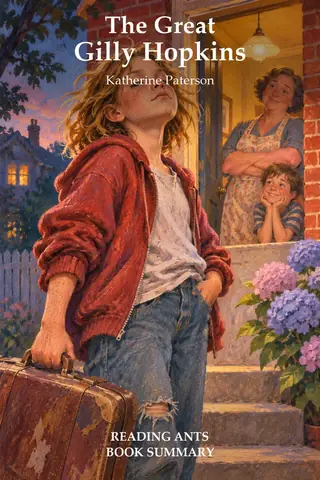
The Great Gilly Hopkins
Katherine Paterson
A clever, angry eleven-year-old foster child who lies and fights to keep people away is slowly won over by a huge-hearted foster mother, and then has to leave her.
🧸 Children's Books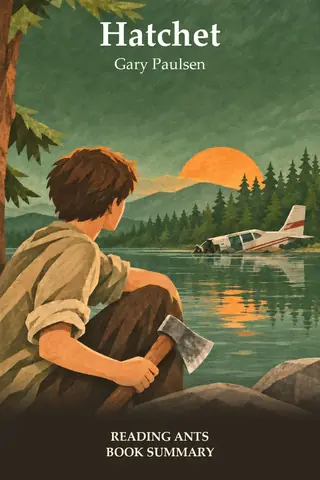
Hatchet
Gary Paulsen
After a plane crash leaves him alone in the Canadian wilderness with only a hatchet, a thirteen-year-old boy must learn to survive, and grows from a frightened city kid into a patient, resourceful young man.
🧸 Children's Books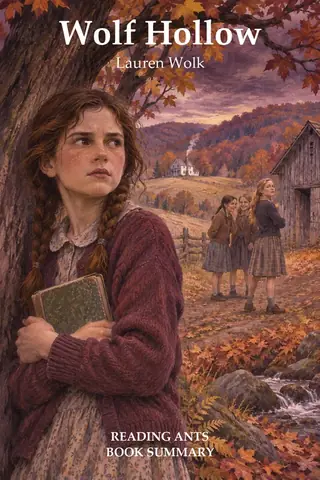
Wolf Hollow
Lauren Wolk
In a farming valley in western Pennsylvania in 1943, an eleven-year-old girl who tries to do the right thing about a cruel bully sees her good intentions lead to tragedy.
🧸 Children's Books
Wonder
R. J. Palacio
A ten-year-old boy born with a rare facial difference goes to school for the first time, and through bullying, friendship and courage he helps everyone around him learn to choose kindness.
🧸 Children's Books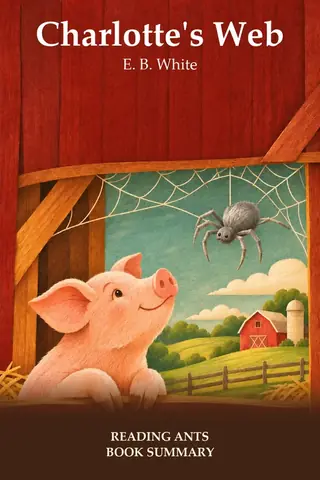
Charlotte's Web
E. B. White
A lonely pig named Wilbur learns he is going to be killed, and his clever friend Charlotte, a spider, comes up with an amazing plan to save his life.
🧸 Children's BooksWant something different?
Pick another topic and we will show you three books to start with.