 Reading Ants
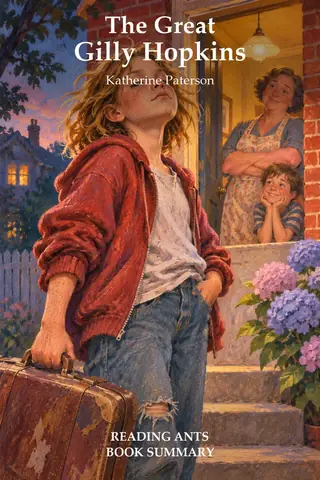
The Great Gilly Hopkins
A clever, angry eleven-year-old foster child who lies and fights to keep people away is slowly won over by a huge-hearted foster mother, and then has to leave her.
Overview
The Great Gilly Hopkins is a 1978 novel by Katherine Paterson, the author of Bridge to Terabithia. Galadriel Hopkins, known as Gilly, is eleven, and she has been moved from one foster home to another for most of her life. She believes that she is too smart and too tough to need anyone, and she is waiting for her beautiful mother, Courtney, whom she has not seen since she was three, to come and take her away. The book is set in a Maryland town near Washington, D.C., from October to just before Christmas. It is funny and sharp, and also sad, and it asks what makes a family and what it takes to let someone love you.
Main Characters
- Galadriel “Gilly” Hopkins: an eleven-year-old foster child, named after a character in Tolkien, who is smart, rude and lonely.
- Maime Trotter: Gilly’s new foster mother, a very large, warm woman who has fostered children for many years.
- William Ernest Teague (W.E.): a shy seven-year-old foster boy with thick glasses who lives with Trotter.
- Mr. Randolph: Trotter’s blind, elderly Black neighbor, who eats supper at her house every night and loves poetry.
- Miss Ellis: Gilly’s social worker.
- Miss Harris: Gilly’s sixth-grade teacher, a tall, calm Black woman.
- Agnes Stokes: a lonely classmate, raised by her grandmother, who keeps trying to befriend Gilly.
- Courtney Rutherford Hopkins: Gilly’s mother, who left home long ago and lives in California.
- Nonnie: Courtney’s mother, Gilly’s grandmother, who lives in Virginia.
Full Summary
Welcome to Thompson Park
Miss Ellis takes Gilly to her third foster home in under three years. The foster mother, Mrs. Trotter, is huge, cheerful and unbothered by Gilly’s rude behavior. Her house is dark, dusty and crowded, and it also holds seven-year-old William Ernest and, every evening at supper, their blind neighbor Mr. Randolph. Gilly keeps a photo of her mother, signed with a loving note, and she decides she can endure anything as long as she is in charge. When a postcard from Courtney arrives with a California address and the words “I miss you,” Gilly is sure that her mother wants her and starts planning to get to California.
The Fighter and the Poems
At school Gilly’s teacher, Miss Harris, is Black, and Gilly is full of contempt for her. On her first day she fights six boys over a basketball. At home she teases William Ernest until Trotter makes it clear that nobody will hurt him. Gilly finds two five-dollar bills hidden behind a volume of an encyclopedia on Mr. Randolph’s shelf and takes them, planning to save for a bus ticket. That same evening Mr. Randolph recites Wordsworth, and she secretly loves the sound of it. She decides that William Ernest could help her reach the top shelf again, so she makes friends with him and folds him a paper airplane. Then she slips an insulting anonymous card into Miss Harris’s math book. Instead of being hurt, the teacher thanks her for it and says they are alike because both are very angry.
The Runaway
A few days later, Gilly uses William Ernest, who sits on her shoulders, and Agnes Stokes, who stands lookout, to get a roll of bills from behind the same book. With the first ten dollars it comes to forty-four dollars, and after she gives Agnes five of them she has thirty-nine, which is far too little for a ticket to California. When she searches the shelf again by herself, she finds nothing more. Furious, she writes Courtney a letter that is mostly lies about her foster home, and asks for the rest of her ticket money. On a Sunday she takes a hundred dollars or more from Trotter’s purse and sets off for the bus station. There the clerk stalls and calls a policeman. Trotter and William Ernest come for her, and Trotter says she will not press charges. When William Ernest begs her to come home, Gilly takes his hand.
Making It Right
The next day Miss Ellis wants to move Gilly, but Trotter refuses, and Gilly chooses to stay until her mother comes. Trotter makes Gilly return the stolen money to Mr. Randolph, lending her the five dollars she had given to Agnes, and posts a list of chores for pay. Gilly teaches William Ernest to stand up for himself, and Trotter’s eyes fill with tears when he shouts at her. When Mr. Randolph and then Trotter and William Ernest all fall ill before Thanksgiving, Gilly stays home and takes care of them. On Thanksgiving Day a small woman in a black hat appears at the door and says she is Gilly’s grandmother. She leaves whispering that she will get Gilly out of there, and Gilly realizes that her own letter has set events in motion.
Leaving
Miss Ellis announces that Courtney and the grandmother want Gilly to live with her grandmother in Virginia. Gilly screams at Trotter, who says nothing, until William Ernest pulls her out of her rage. At their last supper, Mr. Randolph gives Gilly his book of English poetry, and in the night Trotter admits that it is killing her to let Gilly go. Gilly moves in with her grandmother, whom she is asked to call Nonnie, and she writes untrue boasts about horses and riches to William Ernest. She also writes to Miss Harris, who has sent her Tolkien books and who says she misses having Gilly in class.
Homecoming
Courtney arrives at the airport at last, plump, with dull stringy hair, and says she will stay only two days. Gilly sees that her mother has come only because her grandmother paid her, and does not want her. She phones Trotter in tears and asks to come home. Trotter tells her that happy endings are mostly lies, that life is hard, and that doing a hard job well brings its own satisfaction. She says she loves Gilly and that Gilly is home with her grandmother now. Gilly goes back to Nonnie and Courtney, ready to go home with them.
Why It Matters
The Great Gilly Hopkins won a Newbery Honor and the National Book Award for children’s books in 1979. Paterson, who with her family was a temporary foster parent, wrote a heroine who is not sweet or easy to like, and readers care for her anyway. The book looks at foster care honestly, through a child who has been moved from home to home.
It is also remembered for its ending, which refuses to give Gilly a fairy-tale rescue. The real mother is a disappointment, and the happiness Gilly finds is mixed with loss. Many readers remember it as a novel that shows that love and family do not always look the way we expect.
Key Takeaways
- Toughness hides hurt. Gilly’s lies and insults protect her from being abandoned again.
- Love is shown by actions. Trotter’s steady care wins Gilly over without speeches.
- Dreams of rescue can mislead. Gilly’s picture of her mother does not match the real person.
- Prejudice can be unlearned. Gilly’s cruel attitudes begin to change when she gets to know real people.
- Family can come in surprising forms. A foster mother, a blind neighbor and a grandmother all matter.
What We Can Learn
When someone is rude or difficult, there may be hurt underneath. Trotter does not give up on Gilly, and her patience is what finally reaches her. You can try the same with classmates who push people away.
The book also asks us to check our own prejudices. Gilly’s early assumptions about Miss Harris and Mr. Randolph are shown to be wrong, and she is moved by their kindness. Getting to know people is the best cure for stereotypes.
Finally, the ending teaches that it is possible to find a home, even when the life we imagined does not come true.
Criticism and Counterpoints
Some readers find Gilly hard to like for much of the book, because she is selfish, rude and prejudiced. Her racist remarks, though shown as wrong, are uncomfortable to read, and some adults may want to talk about the language first. Others may feel that Trotter and Mr. Randolph are almost too wise and saintly. Some readers wish for a less bittersweet ending. Still, most critics praise the book’s honesty.
Who Should Read It
This book suits readers from about ten to fourteen, and adults who care about children in foster care. It is helpful for anyone who has felt unwanted. Because of the insulting language and the sad ending, it is best read with an adult nearby to talk about it.
Want the whole book?
A summary is a taste, not the meal. Here is where to find the full book.
You reached the end 🎉
Nicely done. Mark this one as read, and we will suggest what to read next.
Read this next
Bridge to Terabithia
Katherine Paterson
A shy country boy and an imaginative new girl create a secret magical kingdom in the woods, and when tragedy strikes, he must find the courage to carry their friendship forward.
🧸 Children's Books
Because of Winn-Dixie
Kate DiCamillo
A lonely ten-year-old girl named India Opal Buloni adopts a stray dog in a Florida grocery store and, with his help, makes new friends and learns to cope with the mother who left her.
🧸 Children's Books
Dear Mr. Henshaw
Beverly Cleary
A lonely boy who writes to his favorite author over several years finds, through letters and a secret diary, how to put his feelings about his parents' divorce into honest words.
🧸 Children's Books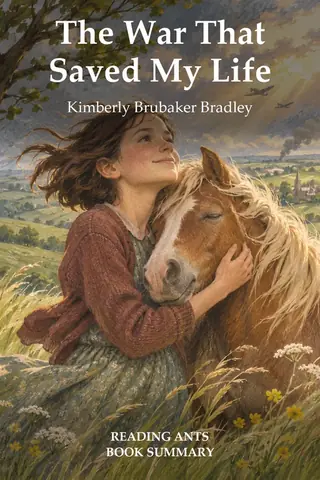
The War That Saved My Life
Kimberly Brubaker Bradley
A girl with a twisted foot, who has been kept shut in her mother's one-room flat, is evacuated from London in 1939, learns to ride a pony and to read, and finds out what being loved feels like.
🧸 Children's Books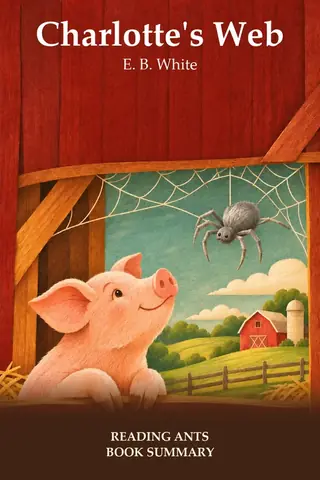
Charlotte's Web
E. B. White
A lonely pig named Wilbur learns he is going to be killed, and his clever friend Charlotte, a spider, comes up with an amazing plan to save his life.
🧸 Children's Books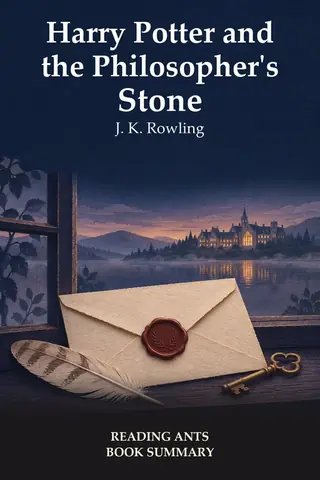
Harry Potter and the Philosopher's Stone
J. K. Rowling
An unloved orphan boy discovers on his eleventh birthday that he is a famous wizard, and during his first year at a magical school he makes true friends and faces the dark wizard who killed his parents.
🧸 Children's BooksWant something different?
Pick another topic and we will show you three books to start with.