 Reading Ants
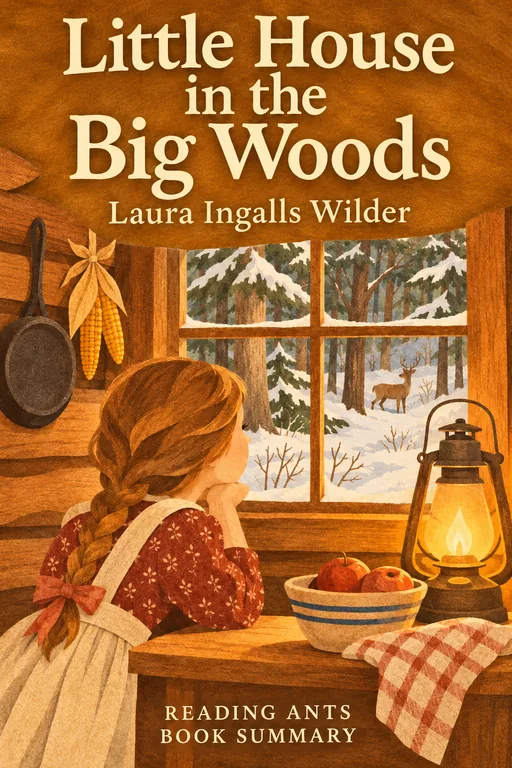
Little House in the Big Woods
A little girl named Laura describes a year of her family's life in a log house in the Wisconsin woods in the 1870s, with its work, stories, songs and the cozy comfort of home.
Overview
Little House in the Big Woods is the first book in the Little House series by Laura Ingalls Wilder, based on her own childhood. It was published in 1932, when she was in her sixties. The story is set in a small log cabin in the Big Woods of Wisconsin, many miles from the nearest town. Laura is about five years old, and she lives with Pa, Ma, her older sister Mary and baby sister Carrie. The book follows the family through the seasons: they hunt, preserve food, make butter and cheese, visit relatives and enjoy music, stories and holidays. It is a gentle picture of pioneer family life.
Main Characters
- Laura Ingalls: the narrator, a lively and curious little girl of about five.
- Mary: Laura’s older sister, who is well behaved and patient.
- Carrie: the baby of the family.
- Pa (Charles Ingalls): a strong, cheerful hunter and farmer who plays the fiddle and tells stories.
- Ma (Caroline Ingalls): a gentle, hardworking and firm mother who keeps the home.
- Jack: the family’s bulldog.
- Grandpa and Grandma, aunts and uncles: relatives who live nearby in the woods.
Full Summary
Preparing for Winter, and Stories
The book opens in the Big Woods, where the trees are huge and the wolves and bears sometimes roam. The family lives in a log house, and in the autumn, they prepare for winter. Pa hunts deer and bears, and the family salts and smokes the meat. Ma and the girls dry vegetables, and they store cheese and pumpkins. Pa also tells the girls stories, such as the tale of how his father was chased by a panther, and plays his fiddle in the evening, while Laura and Mary listen from their trundle bed.
Everyday Life
Each day of the week has its own job: Monday for washing, Tuesday for ironing and so on. The girls help with the chores, and in the evenings, Pa makes bullets and tells tales. Laura learns to be patient and to follow the rules, though she sometimes finds it hard, and she envies Mary’s golden curls. In one story, Pa, walking home in the dark, sees a big black shape and is sure that it is a bear, and prepares to fight it, until he finds that it is only a burned stump. Ma, too, has a mistaken meeting with a bear, when she slaps what she thinks is the cow in the barnyard, and finds it is a bear.
Sugaring Off and Visits
In late winter, the family visits Grandpa’s house for the maple sugar harvest. The cousins join in as the adults boil sap in huge kettles over a fire, and pour hot syrup onto clean snow to harden into candy. It is a joyful day, and the children eat until they are full of sweetness and run races in the sunshine while the grown-ups work and laugh. At the same season, there is a big dance at Grandpa’s, with fiddle music and neighbors. At other times, Aunt Eliza and Uncle Peter visit, and the children play games.
Spring, Summer and Harvest
As the weather warms, Pa plants crops, and the family works in the garden. Ma makes butter and cheese from the milk of their cow, and the girls help to churn butter. In summer, the family picks berries and the girls help in the garden, pulling weeds and watering the plants. Pa builds and mends, and the little house seems to grow warmer and fuller as the cellar fills with potatoes, carrots, turnips and cabbages, and the loft with dried herbs and pumpkins. In the harvest season, neighbors help with threshing the oats, and the family brings in the crops, storing food again for winter. Pa also butchers a hog in the autumn, and the girls play with the pig’s bladder like a balloon, which shows how nothing was wasted and how even chores could be turned into play.
Christmas and Home
Christmas, in the middle of winter, is a high point of the year: the little girls are delighted with small gifts, such as a rag doll, mittens and a stick of candy, because they have so little. They also enjoy the family’s love and a cozy supper. The book ends on an evening when Pa plays the fiddle and sings. Laura, listening, feels the warmth of the fire and the comfort of her family, and understands that this moment is precious. She wishes it could last forever, and she tells herself to remember the song, the firelight and the sound of the wind in the trees.
Why It Matters
Little House in the Big Woods began one of the most famous series in American children’s literature, which inspired the long-running television show Little House on the Prairie in the 1970s and 1980s. The books have been read by many millions and are valued for their detailed pictures of pioneer life, from making butter and bullets to preserving food.
They have also been useful in teaching about American history and the importance of family, work and resourcefulness. Wilder’s plain, direct style, with clear descriptions and gentle humor, is considered a model of simple storytelling.
Key Takeaways
- Family is a source of strength. Love and cooperation make hardships bearable.
- Hard work brings satisfaction. Each task has a purpose and a reward.
- Simple things can bring joy. A small gift or a song is a treasure.
- Nature is both beautiful and dangerous. The woods give food and also risk.
- Traditions connect generations. Stories and songs pass on memories.
What We Can Learn
The book invites us to think about how much we depend on others and on the natural world. Making food, clothes and shelter was a long and shared effort, and reading about it helps us appreciate what we have.
It also shows the value of patience and gratitude. Laura and Mary are happy with little, and learn to enjoy what they receive.
Finally, it reminds us of the importance of family stories. By telling and writing them down, Wilder made her childhood a gift to many readers.
Criticism and Counterpoints
Later books in the series have been criticized for how they portray Native Americans, and for repeating stereotypes held by settlers at the time, and this has led to discussion about the author’s legacy. In 2018, an American library association removed Wilder’s name from a children’s literature award for this reason, replacing it with a different title. This first book has less of such content than the later ones, but it includes a few remarks reflecting its time.
Others note that the books are not strictly factual, because Wilder rearranged events and changed details, and that her daughter, Rose Wilder Lane, helped edit them. Some modern readers find the picture of pioneer life too sunny. Still, many appreciate its warmth and detail.
Who Should Read It
This book suits children from about six or seven, and can be read aloud to younger ones. It is a good book for families who enjoy history and life on a farm. Adults may want to talk with children about the parts that reflect old attitudes.
Want the whole book?
A summary is a taste, not the meal. Here is where to find the full book.
You reached the end 🎉
Nicely done. Mark this one as read, and we will suggest what to read next.
Read this next
Anne of Green Gables
L. M. Montgomery
A talkative, imaginative red-haired orphan is sent by mistake to an elderly brother and sister who wanted a boy, and she wins their hearts and fills their quiet farm with life.
🧸 Children's Books
Little Women
Louisa May Alcott
Four very different sisters grow up together in a loving but poor family in New England during and after the American Civil War, learning about love, ambition, loss and finding their own paths in life.
📜 Classics
Charlotte's Web
E. B. White
A lonely pig named Wilbur learns he is going to be killed, and his clever friend Charlotte, a spider, comes up with an amazing plan to save his life.
🧸 Children's BooksHarry Potter and the Philosopher's Stone
J. K. Rowling
An unloved orphan boy discovers on his eleventh birthday that he is a famous wizard, and during his first year at a magical school he makes true friends and faces the dark wizard who killed his parents.
🧸 Children's Books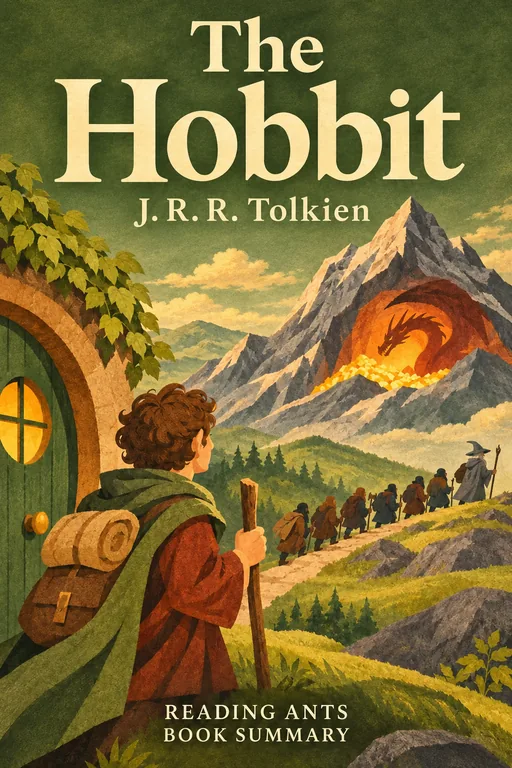
The Hobbit
J. R. R. Tolkien
A comfortable, home-loving hobbit is swept into a dangerous quest with thirteen dwarves to win back their treasure from a dragon, and discovers along the way that he is far braver and cleverer than he ever imagined.
🧸 Children's Books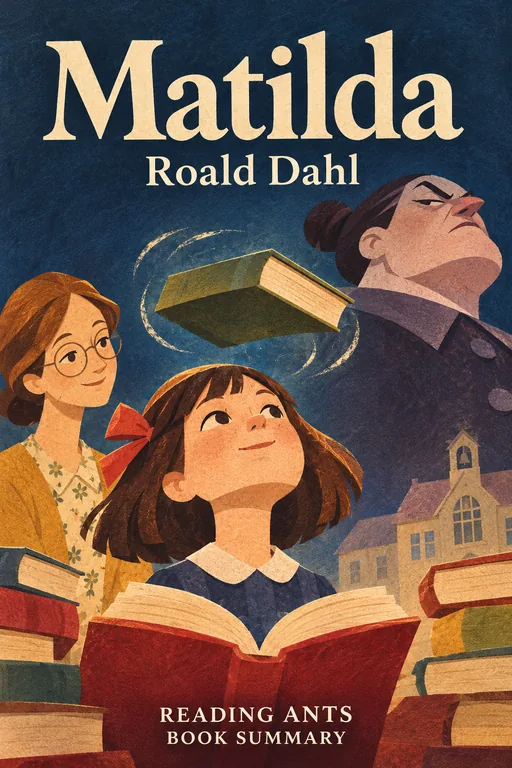
Matilda
Roald Dahl
A brilliant little girl with awful parents and a terrifying headmistress discovers she has magical powers, and uses her wits and her magic to help the one adult who truly cares for her.
🧸 Children's BooksWant something different?
Pick another topic and we will show you three books to start with.