 Reading Ants
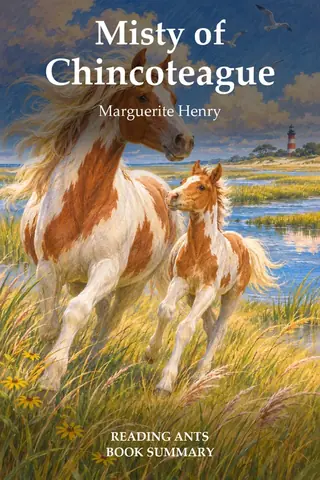
Misty of Chincoteague
Two children on a Virginia island work to buy a wild pony and her foal from the annual roundup, and then must decide what is best for the mare.
Overview
Misty of Chincoteague is a 1947 novel by Marguerite Henry, with pictures by Wesley Dennis, and it was a Newbery Honor book. It is based on the real wild ponies of Assateague Island, off the coast of Virginia, whose ancestors are said to have swum ashore from a wrecked Spanish ship. Every summer the people of nearby Chincoteague Island hold a roundup, and the ponies are made to swim across the channel, to be sold. Two children, Paul and Maureen Beebe, live with their grandparents and dream of owning a pony from the herd. The book is about patience, determination and understanding a free creature.
Main Characters
- Paul Beebe: a boy who is determined to catch a wild mare called Phantom.
- Maureen Beebe: Paul’s sister, who works with him to save money.
- Grandpa and Grandma Beebe: the children’s guardians.
- Phantom: a wild mare who has escaped roundups for two years.
- Misty: Phantom’s foal.
- Pied Piper: the stallion who leads the herd.
- The volunteer firemen: who run the roundup and the sale on Pony Penning Day.
Full Summary
The Wild Ponies
The story begins with a legend: long ago, a Spanish ship wrecked off the Virginia coast, and its ponies swam to the island of Assateague, where they became wild. Over the centuries, they have grown tough and clever. Each year the people of Chincoteague round up some of the ponies, swim them across the channel and sell them at a fair known as Pony Penning Day.
The Dream
Paul and Maureen Beebe live on Chincoteague Island with their grandparents. They want a pony of their own, and Paul has his eye on a wild mare called Phantom, who has escaped the roundup for two years. The children decide to earn the money to buy her. They work at odd jobs, such as raking clams and halter-breaking Grandpa’s colts, and save every cent they can.
The Roundup
When the roundup day arrives, Paul joins the riders and finally manages to catch Phantom, because she is slowed by her new foal, Misty. The children now have the mare and her baby, though they still have to pay for them at the sale. But before they can, a man from the mainland buys the pair for his son.
Getting Them Back
The Beebes are disappointed, but their luck turns: the buyer’s son wins a colt in the yearly raffle, and he no longer needs a pony. The Beebes buy back Phantom and Misty. Over the next year Paul and Maureen train Phantom to be ridden, and they keep Misty out of trouble.
The Race
The next year, on Pony Penning Day, Paul rides Phantom in a race, and she wins. But Phantom is not happy in captivity, and the children notice that she seems restless, as if she hears her old herd calling from across the water.
Letting Go
The next day, Phantom sees her old herd, led by the stallion Pied Piper, being released to swim back to Assateague. Paul understands what she wants, and releases her. She rejoins her herd and swims back to the island. Misty stays with Paul and Maureen. The ending is bittersweet, but the children know that they have done the right thing.
The Real Ponies
The story rests on a real tradition. The wild ponies of Assateague, who are said to descend from animals that survived a shipwreck, are still rounded up each July, and some are sold to raise money for the fire company of Chincoteague. Marguerite Henry visited Chincoteague during Pony Penning in 1946 and met the Beebe family, and she promised to put the grandchildren in her book. The real Misty was born that summer on the Beebe family’s ranch on Chincoteague, not in the wild as in the story. That closeness to real places and people gives the book its warmth. The ponies are not cuddly toys. They are strong and independent, and the book respects that. Phantom is never fully tamed, and the choice at the end to let her go is what gives the story its depth.
Pony Penning Day
The annual roundup is the center of the book. On Pony Penning Day the wild ponies are gathered on Assateague and driven to swim across the channel to Chincoteague, where ponies are sold to raise money for the volunteer fire company. For the Beebe children it is also a test, since they have to turn the money they have saved into a pony, and the roundup is the only chance. The scene shows both the excitement of the crowd and the fear of the ponies, and it sets the stakes for the rest of the story.
Why It Matters
Misty of Chincoteague was a Newbery Honor book and led to a series of books about Misty, and to a film in 1961. It has made the island of Chincoteague and its ponies a famous place to visit: Pony Penning Day is still held every July, and visitors come to see it. For many readers it is the first horse story they love.
It is also a story about the wisdom of letting something go. By freeing Phantom, Paul shows a respect for the wild animal that makes the book more than a simple tale of winning a prize.
Key Takeaways
- Hard work earns a dream. Paul and Maureen save and work for the ponies.
- Patience matters. They tame Phantom slowly.
- Wild animals have needs of their own. Phantom longs for her herd.
- Love sometimes means letting go. Paul sets Phantom free.
- Family and community support children. The grandparents and neighbors help.
What We Can Learn
If you want something badly, the story shows that effort and patience can help. Paul and Maureen do not win the ponies by luck, but by work.
The book also teaches that loving a creature means caring about what is best for it, even when that is hard. Paul’s decision to release Phantom shows maturity.
Finally, it reminds us of the beauty of wild places and the animals that live in them, and of our duty to protect them for the children who come after us.
Criticism and Counterpoints
Some readers find that the plot is slow in the middle, with detailed descriptions of the island and ponies, and that the characters are drawn simply. Others say that the book’s picture of the roundup, in which wild ponies are driven into the water, is cheerful and glosses over the strain on the animals. A few critics feel that the children’s luck, such as the raffle that brings the ponies back to them, is very convenient. But many readers love its warmth and its horses.
Who Should Read It
This book suits readers from about eight to twelve, especially horse lovers, and families who like animal stories to read aloud. It is a good companion for a visit to Chincoteague. Readers who prefer fast action may find it gentle.
Want the whole book?
A summary is a taste, not the meal. Here is where to find the full book.
You reached the end 🎉
Nicely done. Mark this one as read, and we will suggest what to read next.
Read this next
Black Beauty
Anna Sewell
A gentle black horse tells the story of his life, from a happy childhood to hard years pulling cabs, and shows how kindness or cruelty can change an animal's whole life.
🧸 Children's Books
Where the Red Fern Grows
Wilson Rawls
A poor boy in the Ozark Mountains of Oklahoma works for two years to buy two redbone coonhound puppies, and the three become inseparable until a tragic ending.
🧸 Children's Books
Shiloh
Phyllis Reynolds Naylor
An eleven-year-old boy in the West Virginia hills finds a beagle that is mistreated by its owner, and tries to save it, bending the truth along the way.
🧸 Children's Books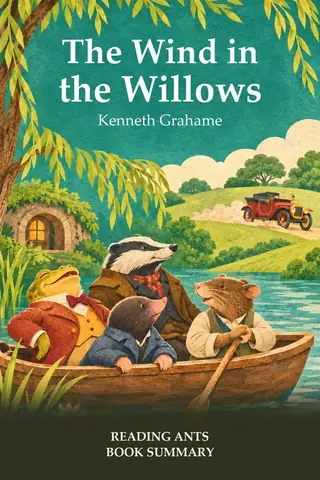
The Wind in the Willows
Kenneth Grahame
A shy Mole, a kindly Water Rat, a gruff Badger and a boastful Toad share riverside adventures in the English countryside, in a story about friendship, home and the madness of Mr. Toad's passion for motorcars.
🧸 Children's Books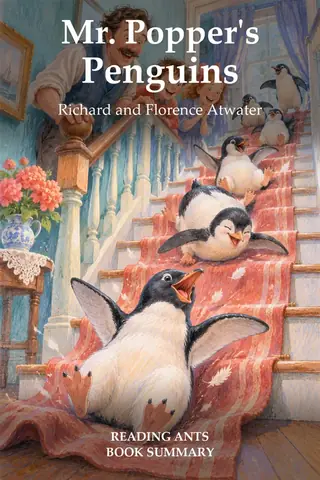
Mr. Popper's Penguins
Richard and Florence Atwater
A dreamy house painter in the little town of Stillwater gets a penguin as a gift, and ends up with twelve of them, and a career in show business.
🧸 Children's Books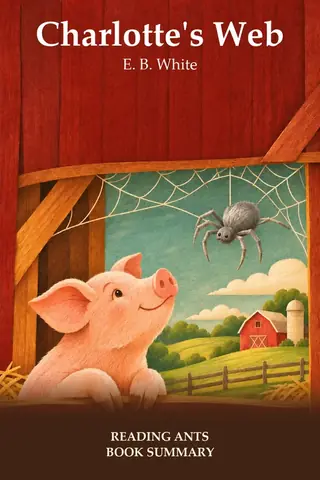
Charlotte's Web
E. B. White
A lonely pig named Wilbur learns he is going to be killed, and his clever friend Charlotte, a spider, comes up with an amazing plan to save his life.
🧸 Children's BooksWant something different?
Pick another topic and we will show you three books to start with.