 Reading Ants
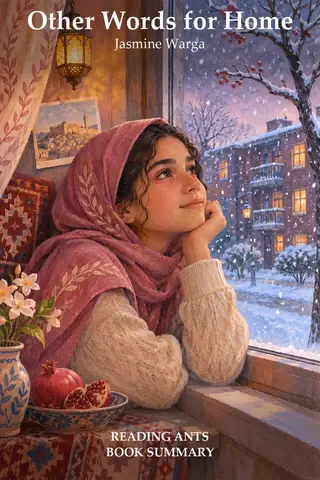
Other Words for Home
A twelve-year-old girl from Syria moves to Cincinnati to escape a war that is coming closer, and finds friends, a voice and a new meaning of home.
Overview
Other Words for Home is a 2019 novel in free verse by Jasmine Warga, and a Newbery Honor book in 2020. Jude lives in a Mediterranean coastal city in Syria, which has so far been spared the worst of the war that is spreading across the country. She has a best friend, her cousin Fatima, and an older brother, Issa, who becomes involved in the protests. When her mother learns that she is expecting a baby, the family decides that Jude and her mother must leave, and the two go to stay with Jude’s uncle’s family in Cincinnati, Ohio. The poems follow Jude as she learns a new school, faces prejudice, and finds a part in a play. It is a story of leaving and arriving, and of the many words for home.
Main Characters
- Jude: the twelve-year-old narrator and poet, who moves from Syria to Ohio.
- Issa: her older brother, who becomes involved in the protests, sides with the rebels and stays behind in Syria.
- Fatima: her cousin and best friend in Syria.
- Jude’s mother and father: her mother comes with her and is expecting a baby, and her father stays in Syria.
- Uncle Mazin and Aunt Michelle: relatives in Cincinnati.
- Sarah: Jude’s cousin, who is unfriendly at first.
- Layla: a girl a year older than Jude, from a Lebanese family that runs a restaurant.
- Ben, Grace and Omar: new friends in her class for English learners.
- Miles: a kind boy at school who becomes a close friend.
Full Summary
Leaving Home
Jude lives in a Mediterranean coastal city in Syria, where the war has not yet arrived. She spends time with her cousin Fatima, and the two like to watch American movies together. Her older brother Issa becomes involved in the protests and sides with the rebels, and when police raid his apartment, the city feels much less safe. When Jude’s mother reveals that she is pregnant, the family decides that Jude and her mother must leave. Jude says goodbye to her father, her brother and her cousin, and she holds on to Issa’s parting words to be brave.
Cincinnati
Jude and her mother arrive in Ohio, to stay with Uncle Mazin, Aunt Michelle and their daughter Sarah. Jude feels both grateful and heartbroken, because she misses her family and fears for them. Sarah is unfriendly, and Jude and her mother argue often about how to fit in. Jude is surprised to be labeled “Middle Eastern” at school, an identity she had not thought much about before.
School
At school Jude struggles with her schedule and with math, and she finds support in her class for English learners, where she befriends Ben, Grace and Omar. Her cousin Sarah mostly ignores her, and Jude is hurt when she overhears Sarah asking when Jude will leave. On a nearby street Jude finds a Middle Eastern restaurant, Ali Baba, and she meets Layla, a girl a year older, whose family is from Lebanon. As her English improves, Jude grows more confident. But she also learns that Issa has moved to a more dangerous city, and she is frightened for him.
Letters and a Song
Jude writes to Fatima, but for a long time she hears nothing. At her mother’s check-up she sees the baby on the screen and learns that it will be a girl. She decides to try out for the school play and practices with her mother. She begins to wear a hijab, and she explains to her aunt that she wants to. She also does well at the tryout, even though Layla and Sarah have warned her that she may not get a part.
The Play
Jude wins a prominent part in the school play, and Sarah is in the chorus. Layla prefers to work on the sets. Jude grows close to Miles, a kind classmate, and she tells him about her worries for Issa. She meets prejudice for being Muslim. After a terrorist attack abroad, some people look at her warily, a stranger tells her to go back where she came from, and Ali Baba is vandalized. Layla stops speaking to Jude for a while, but the two make up. A postcard finally arrives from Fatima, whose family has reached Lebanon. Jude’s mother helps organize a benefit at the mosque to raise money for the restaurant, and Sarah begins to open up to Jude and to her own Syrian heritage.
A New Sister
Ben becomes a U.S. citizen. Jude’s baby sister, Amal, is born, and everyone is overjoyed. The family shares the news with Jude’s father and Issa on a video call, and Jude is relieved to see Issa alive and safe. She shows photos of Amal to her classmates and tells Miles how happy she is to know that Issa is well. The book closes around the school play, with Jude standing on the stage, braver than when she arrived.
Home in Many Places
Not everything is settled at the end. Issa is still in a war zone, her father is still far away, and Fatima is in another country. What has changed is Jude herself. She has found her voice, in English and in poetry, and she has found people who care for her. The story suggests that home is not one place, but a set of people and words that can be carried and rebuilt.
Why It Matters
Other Words for Home was a Newbery Honor book that gave young readers a Syrian girl’s view of the war and the experience of being a refugee, without showing the worst of the violence. Because it is written in free verse, it is quick to read, and the short poems carry strong feelings.
The book also shows American readers a Muslim family with warmth and humor, including prejudice and kindness in the same town. It is often used in schools to build empathy for newcomers, and the book ends with a glossary of Arabic words.
Key Takeaways
- Home can be more than one place. Jude carries Syria with her and makes a new home in Ohio.
- Language is a bridge. Learning English helps her find friends.
- Prejudice hurts, and kindness helps. Jude experiences both in her new community.
- Families are separated by war. Her brother and father stay behind.
- Courage grows in small steps. Jude learns to speak up, onstage and off.
What We Can Learn
If a new student arrives who speaks little English, Jude’s story shows how much a friendly word can mean. Sitting with someone at lunch can change the day.
The book also encourages us to learn about people who come from far away. Understanding what Jude has left makes it easier to be a good neighbor.
Finally, it shows that creative expression, in a play or in poems, can help us to find our voice in a new place, and to feel at home.
Criticism and Counterpoints
Some readers may feel that the war stays far in the background, since the story follows Jude’s new life in Ohio, and that Issa’s story is left unfinished. Poetry can also be less detailed than prose, which may disappoint readers who want more of the plot. Some parents may find the war, the hate crime and the prejudice that Jude meets heavy for younger children, though the violence is brief and not graphic. Still, many praise its emotional honesty.
Who Should Read It
This book suits readers from about ten to fourteen, especially children who are new to a country or who want to understand refugees. It is a good choice for reluctant readers, since the poems are short. Readers who want a plot full of action may find it quiet, but it is moving.
Want the whole book?
A summary is a taste, not the meal. Here is where to find the full book.
You reached the end 🎉
Nicely done. Mark this one as read, and we will suggest what to read next.
Read this next
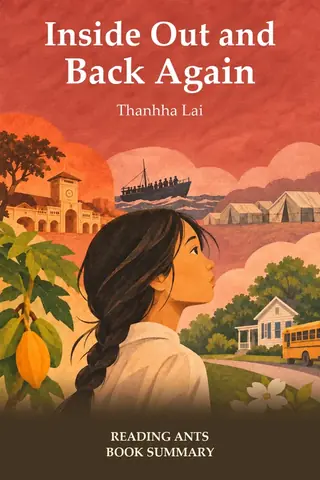
Inside Out and Back Again
Thanhha Lai
In short poems, a ten-year-old Vietnamese girl named Hà describes fleeing Saigon in 1975, living in a refugee camp and starting a new life in Alabama, where she learns a strange new language and a new way of life.
🧸 Children's Books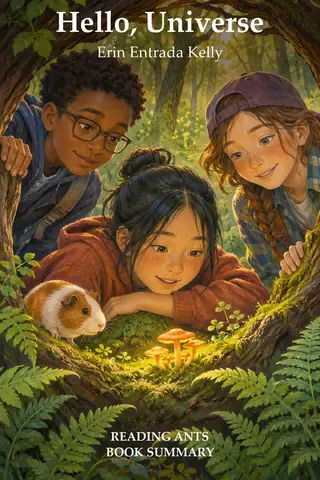
Hello, Universe
Erin Entrada Kelly
Over a few days at the start of summer, four very different kids in the same town, a shy boy, a deaf girl, a self-declared psychic and a bully, are tied together by a guinea pig, a well and a series of coincidences.
🧸 Children's Books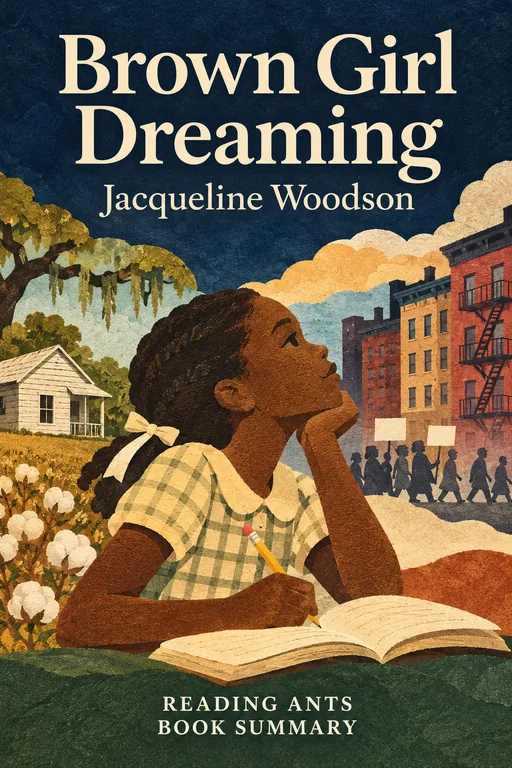
Brown Girl Dreaming
Jacqueline Woodson
A poet tells the story of her childhood in the 1960s and 1970s, moving between South Carolina and New York, and discovering her love of words.
🎒 Young Adult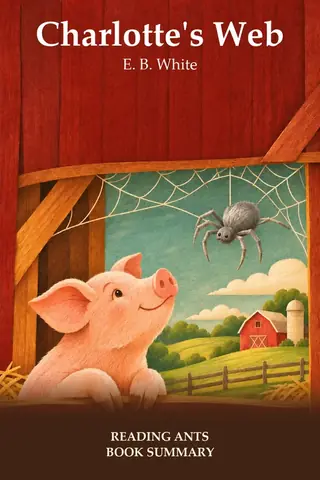
Charlotte's Web
E. B. White
A lonely pig named Wilbur learns he is going to be killed, and his clever friend Charlotte, a spider, comes up with an amazing plan to save his life.
🧸 Children's Books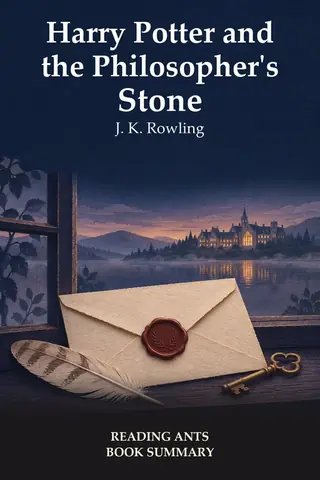
Harry Potter and the Philosopher's Stone
J. K. Rowling
An unloved orphan boy discovers on his eleventh birthday that he is a famous wizard, and during his first year at a magical school he makes true friends and faces the dark wizard who killed his parents.
🧸 Children's Books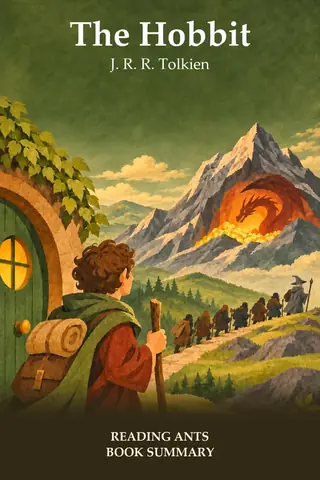
The Hobbit
J. R. R. Tolkien
A comfortable, home-loving hobbit is swept into a dangerous quest with thirteen dwarves to win back their treasure from a dragon, and discovers along the way that he is far braver and cleverer than he ever imagined.
🧸 Children's BooksWant something different?
Pick another topic and we will show you three books to start with.