 Reading Ants
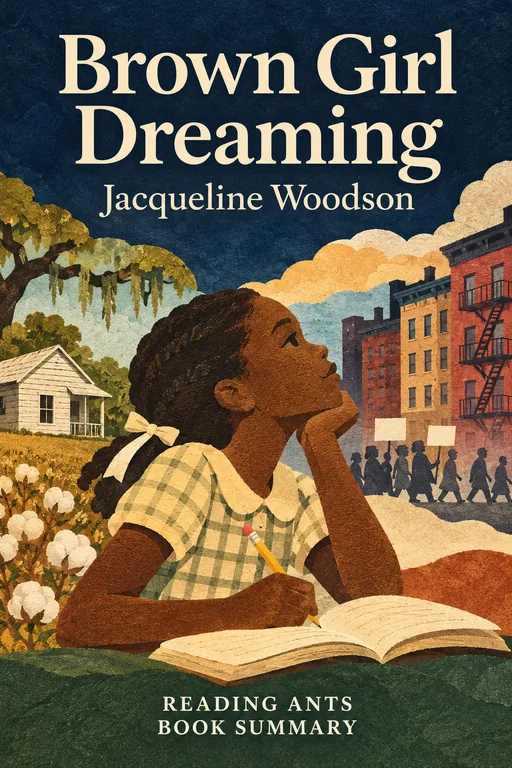
Brown Girl Dreaming
A poet tells the story of her childhood in the 1960s and 1970s, moving between South Carolina and New York, and discovering her love of words.
Overview
Brown Girl Dreaming is a memoir written in verse by Jacqueline Woodson, published in 2014. It is made up of short poems, which tell of Woodson’s life from her birth in Ohio in 1963 to her childhood in South Carolina and New York. It is set against the background of the civil rights movement, and it follows a girl who is shy, curious and slow to read, and who finds that she is a writer. It won the National Book Award for Young People’s Literature, the Newbery Honor, the Coretta Scott King Award and other prizes.
Main Characters
- Jacqueline: the narrator, a thoughtful girl who loves stories.
- Her mother: a strong woman who moves her children to New York for a better life.
- Her grandparents (Gunnar and Georgiana): the grandfather and grandmother, who care for the children in South Carolina.
- Odella, Hope and Roman: her older sister, her older brother and her younger brother.
- Her father, Jack: the man she is named after, who separates from her mother when she is a baby.
- Maria: Jacqueline’s best friend in New York, a girl from Puerto Rico.
Full Summary
Born
The book begins with the poet’s birth. She is born in Columbus, Ohio, in 1963, into a family that has roots in the South. She tells of the world that she enters: a time of marches, of protests, and of the struggle for civil rights. She lives in Ohio with her parents, her older brother and her older sister, and every winter the family travels to South Carolina to visit her mother’s parents.
Her parents separate not long after her first birthday. Her mother moves with the children to Greenville, South Carolina, where her grandparents live, and the family settles there.
South Carolina
Jacqueline spends most of her early childhood in South Carolina, living with her grandparents. Her grandmother, Georgiana, is a Jehovah’s Witness, and she raises the children in the faith, so that each day of the week has its own religious activities. Jacqueline forms a close bond with her grandfather, Gunnar, who works at a printing press with white men who do not give him the respect he has earned. On bus trips, the family must sit in the back because of segregation, and Jacqueline notices the sit-ins and marches that protest the segregation laws. Her family teaches her to stand up for what she believes, but warns her against violence. Her mother is wary of the children becoming too Southern, and she corrects their speech.
She also realizes that she has a gift for stories. She likes to listen, to watch and to store up words, though she struggles to read, and finds that her older sister, who is gifted, reads much faster.
The Move
Her mother, who wants a better life for her children, travels to New York for a weekend, and returns inspired to move the family there. She leaves again for a long time, and the children stay with their grandparents until she returns, about a year later, with a new baby boy, Roman. She then moves the family to New York.
In New York, the family lives in an apartment in Brooklyn. Jacqueline and her siblings feel out of place, because of their Southern accents and upbringing. Her aunt Kay lives in the upstairs apartment and forms a close bond with Jacqueline, but she dies after a fall on the stairs. Jacqueline meets Maria, a girl from Puerto Rico, who becomes her best friend, and they learn about friendship from each other.
Brooklyn Days
Life in Brooklyn is very different from life in the South, and the older children go back to South Carolina for visits, including summers. Her baby brother, Roman, spends much of his early life in the hospital, because he ate lead paint. She also learns more about the civil rights movement and about the Black Panthers and feminism, and she comes to love New York and her school. Her uncle Robert goes to prison, and he changes a great deal.
Words
Jacqueline has a hard time reading at her school in New York, where her older sister is called gifted. After she writes her name all on her own for the first time, she falls in love with writing, and she decides that she can write anything she likes. She does not stand for the Pledge of Allegiance at school, because it goes against the beliefs of a Jehovah’s Witness. The poet Langston Hughes is an inspiration for her own poems, and she realizes that she can be a writer.
Reading may be slow for her, but writing comes naturally, and she does not let her slow reading hold her back.
Loss and Hope
Each time the family visits South Carolina, Grandpa Gunnar’s health is worse, because of lung cancer, until he dies. Her grandmother then moves to New York. These years are the darkest in the book, since Jacqueline also loses her aunt and sees her uncle change, but she also grows in her understanding of the world. Jacqueline writes about her feelings, and discovers that writing can help her to heal.
The book stays in her childhood. It ends with Jacqueline seeing herself as a writer, and encouraging others to make themselves into whatever they want to be.
Why It Matters
Brown Girl Dreaming is one of the most honored books for young readers in recent years. It shows how a child can find her voice, and it offers a view of the civil rights era that is personal and intimate. The poems are simple, but they are crafted with great care. The book has been widely used in schools, and it is loved by many readers who see in it their own struggles and dreams. Woodson served as Young People’s Poet Laureate from 2015 to 2017 and was later named National Ambassador for Young People’s Literature, in 2018. The book has also helped to show that poetry is a form that young readers enjoy, and it is often used by teachers to inspire students to write about their own lives and families.
Key Takeaways
- Stories shape identity. Telling her own story helps Jacqueline to understand herself.
- Family is a foundation. Her grandparents and mother give her strength.
- Learning has many paths. She learns to read in her own time.
- History is personal. The civil rights era is seen through a child’s eyes.
- Home is more than a place. She feels at home in both South Carolina and New York.
What We Can Learn
The book encourages us to value our own stories, and to listen to the stories of others. It shows that learning differences are not a barrier to success, and that every reader has their own pace.
It also reminds us how much history lives in families, and how important it is to ask questions of our parents and grandparents. Finally, it shows that writing, even a few lines, can help us to understand our feelings and the world around us.
Criticism and Counterpoints
Some readers find the verse form too sparse, and would like more detail about events. Because it is a memoir, it is told from the point of view of a child, and does not fully explain the larger history. A few readers may find the pace slow. Many readers, however, praise exactly this spare style, which lets the memories feel vivid and personal, and which makes the book easy to approach for young readers who are new to poetry.
Who Should Read It
This book is for readers from about ten up, and for adults who like poetry and memoir. It is short, and can be read in a day or taken slowly. Anyone who loves words, or who wants to understand the 1960s through a child’s eyes, will enjoy it.
Want the whole book?
A summary is a taste, not the meal. Here is where to find the full book.
You reached the end 🎉
Nicely done. Mark this one as read, and we will suggest what to read next.
Read this next
I Know Why the Caged Bird Sings
Maya Angelou
Maya Angelou tells of her childhood and youth in the segregated South and in California, a story of pain, silence and discovery in which words and books help her find her voice.
👤 Real Lives
Becoming
Michelle Obama
Michelle Obama tells her story from a working-class childhood on the South Side of Chicago to her years as First Lady, and shares what she has learned about becoming oneself.
👤 Real Lives
Inside Out and Back Again
Thanhha Lai
In short poems, a ten-year-old Vietnamese girl named Hà describes fleeing Saigon in 1975, living in a refugee camp and starting a new life in Alabama, where she learns a strange new language and a new way of life.
🧸 Children's Books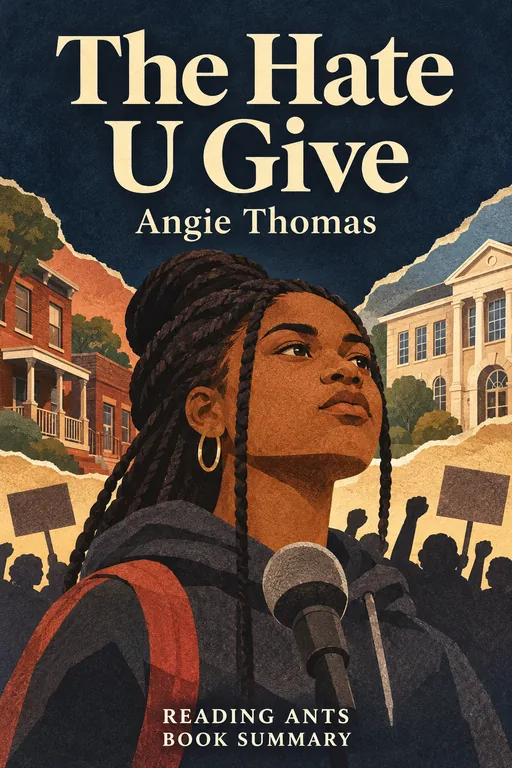
The Hate U Give
Angie Thomas
After witnessing a police officer kill her unarmed friend, a Black teenager finds her public voice while navigating grief, racism and the different expectations of her neighborhood and private school.
🎒 Young Adult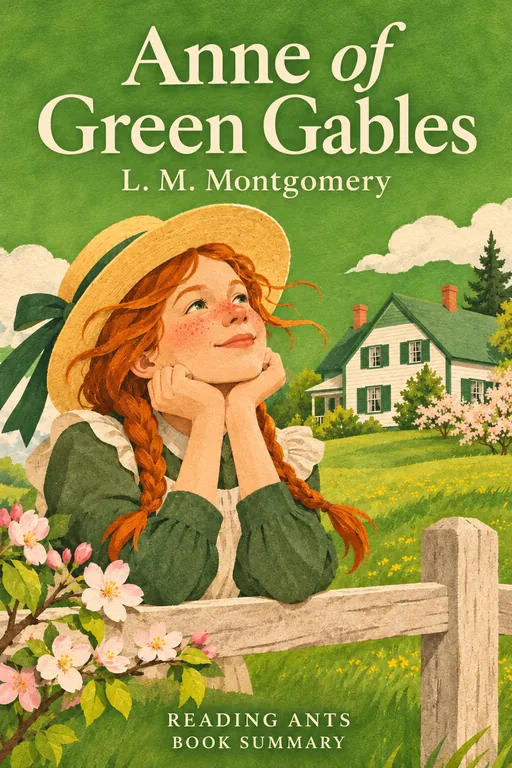
Anne of Green Gables
L. M. Montgomery
A talkative, imaginative red-haired orphan is sent by mistake to an elderly brother and sister who wanted a boy, and she wins their hearts and fills their quiet farm with life.
🧸 Children's Books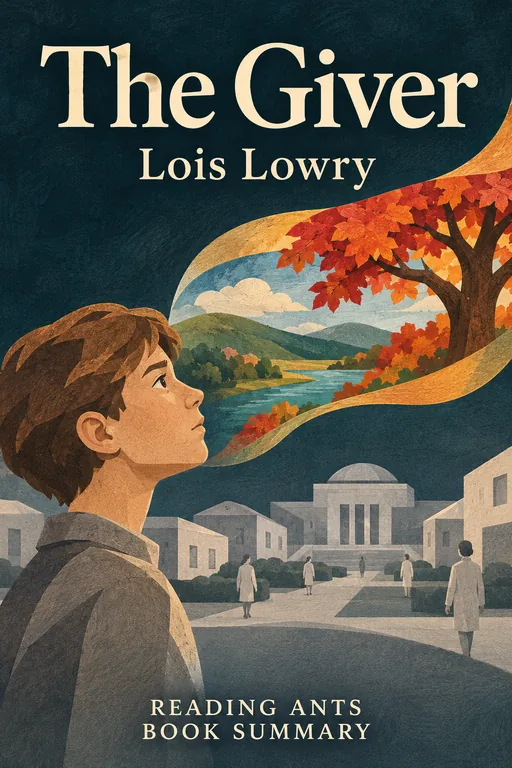
The Giver
Lois Lowry
In a perfectly controlled community with no pain, choice or color, a boy about to turn twelve is chosen to hold the memories of the past, and discovers the terrible price his people pay for their safety.
🎒 Young AdultWant something different?
Pick another topic and we will show you three books to start with.