 Reading Ants
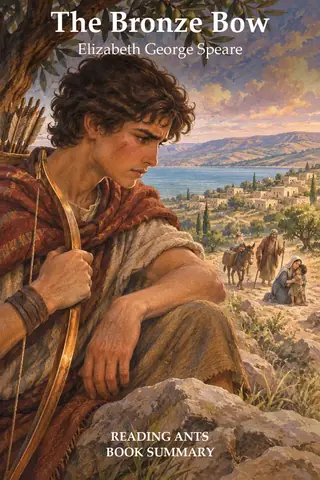
The Bronze Bow
In first-century Galilee, a young Jew filled with hatred for the Romans joins a band of outlaws, and slowly learns that revenge does not bring freedom.
Overview
The Bronze Bow is a 1961 novel by Elizabeth George Speare, the author of The Witch of Blackbird Pond, and it won the Newbery Medal in 1962. It is set in Galilee, in the time of Jesus, when the Romans ruled the land. Daniel bar Jamin swears revenge after the Romans crucify his father for trying to rescue his imprisoned uncle. As he grows up, he joins a band of outlaws who live in the hills and want to drive out the Romans. But he meets people who are following a different teacher, and his sister Leah, who has been badly hurt by grief, needs him. The book is a story of anger, loyalty and a change of heart.
Main Characters
- Daniel bar Jamin: a young man who burns with hatred for the Romans.
- Leah: his younger sister, who is troubled and afraid.
- Rosh: the leader of an outlaw band in the mountains.
- Joel bar Hezron: a friend who joins the rebels.
- Malthace: Joel’s twin sister.
- Samson: a huge enslaved man who follows Daniel loyally.
- Simon the Zealot: a friend and blacksmith who begins to follow Jesus.
- Marcus: a young Roman soldier who befriends Leah.
- Amalek: the cruel blacksmith who buys Daniel.
- Jesus: the teacher who heals Leah.
Full Summary
A Vow of Revenge
The Romans imprison Daniel bar Jamin’s uncle over unpaid taxes. Daniel’s father and several other men try to rescue him, and the Romans capture and crucify them. His mother dies of grief, and his younger sister Leah is so troubled by it that she seems to be possessed. Daniel swears to take revenge. When the family falls into poverty, an elderly relative sells him to Amalek, a cruel blacksmith. Daniel escapes into the hills.
Among the Outlaws
In the mountains Daniel is taken in by Rosh, the leader of an outlaw band who plan to overthrow Rome. Daniel sees Rosh as the one man who can break the Romans’ hold. Later he meets Joel bar Hezron and his twin sister Malthace, and the three of them promise to fight the Romans and agree on the bronze bow as their secret sign. Joel joins Rosh’s band and promises to spy in Capernaum. The band also takes a huge captive, whom they name Samson, and who follows Daniel with great devotion.
A New Duty
Daniel learns that his grandmother is dying, and he goes back to his home village, Ketzah. After she dies, he becomes Leah’s guardian. Simon the Zealot, a friend who has begun to follow Jesus, leaves Daniel his blacksmith shop. Daniel still hates Rome, and he secretly recruits young men from his village to fight for Rosh. As a password they use a line from a psalm about a bow of bronze.
The Banquet
Joel is captured while spying on a Roman banquet. Daniel and his young band try to rescue him. The attack goes badly, until Samson joins the fight and saves the day. Joel is freed, but the band pays a heavy price, and Samson is lost to Daniel for good.
Doubts
Daniel begins to see that the rebellion has weakened his own people more than it has weakened Rome. He also sees that Rosh is greedy and steals, even from his own people, and he begins to turn away from him. He and Joel begin to see Jesus as the leader they have been waiting for, not a leader who fights with weapons but one who offers another kind of freedom. Daniel is torn between his old hatred and what he now hears.
Leah and Marcus
A young Roman soldier, Marcus, tries to befriend Leah. When Daniel learns of it he is furious, and Leah falls back into her old trouble and becomes seriously ill. Jesus heals her. Daniel decides that knowing and following Jesus is enough. He reaches out to Marcus, inviting him into his home to see Leah. The bronze bow, which was a sign of war, becomes a symbol of a different kind of strength.
The Meaning of the Bronze Bow
The title comes from a line in a psalm, about being trained for war so that one’s arms can bend a bow of bronze. For Daniel and his friends it stands for strength and the hope of defeating Rome by force. As the story goes on, the image changes. Daniel sees that the rebellion has hurt his own people, that Rosh is not the hero he imagined, and that the real enemy is the hatred inside himself. By the end, love is shown to be the force that can bend the bow of bronze, a different kind of strength, which comes from forgiveness.
Why It Matters
The Bronze Bow won the Newbery Medal in 1962 and was Elizabeth George Speare’s second Newbery winner. It tells the story of the time of Jesus through the eyes of an ordinary young person, and not as a Bible story retold. When it came out, Kirkus Reviews praised the author for bringing the era to life with entirely human characters. It gives a picture of everyday life in ancient Galilee, with its villages, hills and the tensions of Roman rule.
The book is also a story about how hatred can consume a person. Daniel’s desire for revenge hurts him and his sister, and the novel suggests that love and forgiveness are a stronger force.
Key Takeaways
- Hatred destroys. Daniel’s anger harms the people he loves.
- Violence does not always free. The rebellion weakens his own people.
- Loyalty can be deep. Samson gives everything for Daniel.
- Forgiveness is a strength. Daniel learns to be kind to an enemy.
- Healing comes through compassion. Leah is helped by love, not by force.
What We Can Learn
If you are angry at someone who hurt you, Daniel’s story shows how anger can grow until it controls you. Talking to a trusted person, and letting go of the wish for revenge, can bring relief.
The book also encourages us to look at those we see as enemies, as Daniel eventually does with Marcus. He is a person, too.
Finally, it shows that real strength is sometimes in patience and mercy, not in force. Daniel’s willingness to welcome a Roman soldier into his home is his greatest act of courage.
Criticism and Counterpoints
Some Jewish and Christian groups and scholars have criticized the novel for a hostile picture of first-century Judaism, an idealized picture of early Christianity, and some historical inaccuracies. In 2006 a California school district removed it from a social studies reading list after critics said it glorified Jesus and treated the Jews unfairly, which led to protests from teachers who objected to the censorship. A librarian of the time felt that it is well told but lacks greatness, and that its style has a “commercial sameness.” The battle scene, and the loss of Samson, may be hard for younger readers.
Who Should Read It
This book suits readers from about ten to fourteen who like historical fiction, adventure and stories about faith and forgiveness. It is a good choice for classes on the ancient world, and teachers may wish to discuss its picture of the period. Readers who want a non-religious story may find the ending more devout than they expected.
Want the whole book?
A summary is a taste, not the meal. Here is where to find the full book.
You reached the end 🎉
Nicely done. Mark this one as read, and we will suggest what to read next.
Read this next
The Witch of Blackbird Pond
Elizabeth George Speare
A spirited sixteen-year-old girl from Barbados arrives in strict Puritan Connecticut in 1687, befriends an old Quaker woman, and is accused of witchcraft.
🧸 Children's Books
Island of the Blue Dolphins
Scott O'Dell
After her people leave their island and she is left behind, a Native American girl named Karana survives alone for years, learning to hunt, build and make friends with animals.
🧸 Children's Books
The Cay
Theodore Taylor
During World War II, a prejudiced eleven-year-old American boy is shipwrecked on a tiny Caribbean island, blind, with an old West Indian sailor who teaches him to survive and to see people differently.
🧸 Children's Books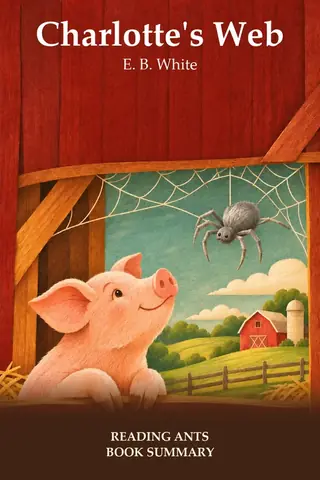
Charlotte's Web
E. B. White
A lonely pig named Wilbur learns he is going to be killed, and his clever friend Charlotte, a spider, comes up with an amazing plan to save his life.
🧸 Children's Books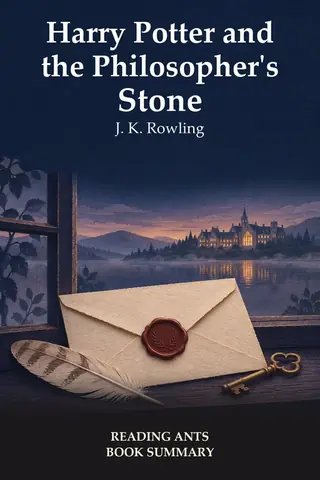
Harry Potter and the Philosopher's Stone
J. K. Rowling
An unloved orphan boy discovers on his eleventh birthday that he is a famous wizard, and during his first year at a magical school he makes true friends and faces the dark wizard who killed his parents.
🧸 Children's Books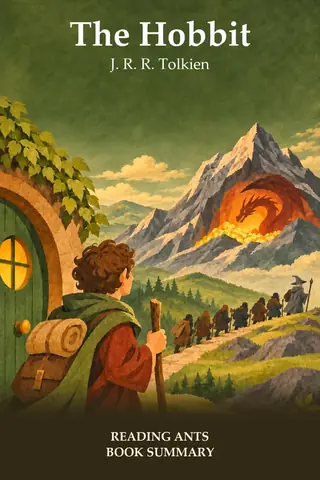
The Hobbit
J. R. R. Tolkien
A comfortable, home-loving hobbit is swept into a dangerous quest with thirteen dwarves to win back their treasure from a dragon, and discovers along the way that he is far braver and cleverer than he ever imagined.
🧸 Children's BooksWant something different?
Pick another topic and we will show you three books to start with.