 Reading Ants
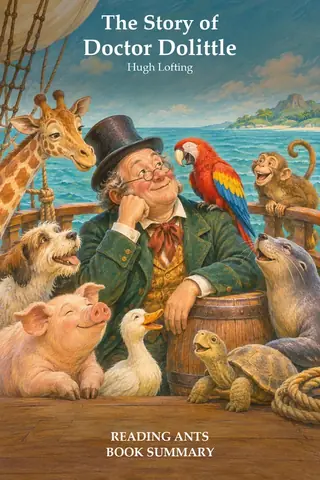
The Story of Doctor Dolittle
A kind English doctor learns to talk to animals from his parrot, sails to Africa with a crew of his animal friends to cure a plague among the monkeys, and returns home with the strangest pet in the world.
Overview
The Story of Doctor Dolittle is a children’s novel by the British author Hugh Lofting, first published in 1920 and illustrated by the author. It is the first book about Doctor John Dolittle, a gentle physician in the English village of Puddleby-on-the-Marsh who prefers animals to people. The book is a light, funny adventure full of talking animals, a shipwreck, a journey through jungle, pirates and a rescue at sea. It is also a product of its time: the original text contains racist ideas and language about Africans, which is explained in the sections below, and later editions were revised.
Main Characters
- Doctor John Dolittle: a kind, absent-minded physician who learns the languages of animals.
- Polynesia: his clever, sharp-tongued parrot, who teaches him animal speech.
- Jip: the dog, whose sense of smell turns out to be very important.
- Dab-Dab: the sensible duck who keeps house.
- Gub-Gub: the greedy, funny pig.
- Too-Too: the owl who can listen very well.
- Chee-Chee: a monkey the Doctor rescues, who knows Africa.
- The pushmi-pullyu: a rare animal with a head at each end.
- Sarah Dolittle: the Doctor’s sister and housekeeper, who leaves when he will not send the crocodile away.
- Prince Bumpo: the son of an African king, who wants to look like a European fairy-tale prince.
Full Summary
A Doctor Who Loves Animals
Doctor John Dolittle lives in Puddleby-on-the-Marsh with his sister Sarah and so many pets that his human patients stop coming. Slowly he becomes poor. A local man who sells cat food suggests that he become an animal doctor instead, and the parrot Polynesia agrees. She secretly teaches him the languages of animals, which takes time and patience, and soon he can listen to any creature and answer it.
News of the Doctor spreads through the animal world. Creatures come from far away with their troubles, and he builds a separate door in his house for each kind. A horse that cannot see properly is given a pair of green spectacles, and the animals love him for treating them as equals.
The Doctor rescues the monkey Chee-Chee from an organ-grinder and takes in a crocodile that has a toothache, and the frightened townspeople stop bringing their animals to him. Sarah, who cannot stand the creature, threatens to go off and get married if it stays, and she leaves when the Doctor will not send it away. The animals take over the housekeeping, but an early winter leaves the household cold and hungry.
Their luck changes when a swallow arrives from Africa with a message. The monkeys there are dying from a sickness, and they need the famous Doctor to come at once.
The Voyage to Africa
The Doctor has no money for a ship, but a sailor lends him a boat and a grocer lends him food. He sets off with Jip, Dab-Dab, Gub-Gub, Too-Too, Chee-Chee, Polynesia and the crocodile. Polynesia knows the sea and gives the sailing orders. For six weeks they sail south behind a swallow who flies ahead of the ship and carries a tiny lantern at night. When the onions run short, porpoises fetch wild onions from an island and drag them along in seaweed nets.
Just before they reach the coast, a storm drives the ship onto a rock and a hole opens in the bottom. Dab-Dab flies a rope to a palm tree on the shore, and the animals who cannot swim, such as Chee-Chee and Gub-Gub, climb along it. The ship is smashed on the rocks, and the animals shelter in a cave. Next morning Dab-Dab finds the Doctor’s hat, which had blown into the sea, floating on the water with a stowaway white mouse sitting inside it. Soon after, a man leads the travelers to the king of the Jolliginki.
Prisoners of the King
The king does not trust white men, because of how one had treated him in the past, so he has the Doctor and his animals shut in a prison. Polynesia slips out between the bars. That night she goes into the palace and copies the Doctor’s voice to give the king a scare, saying that he will fall ill unless the prisoners are freed.
The frightened king gives the order, but the queen later tells him what she saw. When he finds the cell empty, he sends soldiers in a furious search. Chee-Chee leads the group through secret paths and hides them in a hollow tree until the soldiers give up.
The Bridge of Apes
The party hurries on toward the monkeys’ country. At a cliff above a river the monkeys link hands and feet to make a living bridge, and everyone crosses while the king’s men are left behind.
In the Land of the Monkeys the Doctor finds thousands of monkeys sick and many dead. He separates the sick from the well and has all the healthy monkeys come to be “vaccinated” (the book’s own word), working for three days and nights, and then he fills a big house with beds for the sick. There are not enough helpers, so he calls on the other animals. The proud leader of the lions refuses to nurse monkeys, but when his own cub falls ill his wife scolds him for offending the one doctor who can help. He comes back with the leopards and the antelopes to offer help, and he asks the Doctor to look at the cub. Within two weeks the last monkey has recovered, and the Doctor sleeps for three days.
The Rarest Animal
When the Doctor says he must go home to pay his debts, the monkeys hold a council. Chee-Chee explains that in the Land of the White Men you cannot even eat without money, so they decide to give the Doctor a farewell present. Coconuts and bananas would spoil, so Chee-Chee suggests a rare animal that the white men do not have. The monkeys choose the pushmi-pullyu, a shy beast with a head at each end that no hunter has ever caught.
They surround him in the tall grass and ask him to go with the Doctor to the Land of the White Men, where people would pay to see a two-headed animal and the Doctor could pay his debts. He refuses at first, because he hates being stared at, but after three days of persuasion he agrees to meet the Doctor and decide. The Doctor says he does not want money, but Dab-Dab reminds him of the butcher’s bill in Puddleby and of the sailor’s lost boat. The pushmi-pullyu agrees to go, if the Doctor promises to send him back should he dislike the Land of the White Men. After a farewell feast the travelers set off.
Prince Bumpo
Lost in the jungle for many days, the travelers wander into the king’s back garden and are caught again. The king orders the Doctor to scrub his kitchen floor for the rest of his life. Polynesia, who has hidden in a tree, watches Prince Bumpo read fairy tales and sigh that he wishes he were a white prince. Speaking in a tiny voice from a rose-bud, she pretends to be Tripsitinka, the Queen of the Fairies, and tells him that a wizard in his father’s prison can turn him white.
That night Bumpo tells the Doctor that he once kissed the Sleeping Beauty, who woke, cried out that he was black and ran away. The Doctor agrees to try, if Bumpo first gets a ship ready with food and then opens the prison. The Doctor mixes a potion and the prince dips his face in it. His face turns white and his eyes gray. This subplot, which treats white skin as better, is one of the passages for which the book has been strongly criticized. Bumpo unlocks the door, and the Doctor, who fears the cure will not last, refuses to leave him his only mirror. Chee-Chee, Polynesia and the crocodile stay behind in Africa, because it is their home.
Pirates, a Boy and a Rock
On the way home the ship passes the coast of Barbary, where pirates chase passing ships. A fast ship with three red sails comes up behind them. Even with every sail up the pirate ship gains, so the swallows tie strings to the bow and pull the ship along at great speed, and then they hide it in a bay of the Canary Islands. There the rats leave the Doctor’s ship and warn him that its rotten boards will sink it before the next night.
While the Doctor and his animals look for water, the pirates board his ship and leave their own empty, so the Doctor takes the pirates’ ship. Gub-Gub’s sneeze gives them away, and the pirate leader, Ben Ali the Barbary Dragon, blocks the way out of the bay. The Doctor keeps him talking until the old ship sinks under the pirates. Instead of letting sharks eat them, he makes Ben Ali promise to give up piracy and become a bird-seed farmer on the island, growing food for the canaries.
On the pirates’ ship Too-Too hears someone behind a locked door, and the Doctor chops his way in. He finds a small boy whose red-haired uncle, a fisherman, was put off the ship when he refused to become a pirate. Porpoises and eagles cannot find the man, but Jip smells his snuff on the wind and leads the Doctor to a bare rock, where the starving man is sleeping in a hole.
Home Again
The fishing town gives the Doctor a diamond watch and Jip a gold collar that calls him the cleverest dog in the world. Back in England, the Doctor tours the country fairs in a gipsy wagon and charges sixpence to see the pushmi-pullyu, but he refuses to sell him to any circus or menagerie. Soon he has enough money to stop, and he returns to Puddleby a rich man.
He buys the sailor two new ships and pays the grocer. Far away in Africa, the monkeys wonder whether the Good Man will ever come back, and Polynesia and the crocodile assure them that he will.
Why It Matters
This book started the Doctor Dolittle series and is one of the best-known talking-animal stories for children. It treats animals as thoughtful characters with their own languages and opinions. The idea that a human could listen to animals, and gain by it, is still a popular theme in children’s stories and films.
It is also an important example of how a classic can age badly. Since the late twentieth century, critics have said that its depiction of Africans is racist, and the author’s illustrations have been described as caricatures. The book’s estate approved changes in 1988, and later editions removed the slurs and the skin-whitening plot. Today the book is often read with that history in mind, and many parents and teachers choose a revised edition.
Key Takeaways
- Listening is a kind of kindness. The Doctor succeeds because he pays attention to creatures that nobody else bothers to understand.
- Money is not the same as success. The Doctor is poor for most of the book but keeps his friends and his purpose, and he earns his fortune by accident.
- Pride can be corrected. The lion’s proud refusal gives way when his own cub falls ill.
- Teamwork solves problems. Each animal contributes a skill, from Jip’s nose to Too-Too’s ears and the swallows’ strength.
- Old books carry old prejudices. Reading a classic also means noticing where it is unfair to people, and being ready to say so.
What We Can Learn
The Doctor’s gift is not magic but attention. He learns the language of animals because he cares what they say. In real life, a lot of trouble could be avoided if we asked what a person needs and then listened to the answer before we offered advice.
The book also shows how a group works best when everyone’s talents are used. Polynesia plans, Jip sniffs, Dab-Dab keeps things in order and the swallows fly. We can look for the same pattern in a class, a team or a family, and thank the one who does the quiet job.
Finally, it teaches us to read with open eyes. A book can be delightful and still contain ideas that are wrong or hurtful. It is fair to enjoy the adventure while saying plainly that the portrayal of the African characters is racist, and that the idea that white people are better than others is false.
Criticism and Counterpoints
The main criticism is the book’s portrayal of Africans. Critics, including the librarian Isabelle Suhl in 1968, have described its colonial attitudes, its slurs, its illustrations and the skin-whitening subplot as racist. Others point out that the story still sends a white doctor to solve problems that the Africans cannot, treating them as backward. After Lofting’s estate approved changes in 1988, new editions removed the worst material, though some critics call such editing censorship, and some modern editions use the original text because it is in the public domain. Apart from this, some modern readers find the pace uneven, the humor old-fashioned, and the plot loosely connected.
Who Should Read It
This is a good choice for readers aged about eight and up who love animal fantasy and old-fashioned adventures, and for adults who remember the Doctor from their own childhood. Because the original text includes racist language, it is best read with an adult or in a revised edition, and it is a good book to talk about together. Readers who want a modern, quick-paced story may prefer another book.
Want the whole book?
A summary is a taste, not the meal. Here is where to find the full book.
You reached the end 🎉
Nicely done. Mark this one as read, and we will suggest what to read next.
Read this next
The Wind in the Willows
Kenneth Grahame
A shy Mole, a kindly Water Rat, a gruff Badger and a boastful Toad share riverside adventures in the English countryside, in a story about friendship, home and the madness of Mr. Toad's passion for motorcars.
🧸 Children's Books
Mary Poppins
P. L. Travers
A stern, vain and magical nanny arrives on the east wind to look after the four Banks children in London, takes them on extraordinary outings, and leaves when the wind changes.
🧸 Children's Books
The Jungle Book
Rudyard Kipling
A human boy raised by wolves in the Indian jungle learns the Law of the Jungle from a wise bear and a panther, and must outwit a man-eating tiger, in a collection of classic animal stories.
🧸 Children's Books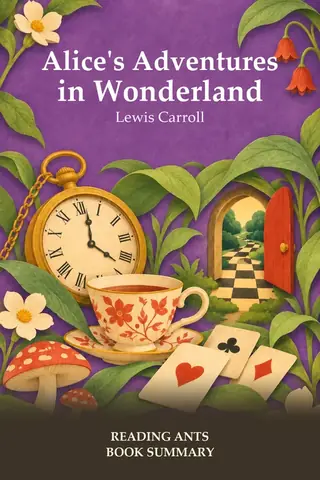
Alice's Adventures in Wonderland
Lewis Carroll
A curious girl follows a white rabbit down a hole into a crazy world where she keeps changing size, meets mad and marvelous creatures, and stands up to a furious Queen.
🧸 Children's Books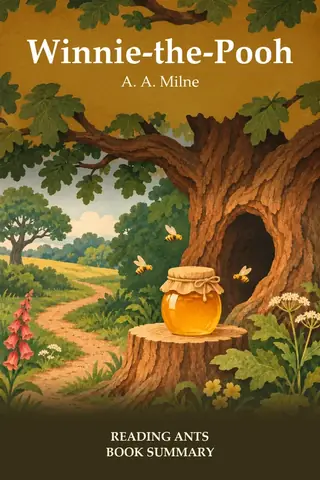
Winnie-the-Pooh
A. A. Milne
A gentle, honey-loving bear and his friends in the Hundred Acre Wood share funny, simple adventures with a boy named Christopher Robin, celebrating friendship, kindness and the joys of childhood.
🧸 Children's Books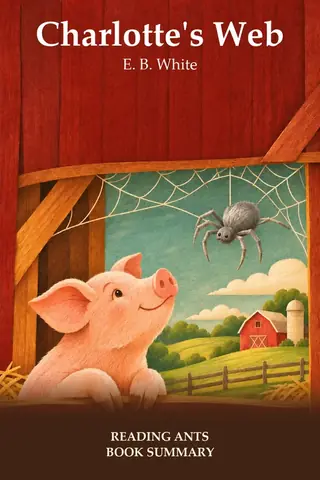
Charlotte's Web
E. B. White
A lonely pig named Wilbur learns he is going to be killed, and his clever friend Charlotte, a spider, comes up with an amazing plan to save his life.
🧸 Children's BooksWant something different?
Pick another topic and we will show you three books to start with.