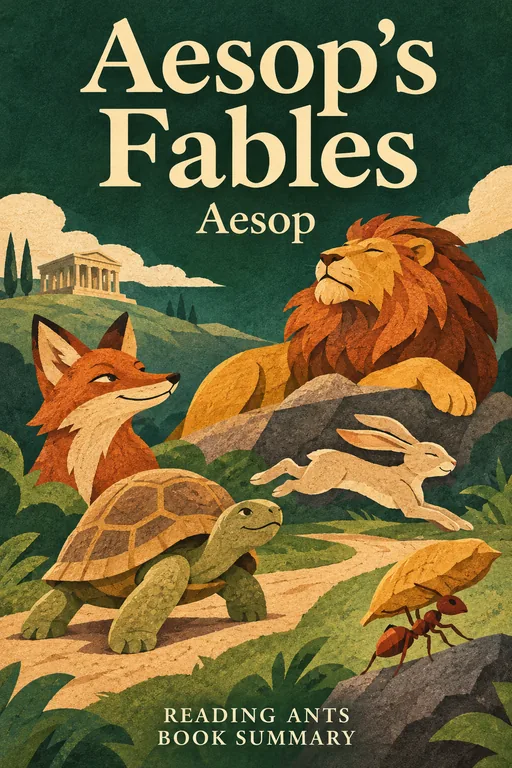
Aesop's Fables
Original title: Αισώπου Μύθοι
A collection of very short stories, mostly about talking animals, each teaching a simple lesson about life, such as slow and steady wins the race, and don't cry wolf.
Overview
Aesop’s Fables is a collection of hundreds of short moral tales credited to Aesop, a storyteller believed to have lived in ancient Greece around the sixth century BCE. According to tradition, he was an enslaved man who won his freedom through his wisdom, though little is known for certain about his life, and many of the fables were probably created by others and collected over centuries. Most fables feature animals with human traits, such as the clever fox, the proud lion and the hardworking ant, and each ends with a lesson, or moral. Simple enough for young children and wise enough for adults, these stories have been retold for more than two thousand years.
Main Characters
- The Tortoise and the Hare: a slow, steady runner and a fast, overconfident one.
- The Fox: a clever, often sly character who appears in many fables.
- The Ant and the Grasshopper: a hard worker and a carefree singer.
- The Boy Who Cried Wolf: a shepherd boy who likes to play tricks.
- The Lion and the Mouse: a mighty king of beasts and a tiny creature.
- The Crow: who appears as both foolish and clever in different fables.
- The Wind and the Sun: two forces of nature in a contest.
Full Summary
The Tortoise and the Hare
A hare boasts about how fast he is and mocks the slow tortoise. The tortoise challenges him to a race. The hare quickly runs far ahead and, sure he will win, lies down for a nap. The tortoise keeps plodding along without stopping. When the hare wakes up, he races to the finish, but the tortoise is already there. The moral: slow and steady wins the race.
The Boy Who Cried Wolf
A shepherd boy, bored while watching his sheep, shouts “Wolf!” to trick the villagers. They run to help and find no wolf, and the boy laughs. He plays the trick again, and again they come. Then one day a real wolf appears. The boy cries for help, but the villagers think he is lying again and don’t come. The wolf attacks the flock. The moral: liars are not believed, even when they tell the truth.
The Ant and the Grasshopper
All summer, the ant works hard, gathering food for the winter, while the grasshopper sings and plays and laughs at the ant for working so hard. When winter comes, the grasshopper has nothing to eat and begs the ant for food. The ant asks what he did all summer. “I sang,” says the grasshopper. “Then you can dance all winter,” the ant replies. The moral: prepare today for the needs of tomorrow.
The Lion and the Mouse
A lion catches a tiny mouse who has run across him while he slept. The mouse begs for mercy, promising that one day it will repay him. The lion laughs at the idea but lets the mouse go. Later, the lion is caught in a hunter’s net and roars helplessly. The mouse hears him, gnaws through the ropes and sets him free. The moral: no act of kindness is ever wasted, and even the small can help the great.
Clever Foxes and Foolish Crows
In The Fox and the Grapes, a hungry fox jumps again and again for a bunch of grapes hanging high on a vine, but can’t reach them. As he walks away, he says the grapes were probably sour anyway. This gave us the phrase “sour grapes,” for pretending you didn’t want something you couldn’t have.
In The Fox and the Crow, a crow sits in a tree holding a piece of cheese. A fox flatters her, praising her beauty and asking to hear her lovely voice. When the crow opens her beak to sing, the cheese falls, and the fox snatches it. The moral: beware of flatterers. But in The Crow and the Pitcher, a thirsty crow finds a pitcher with water too low to reach. She drops pebbles in, one by one, until the water rises high enough to drink. The moral: necessity is the mother of invention.
The Wind and the Sun
The North Wind and the Sun argue about who is stronger. They see a traveler wearing a cloak and agree that whoever makes him take it off wins. The Wind blows as hard as he can, but the traveler only wraps his cloak more tightly. Then the Sun shines gently and warmly, and soon the traveler takes off his cloak. The moral: kindness and persuasion succeed where force fails.
More Lessons
Many other fables are just as famous. In The Goose That Laid the Golden Eggs, a greedy farmer kills his goose to get all the gold at once and finds nothing inside, losing everything. In The Town Mouse and the Country Mouse, a simple country life with safety is found to be better than a rich city life full of danger. In The Dog and His Reflection, a dog carrying a bone sees his reflection in a stream, snaps at the “other” dog’s bone, and loses his own. Each story is just a few lines long, but its lesson is easy to remember.
Why It Matters
Aesop’s Fables is one of the oldest and most widely known collections of stories in the world. The fables were told and written down in ancient Greece and Rome, copied by scholars in the Middle Ages, and became one of the first books printed in many European languages. They have been used for centuries to teach children reading, writing and moral values.
Many common expressions come from Aesop, including “sour grapes,” “the boy who cried wolf,” “slow and steady wins the race,” “don’t count your chickens before they hatch” and “the lion’s share.” Similar animal fables exist in many cultures, such as India’s Panchatantra, and Aesop’s tales have been retold by writers like the French poet Jean de La Fontaine.
Key Takeaways
- Persistence beats talent without effort. The tortoise wins by never stopping.
- Honesty builds trust. Lies destroy our credibility when we need it most.
- Plan ahead. Hard work today prepares us for difficult times.
- Kindness comes back to us. The lion’s mercy is repaid by the mouse.
- Gentleness can be stronger than force. The Sun wins where the Wind fails.
What We Can Learn
Aesop’s fables are perfect for starting conversations with children about values. After reading one, asking “What do you think the lesson is?” or “What would you have done?” helps children think about their own choices.
They also offer quick reminders for adults. When tempted to give up on a long task, remember the tortoise. When someone flatters us to get something, remember the crow. When we want to persuade someone, remember that warmth works better than pressure.
Finally, the fables show that big lessons can fit into small stories. Telling a short story is often a more powerful way to share wisdom than giving a lecture.
Criticism and Counterpoints
Some critics argue that the fables’ morals can be too simple, or even harsh. For example, the ant’s refusal to help the hungry grasshopper can seem cruel rather than wise, and some modern retellings change the ending to show generosity. Others note that some fables teach caution and self-interest rather than kindness.
Historians also point out that Aesop may not have been a real person, and that the collection was shaped by many authors and editors over centuries, who sometimes added morals that don’t quite fit the stories. Nonetheless, the fables remain a timeless introduction to storytelling and ethics.
Who Should Read It
These fables are ideal for young children, especially read aloud, and they are perfect for early readers because each story is so short. Teachers and parents use them to discuss values. Adults can enjoy them as quick, wise reflections on human nature.
Want the whole book?
A summary is a taste, not the meal. Here is where to find the full book.
You reached the end 🎉
Nicely done. Mark this one as read, and we will suggest what to read next.
Read this next
Grimms' Fairy Tales
Jacob and Wilhelm Grimm
Two German brothers collected the folk tales told by ordinary people, from Cinderella and Snow White to Hansel and Gretel, preserving stories of clever children, wicked witches and magical rewards that are now loved all over the world.
🧸 Children's Books
Andersen's Fairy Tales
Hans Christian Andersen
A Danish storyteller wrote magical, funny and often heartbreaking tales, such as *The Little Mermaid*, *The Ugly Duckling* and *The Emperor's New Clothes*, that speak to children and adults about love, courage and being true to yourself.
🧸 Children's Books
The Jungle Book
Rudyard Kipling
A human boy raised by wolves in the Indian jungle learns the Law of the Jungle from a wise bear and a panther, and must outwit a man-eating tiger, in a collection of classic animal stories.
🧸 Children's Books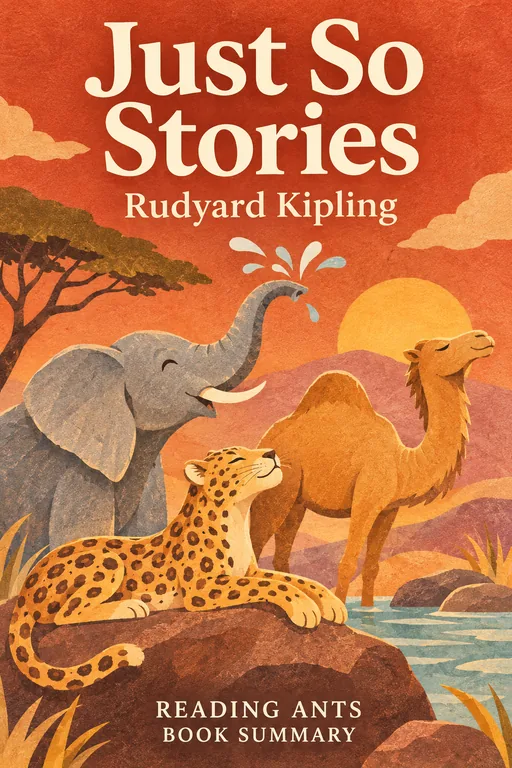
Just So Stories
Rudyard Kipling
In a collection of playful origin tales told to a child called Best Beloved, Rudyard Kipling imagines how animals got their well-known features, such as the camel's hump, the leopard's spots and the elephant's long trunk.
🧸 Children's Books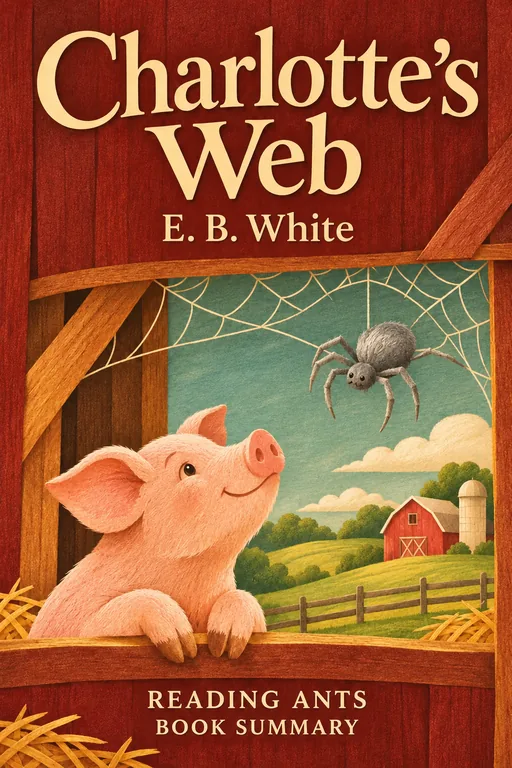
Charlotte's Web
E. B. White
A lonely pig named Wilbur learns he is going to be killed, and his clever friend Charlotte, a spider, comes up with an amazing plan to save his life.
🧸 Children's BooksHarry Potter and the Philosopher's Stone
J. K. Rowling
An unloved orphan boy discovers on his eleventh birthday that he is a famous wizard, and during his first year at a magical school he makes true friends and faces the dark wizard who killed his parents.
🧸 Children's BooksWant something different?
Pick another topic and we will show you three books to start with.