 Reading Ants
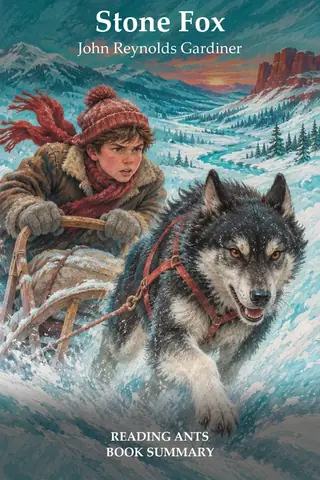
Stone Fox
A ten-year-old boy and his dog enter a dangerous sled race to win the money that will save his sick grandfather's farm.
Overview
Stone Fox is a short 1980 novel by John Reynolds Gardiner, with illustrations by Marcia Sewall, that was a New York Times Notable Book of the Year. Gardiner first wrote it as a screenplay, and a producer suggested making it a book. It is set long ago in Jackson, Wyoming, where ten-year-old Willy lives with his grandfather and his dog, Searchlight, on a potato farm. When a harsh winter leaves his grandfather too ill to work, an audit shows that the farm owes back taxes and is in danger of being lost. Willy decides to enter the National Dogsled Race, whose prize is exactly the amount they owe. His chief rival is the undefeated Stone Fox, a quiet and proud racer. It is a story of loyalty, determination and sacrifice, and it has an ending that many young readers remember.
Main Characters
- Willy: a ten-year-old boy who takes on the work of the farm and the family’s debt.
- Grandfather: Willy’s ill grandfather, who stays in bed for much of the story.
- Searchlight: Willy’s loyal black dog.
- Stone Fox: an undefeated Native American dogsled racer who races to buy land for his tribe.
- Doc Smith: the town’s only doctor and a close friend of the family.
- Mr. Clifford Snyder: the tax collector.
- Mr. Foster: the bank president who helps with the paperwork.
- Lester and Dusty: a kind store clerk and the town drunk, who tells Willy about Stone Fox.
Full Summary
The Potato Farm
Willy lives with his grandfather and his dog, Searchlight, on a small potato farm in Jackson, Wyoming. The work is hard, but the three of them are close, and the farm is all they have. A harsh winter leaves his grandfather ill, and he stays in bed for much of the story. Willy takes care of him and does what he can with the fields. Doc Smith, the town’s only doctor, is a close friend of the family, and he comes to see the old man. Willy is only ten, and he now carries more than most children could.
The Tax Collector
An audit shows that the farm owes five hundred dollars in unpaid taxes. The tax collector is Mr. Clifford Snyder, and he has come to see that the money is paid. If it is not, the farm will be taken. Willy knows that this farm is the only home his grandfather has known, and the thought of losing it weighs on him. Mr. Foster, the bank president, helps Willy with the paperwork. Willy has no way to earn so much money, and he has to think of something quickly. The amount seems enormous to a boy of ten, and the book makes the reader feel how little time he has.
The Race
Willy learns about the National Dogsled Race, held each year in Jackson, whose prize is five hundred dollars, the exact amount that the family owes. He decides to enter with Searchlight, though he must compete against experienced racers. The prize is the only way he can see to save the farm, so he does not give up the idea. The race gives the book a clear goal, and each step that Willy takes toward it is one that a young reader can follow. Throughout the story he is thinking of his grandfather, and he goes into the race with only his dog beside him.
Stone Fox
The favorite in the race is Stone Fox, a Native American racer who has never lost. He uses his winnings to buy back land for his people, and he is strongly opposed to white settlers. He has never been heard to speak to a white person. Willy learns about him from the town drunk, who is called Dusty and who warns that no one can beat him. Stone Fox is the one man whom everyone thinks Willy cannot beat. As the race begins, Willy and Searchlight set out across the snow with Stone Fox and the other racers.
The Finish Line
On the day of the race Willy takes his place at the starting line with Searchlight, and the long run across the snow begins. Near the end Willy is ahead, with Stone Fox and the other racers closing in. But Searchlight, who has given everything, collapses just before the finish line, because her heart has given out. Willy is heartbroken, and it seems that he will lose both his dog and the race.
Then Stone Fox draws a line in the snow and pulls out his gun. He warns the other racers that anyone who crosses the line will be shot. These are the first words that he has ever spoken to a white person. Stone Fox stops just short of the finish line and lets Willy carry Searchlight across it, so Willy finishes first and wins the money for the farm.
Two Opposites
Willy is a small, poor boy, and Stone Fox is a proud, silent man who has been shut out of the world of the settlers. Each has a reason to win: Willy wants to save a farm, and Stone Fox wants land for his people. Earlier, when Willy reaches out to pet one of Stone Fox’s dogs, Stone Fox strikes him in the face, so the final gesture is all the more surprising. The money saves the farm, but the book is remembered for the respect that grows between the boy and the racer, and for the dog who gave everything.
Why It Matters
Stone Fox has been a favorite with young readers since 1980, partly because it is short and partly because of its powerful ending. It was a New York Times Notable Book of the Year, it has appeared in Anita Silvey’s list of the 100 best books for children, and it was adapted as a 1987 television film. Many children remember it for its ending.
It also became well known as a story about determination, in which a small boy refuses to give up in the face of an enormous problem. The race, with its clear stakes, is easy to follow, which makes the book suitable for reluctant readers.
Key Takeaways
- Love gives courage. Willy takes on a huge task for the people he loves.
- A dog’s loyalty can cost everything. Searchlight gives all she has.
- Respect can come from an unexpected place. Stone Fox honors the boy’s effort.
- Pride and need can meet. Stone Fox wants the prize for his people, yet he lets Willy win.
- Hard times test families. The grandfather’s illness shapes the story.
What We Can Learn
When a problem seems too big, Willy shows us that it can help to take it one step at a time. He does not know how to find five hundred dollars, but he trains and he tries.
The story also teaches us to treat the animals that help us with care. Searchlight’s devotion is a reminder of how much our pets give.
Finally, Stone Fox’s gesture shows that even someone who is competing against you may recognize your courage, and answer it with respect.
Criticism and Counterpoints
Some readers find the ending too sad for young children, and it has made many cry. The book has also been criticized for how it draws Stone Fox. Debbie Reese, who runs the site American Indians in Children’s Literature, does not recommend it. She points out that he is called “the Indian,” that his name and hard face follow stereotypes of silent, stern Native men, that he is violent, and that his story of buying back land leaves out the history of how his people lost it. His only spoken words are a threat. Parents and teachers may want to discuss this with children. Still, many readers consider the book a moving classic.
Who Should Read It
This book suits readers from about eight to twelve, especially animal lovers and reluctant readers who want a short, exciting story. It is a good choice for reading aloud, though adults should prepare younger children for the dog’s death. Readers who dislike sad endings may want to skip it.
Want the whole book?
A summary is a taste, not the meal. Here is where to find the full book.
You reached the end 🎉
Nicely done. Mark this one as read, and we will suggest what to read next.
Read this next
Where the Red Fern Grows
Wilson Rawls
A poor boy in the Ozark Mountains of Oklahoma works for two years to buy two redbone coonhound puppies, and the three become inseparable until a tragic ending.
🧸 Children's Books
Shiloh
Phyllis Reynolds Naylor
An eleven-year-old boy in the West Virginia hills finds a beagle that is mistreated by its owner, and tries to save it, bending the truth along the way.
🧸 Children's Books
Call It Courage
Armstrong Sperry
A Polynesian boy who has been afraid of the sea since it took his mother sets out alone in a canoe to prove his courage.
🧸 Children's Books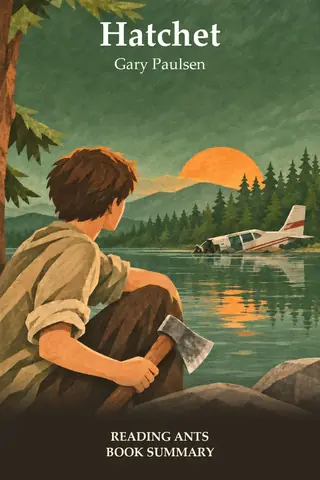
Hatchet
Gary Paulsen
After a plane crash leaves him alone in the Canadian wilderness with only a hatchet, a thirteen-year-old boy must learn to survive, and grows from a frightened city kid into a patient, resourceful young man.
🧸 Children's Books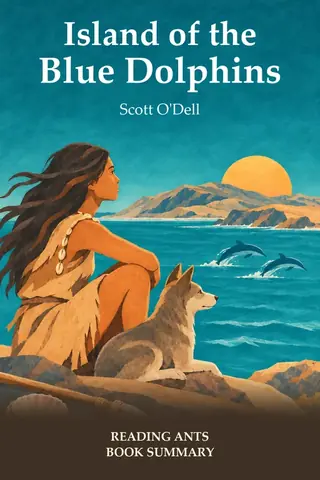
Island of the Blue Dolphins
Scott O'Dell
After her people leave their island and she is left behind, a Native American girl named Karana survives alone for years, learning to hunt, build and make friends with animals.
🧸 Children's Books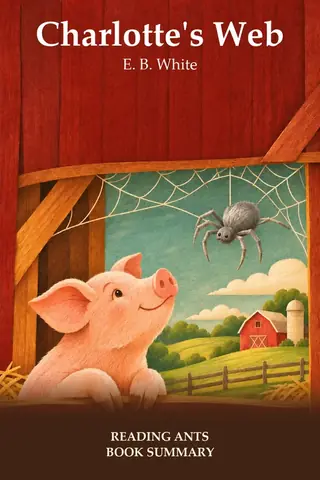
Charlotte's Web
E. B. White
A lonely pig named Wilbur learns he is going to be killed, and his clever friend Charlotte, a spider, comes up with an amazing plan to save his life.
🧸 Children's BooksWant something different?
Pick another topic and we will show you three books to start with.