 Reading Ants
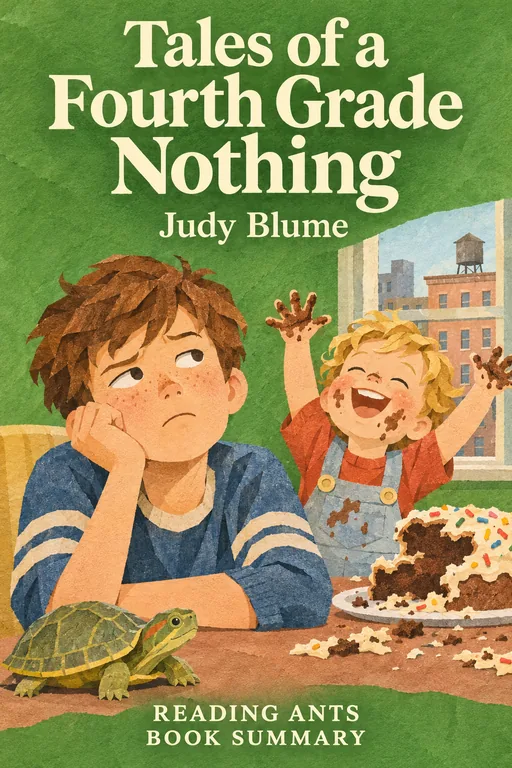
Tales of a Fourth Grade Nothing
Nine-year-old Peter Hatcher tells a funny and heartfelt story about the troubles of living with his destructive toddler brother Fudge, who gets all the attention, until Fudge's latest stunt is the last straw.
Overview
Tales of a Fourth Grade Nothing is a children’s novel by Judy Blume, published in 1972, and it is the first of her Fudge books. It is narrated by Peter, who lives in an apartment in New York City with his parents and his little brother. The book is a series of comic episodes about family life, from a messy birthday party to a fall from the playground jungle gym. Under the humor, it deals honestly with feelings that many older siblings know: jealousy, embarrassment and the sense that a younger brother gets away with everything. It has been popular with young readers for decades.
Main Characters
- Peter Hatcher: the nine-year-old narrator, who feels like “a fourth grade nothing” next to his brother.
- Fudge (Farley Drexel Hatcher): Peter’s little brother, about two and a half when the story begins and three by the middle of it, who is funny, destructive and loud.
- Mr. and Mrs. Hatcher: Peter’s parents, who are loving but often overwhelmed.
- Dribble: Peter’s pet turtle, whom he wins at a birthday party and loves.
- Sheila: an annoying, bossy classmate who lives in Peter’s building.
- Jimmy Fargo: Peter’s best friend and fellow fourth-grader.
- Mr. Yarby: the president of the Juicy-O company, a client of Peter’s father.
Full Summary
Peter, Fudge and a pet turtle
Peter Hatcher is nine and in the fourth grade, and he lives in a New York City apartment with his parents and his little brother, Fudge, who is two and a half when the story begins. Peter wins a pet turtle named Dribble at a birthday party for his best friend, Jimmy Fargo. He is proud of the turtle, shows it to everyone, and warns Fudge never to touch it. Fudge only laughs. That small scene sets the pattern for the book: Peter tries to keep one thing that is his, and Fudge treats nothing as off limits.
Mr. and Mrs. Juicy-O
Peter’s father works for an advertising agency. One of its clients is the Juicy-O drink company, and its president, Mr. Yarby, and his wife come to stay with the Hatchers during a visit to New York. Fudge makes a great show of himself. He frightens Mrs. Yarby, and he covers their suitcase with stamps, so the visitors decide to leave early. Soon afterward, Peter’s father loses the Juicy-O account. Peter is left to watch how a small boy can cause enormous trouble and still be treated as the center of attention.
Eat it or wear it
Fudge stops eating, and the family tries one idea after another. Peter is asked to stand on his head so that Fudge will laugh and open his mouth, though Peter soon resents being turned into the entertainment. Fudge then insists on eating on the floor like a dog, and his mother lets him eat under the table. A grandmother’s trick and a series of doctors do not help. In the end, Peter’s father loses patience and pours a bowl of cereal over Fudge’s head. The message is that Fudge must either eat it or wear it, and after that he eats at the table again.
A flying lesson and a birthday
Peter, Jimmy and Sheila are asked to watch Fudge at the Central Park playground. Sheila, who lives in Peter’s building and is very bossy, chases the boys around, and Fudge climbs to the top of the jungle gym, pretends to be a bird and jumps. He knocks out his front teeth. At first Peter’s mother blames Peter, which makes him feel the unfairness deeply, though she apologizes the next day. Later Fudge turns three, and his birthday party is a noisy disaster. On another day, Peter is dragged along on an outing in which Fudge behaves badly at the dentist and in the shoe store.
The school project and the commercial
Peter, Jimmy and Sheila work together on a school project about transportation in New York. Fudge scribbles on their poster, so the boys must redo it, and Peter’s mother, to his surprise, spanks Fudge. Fudge also cuts his own hair with the project’s scissors, and Peter’s father puts a chain latch on Peter’s door. Soon after, Peter goes to his father’s office, where the Toddle-Bike company, a new client, is looking for a child for a television commercial. Its president picks Fudge. Peter feels jealous and unimportant, like a fourth grade nothing, although Fudge will not pedal until Peter shows him how. Later, Peter’s father takes both boys to a movie, and Fudge wanders off to the front rows.
Dribble
Peter keeps Dribble in a bowl in his room, and he checks on him every day after school. One day he finds the chain latch undone and a chair set in front of his door, and Dribble is gone from his bowl. Fudge giggles, and then announces that the turtle is in his tummy. Peter thinks he is joking until he realizes that Fudge is serious. His mother is frantic, and she seems far more worried about Fudge than about the lost pet, while the family rushes Fudge to the hospital.
The hospital and a puppy
At the hospital, the doctors work to get the turtle out of Fudge, but Dribble has died. Peter is angry and hurt, because everyone is fussing over Fudge while his loss is hardly mentioned. In the end, his parents see how much he has had to put up with. His father brings home a box with a puppy inside, and he makes it clear that the dog belongs to Peter. Peter names him Turtle, in memory of Dribble. The ending is light, since Peter’s father jokes that the dog will grow too big for Fudge to swallow, and Peter feels that his parents have finally noticed how grown-up he has been.
Why It Matters
Tales of a Fourth Grade Nothing describes family life, and the feelings of siblings, with frankness and humor. It gave young readers a voice that sounded like their own, speaking about jealousy and embarrassment without a lecture. The book sold millions of copies, led to a series of sequels, including Superfudge, and the Fudge books were later turned into a television series in the 1990s. It helped make Judy Blume one of the most popular writers for young people, and it is an example of realistic fiction that takes children’s feelings seriously.
Key Takeaways
- Sibling jealousy is normal. Peter’s resentment is understandable and common.
- Children’s feelings matter. Peter needs his parents to listen to him.
- Humor eases hard feelings. The story makes family troubles funny.
- Fairness is not always sameness. Peter needs attention too, even if Fudge needs more.
- Love survives annoyance. Peter still cares for Fudge.
What We Can Learn
You can learn that it is normal to feel jealous or overlooked, and that it is healthy to say how you feel, as Peter finally does. The book also suggests that parents benefit from hearing children’s complaints, and that family life is made up of small struggles and affection. It might help older siblings to know that they are not alone. Try talking with someone close to you about a time that you felt left out, and think about how you can listen to others, particularly younger brothers and sisters, with patience.
Criticism and Counterpoints
Some readers feel that the story shows Fudge’s bad behavior with too little consequence, and that the parents seem unrealistically permissive. A few critics argue that the episodic structure, with its short, loosely connected chapters, lacks a strong plot, and that some of the humor, set in the 1970s, is dated. The scene with the turtle may upset sensitive children. Others find that the portrayal of the family is slightly stereotyped, with a working father and a mother at home. Even so, many consider the book fresh and relatable, and it remains popular.
Who Should Read It
This book is for children from about eight, especially those with younger siblings, and for families who enjoy funny, realistic stories. It is also a good read-aloud. Parents may want to discuss the turtle scene with sensitive children.
Want the whole book?
A summary is a taste, not the meal. Here is where to find the full book.
You reached the end 🎉
Nicely done. Mark this one as read, and we will suggest what to read next.
Read this next
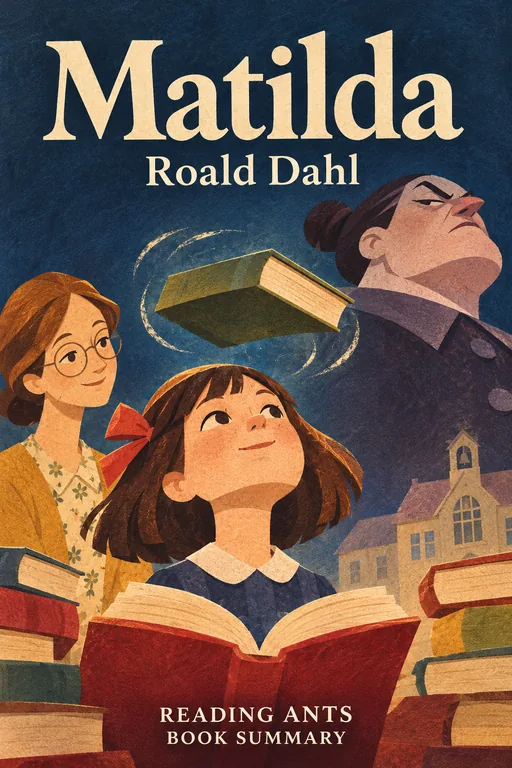
Matilda
Roald Dahl
A brilliant little girl with awful parents and a terrifying headmistress discovers she has magical powers, and uses her wits and her magic to help the one adult who truly cares for her.
🧸 Children's Books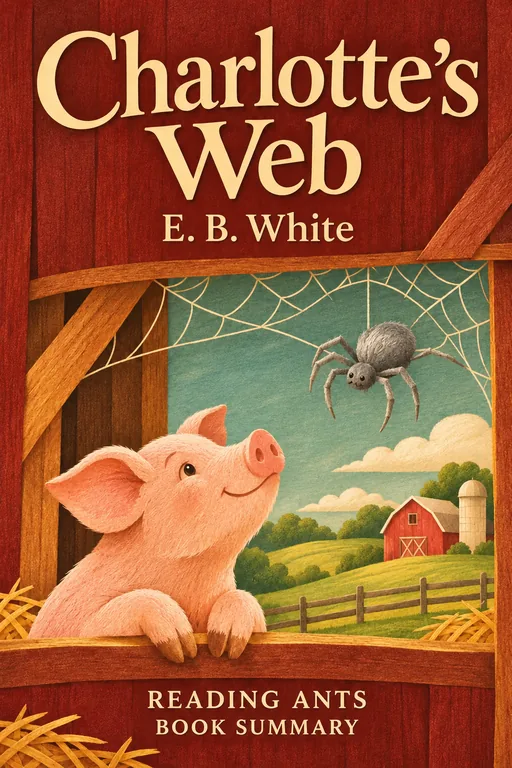
Charlotte's Web
E. B. White
A lonely pig named Wilbur learns he is going to be killed, and his clever friend Charlotte, a spider, comes up with an amazing plan to save his life.
🧸 Children's Books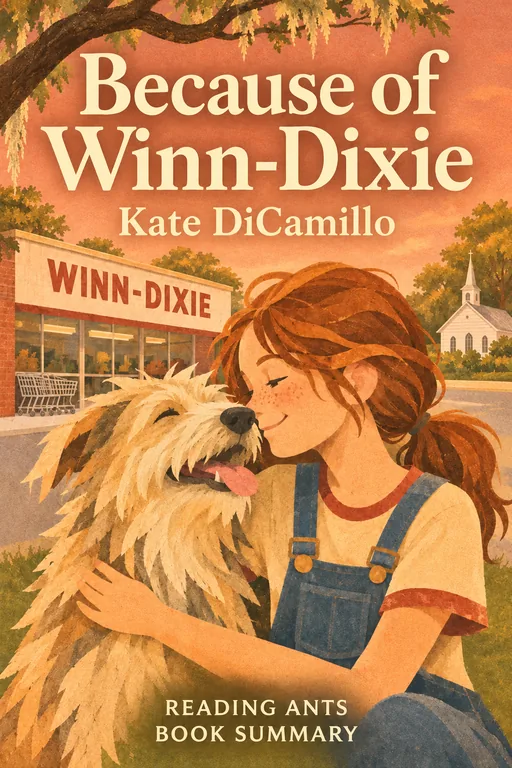
Because of Winn-Dixie
Kate DiCamillo
A lonely ten-year-old girl named India Opal Buloni adopts a stray dog in a Florida grocery store and, with his help, makes new friends and learns to cope with the mother who left her.
🧸 Children's Books
Anne of Green Gables
L. M. Montgomery
A talkative, imaginative red-haired orphan is sent by mistake to an elderly brother and sister who wanted a boy, and she wins their hearts and fills their quiet farm with life.
🧸 Children's Books
A Wrinkle in Time
Madeleine L'Engle
An awkward girl travels across the universe with her genius little brother and a new friend to rescue her scientist father from a dark planet ruled by a giant evil brain, and discovers that love is her greatest power.
🧸 Children's BooksHarry Potter and the Philosopher's Stone
J. K. Rowling
An unloved orphan boy discovers on his eleventh birthday that he is a famous wizard, and during his first year at a magical school he makes true friends and faces the dark wizard who killed his parents.
🧸 Children's BooksWant something different?
Pick another topic and we will show you three books to start with.