 Reading Ants
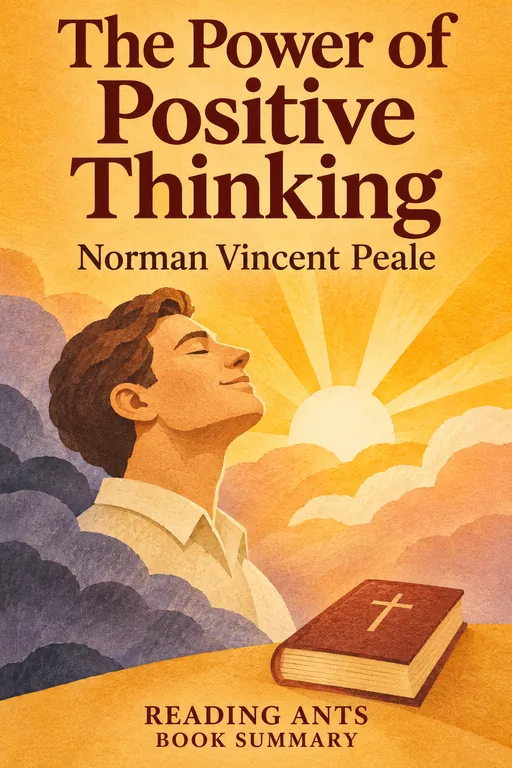
The Power of Positive Thinking
Minister Norman Vincent Peale teaches that faith, a hopeful attitude and the practice of positive thinking and prayer can help people to overcome fear, worry and failure, and to live more confident and effective lives.
Overview
The Power of Positive Thinking was published in 1952 by Norman Vincent Peale, a Protestant minister in New York, who was pastor of the Marble Collegiate Church for many years. The book was a huge bestseller, staying on the New York Times list for years, and sold millions of copies. The book has seventeen chapters and an epilogue, and it combines Christian teaching, anecdotal case histories and simple techniques for changing one’s thoughts, such as repeating Bible verses as affirmations and picturing success. Several chapters end with a numbered list of practical rules. Peale says that your thoughts shape your life, and that you can learn to replace negative ideas with positive ones. The sections below group the chapters by theme rather than following the book’s order.
Full Summary
1. Believe in yourself
The idea: Peale begins with the claim that lack of confidence is one of the great problems of our time. A sense of inferiority, he says, limits what we do, but can be overcome by deliberately building faith in oneself, together with trust in God. His first chapter closes with ten rules. They include holding a picture of yourself succeeding, answering every negative thought with a positive one, not inflating obstacles in your imagination, and repeating Bible verses as affirmations several times a day. He also says that the way you think about a difficulty matters more than the difficulty itself.
In real life: A person who expects to fail a test may study less, and so makes it more likely.
2. A peaceful mind generates power
The idea: The author emphasizes the importance of calming the mind. Worry, tension and resentment waste energy, he says, and keep us from doing well. He recommends emptying the mind of fears and grudges and then refilling it with healthy thoughts, reading the Bible and poetry, calling up peaceful scenes in memory, and prayer, in order to restore calm. He also suggests a daily quarter of an hour of complete silence. A peaceful mind, Peale says, is a source of driving energy.
In real life: Taking a few quiet minutes before a hard task can settle your nerves.
3. Prayer, faith and the help of God
The idea: A central feature is the role of prayer. Peale says that prayer is a form of power, in which we draw on resources beyond ourselves. He suggests short, simple prayers throughout the day, in plain everyday language, and the repetition of Bible verses as affirmations. He also offers a three-step method he calls prayerize, picturize and actualize: pray about a goal, hold a clear mental picture of it, and then work to make it real. He tells stories of people who he says found strength through faith, and describes prayer as a help for physical and emotional problems. Faith, he says, is not only for church, but a practical help in daily life.
In real life: Many people find strength and calm in prayer or reflection when facing a challenge.
4. Stop worrying and expect the best
The idea: Peale discusses worry, and says that it is a mental habit that can be broken. One technique is to empty the mind of fear, and fill it with positive thoughts of faith. He presents happiness as largely a matter of choice and habit, with worry and resentment as obstacles, and advises trusting God and taking action to deal with problems. He also urges readers to practice expecting the best, saying that what the mind strongly expects it tends to receive, and to take an attitude of not believing in defeat. He recommends slowing down rather than fuming and fretting. He encourages a habit of reading uplifting words, especially from the Bible.
In real life: Replacing “I’ll never get through this” with “I’ll take it one step at a time” can change how you feel.
5. Energy, health and getting along with others
The idea: The book links attitude to energy, and says that we can draw energy from God, while fear, guilt and resentment drain it. Peale also touches on health, saying that anger and other negative feelings can contribute to physical illness, and describing prayer as a help in healing, to be used together with medical care. He also offers practical advice on getting along with others, such as remembering names, congratulating people on their achievements and building up their self-respect, as part of living a more fulfilled life.
In real life: Remembering a new colleague’s name and thanking them can brighten a working day.
6. Dealing with trouble and heartache
The idea: In the later chapters, Peale discusses how to handle difficulties such as anger and heartache. For heartache he recommends physical activity, returning to normal activities and company, allowing yourself to grieve, trust in God, and a belief in life after death. He says that anger harms us and should be let go. Obstacles, he says, should be faced calmly and with faith, not feared. He closes with a short epilogue urging the reader to go back and keep practicing each technique until it works.
In real life: Keeping in touch with friends and sticking to a routine can help during a hard time.
Why It Matters
The Power of Positive Thinking is one of the best-selling self-help books ever, and a founding text of the modern positive-thinking movement. It influenced later self-help authors and speakers, and figures such as Billy Graham and Robert Schuller are said to have credited it with helping them. Peale’s work helped make the idea of mental attitude central to American popular culture. For many readers, it gave a sense of hope, and a practical set of habits. At the same time, it has been controversial, and remains the subject of debate.
Key Takeaways
- Your thoughts matter. Expecting success can shape your effort and action.
- A calm mind works better. Peace gives you energy and clarity.
- Faith can be a resource. Prayer and trust helped many readers.
- Replace negative thoughts. Deliberately choose helpful ideas.
- Obstacles can be faced. Meet them with faith and effort rather than fear.
What We Can Learn
Whether or not you share Peale’s religious faith, you can take some practical habits from the book. Notice the thoughts that you repeat to yourself, and try to replace discouraging ones with realistic and hopeful statements. Take a few minutes each day for quiet, prayer or reflection. Picture yourself succeeding at a goal, and then work steadily toward it. Practice gratitude. At the same time, remember that positive thinking is not a substitute for effort, evidence and professional help, and that it is acceptable to feel sad or worried at times. Seek support for serious problems.
Criticism and Counterpoints
Critics say that the book oversells positive thinking, and suggests that attitude alone can control events, which can lead people to blame themselves when things go wrong, such as illness or poverty. Psychologists note that research shows that optimism can help, but that denying problems or forcing positive thoughts can backfire. Theologians have criticized Peale for presenting faith as a technique for success, and for ignoring suffering and social injustice. Others point out that his anecdotes are not verifiable. Some historians note that his political associations are controversial.
Who Should Read It
This book is for readers who want encouragement and who are open to its Christian framing, and for those interested in the history of self-help. It is easy to read, though dated. Those who prefer a scientific approach to optimism should read Learned Optimism.
Want the whole book?
A summary is a taste, not the meal. Here is where to find the full book.
You reached the end 🎉
Nicely done. Mark this one as read, and we will suggest what to read next.
Read this next
Think and Grow Rich
Napoleon Hill
Napoleon Hill claims that wealth and success begin with a burning desire, firm belief and persistent action, and presents thirteen principles he says were distilled from the habits of successful people.
🌱 Self-Improvement
How to Win Friends and Influence People
Dale Carnegie
People are driven by emotion and the desire to feel important, so the way to get along with them, and win them to your point of view, is to stop criticizing, show genuine interest and appreciation, and see things from their side.
🌱 Self-Improvement
The Secret
Rhonda Byrne
Rhonda Byrne presents the "law of attraction," the claim that thoughts and feelings attract matching events, so that by focusing on what you want and believing you will receive it, you can gain wealth, health and happiness.
🌱 Self-Improvement
Learned Optimism
Martin Seligman
Psychologist Martin Seligman shows that the way we explain bad events to ourselves, optimistically or pessimistically, shapes our health, success and happiness, and that pessimists can learn to think more like optimists through a skill of challenging their own thoughts.
🌱 Self-Improvement
How to Stop Worrying and Start Living
Dale Carnegie
Dale Carnegie gathers practical rules and true stories to show that worry can be reduced by living in day-tight compartments, facing the worst, analyzing problems calmly, keeping busy, and cultivating a peaceful and grateful mind.
🌱 Self-Improvement
Atomic Habits
James Clear
Big changes in life come not from huge leaps but from tiny habits repeated every day, and you can build good habits (and break bad ones) by designing your life so the right choices are obvious, attractive, easy and satisfying.
🌱 Self-ImprovementWant something different?
Pick another topic and we will show you three books to start with.