 Reading Ants
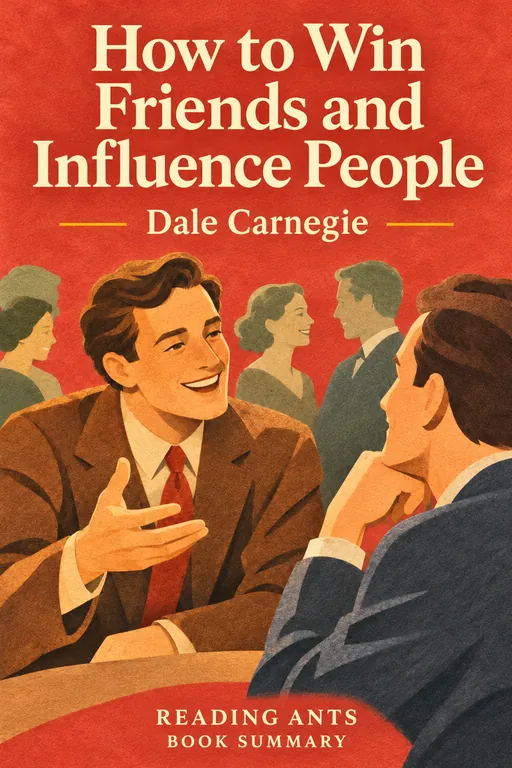
How to Win Friends and Influence People
People are driven by emotion and the desire to feel important, so the way to get along with them, and win them to your point of view, is to stop criticizing, show genuine interest and appreciation, and see things from their side.
Overview
How to Win Friends and Influence People is one of the best-selling self-help books ever written. Dale Carnegie, an American teacher of public speaking, developed its lessons from courses he taught to business people in New York. He noticed that technical skill mattered far less to success than the ability to deal with people. The book is organized into simple principles: how to handle people, how to make people like you, how to win people to your way of thinking, and how to lead and change people without causing resentment. Each principle is illustrated with stories about famous figures, such as Abraham Lincoln, and ordinary students from Carnegie’s classes. Nearly a century later, its advice remains surprisingly fresh.
Full Summary
1. Don’t criticize, condemn or complain
The idea: Criticism makes people defensive and resentful, and rarely changes their behavior. Almost everyone, even people who do terrible things, sees themselves as right. Instead of judging, Carnegie advises trying to understand why people act as they do.
From the book: Carnegie describes how, after the Battle of Gettysburg, Abraham Lincoln wrote an angry letter to a general who had let the enemy escape. Lincoln never sent it. It was found among his papers after his death. He had learned that harsh criticism usually does more harm than good.
In real life: When a sibling forgets to do the dishes, scolding them often starts an argument. Asking calmly, or thanking them when they do remember, works far better.
2. Give honest, sincere appreciation
The idea: One of the deepest human desires is the desire to feel important and appreciated. Carnegie says we should praise people generously and sincerely, not with empty flattery, which people quickly see through. Real appreciation means noticing what people do well and telling them.
In real life: Thanking a bus driver, a teacher or a parent for something specific, such as “thank you for explaining that so patiently,” can brighten their whole day and strengthen the relationship.
3. See things from the other person’s point of view
The idea: The only way to get someone to do something is to make them want to do it. People care most about their own needs and interests, so to persuade them, talk about what they want, not what you want.
In real life: A child who wants a later bedtime will have more luck explaining how they will still get up on time and finish their homework than simply saying “I want to stay up.”
4. Become genuinely interested in other people
The idea: Carnegie’s six ways to make people like you are simple: be genuinely interested in others; smile; remember and use people’s names; be a good listener and encourage others to talk about themselves; talk about what interests them; and make them feel important, sincerely. Carnegie argues that showing real interest in others wins friends far faster than trying to impress them.
From the book: Carnegie tells of a dinner party where he spent the evening listening, fascinated, to a botanist talk about plants. He hardly said a word himself, yet at the end the botanist told the host that Carnegie was a most interesting conversationalist.
In real life: At a new school or job, asking classmates or coworkers about their hobbies, and remembering what they said next time, is one of the fastest ways to make friends.
5. Avoid arguments and admit your mistakes
The idea: The only way to win an argument is to avoid it. Even if you win, the other person feels humiliated and is unlikely to change their mind. Carnegie advises respecting others’ opinions, never bluntly telling someone they are wrong, and admitting your own mistakes quickly and openly. Beginning in a friendly way, and getting the other person to say “yes” early on, makes agreement easier.
In real life: In a debate with a friend about a movie, saying “I might be wrong, but I saw it differently” keeps the conversation friendly and open instead of turning it into a fight.
6. Let others feel the idea is theirs
The idea: People prefer ideas they believe they came up with themselves. Instead of giving orders, ask questions and offer suggestions. Let the other person do most of the talking. Appeal to their nobler motives, show your ideas in a dramatic or memorable way, and, when appropriate, throw down a friendly challenge.
From the book: Carnegie describes how the steel executive Charles Schwab dealt with a mill whose workers weren’t meeting their targets. He asked how many batches the day shift had produced, wrote that number in chalk on the floor, and left without a word. The night shift saw it and tried to beat it, and soon the two shifts were competing to outdo each other.
In real life: A team leader who asks “How do you think we could finish this faster?” often gets better results than one who simply orders people to work harder.
7. Lead without causing resentment
The idea: When you need to correct someone, begin with sincere praise. Point out mistakes indirectly, talk about your own mistakes first, ask questions instead of giving direct orders, and let the other person save face. Praise even small improvements, and give people a fine reputation to live up to. Encouragement makes faults seem easy to fix.
In real life: A coach might say, “Your passing has really improved this month. If we work on your shooting next, you’ll be one of our strongest players,” rather than “Your shooting is terrible.”
Why It Matters
Since its publication in 1936, How to Win Friends and Influence People has sold tens of millions of copies and been translated into dozens of languages. It became a model for the modern self-help book and for corporate training in communication and leadership. Dale Carnegie Training courses, based on its principles, have been taught in many countries.
Successful people from many fields, including the investor Warren Buffett, who took a Carnegie course as a young man, have credited it with helping them. Its ideas, such as remembering names, listening more than talking and avoiding criticism, have become part of everyday wisdom about how to get along with others.
Key Takeaways
- Criticism backfires. People defend themselves rather than change, and resentment lasts long after the argument.
- Appreciation is powerful. The desire to feel important drives much human behavior.
- Interest wins friends. Listening and caring about others make people like you.
- Arguments are rarely won. Respect, humility and friendliness persuade better than force.
- Good leaders encourage. Praise, questions and face-saving inspire change without resentment.
What We Can Learn
Try one principle at a time. For a week, notice every time you are about to criticize or complain, and see whether you can replace it with a question or a word of appreciation. Practice remembering people’s names and using them.
In conversations, let the other person talk more. Ask follow-up questions and listen fully instead of waiting for your turn. People often leave such conversations feeling closer to you, even if you said very little.
When disagreements arise, admit your own mistakes first and look for points of agreement. These habits make school, work and family life smoother, and they help you become someone others trust and enjoy being with.
Criticism and Counterpoints
Some critics see the book as a manual for manipulation, teaching people to fake interest and flatter others to get what they want. Carnegie himself insisted that his principles only work when they are sincere, and repeatedly warns against empty flattery, but readers can still misuse them.
Others find the examples old-fashioned, focused on businessmen of the 1930s, and the advice sometimes too simple for complex situations, such as serious conflicts or abuse, where avoiding criticism isn’t appropriate. Later editions have updated some language. Many readers feel the core lessons remain timeless.
Who Should Read It
This book is useful for almost everyone: students, new employees, managers, salespeople, parents and anyone who wants better relationships. It is easy to read in short sections. Readers looking for modern psychological research may prefer newer books, but Carnegie’s advice is a classic starting point.
Want the whole book?
A summary is a taste, not the meal. Here is where to find the full book.
You reached the end 🎉
Nicely done. Mark this one as read, and we will suggest what to read next.
Read this next
The 7 Habits of Highly Effective People
Stephen R. Covey
Lasting success in life and work comes not from quick tricks or a charming personality but from good character, built through seven habits that move us from depending on others, to standing on our own, to working well with others.
🌱 Self-Improvement
Never Split the Difference
Chris Voss
Former FBI hostage negotiator Chris Voss teaches that great negotiation comes not from logic and compromise but from listening, empathy and asking the right questions, so that the other side feels understood and wants to cooperate.
🌱 Self-Improvement
Nonviolent Communication
Marshall B. Rosenberg
Psychologist Marshall Rosenberg teaches a method of speaking and listening, built on observations, feelings, needs and requests, that aims to replace blame, criticism and demands with honesty and empathy, so that conflicts can be resolved with compassion.
🌱 Self-Improvement
How to Stop Worrying and Start Living
Dale Carnegie
Dale Carnegie gathers practical rules and true stories to show that worry can be reduced by living in day-tight compartments, facing the worst, analyzing problems calmly, keeping busy, and cultivating a peaceful and grateful mind.
🌱 Self-Improvement
Atomic Habits
James Clear
Big changes in life come not from huge leaps but from tiny habits repeated every day, and you can build good habits (and break bad ones) by designing your life so the right choices are obvious, attractive, easy and satisfying.
🌱 Self-Improvement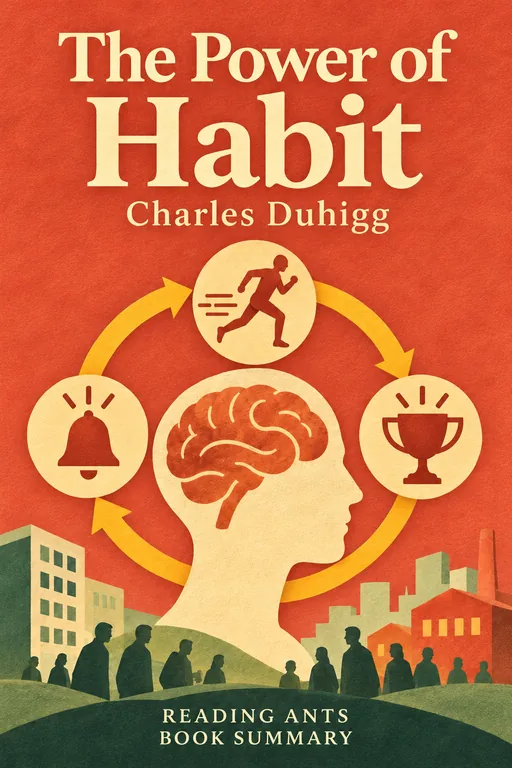
The Power of Habit
Charles Duhigg
Charles Duhigg shows that habits follow a loop of cue, routine and reward, and that by understanding the loop we can change our own habits, as well as those of companies and societies.
🌱 Self-ImprovementWant something different?
Pick another topic and we will show you three books to start with.