 Reading Ants
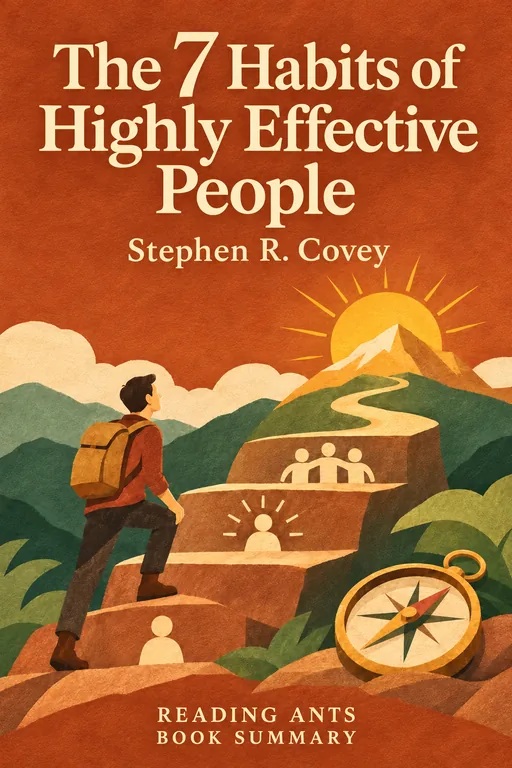
The 7 Habits of Highly Effective People
Lasting success in life and work comes not from quick tricks or a charming personality but from good character, built through seven habits that move us from depending on others, to standing on our own, to working well with others.
Overview
The 7 Habits of Highly Effective People is one of the best-selling self-help and business books of all time. Stephen Covey, an American educator and consultant, argues that many modern success books focus on the “personality ethic,” such as positive thinking and techniques for influencing people. Instead, he calls for a return to the “character ethic”: timeless principles like integrity, fairness, patience and service. He presents seven habits in a clear order. The first three build personal independence, the next three build healthy relationships with others, and the last keeps everything in balance. The book combines practical tools with stories from Covey’s family life and work.
Full Summary
1. Change starts with how you see the world
The idea: Covey says we each look at the world through “paradigms,” our mental maps of how things are. Real change comes from shifting these paradigms, working from the inside out: improving ourselves before trying to change others. He describes a maturity path from dependence (“you take care of me”), to independence (“I take care of myself”), to interdependence (“we can do something better together”).
From the book: Covey describes riding a quiet subway on a Sunday morning when a man got on with his noisy, unruly children, who disturbed everyone while the father did nothing. Irritated, Covey asked him to control them. The man apologized and explained that they had just come from the hospital where the children’s mother had died about an hour earlier. In an instant, Covey’s irritation turned to compassion. Nothing had changed except the way he saw the situation.
In real life: A classmate who never answers your messages may seem rude, until you learn that they are caring for a sick parent. A new piece of information can change everything you feel.
2. Habit 1: Be proactive
The idea: Between what happens to us and how we respond, there is a space where we can choose. Proactive people take responsibility for their responses, while reactive people blame circumstances, other people or their mood. Covey suggests focusing on your Circle of Influence (things you can actually affect) rather than your Circle of Concern (things you worry about but can’t control).
In real life: Instead of saying “the teacher makes this class boring,” a proactive student asks what they can do: prepare questions, find a study partner, or look up the topic in a more interesting way.
3. Habit 2: Begin with the end in mind
The idea: Before acting, decide where you want to go. Covey encourages readers to write a personal mission statement that describes their values and the kind of person they want to be in each role: parent, friend, worker, citizen. This becomes a guide for daily decisions.
From the book: Covey asks readers to imagine attending their own funeral, and to think about what they would want family, friends, colleagues and community members to say about them. The answers reveal what truly matters.
In real life: A student who knows they want to become a nurse can judge each choice, such as which classes to take or how to spend free time, by whether it brings them closer to that goal.
4. Habit 3: Put first things first
The idea: Habit 3 is about managing yourself so that your time reflects your priorities. Covey sorts activities into four quadrants by urgency and importance. Most people spend their days on urgent things, important or not: emails, interruptions, crises. Effective people focus on Quadrant II: important but not urgent activities, such as planning, exercise, building relationships and learning, which prevent future crises.
In real life: Studying a little every week (important, not urgent) prevents the panic of cramming the night before an exam (urgent and important). Scheduling exercise or family time first, before the week fills up, protects what matters most.
5. Habit 4: Think win-win
The idea: The next three habits are about working with others. Covey describes the Emotional Bank Account: kindness, honesty and keeping promises make deposits of trust, while rudeness and broken promises make withdrawals. Win-win thinking means looking for solutions that benefit everyone, based on an “abundance mentality,” the belief that there is enough success to go around. If no win-win solution can be found, it is sometimes better to agree on “no deal.”
In real life: Two siblings fighting over the family computer can work out a schedule that gives each of them the time they need most, instead of one winning and the other sulking.
6. Habit 5: Seek first to understand, then to be understood
The idea: Most people listen with the intention of replying, not understanding. Covey teaches empathic listening: listening to grasp the other person’s feelings and point of view before giving advice or making your own case. When people feel truly understood, they become much more open to hearing you.
In real life: When a friend complains about a bad day, try reflecting back what you hear, like “sounds like you felt embarrassed in front of everyone,” before offering solutions. Often, being heard is what they need most.
7. Habit 6: Synergize
The idea: Synergy means that the whole is greater than the sum of its parts. When people who respect their differences work together creatively, they can find “third alternatives” that neither would have thought of alone. Differences in opinion become strengths rather than threats.
In real life: A group project where one student is great at research, another at design and a third at speaking can produce something far better than any of them could alone, if they listen to each other.
8. Habit 7: Sharpen the saw
The idea: The final habit is about regularly renewing yourself in four areas: physical (exercise, sleep, nutrition), mental (reading, learning), social and emotional (relationships, service) and spiritual (values, reflection, nature). Covey also explains the balance between producing results and caring for the ability to produce, using Aesop’s fable of the goose that laid golden eggs: a farmer who kills the goose to get all the gold at once ends up with nothing.
In real life: Pulling all-nighters may get one assignment done, but regularly skipping sleep and exercise wears down the “goose,” your health, and leads to worse results over time.
Why It Matters
The 7 Habits of Highly Effective People has sold tens of millions of copies and been translated into dozens of languages. It shaped the language of modern self-help and management: phrases like “be proactive,” “win-win,” “begin with the end in mind” and “sharpen the saw” are now everyday expressions in offices and schools around the world.
Covey’s company built training programs on the habits for businesses, governments and schools, and his son Sean Covey adapted them for teenagers and children. The book’s emphasis on character and principles, rather than quick tricks, helped make leadership development a major industry, and it remains a common recommendation for anyone starting a career.
Key Takeaways
- Character beats technique. Lasting success rests on principles like integrity and fairness.
- You choose your response. Proactive people focus on what they can influence.
- Know where you are going. A personal mission statement guides daily choices.
- Do the important things first. Invest in important but non-urgent work before crises arrive.
- Understand before being understood. Empathic listening builds trust and better solutions.
- Renew yourself regularly. Care for body, mind, relationships and spirit.
What We Can Learn
Start with Habit 1: notice when you blame others or circumstances, and ask what part of the situation is within your control. That one shift can change how a whole day feels.
Try writing a short personal mission statement, even a few sentences about the person you want to be. Then, at the start of each week, plan time for your most important but non-urgent goals before other tasks fill your calendar.
In relationships, practice listening without interrupting or planning your reply. Make small “deposits” of trust every day: keep promises, apologize sincerely and show appreciation. These habits take years to master, but even small steps make a noticeable difference.
Criticism and Counterpoints
Some critics find the book long, repetitive and full of corporate jargon. Others note that its ideas are not new. Many are drawn from older philosophy, religion and earlier self-help, and Covey’s own religious background shapes its values, which some readers find too moralistic.
The book also offers little scientific evidence for its claims, relying instead on stories and personal experience. Its advice assumes readers have a fair amount of control over their time and choices, which may not be true for people facing poverty, discrimination or demanding jobs with little freedom. Supporters argue that the habits are common sense, clearly organized, and helpful in any situation.
Who Should Read It
This book suits teens, students, professionals, managers and parents who want a clear framework for personal growth and better relationships. Teenagers may prefer the shorter adaptation, The 7 Habits of Highly Effective Teens, by Sean Covey. Readers looking for quick tips or scientific research may find it too long and moralistic.
Want the whole book?
A summary is a taste, not the meal. Here is where to find the full book.
You reached the end 🎉
Nicely done. Mark this one as read, and we will suggest what to read next.
Read this next

Atomic Habits
James Clear
Big changes in life come not from huge leaps but from tiny habits repeated every day, and you can build good habits (and break bad ones) by designing your life so the right choices are obvious, attractive, easy and satisfying.
🌱 Self-Improvement
How to Win Friends and Influence People
Dale Carnegie
People are driven by emotion and the desire to feel important, so the way to get along with them, and win them to your point of view, is to stop criticizing, show genuine interest and appreciation, and see things from their side.
🌱 Self-Improvement
Man's Search for Meaning
Viktor E. Frankl
A psychiatrist who survived the Nazi concentration camps explains that even in the worst suffering, people can choose their attitude, and that finding a reason to live is what gives us the strength to endure.
👤 Real Lives
Essentialism
Greg McKeown
Greg McKeown argues that we should do fewer things, but do them better, by deciding what is truly essential, saying no to the rest, and building simple routines that protect our time and energy.
🌱 Self-Improvement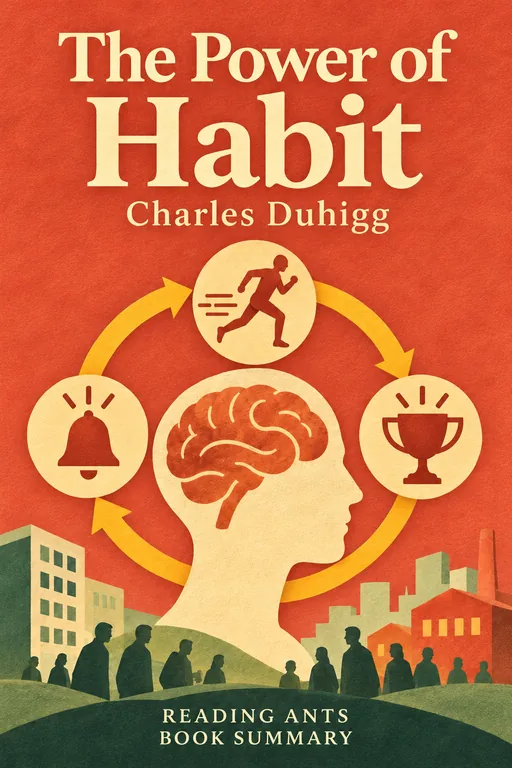
The Power of Habit
Charles Duhigg
Charles Duhigg shows that habits follow a loop of cue, routine and reward, and that by understanding the loop we can change our own habits, as well as those of companies and societies.
🌱 Self-Improvement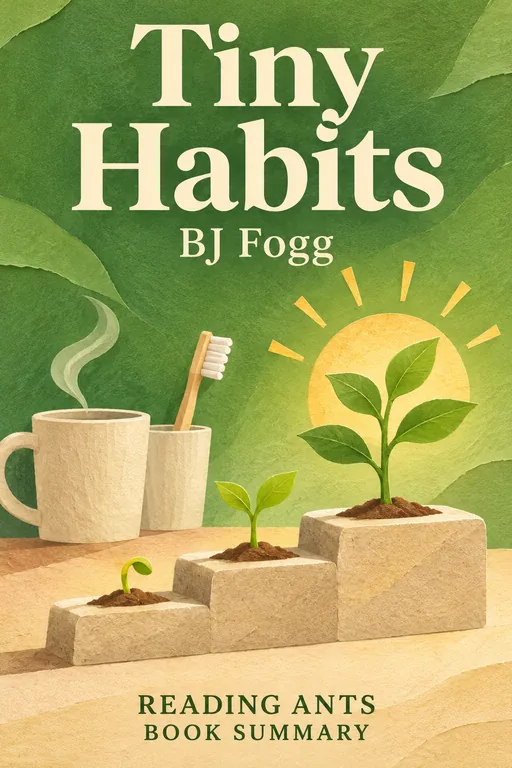
Tiny Habits
BJ Fogg
Stanford behavior scientist BJ Fogg teaches that lasting change comes not from willpower but from starting with very small behaviors, attaching them to existing routines and celebrating each success to make them stick.
🌱 Self-ImprovementWant something different?
Pick another topic and we will show you three books to start with.