 Reading Ants
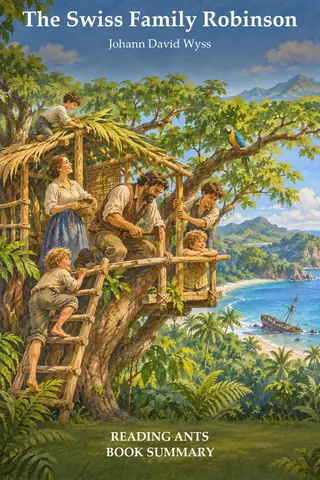
The Swiss Family Robinson
A Swiss father, mother and four sons survive a shipwreck and build a new life on a tropical island, using clever inventions, hard work and faith until a ship finally arrives.
Overview
The Swiss Family Robinson was written by the Swiss pastor Johann David Wyss for his own sons and first published in German in Zurich in 1812 and 1813. His son Johann Rudolf edited it. It was soon translated into French and English, and the versions most people know have been heavily revised and expanded by later translators. This summary follows the English text edited by W. H. G. Kingston, which can be read on Wikisource. The book is long and has no single plot twist, so it is told as a series of adventures: a family marooned on an island meets new animals, plants and problems, and each time the father finds a way to solve them. Because the work is very long, this summary covers its whole arc but samples the episodes.
Main Characters
- Father: the narrator, a practical, kindly man who invents tools and teaches his sons about nature and faith.
- Mother: steady and brave, in charge of food, animals and the garden.
- Fritz: the eldest son, about fifteen at the start, spirited, strong and quick-tempered.
- Ernest: the second son, bookish and well informed.
- Jack: the third son, bold, impulsive and full of jokes.
- Franz: the youngest, nearly eight at the start.
- Turk and Juno: the family’s two large dogs, which swim after the boat from the wreck.
- Jenny Montrose: a young Englishwoman, shipwrecked years earlier, whom Fritz finds late in the story.
Full Summary
The Wreck
A storm has driven the ship for days, its masts are gone and water is pouring into the hold. The crew take the only boat and leave the family aboard. At dawn the storm eases and the back of the ship is wedged between rocks, with land in sight. The father, mother and their four sons gather everything useful they can: guns, powder, tools, a chest of carpenter’s gear, food, seeds and some poultry. The cow, donkey, goats, sheep and a sow stay on the ship for the moment, to be fetched later.
Reaching the Island
The father builds a small boat from large casks. The family sails it to shore with the dogs Turk and Juno swimming alongside. They land in a quiet inlet and thank God for their safety. The first night they sleep in a tent made of canvas. Jack is caught by the leg in the claw of a huge lobster, and Fritz comes back from exploring with a small animal that the boys take for a sucking pig, until Ernest says it is an agouti. The dogs steal it from the table and eat it. The father’s calm lectures and prayers set a pattern for the whole book.
A House in the Trees
The tent is hot and the landing place is rocky, so the mother suggests moving to a shady grove she has seen. The family builds a bridge over a stream, loads the cow and donkey, and travels to a clump of enormous trees. They shoot an arrow with a thread over a branch and haul up a rope ladder, then build a floor in the branches. The family sleeps there in hammocks, safe from wild animals. The home later grows into the settlement they call Falconhurst.
Wreck, Pinnace and Rock House
Over many months the father and his sons make trips to the wreck, bringing back livestock, planks and tools. The father recovers a small boat called a pinnace from the hold and frees it by blowing open the ship’s side with a mortar. A storm destroys their tent on the shore, so they dig a winter home into the rock. Jack’s crowbar breaks into a hidden cave of rock salt, which they clear of bad air and turn into the Rock House, with rooms for living, cooking, stabling animals and storing powder.
Farms, Harvests and the Boa
More buildings follow: a farm called Woodlands, a cottage on Prospect Hill, a canoe covered in seal skin that Fritz uses for exploring, and a first harvest of grain that comes in so heavily that the family has to work hard to thresh it. The boys tame many animals, including a monkey, a jackal, an ostrich and a buffalo. One day a boa constrictor more than thirty feet long appears. At first the family barricades itself in the cave, and the snake passes by without being hurt by their shots. Next morning the donkey, Grizzle, breaks loose, runs toward the marsh and is seized and swallowed by the boa. The father and Fritz then shoot the gorged snake dead.
Ten Years On
Ten years pass. The sons are young men, the homes have fountains and gardens, and the father worries about what will happen to the family as he and the mother grow old. Fritz goes off alone for a day in his canoe and returns with pearls from a hidden bay and with a message from a stranger. He had struck down an albatross carrying a rag, on which a woman had written to ask for rescue. The family sails to Pearl Bay, where a boar injures Jack, and at night a lion and lioness come to the camp. Fritz and the father kill them, but the lioness kills the old dog Juno.
Jenny Montrose
Fritz goes off to find the writer of the message, and when he is gone for several days the family sets out to search for him. They fight a whale, meet Fritz disguised and paddling in his canoe, and learn his story. He has found a castaway he thought was a young man, who turns out to be a young woman, Jenny Montrose. She had lived alone for three years on a far coast, making tools, taming a bird and keeping a fire burning, and she had sent the messages on birds. Fritz brought her to the island, and she becomes a loved member of the family.
The English Ship
One spring day the boys fire the island’s guns and hear three shots answer. After a storm, the father and Fritz paddle out and find an English brig of war, and its captain tells them he is searching for survivors of Jenny’s lost ship. Jenny’s father, a colonel, hopes to learn what happened to his daughter. The brig is the Unicorn, under Captain Littlestone, and among his passengers is an invalid gentleman, Mr. Wolston, with his wife and daughters, who rest on shore and become friends of the family. The captain says that three of his passengers have asked to be left at the island. The parents decide to stay on the island, which they call New Switzerland, with Ernest and Jack. Fritz and Jenny, who have grown fond of each other, will go to England with Franz, who will be schooled in Europe, and the father gives Fritz his journal to be published.
Why It Matters
The Swiss Family Robinson is one of the best-known adventure stories in the shipwreck tradition that began with Robinson Crusoe. Unlike Crusoe, who is alone, the family works together and carries its home, its manners and its faith with it. The book mixes adventure with lessons about nature, farming, craftsmanship and religion, which is why generations of children and parents have read it. The English versions have been published in many revised editions, with the original text expanded and softened by later hands, and these have kept the story alive for more than two centuries.
Key Takeaways
- Teamwork saves a family. Each person has a job, and the island becomes a home because everyone helps.
- Make use of what you have. The father turns casks, planks, seeds, animals and tools into houses, boats and farms.
- Learn from the world around you. The father explains plants, animals and materials to his sons as they appear.
- Faith and gratitude steady the family. They pray after each danger and keep one day for rest.
- Home is people, not place. The family chooses to stay in New Switzerland because they belong together there.
What We Can Learn
The book is a lesson in patient, practical problem solving. The family never has everything it wants, so it learns to ask what the materials at hand can do, then tries, fails and tries again. In daily life it helps to start with what we have, not what we lack.
It also shows how much can be learned by paying attention. Every walk becomes a science lesson for the boys, and the habit of asking why things work is what makes them useful.
Finally, the story reminds us to share responsibilities fairly. The mother, father and sons each have jobs and rules, and the family avoids many of its problems because it works as a group.
Criticism and Counterpoints
Readers have long pointed out that the English versions bear little resemblance to Wyss’s German original, since translators added many episodes and changed or removed others. The Kingston edition note says its translators left out the long moral lectures and made the story livelier. Even so, the book remains full of lectures: the father stops to explain almost every plant, animal and piece of technology. Animals that no single island could hold, from lions to walruses, appear side by side, so the island is not realistic. Many episodes also involve hunting and killing animals, which readers today may find hard. The story is also strongly shaped by the religious and social views of its time and by a very neat idea of family roles.
Who Should Read It
This is a good book for readers of about eight and up who like adventure, survival stories and inventive problem solving, and for families who want a classic to read together. Fans of Robinson Crusoe, Treasure Island or Hatchet will find a gentler, more cooperative cousin. Readers who dislike hunting scenes or long explanations may want to skim or choose an abridged edition.
Want the whole book?
A summary is a taste, not the meal. Here is where to find the full book.
You reached the end 🎉
Nicely done. Mark this one as read, and we will suggest what to read next.
Read this next
Robinson Crusoe
Daniel Defoe
After a shipwreck, an English sailor named Robinson Crusoe survives for twenty-eight years on a remote island, building a life with his own skill and faith, and eventually befriending a man he calls Friday.
📜 Classics
Treasure Island
Robert Louis Stevenson
A boy who finds a pirate's treasure map sails to a distant island, only to discover that the ship's charming one-legged cook is the leader of a band of pirates who want the gold for themselves.
🧸 Children's Books
Hatchet
Gary Paulsen
After a plane crash leaves him alone in the Canadian wilderness with only a hatchet, a thirteen-year-old boy must learn to survive, and grows from a frightened city kid into a patient, resourceful young man.
🧸 Children's Books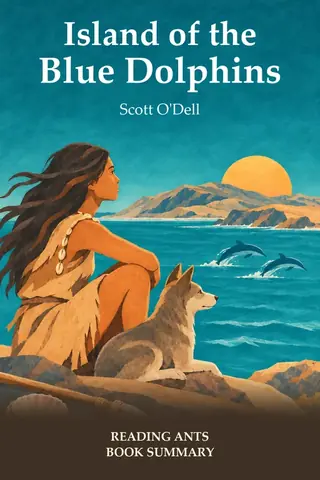
Island of the Blue Dolphins
Scott O'Dell
After her people leave their island and she is left behind, a Native American girl named Karana survives alone for years, learning to hunt, build and make friends with animals.
🧸 Children's Books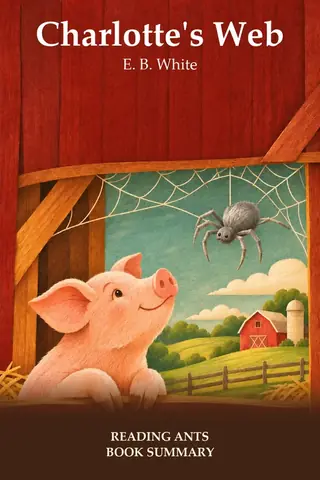
Charlotte's Web
E. B. White
A lonely pig named Wilbur learns he is going to be killed, and his clever friend Charlotte, a spider, comes up with an amazing plan to save his life.
🧸 Children's Books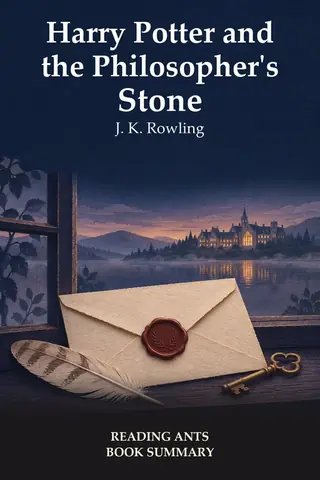
Harry Potter and the Philosopher's Stone
J. K. Rowling
An unloved orphan boy discovers on his eleventh birthday that he is a famous wizard, and during his first year at a magical school he makes true friends and faces the dark wizard who killed his parents.
🧸 Children's BooksWant something different?
Pick another topic and we will show you three books to start with.