 Reading Ants
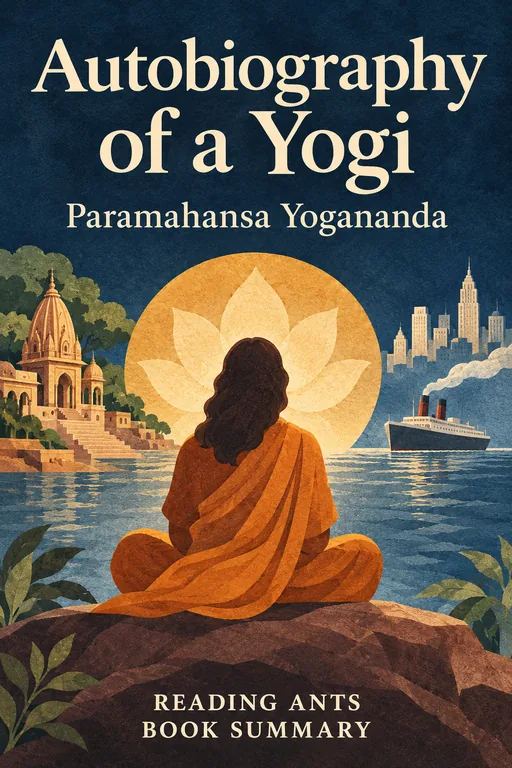
Autobiography of a Yogi
Paramahansa Yogananda, an Indian yoga master who taught in the United States, tells the story of his spiritual search, from a boyhood in India to the founding of his organization in the West, and describes the saints and teachers he met along the way.
Overview
Autobiography of a Yogi was first published in 1946 by Paramahansa Yogananda, who was born Mukunda Lal Ghosh in northern India in 1893. He came to the United States in 1920 and taught yoga and meditation there until his death in 1952, and he founded the Self-Realization Fellowship. The book appeared in 1946, and later editions were enlarged. The book tells of his search for a guru, his training, and his meetings with a series of remarkable figures, including the Indian saint Sri Yukteswar and, in America, public figures. It contains many accounts of miracles, which the author presents as real. It has been very popular, and was one of the first works to bring Indian spirituality to many Western readers.
Full Summary
1. A spiritual boyhood
The idea: Yogananda tells of his early years in a devout family, and of his early sense that spiritual life was his destiny. He recounts childhood episodes in which he sensed a presence, and the deep impression made on him by the death of his mother when he was a boy. Even as a child, he says, he longed to find a teacher who could guide him to God. More than once he tried to run away to the Himalayas to find holy men, but he was brought back each time.
In real life: Many people feel a call toward a certain path from early on, and sometimes it takes years to understand it.
2. Meeting the guru
The idea: The center of the book is the author’s meeting with his teacher, Swami Sri Yukteswar, a strict and loving master who lived in a hermitage in Serampore. Yogananda describes his years of training, which included both spiritual discipline and university study, and the difficult but affectionate relationship with a man who did not hesitate to correct him. Under his guidance, he says, he learned to meditate deeply and to understand the unity behind religions.
In real life: A good teacher can see our weaknesses and strengths and challenge us, because he cares.
3. Yoga and Kriya technique
The idea: Yogananda describes the practice of yoga as a science of union with the divine, through meditation, breath control and moral discipline. He introduces Kriya Yoga, a technique of meditation, which he says was passed down from ancient times through a line of teachers that he names as Mahavatar Babaji, Lahiri Mahasaya, Sri Yukteswar and himself. He claims that regular practice can transform consciousness. He writes that the actual technique must be learned from a qualified Kriya Yogi, and he does not give full instructions in the book.
In real life: Learning to sit quietly and focus on the breath is a practice that many traditions share.
4. Saints and miracles
The idea: A great part of the book is made up of stories about saints and yogis whom Yogananda met, or heard about, who are said to have performed extraordinary acts, such as appearing in two places at once, living without food, or bringing the dead back to life. He treats these not as tricks but as expressions of spiritual laws. There are also scenes with Hindu holy women and with Therese Neumann, a Catholic mystic in Bavaria who was said to bear the wounds of Christ. Readers may take these accounts as faith, symbol or tradition.
In real life: People of many faiths tell stories of wonders that inspire them, though outside observers cannot verify them.
5. Teaching in the West
The idea: In 1920, Yogananda was invited to speak at a conference in Boston, and he stayed in the United States, giving lectures to large audiences and starting a center in Los Angeles. He describes meetings with people from different walks of life, among them the plant breeder Luther Burbank, and with the Indian leader Mahatma Gandhi, during a return trip to India. He also describes the school for boys that he founded at Ranchi in India, which combined ordinary lessons with yoga. He reflects on the possibility of a meeting between East and West, with each bringing its strengths, spiritual insight and practical skill.
In real life: A traveler who brings ideas from one culture to another can build a bridge, but must listen as well as teach.
6. The end of the guru
The idea: Late in the book come the death of Sri Yukteswar, which the author treats as a transition and not an end, and the guru’s reappearance to him afterwards, when he speaks of life after death. The last chapters then describe Yogananda’s return to the West and the hermitage at Encinitas in California, built for him while he was away, where he was revising the manuscript of the book in 1945. The closing pages dwell on his hope for a world community founded on spiritual brotherhood and on the practice of Kriya Yoga in the West. He also stresses throughout that religion is universal and one.
In real life: The influence of a teacher can continue in a student’s life long after they are gone.
Why It Matters
Autobiography of a Yogi has been translated into dozens of languages and has sold millions of copies. It is considered one of the most influential spiritual books of the twentieth century, and has inspired many to take up meditation and yoga. It became widely known among people interested in Eastern thought, and many public figures have said that they read it, including the technology entrepreneur Steve Jobs, who is said to have reread it often. The book also helped to shape Western ideas of India and of the guru. For devoted readers, it is a source of encouragement, and for others, a vivid portrait of a life and a tradition.
Key Takeaways
- A teacher can guide the way. The guru-disciple relationship is central.
- Meditation is a practice. Regular, disciplined practice is stressed.
- Religions share a core. The author sees a unity beneath different faiths.
- Faith and wonder inspire. The book presents the world as full of spiritual possibility.
- East and West can learn from each other. Yogananda tried to combine spiritual and practical life.
What We Can Learn
You can take from the book a sense of seriousness about spiritual questions, and the idea that regular practice, such as quiet reflection or meditation, can change how you feel. You can also read it as a portrait of how a person finds a mentor. At the same time, ask questions about claims that cannot be tested, and compare different accounts. Respect the traditions of others, but think for yourself. If you wish to practice meditation or yoga, seek good teachers and be wary of any claim that seems extreme.
Criticism and Counterpoints
Skeptics say that the book’s reports of miracles are not supported by evidence, and that they cannot be tested. Some scholars note how constantly the book mixes miracles with everyday events, and how actively the book and the author’s movement were promoted. Critics also point out that the book is a work of devotion, not an objective biography, and that it was edited later by the organization that Yogananda founded. Admirers say that its value lies in its spiritual message and the example of a sincere searcher.
Who Should Read It
This book is for readers interested in spirituality, yoga and Indian religion, and who can read stories of the supernatural with an open but questioning mind. It is long and sometimes dense. Those who prefer strictly factual biography or a scientific approach may find parts hard to accept.
Want the whole book?
A summary is a taste, not the meal. Here is where to find the full book.
You reached the end 🎉
Nicely done. Mark this one as read, and we will suggest what to read next.
Read this next
The Upanishads
Various
A collection of ancient Indian texts, composed over several centuries, which explore the nature of reality and the self, and teach that the innermost self of each person is one with the ultimate reality behind the universe.
🕊️ Philosophy & Religion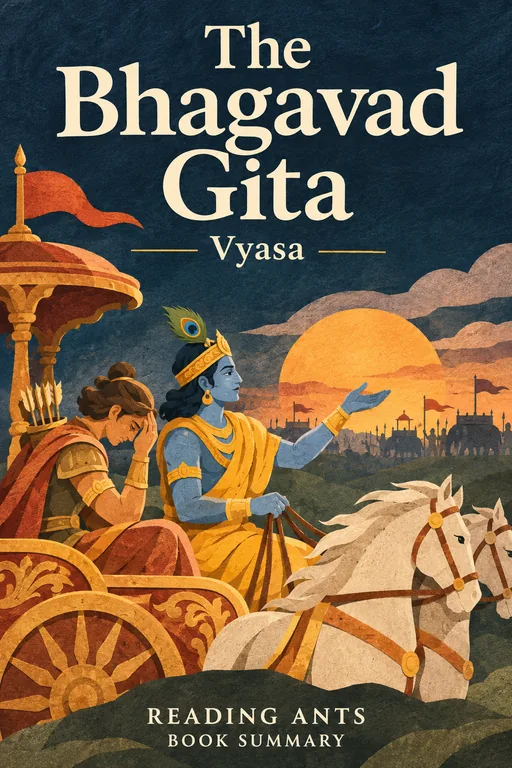
The Bhagavad Gita
Vyasa
On the eve of a great battle, the warrior Arjuna despairs, and the god Krishna, serving as his charioteer, teaches him about duty, the soul, selfless action and devotion.
🕊️ Philosophy & Religion
Zen Mind, Beginner's Mind
Shunryu Suzuki
In simple, direct talks, the Japanese Zen teacher Shunryu Suzuki explains that the heart of Zen practice is to sit quietly, breathe and approach each moment with the openness of a beginner.
🕊️ Philosophy & Religion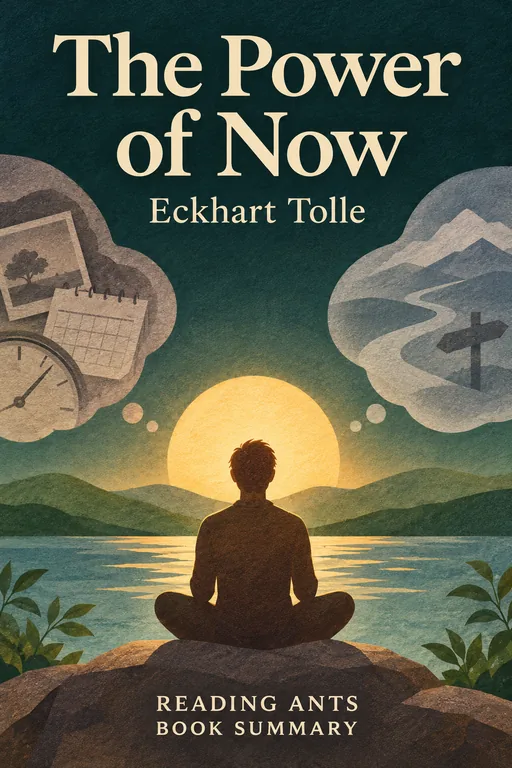
The Power of Now
Eckhart Tolle
Eckhart Tolle teaches that much of our suffering comes from living in thoughts about the past and future, and that peace is found by paying full attention to the present moment.
🌱 Self-Improvement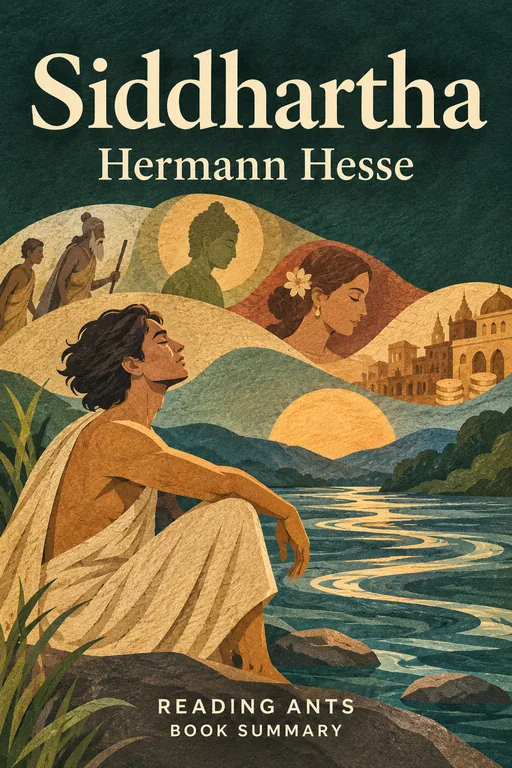
Siddhartha
Hermann Hesse
A gifted young man leaves teachers, wealth and family behind in search of enlightenment, only to discover through love, grief and a river that wisdom must be lived rather than borrowed.
🌍 World Literature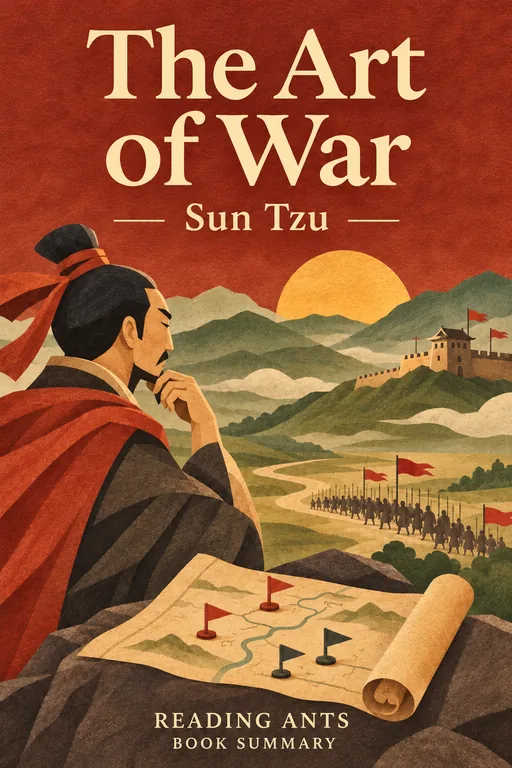
The Art of War
Sun Tzu
The greatest victory is the one won without fighting, achieved through careful planning, knowing both yourself and your opponent, and using deception, flexibility and timing.
🕊️ Philosophy & ReligionWant something different?
Pick another topic and we will show you three books to start with.