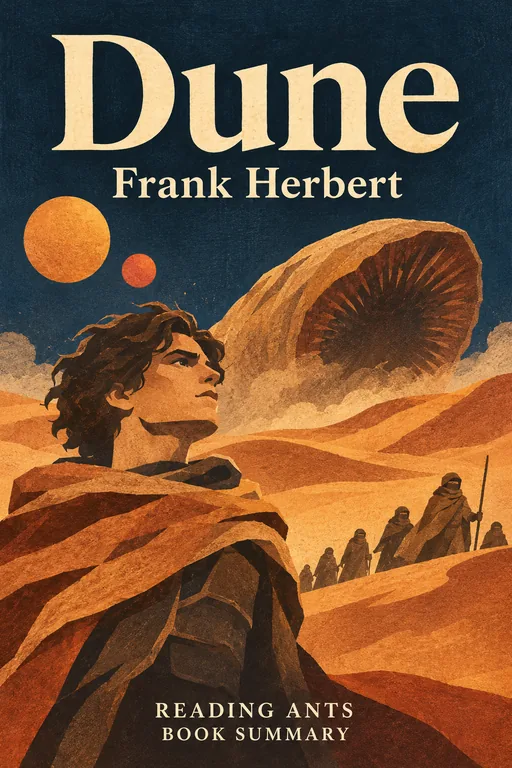
Dune
When his noble family is betrayed and destroyed, young Paul Atreides escapes into the deserts of the planet Arrakis and rises to lead its native people, the Fremen, in a revolution that will change the universe.
Overview
Dune, by Frank Herbert, was published in 1965 and is regarded as one of the greatest science fiction novels ever written. It is set in the distant future, in a feudal interstellar empire. The most valuable substance in the universe is “the spice,” or melange, which extends life and allows space travel, and it is found only on the desert planet Arrakis, also called Dune. When the Emperor gives the planet, long ruled by House Harkonnen, to their rivals, House Atreides, the Harkonnens plot with the Emperor to destroy the Atreides. Paul, the fifteen-year-old heir of the Atreides, must survive in the harsh desert and discover who he really is. The novel mixes politics, ecology, religion and adventure.
Main Characters
- Paul Atreides: the young heir, trained in strategy, combat and mental discipline.
- Duke Leto Atreides: Paul’s honorable father.
- Lady Jessica: Paul’s mother, a member of the Bene Gesserit order.
- Baron Vladimir Harkonnen: the cruel, scheming enemy of House Atreides.
- Stilgar: the leader of a Fremen tribe.
- Chani: a Fremen woman who becomes Paul’s partner.
- Duncan Idaho and Gurney Halleck: loyal Atreides warriors.
- Dr. Yueh: the physician who betrays the Duke.
- Emperor Shaddam IV: the ruler of the known universe.
Full Summary
The Move to Arrakis
Paul, fifteen, lives with his father, Duke Leto, and his mother, Lady Jessica, on the water-rich planet Caladan. Jessica, who is a Bene Gesserit, a member of a powerful sisterhood with mental and physical training, has secretly trained Paul in their ways, though she was ordered to bear a daughter. The Emperor orders House Atreides to take over Arrakis, which is a dangerous trap, since the Harkonnens have ruled the planet and will try to destroy them.
On Arrakis, which is vast desert with giant sandworms that attack anything that moves, the people live in scarcity. The native Fremen, who survive in the deep desert, are almost legendary. Paul begins having dreams of the future, and of the Fremen.
Betrayal
The Harkonnens, supported by the Emperor’s elite troops, the Sardaukar, attack. A traitor in the Duke’s household, Dr. Yueh, whose wife has been held hostage, disables the Duke’s shields. Duke Leto is captured and delivered to the Baron; Leto releases a poison gas hidden in a false tooth, hoping to kill his enemy, but the Baron’s shield saves him while the gas kills Leto and others in the room. Paul and his mother escape into the desert, thought dead.
Among the Fremen
Paul and Jessica are found by the Fremen. Paul, tested and proven, is accepted, and Stilgar’s people teach him how to live in the desert, how to conserve water, and how to ride the giant sandworms. Paul takes the name Muad’Dib and the Fremen come to see him as a prophesied messiah, the Lisan al-Gaib, a legacy of a Bene Gesserit plan to spread myths through the galaxy. Paul falls in love with Chani, a young Fremen woman.
Jessica, who is pregnant, drinks the “Water of Life,” a poison that can kill, and becomes a Reverend Mother, changing her unborn daughter, Alia, who is born with extraordinary awareness.
The Spice and the Vision
Paul takes the Water of Life himself, and wakes after being in a trance. He realizes that he can see the future and the past, and that he is the “Kwisatz Haderach,” the being the Bene Gesserit hoped to breed. He sees that, whatever he does, his followers will start a holy war across the universe, and he can’t stop it.
He leads the Fremen in guerrilla warfare against the Harkonnens, disrupting their spice production. The campaign has a personal cost: in a raid on their hideout, Paul and Chani’s infant son, Leto, is killed. The spice flow drops, and the Emperor and the guild that controls space travel become concerned.
The Battle
The Emperor arrives at Arrakis with his armies, intending to crush the Fremen. Paul, using the sandworms as an attack weapon and atomic weapons to blast through a mountain wall, crushes the Emperor’s Sardaukar in a decisive battle. His sister Alia kills the Baron. Paul confronts the Emperor and gets him to surrender, then challenges Feyd-Rautha, the Baron’s nephew, to a duel and kills him.
Victory and Cost
Paul forces the Emperor to give his daughter, Princess Irulan, to marry him, giving him the throne. Chani is Paul’s true love, but she will be only a concubine. The novel ends with Paul as Emperor and the Fremen preparing to carry his name across the stars, though Paul knows this will lead to a terrible jihad in his name.
Why It Matters
Dune won the first Nebula Award and shared the Hugo Award in 1966, and is often called one of the best-selling science fiction novels of all time, with close to twenty million copies sold. It spawned five sequels by Herbert and many more by his son, Brian Herbert, and Kevin J. Anderson. Adaptations include David Lynch’s 1984 film, a 2000 miniseries and Denis Villeneuve’s acclaimed Dune (2021) and Dune: Part Two (2024).
The novel was ahead of its time in treating ecology as a central theme: water, desert and the balance of life shape the story. It also warned about charismatic leaders and religious fervor; Herbert wrote that he wanted to show how dangerous it is to trust heroes. Its influence can be seen in works such as Star Wars.
Key Takeaways
- Ecology shapes civilization. Water and spice determine politics and culture.
- Beware of messiahs. Paul’s rise as a prophet leads to disaster.
- Power has a price. Paul wins but unleashes a holy war.
- Adaptation means survival. The Fremen thrive by respecting the desert.
- Betrayal comes from within. The Atreides fall to a traitor.
What We Can Learn
Dune encourages us to think about resources and the environment. The Fremen conserve every drop of water, a reminder that survival depends on respecting limits.
It also warns us about the dangers of unquestioning followers. Paul sees that his followers’ devotion may be the cause of great suffering, and Herbert suggests that we should be skeptical of leaders who seem too perfect.
Finally, the novel shows the value of mental discipline and preparation. Paul survives because he has been trained to think clearly, control fear and plan ahead.
Criticism and Counterpoints
Some readers find Dune difficult to enter, with its many invented terms, long passages of dialogue and complex politics. Others find that its characters are more symbols than people, and some critics note that its portrayal of the Fremen, drawing on Arab and Middle Eastern cultures, is problematic.
Herbert’s story, in which a young man from outside becomes the greatest leader of a desert people, has been criticized as a “white savior” trope, though Herbert intended it as a warning. The sequels, especially Dune Messiah, make clear that Paul’s rule is a disaster. Other critics have noted that Herbert’s women are rarely given full agency, though the Bene Gesserit are powerful.
Who Should Read It
This novel suits older teens and adults who enjoy rich, complex world-building. It is long and slow at times, but rewarding. Fans of the films may find the novel’s ideas deeper than the adaptations.
Want the whole book?
A summary is a taste, not the meal. Here is where to find the full book.
You reached the end 🎉
Nicely done. Mark this one as read, and we will suggest what to read next.
Read this next
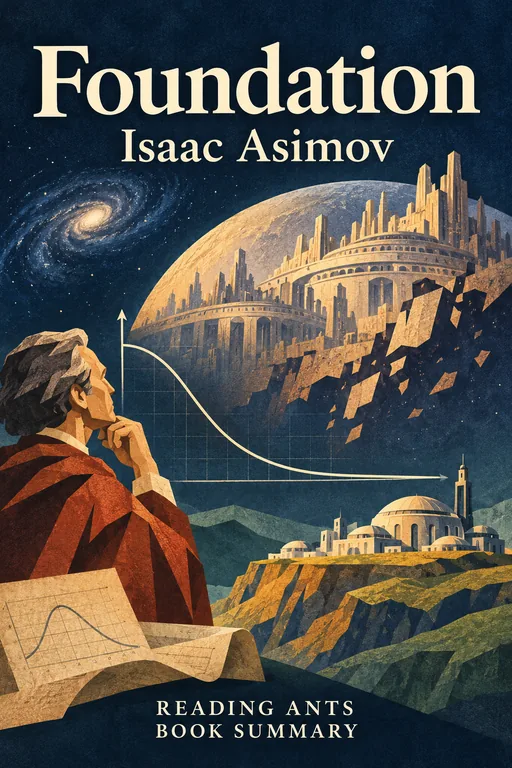
Foundation
Isaac Asimov
A mathematician predicts that the vast Galactic Empire will fall, and sets up a small colony of scientists at the edge of the galaxy to shorten the coming dark age from thirty thousand years to one thousand.
🚀 Sci-Fi & Fantasy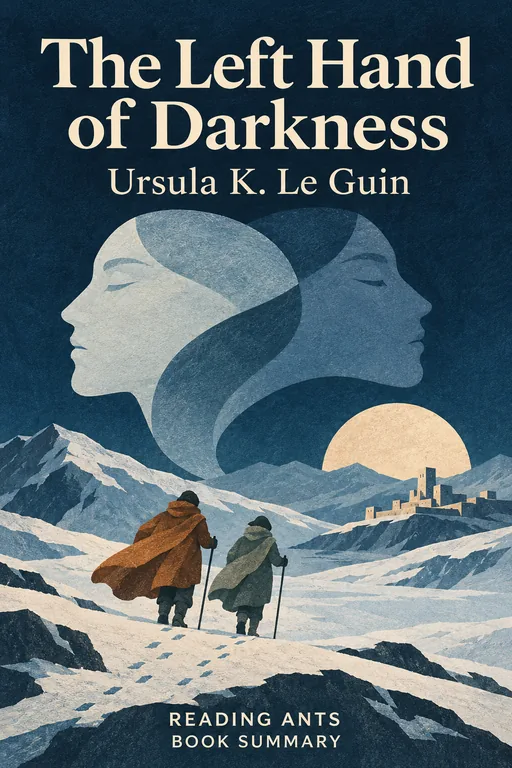
The Left Hand of Darkness
Ursula K. Le Guin
A lone envoy from a league of human worlds travels to the frozen planet Gethen, where people have no fixed gender, and learns to trust a local statesman, Estraven, who is exiled for his politics and who comes to the envoy's aid.
🚀 Sci-Fi & FantasyA Game of Thrones
George R. R. Martin
In a medieval-style world, noble families scheme and fight for the Iron Throne of the Seven Kingdoms while an ancient menace awakens in the frozen North, and no one, however honorable, is safe.
🚀 Sci-Fi & Fantasy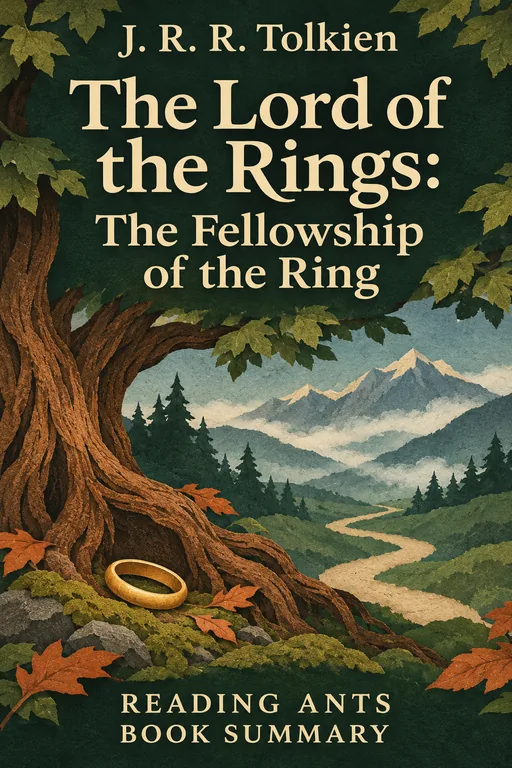
The Lord of the Rings: The Fellowship of the Ring
J. R. R. Tolkien
A small hobbit inherits a ring holding the Dark Lord Sauron's evil power, and a fellowship of nine sets out to destroy it in the volcano where it was made, deciding the fate of Middle-earth.
🚀 Sci-Fi & Fantasy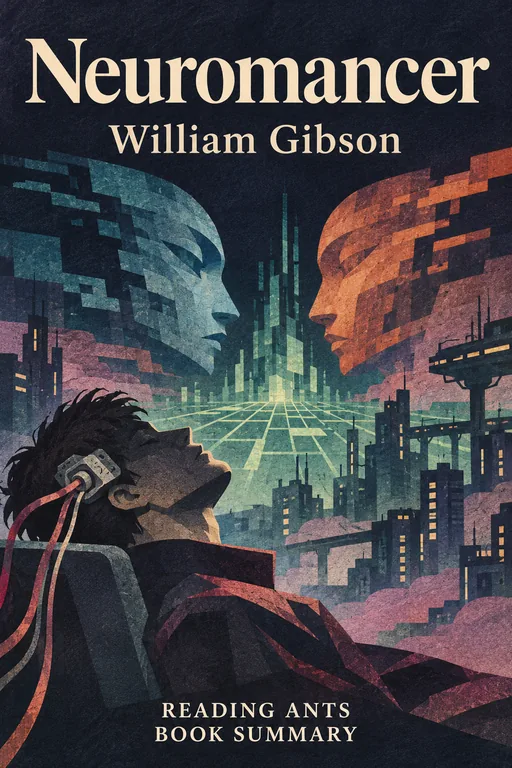
Neuromancer
William Gibson
A washed-up computer thief named Case is hired for one last job that pulls him into a hidden contest between two artificial minds.
🚀 Sci-Fi & Fantasy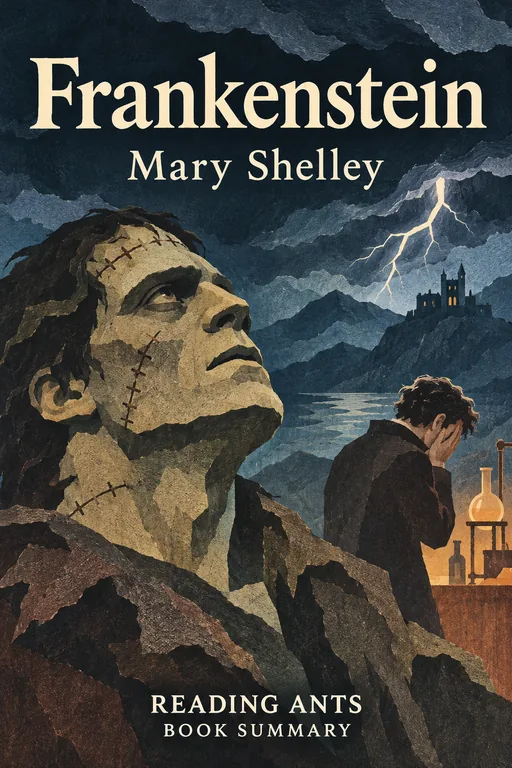
Frankenstein
Mary Shelley
A young scientist creates a living being from dead body parts, then abandons it in horror, and his rejected creation, longing for love, turns to revenge.
🚀 Sci-Fi & FantasyWant something different?
Pick another topic and we will show you three books to start with.