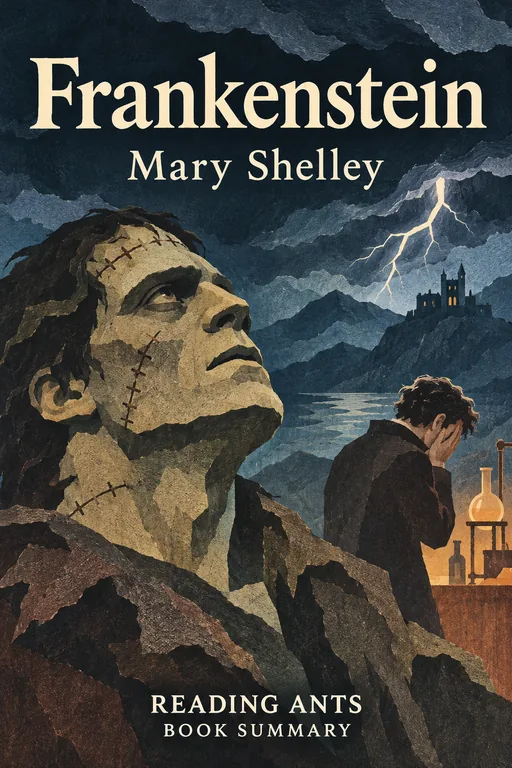
Frankenstein
A young scientist creates a living being from dead body parts, then abandons it in horror, and his rejected creation, longing for love, turns to revenge.
Overview
Frankenstein; or, The Modern Prometheus was written by Mary Shelley when she was only eighteen and first published in 1818. It began during a stormy summer in Switzerland, when Mary, the poet Percy Shelley and Lord Byron held a contest to write ghost stories. The novel tells of Victor Frankenstein, a brilliant student who discovers the secret of giving life to lifeless matter and builds a creature, then flees from it in disgust. Alone and rejected by everyone, the creature educates itself and begs his creator for companionship, but when Victor refuses, tragedy follows. Often called the first science fiction novel, Frankenstein asks enduring questions about ambition, responsibility and what it means to be human.
Main Characters
- Victor Frankenstein: an ambitious young scientist from Geneva.
- The creature: the intelligent, sensitive and finally vengeful being Victor creates.
- Robert Walton: an explorer on an Arctic voyage who hears Victor’s story.
- Elizabeth Lavenza: Victor’s adopted sister and later his bride.
- Henry Clerval: Victor’s loyal, cheerful best friend.
- William Frankenstein: Victor’s young brother.
- Justine Moritz: a kind servant of the Frankenstein family.
- The De Lacey family: a poor family whom the creature secretly watches.
Full Summary
A Ship in the Arctic
The novel begins with letters from Robert Walton, an explorer sailing toward the North Pole, to his sister in England. His ship becomes trapped in ice. One day the crew sees a huge figure on a dogsled crossing the ice. The next day, they rescue a weak, half-frozen man, Victor Frankenstein, who is chasing that figure. Seeing that Walton shares his burning ambition, Victor decides to tell him his story as a warning.
The Experiment
Victor grows up in a loving family in Geneva, with his parents, his younger brothers and Elizabeth, an orphan adopted by the family in the 1831 revision (in the original 1818 text she is his cousin). As a teenager, he becomes fascinated by old books of alchemy, then by modern science. At university in Ingolstadt, he becomes obsessed with discovering the secret of life. Working alone for months, collecting body parts from graveyards and slaughterhouses, he builds a giant human figure.
On a dreary November night, he brings it to life. But when the creature opens its dull yellow eyes, Victor is horrified by its ugliness and runs away. The creature follows him, but Victor flees again. He falls into a long fever, nursed by his friend Henry Clerval.
Murder in Geneva
Months later, Victor receives terrible news: his little brother William has been murdered. Returning home, he glimpses the creature near the crime scene and knows it is the killer. But Justine, a gentle family servant, is accused because William’s locket was found in her pocket. Victor says nothing, fearing no one will believe him, and Justine is executed. Victor is overwhelmed with guilt.
The Creature’s Story
In the mountains near Chamonix, the creature confronts Victor and begs him to listen. He describes his first days, confused by light, cold and hunger. Everywhere he went, people screamed and attacked him. He hid in a shed beside a cottage, where he secretly watched the poor but loving De Lacey family. By listening to them, he learned to speak and read, and through books such as Paradise Lost he learned about history and feelings. He secretly helped the family by gathering firewood.
Finally, he gathered the courage to speak to the blind old father, De Lacey, who welcomed him kindly. But when the rest of the family returned, they were terrified and drove him away. In despair and rage, he burned their cottage. Later, he saved a girl from drowning and was shot by her companion. When he met young William and learned he was a Frankenstein, he killed him in anger and planted the locket on Justine.
The creature asks Victor for one thing: to make him a female companion. If Victor agrees, the two will go to the wilds of South America and never be seen again.
The Broken Promise
Victor reluctantly agrees and travels with Clerval to Britain, then works alone on a remote island in Scotland’s Orkney Islands. But as he works, he imagines the two creatures having children and creating a race of monsters. As the creature watches through the window, Victor tears the female creature apart. The creature swears revenge, promising that he will be with Victor on his wedding night.
Soon after, Clerval is found strangled on the Irish coast, and Victor is briefly accused of the murder. After recovering, he returns to Geneva and marries Elizabeth, preparing to fight the creature. But on their wedding night, while Victor searches the house, the creature kills Elizabeth. Victor’s father dies of grief shortly after.
The Chase
With nothing left, Victor swears to hunt the creature down. He follows it across Europe and into the frozen Arctic, where the creature leaves him food and messages to keep him going. This is where Walton found him.
Weakened, Victor dies aboard Walton’s ship, still urging the explorer to destroy his creation. Shortly after, Walton finds the creature standing over Victor’s body, weeping. The creature says he suffered more than his creator, that he was filled with love but met only hatred, and that his crimes have tormented him. He announces he will travel to the northernmost point of the earth and destroy himself on a funeral pyre, then disappears into the darkness.
Why It Matters
Frankenstein is often called the first true science fiction novel. Instead of using magic to create life, Victor uses science, and the book explores the dangers of scientific ambition pursued without thought for its consequences. Its themes feel more relevant than ever in debates about genetic engineering, artificial intelligence and other powerful technologies.
The novel has inspired hundreds of adaptations, most famously the 1931 film with Boris Karloff, whose image of a flat-headed monster with bolts in his neck became iconic, although it differs greatly from the articulate creature in the book. “Frankenstein” has become a word for any creation that turns against its maker. The book is also admired for being written by a teenage woman in an era when few women published novels.
Key Takeaways
- Creators are responsible for their creations. Victor’s greatest crime is abandoning the creature.
- Rejection breeds violence. The creature becomes monstrous after being denied love and kindness.
- Unchecked ambition is dangerous. Victor’s pursuit of glory destroys everyone he loves.
- Appearance shapes how we are treated. People judge the creature by his looks, not his heart.
- Knowledge can be both wonderful and destructive. Science needs moral wisdom.
What We Can Learn
Frankenstein teaches us to take responsibility for what we start. Whether it’s a project, a pet or a promise, walking away when things get difficult can cause real harm.
It also shows how much kindness matters. The creature begins gentle and curious, and he becomes violent after constant rejection. Including people who seem different, rather than judging them by appearance, can change lives.
Finally, the novel reminds us to think carefully about new technologies. Before rushing ahead with powerful inventions, scientists, companies and citizens should ask what the consequences might be and who might be hurt.
Criticism and Counterpoints
Some readers find the novel’s style slow and old-fashioned, with long descriptions of scenery and many coincidences, such as the creature finding exactly the right books in the woods or meeting William by chance. Victor’s constant self-pity and fainting can also be frustrating.
Critics have debated whether the creature is truly a victim or responsible for his own crimes, since he chooses to murder innocent people. Readers also note that the female characters, such as Elizabeth and Justine, are mostly passive victims. Others argue that these elements reflect the novel’s era and that its central questions remain as powerful as ever.
Who Should Read It
This book suits teenagers and adults who enjoy horror, science fiction or thought-provoking classics. It is a good choice for discussing science and ethics. Readers expecting the monster from the films may be surprised by how thoughtful and tragic the creature is.
Want the whole book?
A summary is a taste, not the meal. Here is where to find the full book.
You reached the end 🎉
Nicely done. Mark this one as read, and we will suggest what to read next.
Read this next
Dracula
Bram Stoker
An ancient vampire count from Transylvania moves to England to spread his curse, and a small band of brave friends, led by a wise Dutch professor, must hunt him down before he destroys them all.
📜 Classics
Strange Case of Dr Jekyll and Mr Hyde
Robert Louis Stevenson
A respected London doctor creates a potion that separates his evil side into a separate person, the brutal Mr. Hyde, but the darker self grows stronger until it takes control completely.
📜 Classics
Never Let Me Go
Kazuo Ishiguro
Looking back on her childhood at an English boarding school, a young woman gradually reveals that she and her friends were created to donate their organs, and that they accept their fate without ever trying to escape.
✨ Modern Fiction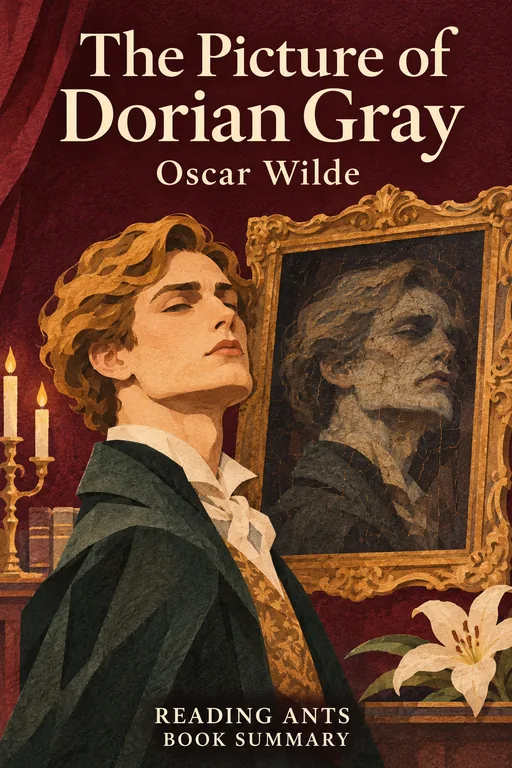
The Picture of Dorian Gray
Oscar Wilde
A beautiful young man wishes that his portrait would grow old instead of him, and as he lives a life of selfish pleasure and cruelty, his face stays perfect while the painting reveals the ugliness of his soul.
📜 Classics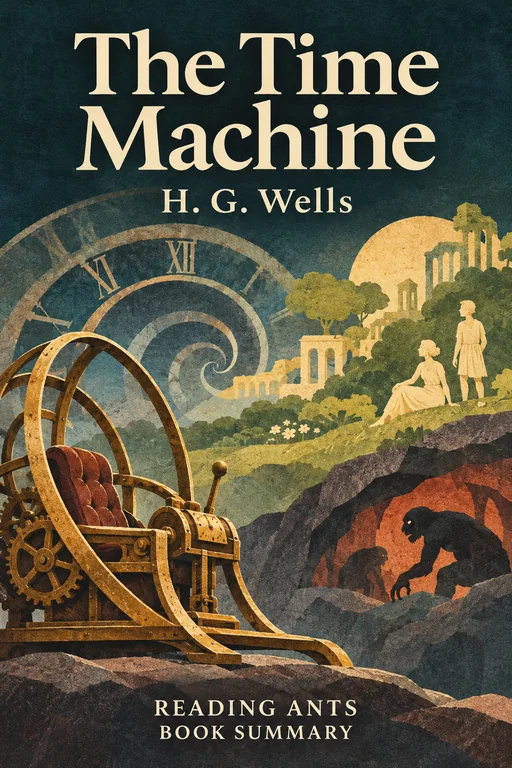
The Time Machine
H. G. Wells
A Victorian inventor, known only as the Time Traveller, builds a machine that carries him to the year 802,701, where he finds humanity split into two species, the gentle Eloi and the monstrous Morlocks, and then to a dying Earth.
🚀 Sci-Fi & Fantasy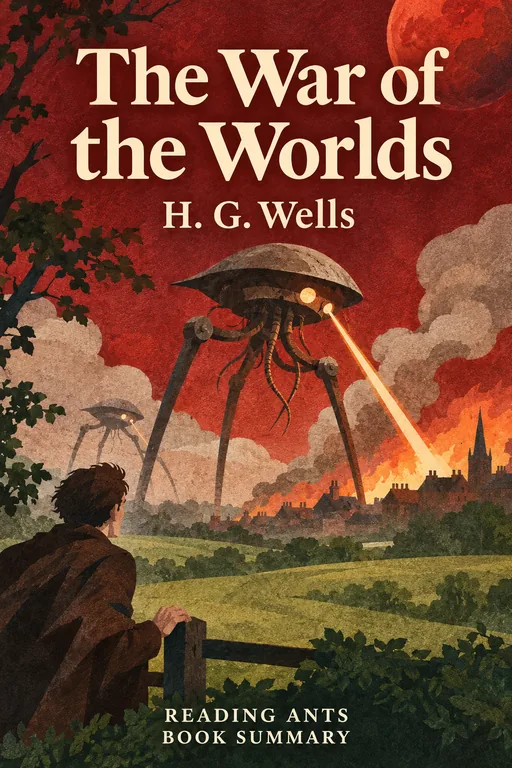
The War of the Worlds
H. G. Wells
Martians land in the English countryside with war machines and heat-rays that overwhelm human armies, until the invaders are brought down by the one thing humans never expected: Earth's smallest germs.
🚀 Sci-Fi & FantasyWant something different?
Pick another topic and we will show you three books to start with.