 Reading Ants
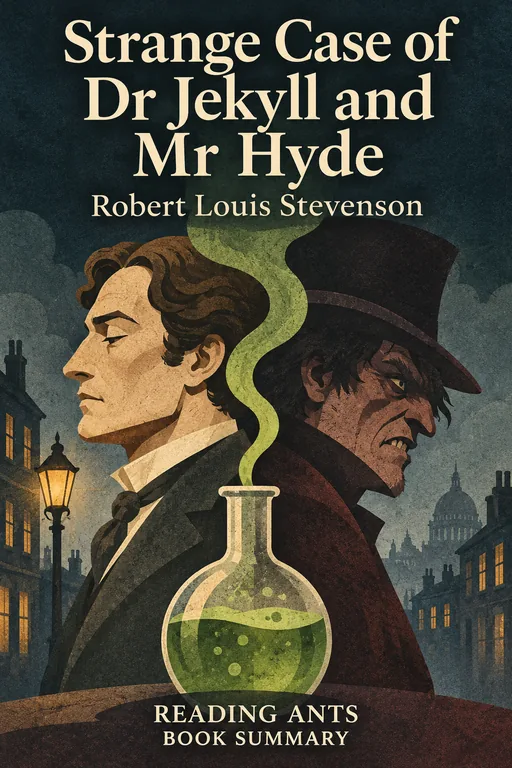
Strange Case of Dr Jekyll and Mr Hyde
A respected London doctor creates a potion that separates his evil side into a separate person, the brutal Mr. Hyde, but the darker self grows stronger until it takes control completely.
Overview
Strange Case of Dr Jekyll and Mr Hyde is a short gothic novella by the Scottish writer Robert Louis Stevenson, published in 1886. The story is told mostly through the eyes of Mr. Utterson, a calm, respectable lawyer in Victorian London, who becomes worried about his old friend, the kind and wealthy Dr. Henry Jekyll. Jekyll has made a strange will leaving everything to a mysterious man named Edward Hyde, who is small, ugly and violent, and who fills everyone who meets him with disgust. Utterson sets out to discover the connection between the two men. The shocking answer has made “Jekyll and Hyde” a phrase for anyone with two very different sides to their personality.
Main Characters
- Dr. Henry Jekyll: a respected, kind-hearted doctor and scientist.
- Mr. Edward Hyde: a violent, cruel man who seems almost evil itself.
- Mr. Gabriel John Utterson: a loyal, reserved lawyer and friend of Jekyll.
- Dr. Hastie Lanyon: a doctor and former friend of Jekyll.
- Mr. Richard Enfield: Utterson’s distant relative.
- Poole: Dr. Jekyll’s faithful butler.
- Sir Danvers Carew: a kindly elderly politician.
Full Summary
The Story of the Door
On a Sunday walk through London, Mr. Utterson and his relative Mr. Enfield pass a shabby door in a side street. Enfield tells a disturbing story: late one night, he saw a small, strange man knock down a young girl and trample over her as if it were nothing. A crowd forced the man to pay compensation, and he went through that door and returned with a check signed by a highly respected gentleman. The man’s name was Hyde.
Utterson is alarmed. He has in his safe a will written by his friend Dr. Jekyll, which leaves all of Jekyll’s property to Edward Hyde, and even says that if Jekyll disappears for more than three months, Hyde should inherit everything. Utterson fears that Hyde is blackmailing his friend.
Searching for Mr. Hyde
Utterson waits near the door until he meets Hyde. Hyde is small and pale, with a sense of deformity that nobody can quite describe, and Utterson feels a deep disgust. He discovers that the door leads to the old laboratory at the back of Dr. Jekyll’s house. When he asks Jekyll about Hyde, Jekyll becomes uncomfortable and tells him that he can be rid of Hyde whenever he chooses, asking Utterson to protect Hyde’s rights if anything happens.
The Carew Murder
About a year later, a maid looking out of her window sees Hyde beat a kind elderly gentleman, Sir Danvers Carew, to death with a cane in the street. Part of the broken cane is found, and Utterson recognizes it as one he gave to Jekyll. He leads the police to Hyde’s apartment, but Hyde has vanished.
When Utterson visits Jekyll, the doctor looks ill and swears he is finished with Hyde. He shows Utterson a letter supposedly from Hyde. But when Utterson’s clerk compares the handwriting with a note from Jekyll, he notices that the two scripts are almost the same, slanted differently.
Dr. Lanyon’s Shock
For a while, Jekyll seems happier, socializing with friends again. Then he suddenly shuts himself away. Utterson visits their mutual friend Dr. Lanyon, who has fallen gravely ill after a terrible shock. Lanyon refuses to speak of Jekyll and dies within weeks, leaving Utterson a sealed letter to be opened only after Jekyll’s death or disappearance.
The Last Night
One evening, Jekyll’s butler, Poole, comes to Utterson in terror. For days, Jekyll has been locked in his laboratory, sending out notes demanding a particular chemical, and the voice behind the door no longer sounds like his master. Utterson and Poole break down the door. They find Hyde on the floor, dying, having poisoned himself, and wearing clothes far too big for him. There is no sign of Jekyll. On the desk lies a new will naming Utterson as heir, and a letter telling him to read Lanyon’s account and then Jekyll’s own confession.
Lanyon’s Narrative
Lanyon’s letter explains that Jekyll had asked him to fetch a drawer of chemicals from his laboratory and give it to a man who would come at midnight. The man was Hyde. Hyde mixed a potion in front of Lanyon and drank it. Before Lanyon’s eyes, Hyde’s body twisted and swelled, and he transformed into Henry Jekyll. The horror of what he saw destroyed Lanyon’s health.
Jekyll’s Full Statement
In his confession, Jekyll explains everything. He had always felt that humans have two natures, one good and one evil, constantly at war. He created a potion that could separate them. When he drank it, he became Edward Hyde, a pure form of his evil side, smaller because that side had been less used. At first Jekyll enjoyed the freedom of indulging his worst desires as Hyde, then returning to his respectable life.
But Hyde grew stronger. One morning, Jekyll woke up to find he had turned into Hyde in his sleep, without the potion. After the murder of Carew, he vowed never to become Hyde again, but the transformations began happening on their own, and he needed more and more of the potion to return. When his supply of a special ingredient ran out, and new batches failed to work, he knew that he would soon become Hyde forever. He writes his confession as Jekyll for the last time, knowing that his life is ending.
Why It Matters
Strange Case of Dr Jekyll and Mr Hyde was an instant bestseller when it was published in 1886 and has remained one of the most famous horror stories ever written. Its central idea, that every person contains both good and evil, struck a chord with Victorian readers living in a society that valued strict respectability while hiding many vices.
The phrase “Jekyll and Hyde” is now used everywhere to describe someone who behaves in very different ways at different times. The story has been adapted into countless films, plays, a famous musical and cartoons. It has influenced psychology, crime fiction and superhero stories, such as the Incredible Hulk, which feature transformations into a darker, uncontrollable self.
Key Takeaways
- Everyone has good and bad sides. The struggle between them is part of being human.
- Hiding our faults can make them stronger. Jekyll’s secret indulgence lets Hyde grow.
- Bad habits can take control. What starts as a choice becomes an addiction.
- Respectability can mask darkness. Victorian society’s obsession with reputation hides secrets.
- Science without ethics is dangerous. Jekyll’s experiment destroys him.
What We Can Learn
The story teaches us that we cannot simply separate ourselves from our mistakes or bad impulses. Instead of hiding them, it is healthier to admit them and work on them openly, with the help of friends or professionals if needed.
It also shows how small choices can grow into habits that are hard to break. Jekyll believes he can stop whenever he wants, but each time it becomes harder. This is true of many habits, from excessive gaming to unhealthy behaviors.
Finally, Utterson’s loyalty reminds us to look out for friends who seem to be struggling. Asking questions and offering support can make a difference.
Criticism and Counterpoints
Some readers note that the twist, that Jekyll and Hyde are the same person, is now so famous that the mystery structure no longer surprises anyone. The story’s style can also feel formal and old-fashioned, and much of the action is described secondhand through letters.
Critics have also pointed out that the book has almost no female characters, and that its vague hints about Hyde’s “pleasures” leave readers guessing about what evil he actually commits. Some modern readers find the idea of evil as a separate, deformed self too simple. Still, the novella’s atmosphere and psychological insight remain powerful.
Who Should Read It
This short book suits teens and adults who enjoy gothic horror, mysteries and psychological stories. It can be read in an evening. Readers who think they already know the story will find the original darker and more thoughtful than its adaptations.
Want the whole book?
A summary is a taste, not the meal. Here is where to find the full book.
You reached the end 🎉
Nicely done. Mark this one as read, and we will suggest what to read next.
Read this next
Frankenstein
Mary Shelley
A young scientist creates a living being from dead body parts, then abandons it in horror, and his rejected creation, longing for love, turns to revenge.
🚀 Sci-Fi & Fantasy
The Picture of Dorian Gray
Oscar Wilde
A beautiful young man wishes that his portrait would grow old instead of him, and as he lives a life of selfish pleasure and cruelty, his face stays perfect while the painting reveals the ugliness of his soul.
📜 Classics
Dracula
Bram Stoker
An ancient vampire count from Transylvania moves to England to spread his curse, and a small band of brave friends, led by a wise Dutch professor, must hunt him down before he destroys them all.
📜 Classics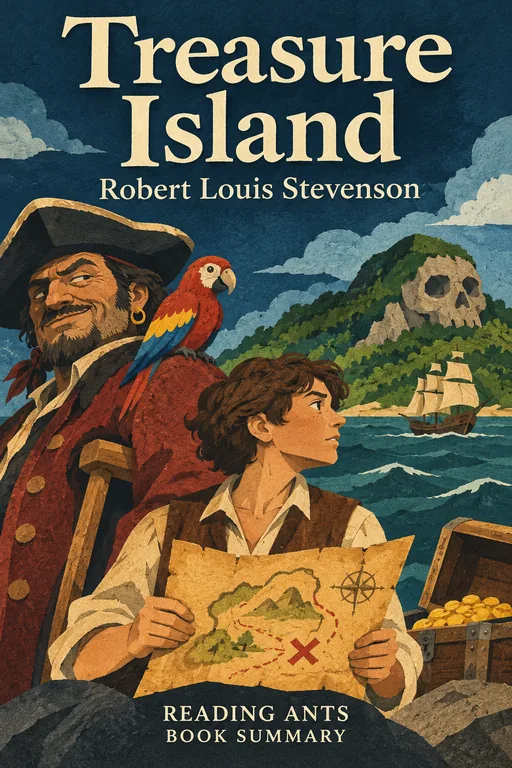
Treasure Island
Robert Louis Stevenson
A boy who finds a pirate's treasure map sails to a distant island, only to discover that the ship's charming one-legged cook is the leader of a band of pirates who want the gold for themselves.
🧸 Children's Books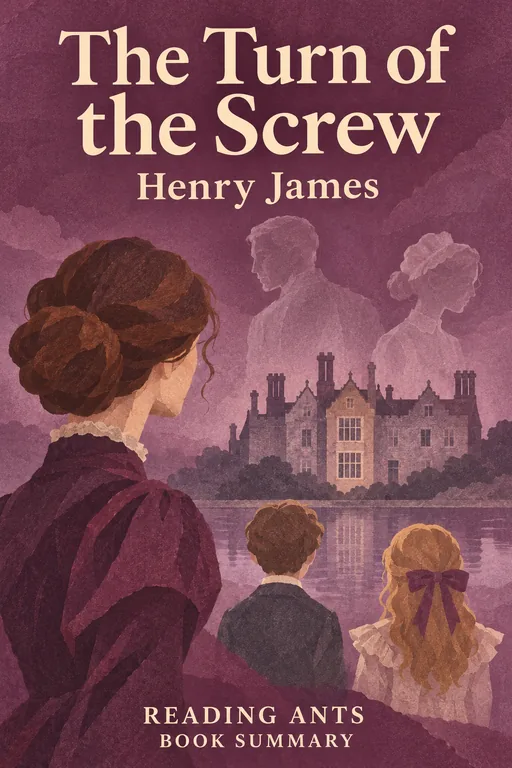
The Turn of the Screw
Henry James
A young governess at a remote English country house becomes convinced that two dead servants are trying to possess the children in her care, but the story leaves it unclear whether the ghosts are real or in her mind.
📜 Classics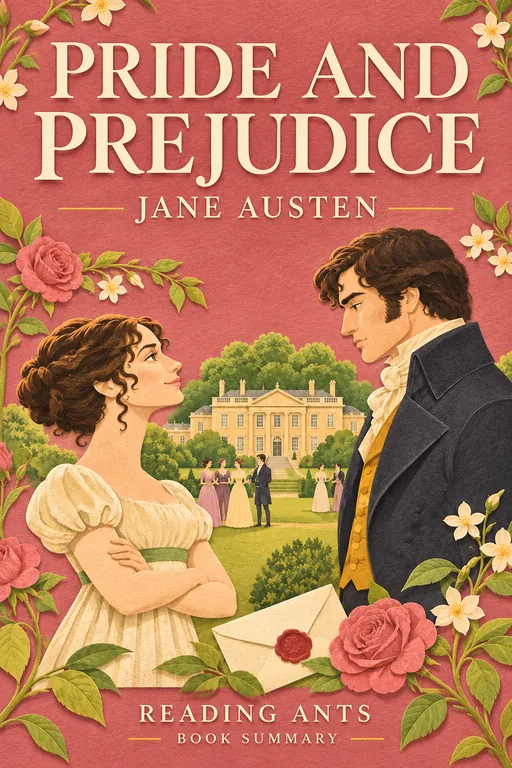
Pride and Prejudice
Jane Austen
Quick-witted Elizabeth Bennet and the proud, wealthy Mr. Darcy badly misjudge each other, and only by facing their own faults do they find their way to love.
📜 ClassicsWant something different?
Pick another topic and we will show you three books to start with.