 Reading Ants
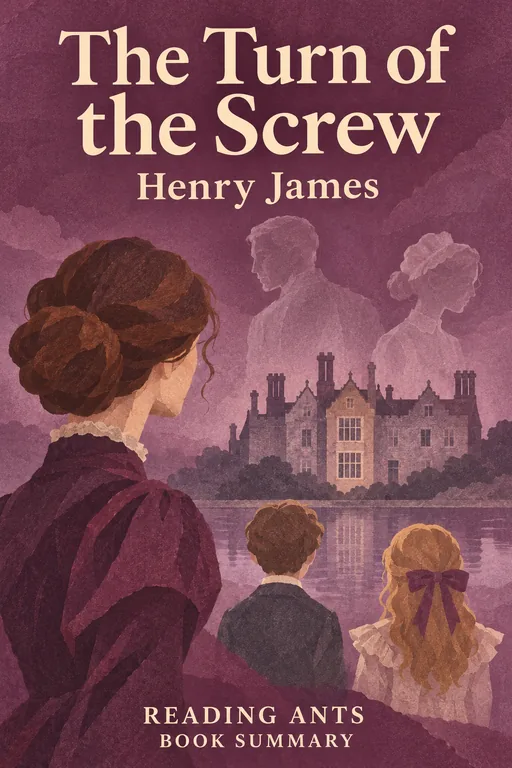
The Turn of the Screw
A young governess at a remote English country house becomes convinced that two dead servants are trying to possess the children in her care, but the story leaves it unclear whether the ghosts are real or in her mind.
Overview
The Turn of the Screw is a novella by Henry James, published in 1898, and is one of the most famous and most debated ghost stories in English. It is framed as a manuscript read aloud at a Christmas gathering, in which a governess tells of her experience at a house called Bly. James deliberately keeps the evil vague, so that readers must decide for themselves what is happening. The story has been read as a straightforward tale of the supernatural, and as a study of a disturbed mind, and both readings can be supported by the text.
Main Characters
- The governess: the young, unnamed narrator, who is earnest, inexperienced and imaginative.
- Miles: the boy of about ten, charming, clever and mysterious.
- Flora: his eight-year-old sister, sweet and watchful.
- Mrs. Grose: the housekeeper, who is simple, loyal and anxious.
- Peter Quint: the dead valet, whose ghost appears.
- Miss Jessel: the former governess, also dead, whose ghost appears.
- The uncle: the children’s guardian, a handsome man who lives in London and wants no contact.
Full Summary
The frame
At a country house on Christmas Eve, a group of friends is telling ghost stories. One of them, Douglas, says that he has a manuscript written by a woman who was once his sister’s governess. She sent him the pages before she died, and he has never shared them. He sends to London for it and reads it aloud over several evenings. The story that follows is the governess’s own account of her experience, written down some years afterward, so that readers must rely on her version of what happened.
Arrival at Bly
The governess, who is twenty and the daughter of a clergyman, answers an advertisement from a rich bachelor in London, who needs someone to look after his orphaned nephew and niece at his country estate. The uncle makes one condition: that she must never trouble him with any problems. She accepts, falling a little in love with him, and arrives at Bly, where she meets the housekeeper, Mrs. Grose, and the lovely little Flora. She finds the house beautiful and her situation happy.
The first ghost
Soon, the governess receives a letter from Miles’s school, saying that he has been expelled, without explanation. When Miles returns, he is polite and charming, and she cannot believe that he has done anything wrong. One evening, while she is walking in the grounds, she sees a man on a tower of the house, whom she does not know. She sees him again at a window. Mrs. Grose, from the governess’s description, identifies him as Peter Quint, a former valet, who is dead.
The second ghost
The governess also sees a woman, in black, by the lake, while she and Flora are sitting there. From the governess’s description, she decides that this is Miss Jessel, her predecessor as governess, who had a relationship with Quint and who also died, and Mrs. Grose does not deny it. The governess becomes convinced that the two ghosts have come back to claim the children, with whom they spent a great deal of time in life, and she fears that Quint, who Mrs. Grose says was far too free with everyone, had a bad influence on them. She believes that the children see the ghosts too, but conceal it. She resolves to protect them, though she has no proof, and Mrs. Grose cannot see the figures.
Confrontation with Flora
The governess’s suspicion and her watching grow more intense. One day, while Miles distracts her by playing the piano, Flora slips out of the house. The governess and Mrs. Grose find her by the lake, and the governess sees Miss Jessel on the far bank and points her out. Mrs. Grose says that she sees nothing, and Flora flatly denies seeing anything and cries out to be taken away from the governess. The child becomes feverish and hostile, and the governess decides that Mrs. Grose must take Flora away from Bly, to the uncle in London. The governess is left alone with Miles, convinced that she must save him. Mrs. Grose also discovers that a letter the governess had written to the uncle has disappeared, and the governess suspects that Miles took it.
The last scene
In the final scene, the governess presses Miles to confess. He admits that he took her letter, opened it and burned it, but he insists that he did not steal at school, and says only that he said things to a few friends. At that moment the governess sees Quint’s face at the window, and she holds Miles close and cries out. Miles asks whether Miss Jessel is there, and then, when the governess says it is someone else, names Peter Quint. He looks for him but sees nothing. As she holds him, the boy dies in her arms, and the story ends abruptly, leaving the question of cause unanswered, whether by fright, by the ghost, or by her own tight grasp.
Why It Matters
The Turn of the Screw has been one of the most discussed works of fiction for over a century, with critics arguing over whether the ghosts are real or imagined. James’s careful ambiguity, and his use of an unreliable narrator, have influenced many later writers of horror and psychological suspense. The story shows that fear can come from what is hinted at, not shown. It has been adapted for opera, by Benjamin Britten, and for film and television, notably The Innocents in 1961, and remains a model of the ghost story that haunts through suggestion.
Key Takeaways
- Ambiguity can disturb. We never know what is real.
- The narrator may be unreliable. We see only what the governess tells us.
- Fear can be self-fueling. Her suspicion shapes what she sees.
- Innocence may hide complexity. The children are hard to read.
- Protection can harm. Her attempt to save Miles may destroy him.
What We Can Learn
You can learn from this story to be careful about the stories we tell ourselves, and about the possibility that fear and anxiety can shape what we think we see. It also shows how readers must pay attention to who is telling a story, and how much we can trust them. In real life, you can think about how to ask for evidence and a second opinion when you feel certain about a danger. Reading it with friends and discussing whether the ghosts are real can be rewarding.
Criticism and Counterpoints
Some critics argue that the ghosts are real, and that the governess is a heroine, while others say that she is a repressed, disturbed woman who imagines the whole thing and drives a child to death. Neither reading is settled, which frustrates some readers. Others find James’s style, with its long, qualified sentences, difficult and slow. A few readers feel that the ambiguity is a trick, and that the story would be stronger if it committed to one reading. Despite this, the book is widely admired for its craft.
Who Should Read It
This book is for readers from about fourteen who enjoy ghost stories and psychological puzzles, and who are willing to read slowly. It is short, but dense. Readers who like it may enjoy Rebecca or The Haunting of Hill House.
Want the whole book?
A summary is a taste, not the meal. Here is where to find the full book.
You reached the end 🎉
Nicely done. Mark this one as read, and we will suggest what to read next.
Read this next
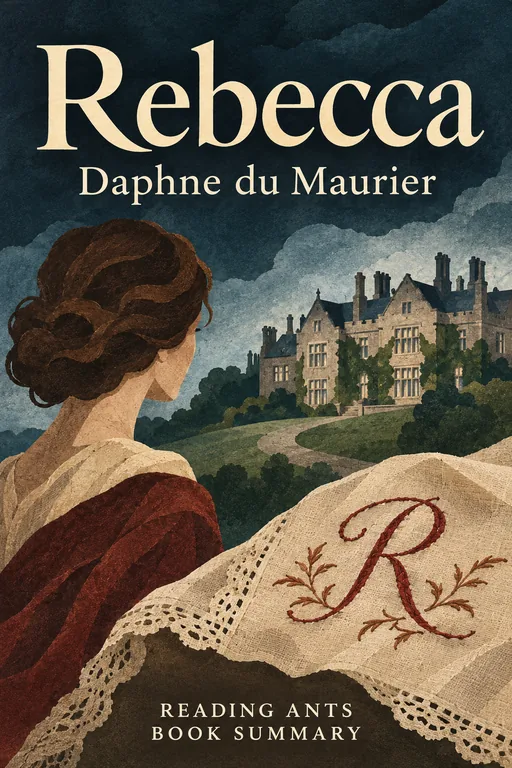
Rebecca
Daphne du Maurier
A shy young woman marries a wealthy widower and moves to his great estate, Manderley, where she is haunted by the memory of his first wife, Rebecca, and slowly learns the truth about her death.
📜 Classics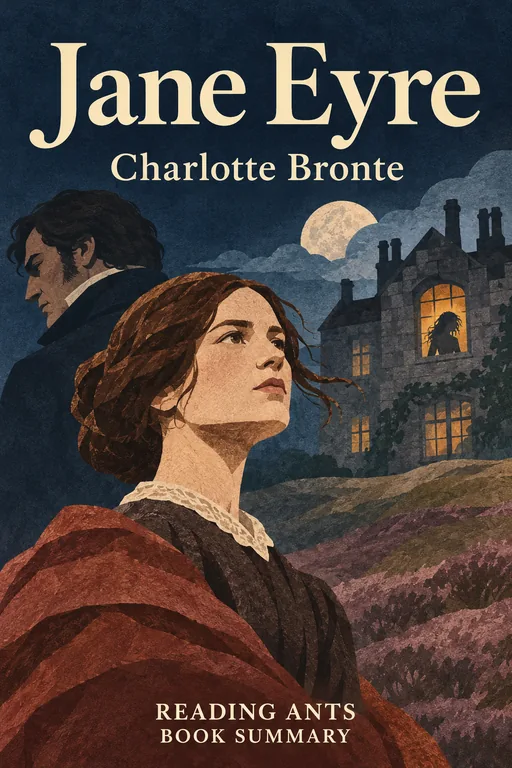
Jane Eyre
Charlotte Bronte
A poor, plain but fiercely independent orphan becomes a governess, falls in love with her brooding employer, discovers his terrible secret, and refuses to give up her self-respect even for love.
📜 Classics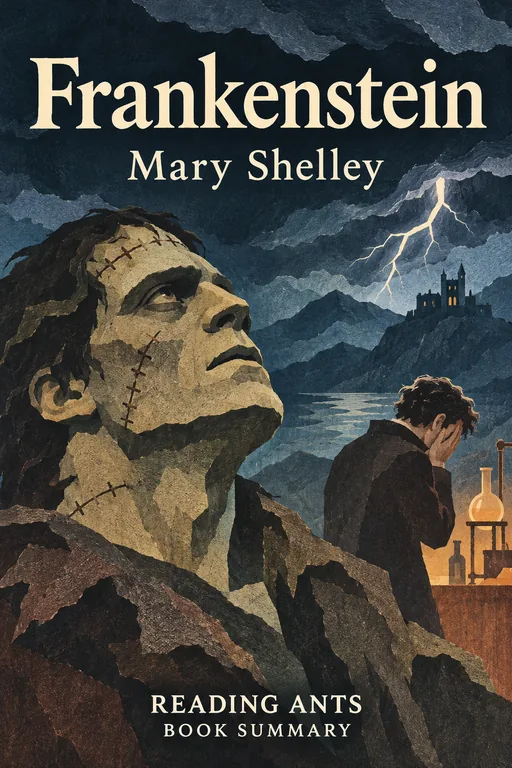
Frankenstein
Mary Shelley
A young scientist creates a living being from dead body parts, then abandons it in horror, and his rejected creation, longing for love, turns to revenge.
🚀 Sci-Fi & Fantasy
Dracula
Bram Stoker
An ancient vampire count from Transylvania moves to England to spread his curse, and a small band of brave friends, led by a wise Dutch professor, must hunt him down before he destroys them all.
📜 Classics
The Picture of Dorian Gray
Oscar Wilde
A beautiful young man wishes that his portrait would grow old instead of him, and as he lives a life of selfish pleasure and cruelty, his face stays perfect while the painting reveals the ugliness of his soul.
📜 Classics
Pride and Prejudice
Jane Austen
Quick-witted Elizabeth Bennet and the proud, wealthy Mr. Darcy badly misjudge each other, and only by facing their own faults do they find their way to love.
📜 ClassicsWant something different?
Pick another topic and we will show you three books to start with.