 Reading Ants
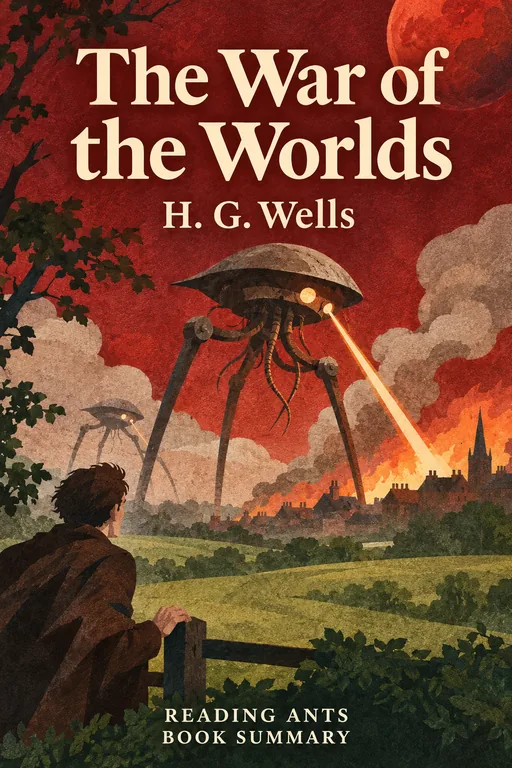
The War of the Worlds
Martians land in the English countryside with war machines and heat-rays that overwhelm human armies, until the invaders are brought down by the one thing humans never expected: Earth's smallest germs.
Overview
The War of the Worlds is a science fiction novel by H. G. Wells, published as a magazine serial in 1897 and as a book in 1898. It is one of the first and most influential stories of an alien invasion. The narrator, an unnamed man living in Surrey, England, describes how strange cylinders fall from Mars and release tall, three-legged fighting machines that destroy everything in their path. Wells set the story in familiar English towns, such as Woking, Richmond and London, and wrote it in the realistic style of a news report, which made the shocking events feel real. The book was also a pointed comment on the British Empire, asking readers to imagine how it feels to be conquered by a far stronger power.
Main Characters
- The narrator: an unnamed writer with an interest in science, who survives the invasion.
- The narrator’s wife: whom he sends to safety and fears he has lost.
- The narrator’s brother: a medical student in London, whose story is told separately.
- The curate: a religious man who loses his mind from fear.
- The artilleryman: a soldier with big, unrealistic plans for survival.
- Ogilvy: an astronomer who first sees the signs of Mars.
- The Martians: tentacled creatures with large heads and enormous intelligence.
Full Summary
The Falling Stars
At the start, astronomers notice strange explosions of gas on Mars. Soon afterward, a “falling star” lands on Horsell Common, near the narrator’s home. It is a huge metal cylinder. A crowd gathers, and the top of the cylinder starts to unscrew. A strange, gray, tentacled creature appears. When a group of men approaches with a white flag, a beam of heat flashes out and burns them to death.
The Heat-Ray
The military arrives but is largely outmatched, though artillery does destroy a machine. More cylinders land across southern England. The Martians climb out of their pits and assemble giant three-legged machines, “tripods,” that tower over trees and buildings. They fire heat-rays that burn everything, and release a poisonous black smoke that kills anyone who breathes it. The narrator escapes with his wife to Leatherhead and leaves her with friends. When he returns, he finds the countryside devastated.
The Curate and the Artilleryman
The narrator spends time trapped in a ruined house with a frightened curate, who is useless and self-pitying, and he sees the Martians drinking the blood of captured humans, which they use as nourishment. The curate’s noise attracts the Martians, and the narrator knocks him unconscious to keep them from discovering both of them; a Martian’s mechanical tentacle then reaches into the ruined house and removes the curate. Later, the narrator meets an artilleryman, who dreams of building an underground society to survive, with the strongest, cleverest people hunting with machines. The narrator soon recognizes that the man is lazy and deluded.
The Red Weed
As the weeks pass, the narrator notices a strange red weed spreading across the landscape, a Martian plant that covers ruins and rivers, a sign that the invaders mean to turn the Earth into their own world. From a hiding place, he watches the Martians at work in their pits, building machines and carrying out experiments, and begins to understand how little they care about humans, whom they treat as food and as obstacles. Alone in a flooded and silent countryside, he comes close to despair, and wonders whether humanity’s day is over.
London
Meanwhile, the narrator’s brother is in London, which is gripped by panic as people flee. Steamships take refugees across the sea, and thousands crowd the roads, in scenes of fear and chaos. A brave ship, the Thunder Child, destroys two Martian tripods before being destroyed itself.
The Ruined City
The narrator walks toward London through empty streets and abandoned houses, expecting at any moment to meet a Martian. Instead, he finds a world eerily silent, with only a few stray dogs and an occasional corpse. At last he hears a strange, mournful cry, repeated again and again, and fears the worst.
Death of the Martians
The narrator, wandering among the ruins of London, finds the Martian machines motionless. Approaching them, he sees the Martians lying dead, killed by the bacteria of Earth, to which they have no immunity. The Martians, who had no way to protect themselves against the diseases that humans have lived with for thousands of years, have been defeated by germs.
Aftermath
The narrator is reunited with his wife, whom he thought dead. Humanity recovers and studies the technology left behind, changing its view of its place in the universe. The narrator ends by wondering whether the Martians, or others, may come again.
Why It Matters
The War of the Worlds is one of the most famous science fiction novels ever written. It established many of the ideas that later alien invasion stories used: advanced technology, huge fighting machines, mass destruction and humanity’s near helplessness. Its description of the Martians’ heat-ray influenced later ideas about weapons.
In 1938, Orson Welles directed a radio drama version, broadcast on the eve of Halloween, which, according to popular accounts, caused panic among some listeners who thought a real invasion was occurring, although historians now think the panic was exaggerated by newspapers. The novel has been adapted into films, television series, a famous 1978 concept album and countless other works, and it remains a model of the invasion story.
Key Takeaways
- Humans are not invincible. A technologically advanced enemy can overwhelm us.
- Empire has two sides. Wells invites the British to imagine being the conquered.
- Nature can be a powerful ally. Microbes defeat the Martians.
- Fear brings out the best and worst. Some people flee, some help others.
- Humility is wise. Humans may not be the center of the universe.
What We Can Learn
The novel invites us to think about how it feels to be on the receiving end of overwhelming force. Wells wrote it at the height of the British Empire, and he asked readers to consider what it meant for those the empire conquered.
It also reminds us that nature has its own balance. The tiniest living things, bacteria, which we often fear, have protected humanity.
Finally, it shows how people react in a crisis. Some panic, some become selfish, and some stay calm and help others. Preparing for emergencies, and keeping our heads, can make a difference.
Criticism and Counterpoints
Some readers find the opening slow, with its detailed descriptions of astronomy, and the narrator is a rather detached observer who isn’t developed deeply as a character. The ending, in which germs suddenly kill the Martians, strikes some as too convenient.
The Martians’ behavior has been criticized as unscientific, since what we later learned about Mars makes such a civilization implausible. The novel also reflects Victorian views, including an unquestioning view of “survival of the fittest.” Despite its age, the story is still gripping.
Who Should Read It
This short novel suits readers from about 10 upward who enjoy science fiction and adventure. Some language and scenes of destruction may be too intense for the very young. Fans of alien invasion stories will enjoy seeing where it all started.
Want the whole book?
A summary is a taste, not the meal. Here is where to find the full book.
You reached the end 🎉
Nicely done. Mark this one as read, and we will suggest what to read next.
Read this next
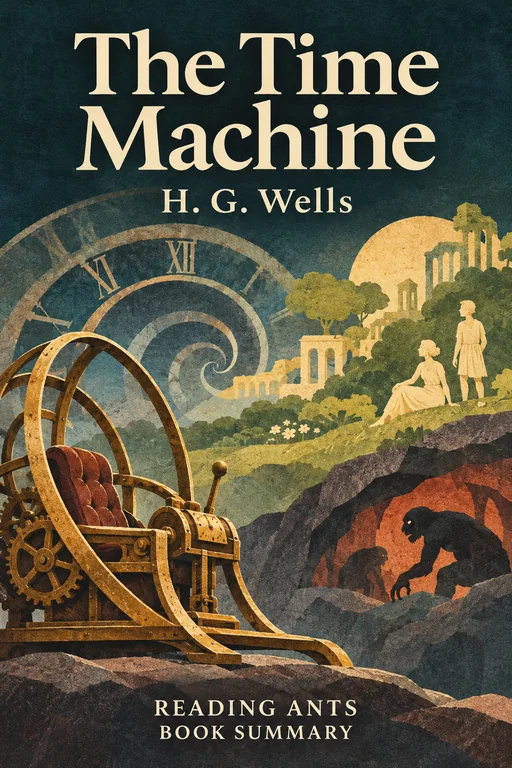
The Time Machine
H. G. Wells
A Victorian inventor, known only as the Time Traveller, builds a machine that carries him to the year 802,701, where he finds humanity split into two species, the gentle Eloi and the monstrous Morlocks, and then to a dying Earth.
🚀 Sci-Fi & Fantasy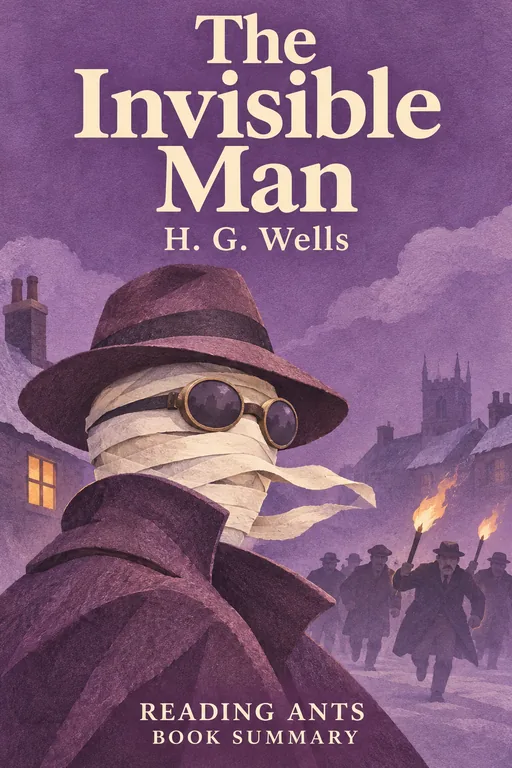
The Invisible Man
H. G. Wells
A brilliant scientist who has discovered how to make himself invisible finds that the power isolates him and drives him toward cruelty, until a frightened community hunts him down.
🚀 Sci-Fi & Fantasy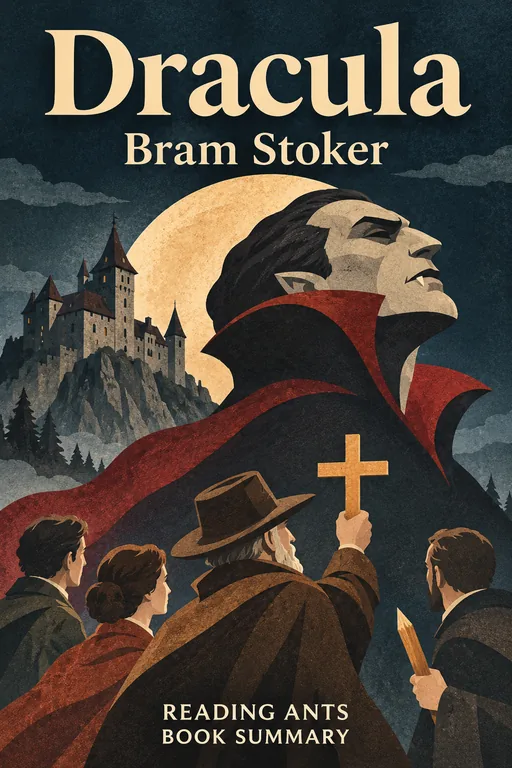
Dracula
Bram Stoker
An ancient vampire count from Transylvania moves to England to spread his curse, and a small band of brave friends, led by a wise Dutch professor, must hunt him down before he destroys them all.
📜 Classics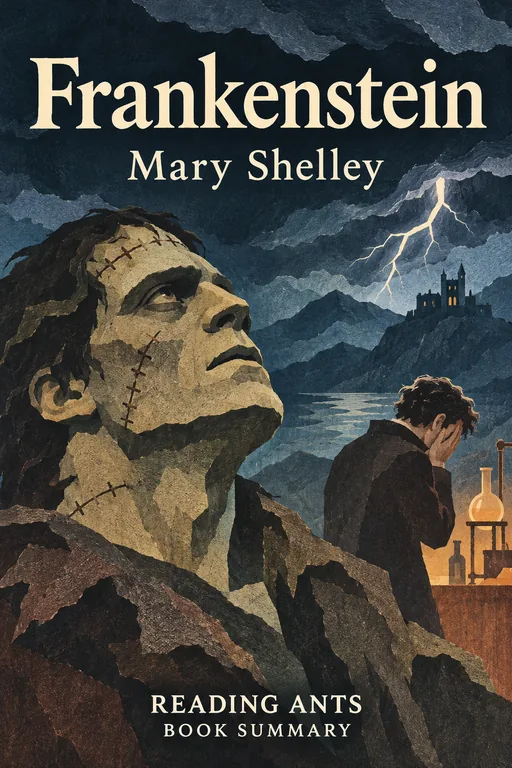
Frankenstein
Mary Shelley
A young scientist creates a living being from dead body parts, then abandons it in horror, and his rejected creation, longing for love, turns to revenge.
🚀 Sci-Fi & Fantasy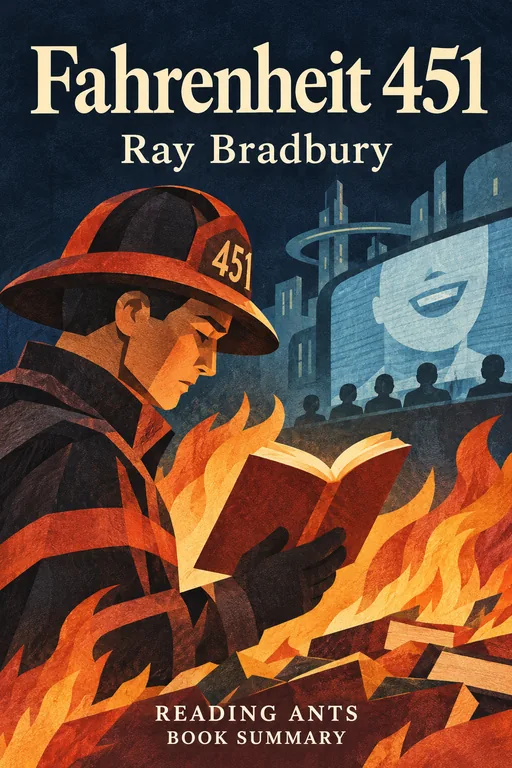
Fahrenheit 451
Ray Bradbury
In a future America where books are illegal and firemen start fires instead of putting them out, one fireman begins to read the books he is supposed to burn, and discovers what his society has lost.
🚀 Sci-Fi & Fantasy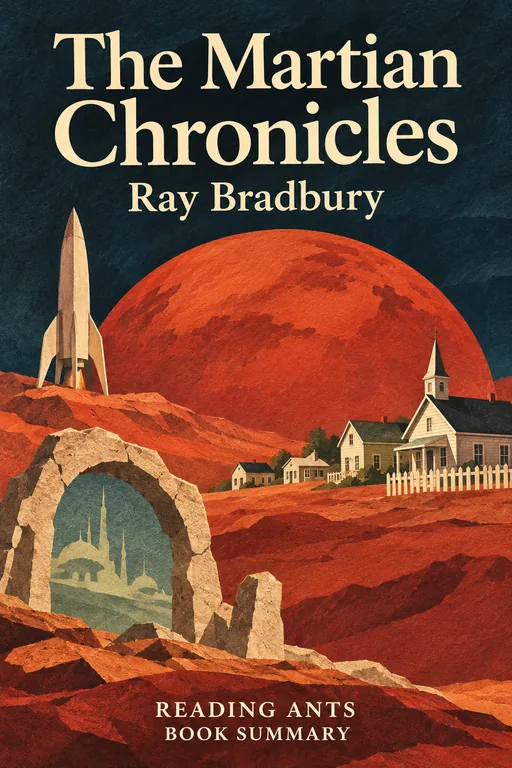
The Martian Chronicles
Ray Bradbury
Through a series of linked stories, Ray Bradbury follows human beings as they travel to Mars, destroy the people who live there, build towns that copy the Earth they left behind, and are then pulled back home when a nuclear war breaks out.
🚀 Sci-Fi & FantasyWant something different?
Pick another topic and we will show you three books to start with.