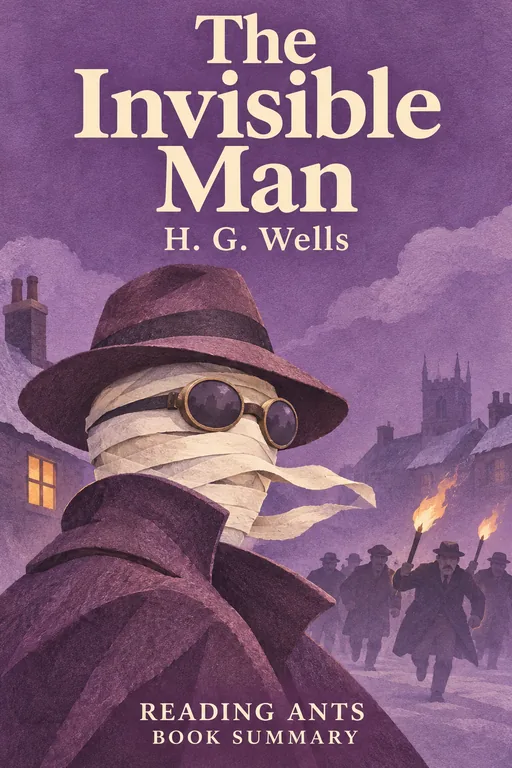
The Invisible Man
A brilliant scientist who has discovered how to make himself invisible finds that the power isolates him and drives him toward cruelty, until a frightened community hunts him down.
Overview
The Invisible Man is a science fiction novel by H. G. Wells, published in 1897, and it is one of his early scientific romances, alongside The Time Machine and The War of the Worlds. It begins in a quiet English village, where a mysterious stranger arrives, wrapped in bandages, and it gradually reveals the secret of his experiment. Wells combines humor, suspense and horror, and uses the idea of invisibility to ask what a person might do when no one can see them, and what science without ethics might become.
Main Characters
- Griffin, the Invisible Man: a brilliant, ill-tempered scientist, who is also an albino, and has made himself invisible.
- Mrs. Hall: the innkeeper at Iping, who is curious and talkative.
- Mr. Hall: her husband, the landlord of the Coach and Horses.
- Thomas Marvel: a tramp who is forced to become Griffin’s helper.
- Dr. Kemp: a doctor and scientist, whom Griffin knew from University College, who tries to stop him.
- Colonel Adye: the chief of police in Port Burdock.
- The villagers of Iping: a curious, gossiping community.
Full Summary
A stranger at the inn
On a snowy winter day, a stranger arrives at the village of Iping in Sussex, his face wrapped in bandages, with big blue glasses and a hat. He takes a room at the Coach and Horses inn, and demands to be left alone. He conducts experiments in his room, which fill the house with strange smells, and many bottles arrive for him. Mrs. Hall, the landlady, is curious, and the villagers gossip about him. Some guess that he is a criminal hiding from the law, and others that he is an anarchist in disguise. A burglary at the vicarage adds to the suspicion, and he grows more bad-tempered as his money runs out.
The unmasking
When the stranger cannot pay his bill, Mrs. Hall confronts him. In a fury he pulls off his false nose, bandages and glasses in front of the astonished villagers, revealing nothing underneath. He is invisible. The village constable arrives with a warrant, and the stranger fights him and the others, strips off his clothes so that nobody can hold him, and escapes, hitting out at those around him. Iping is thrown into uproar. The Invisible Man, naked, cold and hungry, now roams the countryside, furious at the nuisance of a body that cannot be seen.
Marvel the tramp
On the downs, the Invisible Man forces a tramp, Thomas Marvel, to be his assistant. Marvel is sent back to the inn at Iping to fetch the clothes and three notebooks that Griffin left behind. Terrified, he is kept in line with threats and bruises, and the two travel on together, while Marvel gathers up money that Griffin takes from shops and tills. Eventually Marvel slips away with the notebooks, and runs into the town of Port Burdock, where he begs for protection in an inn, saying that the Invisible Man is after him and will kill him.
Griffin’s story
Meanwhile, the Invisible Man, whose name is Griffin, is wounded in a fight at the inn, and makes his way to the home of Dr. Kemp, a scientist he knew from University College. He tells Kemp his story: a poor and ambitious young scientist, he worked in secret for years on a way to change the refractive index of the body, so that it no longer bends or reflects light. To pay for his work he robbed his own father, who then killed himself. He tested the process on a cat and then on himself, and set fire to his lodgings to cover his tracks. He now finds that invisibility brings cold, hunger and danger, and that he cannot move easily in public.
The Reign of Terror
Griffin tells Kemp that he plans a Reign of Terror, in which he, the invisible one, will rule by fear, and that Kemp will be his partner. Kemp, who is horrified and has already sent word to the police, refuses to agree. When Colonel Adye and his men arrive, Griffin escapes, and then kills a man named Wicksteed. He sends a letter announcing that the Terror begins with the execution of Kemp, and he besieges Kemp’s house, smashing its windows, shooting Colonel Adye and breaking in with an axe, while Kemp escapes and runs for the town.
The hunt and death
Kemp and Adye plan a hunt: they talk of bloodhounds, of locking up food so that Griffin cannot eat, of hiding anything he could use as a weapon, and even of powdered glass on the roads. Griffin, who is wounded and tired, is still dangerous. Finally, he chases Kemp through the streets, and the townspeople, shouting and armed with whatever they have, strike him down. As he dies, his body slowly becomes visible: first the veins, bones and nerves, then the flesh, and finally the skin, revealing a battered, naked young man with the white hair and red eyes of an albino. The people look at him, and the story ends with Marvel, now an innkeeper, secretly studying Griffin’s notebooks without being able to make sense of them.
Why It Matters
The Invisible Man is one of the most famous science fiction stories, and invisibility has remained a favorite theme in film and fiction, from the 1933 film to modern adaptations. Wells used the idea to explore ethical questions, such as whether power without accountability corrupts, and how a scientist might become isolated from society. The novel also shows his interest in the social side of science, and his sense of humor in the early village scenes. Its depiction of a man who cannot connect to others remains relevant, and it influenced the genres of horror and science fiction.
Key Takeaways
- Power without accountability corrupts. Griffin turns to violence.
- Science needs ethics. The discovery brings no wisdom with it.
- Isolation harms. Invisibility cuts Griffin off from humanity.
- Fear drives mobs. The community responds with force.
- Ambition can blind a person. Griffin neglects the human cost of his experiment.
What We Can Learn
You can learn from Griffin that talent and knowledge are not enough, and that responsibility toward others matters. The story asks what we would do if no one could see us, and whether our behavior would change. It also reminds us that a person who feels cut off from others may be dangerous, to themselves and to those around them. If you read it, notice how Wells blends comedy and terror, and how the science is explained in a convincing way. It is a good introduction to early science fiction.
Criticism and Counterpoints
Some readers find that the novel’s tone shifts, from comedy in the first half to violence in the second, and that the long story told by Griffin to Kemp slows the action. Scientists have noted that the physics of invisibility is not plausible, since an invisible person could not see, as the eye needs to absorb light. Others feel that Griffin’s turn to murder is sudden, and that some characters, like Marvel, are types. A few modern readers note the use of his albinism as a mark of strangeness. However, the story is widely appreciated.
Who Should Read It
This book is for readers from about ten or twelve who enjoy science fiction, mystery and classic adventure. It is short and fast-moving. Readers who like it may go on to Wells’s other novels, such as The Time Machine and The War of the Worlds.
Want the whole book?
A summary is a taste, not the meal. Here is where to find the full book.
You reached the end 🎉
Nicely done. Mark this one as read, and we will suggest what to read next.
Read this next
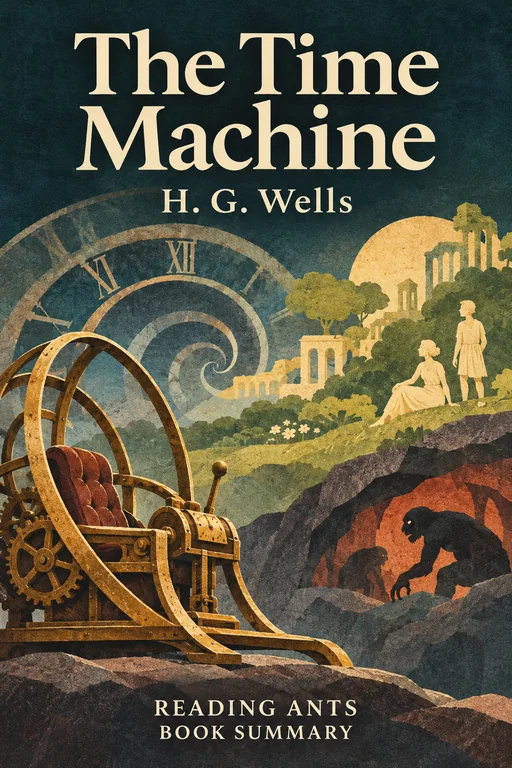
The Time Machine
H. G. Wells
A Victorian inventor, known only as the Time Traveller, builds a machine that carries him to the year 802,701, where he finds humanity split into two species, the gentle Eloi and the monstrous Morlocks, and then to a dying Earth.
🚀 Sci-Fi & Fantasy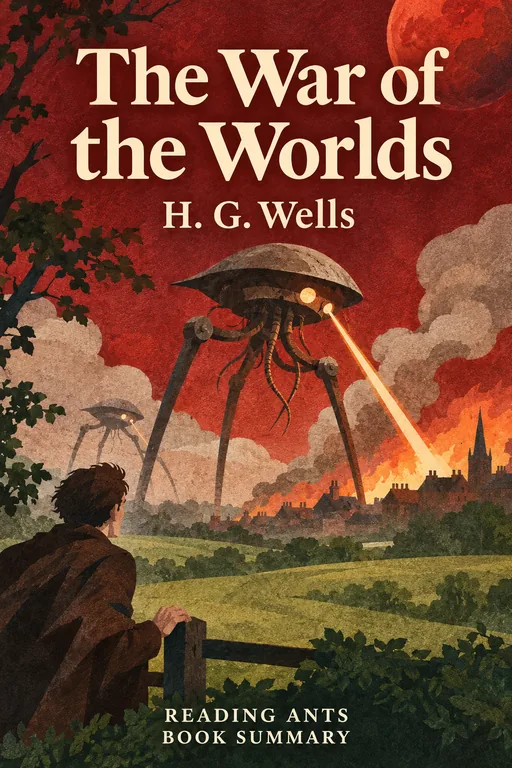
The War of the Worlds
H. G. Wells
Martians land in the English countryside with war machines and heat-rays that overwhelm human armies, until the invaders are brought down by the one thing humans never expected: Earth's smallest germs.
🚀 Sci-Fi & Fantasy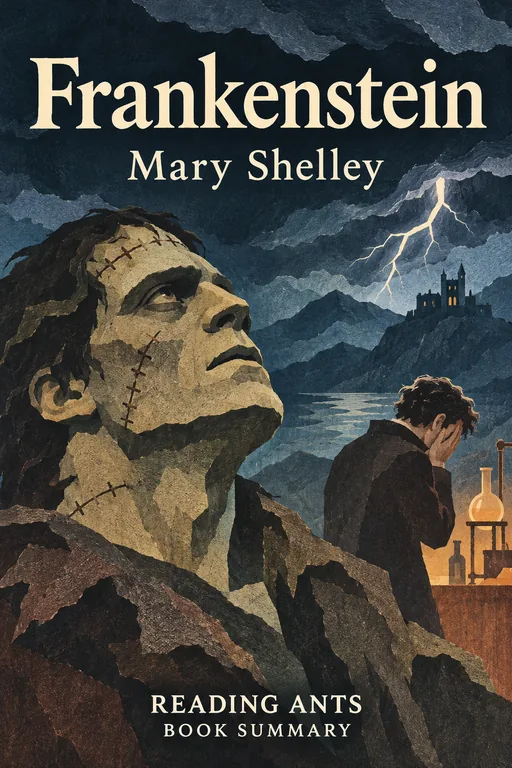
Frankenstein
Mary Shelley
A young scientist creates a living being from dead body parts, then abandons it in horror, and his rejected creation, longing for love, turns to revenge.
🚀 Sci-Fi & Fantasy
Strange Case of Dr Jekyll and Mr Hyde
Robert Louis Stevenson
A respected London doctor creates a potion that separates his evil side into a separate person, the brutal Mr. Hyde, but the darker self grows stronger until it takes control completely.
📜 Classics
Fahrenheit 451
Ray Bradbury
In a future America where books are illegal and firemen start fires instead of putting them out, one fireman begins to read the books he is supposed to burn, and discovers what his society has lost.
🚀 Sci-Fi & Fantasy
The Martian Chronicles
Ray Bradbury
Through a series of linked stories, Ray Bradbury follows human beings as they travel to Mars, destroy the people who live there, build towns that copy the Earth they left behind, and are then pulled back home when a nuclear war breaks out.
🚀 Sci-Fi & FantasyWant something different?
Pick another topic and we will show you three books to start with.