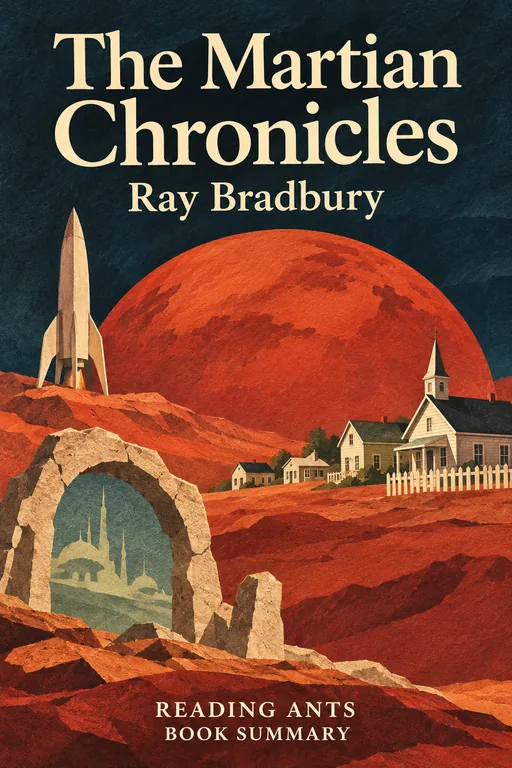
The Martian Chronicles
Through a series of linked stories, Ray Bradbury follows human beings as they travel to Mars, destroy the people who live there, build towns that copy the Earth they left behind, and are then pulled back home when a nuclear war breaks out.
Overview
The Martian Chronicles is not a conventional novel. It is a collection of short stories, joined by brief interludes, that together tell the history of human settlement on Mars from the first rocket landings to the end of the Earth as the settlers knew it. Bradbury first published it in 1950, and its dates run from the late twentieth century into the early twenty-first. Although it is science fiction, it has little interest in machines or science. Its Mars is a place of poetry, memory and loneliness, and its real subject is people: their hunger for a fresh start, their habit of carrying old prejudices and mistakes with them, and the way they treat those who are different. Readers often say the book is really about America, seen through the lens of an imagined frontier.
Main Characters
- The Martians: a gentle, long-lived, telepathic people with golden eyes who live in cities beside dry canals.
- Captain Wilder: the commander of a later expedition, who tries to keep the settlement going with some decency.
- Spender: an archaeologist on that expedition who falls in love with Martian culture and turns against his own crew.
- Mr. Stendahl: a man who builds a revenge plan out of the horror stories that society has banned.
- Sam Parkhill: a pushy settler who opens a hot-dog stand on Mars.
- Walter Gripp: a man who believes he may be the last person alive on the planet.
- Timothy and his family: a boy, Timothy, with his brothers and parents, who start a new life on Mars at the close of the book.
Full Summary
The Rockets Begin
The book opens in a year that the author sets in the future, with a rocket ready to leave for Mars. Before the first people arrive, we see a Martian woman named Ylla, who is bored in her marriage and dreams of strangers coming from another world. Her jealous husband is determined not to lose her, and when the first expedition’s two astronauts appear he kills them. The next expedition is also met with suspicion, and its crew is treated as a group of madmen by the Martians, who are puzzled by their strange talk about another planet. The third group of explorers finds a town that looks exactly like the place they grew up. The Martians have read their minds and built a lure, a world of loving relatives and old houses, and in the night the visitors are murdered while they sleep. Each of these early stories shows a Mars that defends itself with suspicion, trickery, telepathy and sometimes murder, and each shows human beings who arrive unprepared.
The Fourth Expedition
When the fourth expedition lands under Captain Wilder, the Martians are almost gone, wiped out by a disease the earlier visitors carried with them, which spread through the population like a plague, though some telepathic Martians survive. The crew finds empty cities, the remains of an old culture and silence. The archaeologist Spender spends time in the ruins and is struck by the beauty of what the Martians built. He becomes bitter at the carelessness of his fellow crew members, who litter the canals and treat the planet as a place to be used. Eventually he takes up a gun and begins to shoot the men he sees as despoilers. Wilder has to pursue him across the hills and, in the end, he must kill the man he respects. The story is both a crime story and an argument about what a conqueror owes the conquered.
The Settlers
After the explorers come the settlers, in great numbers, and the stories grow more varied. Some are comic, such as the tale of a man who opens a hot-dog stand beside a Martian road and soon finds himself in a feud. Some are bleak, such as the story of a man who is the only person left in a silent town and goes mad with loneliness. Some are about prejudice, as a group of Black Americans leaves the South to start again on Mars and hopes to escape what they suffered at home. In another story a settler tries to bring a rare book culture to Mars after banned fiction is burned on Earth, and plans a revenge on the officials who destroyed the stories he loved. Together these chapters show that people have a talent for bringing their worst habits along with their best hopes.
The Towns Fill Up
Settlements spring up, with houses, shops and signs, and Mars slowly begins to look like the places the colonists left. Names are changed, the landscape is renamed, and what was strange becomes familiar. The author is gently ironic about this process, since in remaking Mars the settlers erase what made it different. At the same time, a quiet feeling of loss runs through the stories: the old Martian civilization is gone, and nobody on the new planet remembers its songs.
The War on Earth
Then comes news from home. A war breaks out on Earth, and nearly all the settlers hurry back to their old world, leaving Mars almost empty. One of the best-known pieces of the book describes a house on Earth, run by machines, that keeps cooking breakfast, cleaning and reading poems long after its family has vanished, and which at last burns down. The house is a symbol of how much ordinary comfort remains when the people who needed it are gone. The stories make clear that the settlers have destroyed their own world just as they had destroyed the Martians.
The Last Family
A few people stay behind or arrive later. In the closing chapter, after the war, a father who has brought his family to Mars burns his old maps and papers, and the rocket in which they came, as a deliberate break with Earth’s habits. The children ask when they will see the Martians. The father says that he will show them, and leads them to a canal, where they look into the water and see their own reflections. The family have become the new Martians, and the book ends with them looking at a world that is theirs. The ending is quiet, hopeful and sad all at once. It suggests that after the destruction, a small, humble start might still be possible.
Why It Matters
The Martian Chronicles is one of the most admired works of twentieth-century American science fiction, and it helped to show that the genre could be literary, emotional and critical of society. Bradbury’s prose is lyrical, and his stories use Mars as a mirror in which readers can see questions about colonialism, racism, war and loneliness. It has been widely read in schools, and it is often discussed alongside his better-known novel Fahrenheit 451.
The book also changed how many readers think about space exploration. Instead of the cheerful adventure common in earlier pulp stories, it asks what the explorers will do to the places they visit, and what those places will do to them. That question remains alive today, whenever people discuss the future of travel beyond Earth.
Key Takeaways
- Explorers often carry their worst habits with them. The humans reach a new world and repeat old harms, including disease, greed and prejudice.
- A culture can be destroyed without a battle. The Martians are wiped out by illness and by the settlers’ carelessness rather than by war.
- People try to remake every new place in the image of home. The Martian towns slowly turn into copies of Earth towns.
- Technology does not guarantee wisdom. Humans can build rockets, yet they still cannot keep themselves from destroying their own world.
- A fresh start is possible, but it requires humility. The final family succeeds only by learning to see themselves as part of the new world.
What We Can Learn
The book invites us to ask what we owe to the places and people we encounter when we travel, whether to another country or another planet. Showing up with a belief that our way is the right way can destroy something precious before we have even understood it.
It also reminds us that progress in technology and progress in character are different things. Rockets and machines can be built quickly, while kindness, patience and respect take longer, and the stories suggest that without the second we may waste the first.
Finally, it shows how nostalgia works. The settlers want to feel at home, so they rebuild what they left behind, and in doing so they lose the chance to discover something new. The book encourages readers to meet unfamiliar things with curiosity rather than the wish to make them familiar.
Criticism and Counterpoints
Some readers find the structure uneven. Because the book is a set of separate stories, some are far stronger than others, and the connecting thread can feel loose. Critics have also pointed out that the science is not meant to be accurate: Bradbury’s Mars has breathable air and canals, ideas that were already known to be wrong when he wrote, and he said himself that he was writing myth rather than prediction.
Others argue that the book’s treatment of the Martians is romantic and sentimental, using a vanished people as a symbol, and that its view of colonization reflects a particular American viewpoint. Some modern readers also find the depiction of race and gender in a few stories dated. Still, many consider these weaknesses minor next to the book’s imagination and style.
Who Should Read It
This book suits teenagers and adults who enjoy imaginative, reflective stories more than technical science fiction. Because it is made up of short chapters, it is easy to read in small sittings. It is a good starting point for readers new to classic science fiction, and for anyone interested in how stories about space can speak to questions about history and human nature.
Want the whole book?
A summary is a taste, not the meal. Here is where to find the full book.
You reached the end 🎉
Nicely done. Mark this one as read, and we will suggest what to read next.
Read this next
Fahrenheit 451
Ray Bradbury
In a future America where books are illegal and firemen start fires instead of putting them out, one fireman begins to read the books he is supposed to burn, and discovers what his society has lost.
🚀 Sci-Fi & Fantasy
I, Robot
Isaac Asimov
Nine linked stories follow the early history of intelligent robots, as a veteran robot psychologist named Susan Calvin recalls how the Three Laws of Robotics led to puzzles, mistakes and, in the end, a world quietly managed by machines.
🚀 Sci-Fi & Fantasy
The Time Machine
H. G. Wells
A Victorian inventor, known only as the Time Traveller, builds a machine that carries him to the year 802,701, where he finds humanity split into two species, the gentle Eloi and the monstrous Morlocks, and then to a dying Earth.
🚀 Sci-Fi & Fantasy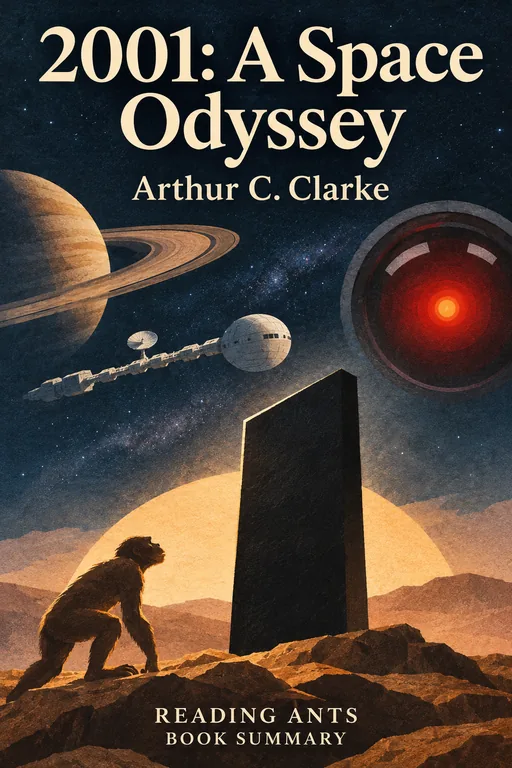
2001: A Space Odyssey
Arthur C. Clarke
A mysterious black slab guides human evolution from ape-like ancestors, and millions of years later a spaceship crew travels toward Saturn to follow its trail, with a computer named HAL as their companion and, eventually, their greatest danger.
🚀 Sci-Fi & Fantasy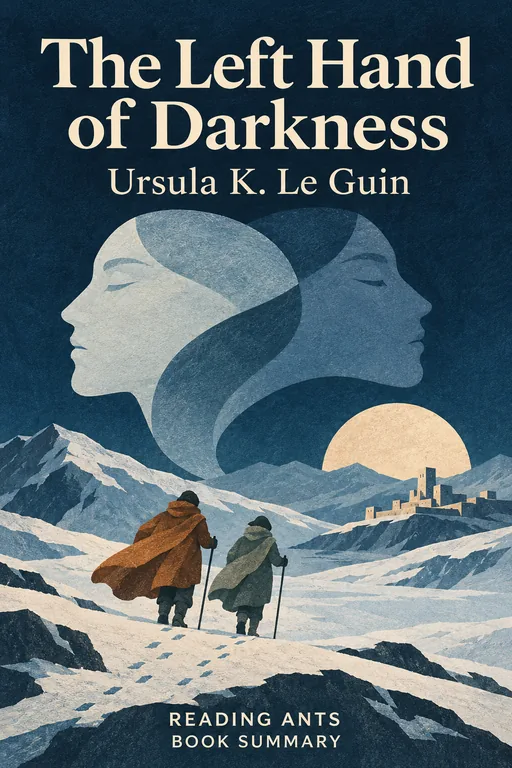
The Left Hand of Darkness
Ursula K. Le Guin
A lone envoy from a league of human worlds travels to the frozen planet Gethen, where people have no fixed gender, and learns to trust a local statesman, Estraven, who is exiled for his politics and who comes to the envoy's aid.
🚀 Sci-Fi & Fantasy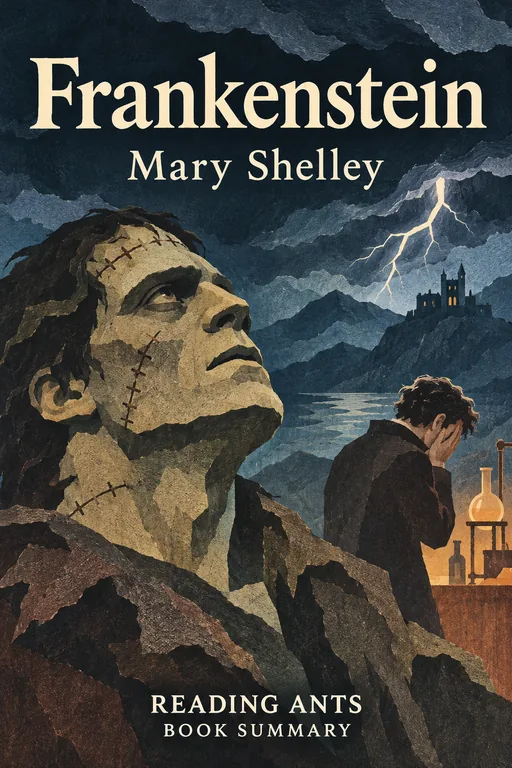
Frankenstein
Mary Shelley
A young scientist creates a living being from dead body parts, then abandons it in horror, and his rejected creation, longing for love, turns to revenge.
🚀 Sci-Fi & FantasyWant something different?
Pick another topic and we will show you three books to start with.