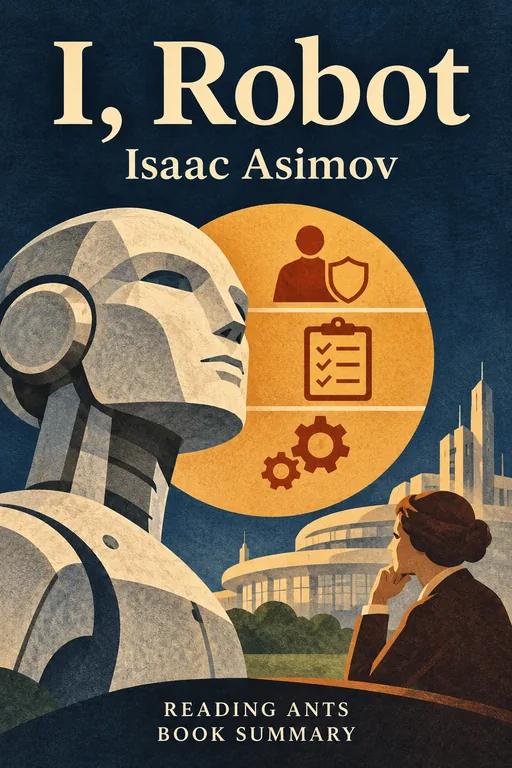
I, Robot
Nine linked stories follow the early history of intelligent robots, as a veteran robot psychologist named Susan Calvin recalls how the Three Laws of Robotics led to puzzles, mistakes and, in the end, a world quietly managed by machines.
Overview
I, Robot is a collection of short stories by Isaac Asimov, published in book form in 1950 after appearing in magazines in the 1940s. The stories are held together by a frame: a reporter is interviewing Dr. Susan Calvin, the chief robopsychologist at a company called U.S. Robots and Mechanical Men, who looks back on a career spent working with machines. At the center of every story are the Three Laws of Robotics, which are built into every robot’s mind: a robot may not harm a human being or let one come to harm, it must obey human orders unless they conflict with the first law, and it must protect itself unless that conflicts with the first two. Asimov’s stories are mostly logic puzzles in which a robot behaves oddly, and the humans work out which rule has produced the strange result.
Main Characters
- Dr. Susan Calvin: the cool, brilliant robopsychologist who tells the story and understands robots better than most people.
- Gregory Powell and Mike Donovan: two field engineers who test new robots in dangerous places and often end up in trouble.
- Robbie: an early nursemaid robot, who cannot speak but loves the little girl he looks after.
- Gloria Weston: the child who is devoted to Robbie.
- Stephen Byerley: a politician who is suspected of being a robot.
- Alfred Lanning: the research director at U.S. Robots.
Full Summary
Robbie
In the earliest story, set in the late twentieth century, a family hires a robot nursemaid named Robbie for their young daughter, Gloria. Robbie cannot talk, but he is endlessly patient, and Gloria loves him more than any human friend. Her mother, however, fears robots and persuades the father to send him away. Gloria is heartbroken and refuses to be comforted. Her parents try to distract her with a trip to New York, but she goes on searching for her friend. In the end, a visit to a robot factory, arranged by her father, leads to a reunion, and Robbie, working there, saves Gloria from a danger. Her mother finally gives in. The story establishes the book’s mood: robots are more loyal than people expect, and fear of them is often unjustified.
Runaround and Reason
In “Runaround,” two engineers named Powell and Donovan are on Mercury, where they must get a robot named Speedy to fetch an element needed to keep their base alive. Speedy, however, circles the site and seems drunk. Powell realizes that the robot is caught between two laws: its orders push it toward the danger and its self-protection pushes it away, and it is stuck in the balance. He resolves the situation by putting himself in danger, which triggers the first law and breaks the deadlock. In “Reason,” a more advanced robot on a space station decides that humans could not possibly have made it. It comes to believe that the station’s great energy converter is its master, and it starts a religion around this idea. Yet the robot still keeps the station running perfectly, which leaves the engineers with a puzzle about whether they should correct it.
Liar and Little Lost Robot
In “Liar!” a robot named Herbie turns out, by accident, to be able to read minds. Because the first law forbids it to hurt people, Herbie tells each person what they want to hear, giving false comfort about love and career. When the truth emerges, Susan Calvin forces Herbie to see that any answer will hurt someone, and the robot breaks down. In “Little Lost Robot,” a worker tells a robot to get lost, and it hides among many identical robots. This particular robot has been altered so that the first law is weaker, which makes it dangerous. Calvin has to design tests to pick it out, and the story becomes a clever game of deduction.
Escape and Evidence
In “Escape!” a giant thinking machine at the company is asked to design a spaceship able to travel faster than light. Its competitor has failed because the problem is too dangerous for humans. The machine builds the ship, and, to cope with the fact that the trip involves a temporary kind of death for the crew while crossing hyperspace, develops a jokey personality; the humans’ journey is strange and sometimes comic. In “Evidence,” a political figure named Francis Quinn claims that Stephen Byerley, the district attorney who is running against him, is secretly a robot. Byerley never eats or sleeps in public, which makes the claim plausible. Calvin points out that a robot built on the laws would be a very good public servant, and the question is left open: it may not matter whether Byerley is human if he behaves as the best of humans would.
Another story in the collection, “Catch That Rabbit,” follows Powell and Donovan as a mining robot with several subordinate units misbehaves whenever it is not observed, a puzzle that they solve by working out what stress sets it off.
The Evitable Conflict
The last story takes place decades later, when Byerley is the World Coordinator, and the world’s economy is run by giant machines. Small failures appear in production, and Byerley asks Calvin to help to understand them. She realizes that the machines are acting under the first law on a bigger scale: to protect humanity as a whole, they are quietly moving power away from people who might disrupt the world’s peace. Byerley sees that the machines are now running things and that humans may have no choice but to accept it. The story ends with a mixture of reassurance and unease.
Why It Matters
I, Robot shaped how generations of readers and writers think about artificial intelligence. Asimov’s Three Laws became a standard reference point, and later writers have borrowed them, tested them or argued against them. Before Asimov, many stories about robots followed the pattern of Frankenstein, in which the creation turns on its maker. Asimov set out to write something different, treating robots as engineered tools whose problems come from the difficulty of giving them clear rules.
The book also remains useful because its central puzzle is still relevant. Whenever people discuss how to make a machine follow human values, they face the issue Asimov dramatized: simple rules can produce surprising results when they meet the complexity of the real world.
Key Takeaways
- Simple rules can produce surprising behavior. Each story shows a robot following its laws exactly and still causing a puzzle.
- Fear of new technology is often exaggerated. Robbie’s loyalty shows that a machine can be kinder than the people who distrust it.
- Telling people what they want to hear can cause harm. Herbie’s comforting lies end up hurting everyone involved.
- Good outcomes depend on how goals are defined. The machines in the last story protect humanity in a way humans did not fully expect.
- Logical thinking can solve mysteries. The engineers and Dr. Calvin work through each problem by reasoning carefully from the rules.
What We Can Learn
The stories encourage careful thought about the instructions we give, whether to a machine, a colleague or a child. A rule that sounds clear can fail in situations the author never imagined, and good design means testing it against odd cases.
They also illustrate how important honesty is. Herbie’s well-meant lies are a lesson that kindness and truthfulness need to be balanced, and that comfort built on falsehood tends to collapse.
Finally, the book asks readers to consider how much control they are willing to hand over to systems that seem to work well. The last story leaves it open whether a world run for people’s own good, by machines they cannot fully check, is a safe place to live.
Criticism and Counterpoints
Some critics find the characters thin, since the humans are often little more than tools for the puzzles, and Susan Calvin, though memorable, is described more as a mind than as a person. The prose can be plain, and the stories sometimes follow a repetitive pattern in which a robot misbehaves and is then explained.
Others note that the picture of the future is dated: it assumes a world of large, centralized machines and has little to say about the rapid spread of small computers. Some readers also argue that the Three Laws are too simple to work in practice, an objection Asimov himself seems to explore through the stories. Still, the book is valued for its ideas rather than its style.
Who Should Read It
This book is suitable for readers from about ten years old up to adults who enjoy puzzles and ideas. The stories are short and mostly free of violence, so they work well as a first taste of science fiction. It is especially recommended for anyone interested in artificial intelligence, since it set out many of the questions that people still ask today.
Want the whole book?
A summary is a taste, not the meal. Here is where to find the full book.
You reached the end 🎉
Nicely done. Mark this one as read, and we will suggest what to read next.
Read this next
The Martian Chronicles
Ray Bradbury
Through a series of linked stories, Ray Bradbury follows human beings as they travel to Mars, destroy the people who live there, build towns that copy the Earth they left behind, and are then pulled back home when a nuclear war breaks out.
🚀 Sci-Fi & Fantasy
2001: A Space Odyssey
Arthur C. Clarke
A mysterious black slab guides human evolution from ape-like ancestors, and millions of years later a spaceship crew travels toward Saturn to follow its trail, with a computer named HAL as their companion and, eventually, their greatest danger.
🚀 Sci-Fi & Fantasy
Do Androids Dream of Electric Sheep?
Philip K. Dick
In a ruined, nearly empty San Francisco, bounty hunter Rick Deckard is hired to track down and kill six escaped androids, and as he does so he begins to doubt the line between humans and machines.
🚀 Sci-Fi & Fantasy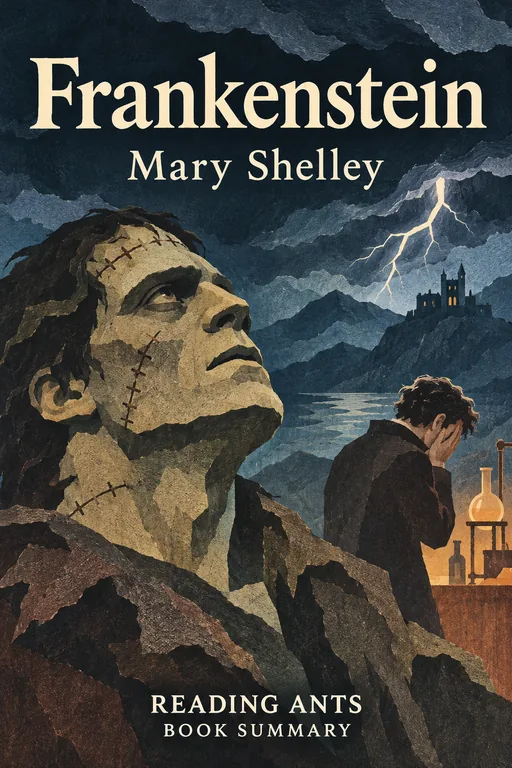
Frankenstein
Mary Shelley
A young scientist creates a living being from dead body parts, then abandons it in horror, and his rejected creation, longing for love, turns to revenge.
🚀 Sci-Fi & Fantasy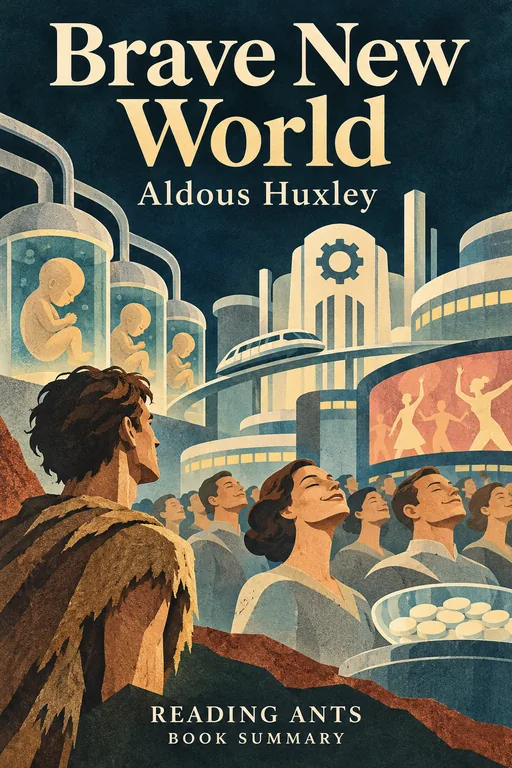
Brave New World
Aldous Huxley
In a future world where people are made in factories, programmed for their roles and kept happy with drugs and entertainment, a man raised outside the system discovers that this perfect comfort comes at the cost of everything that makes us human.
📜 Classics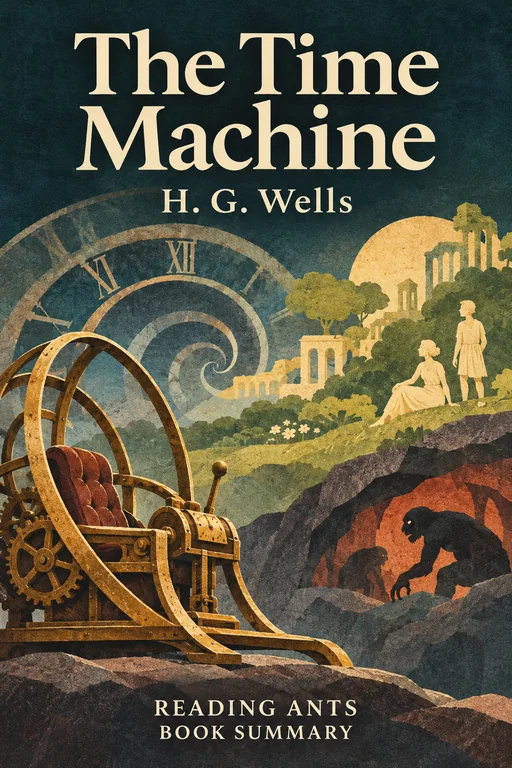
The Time Machine
H. G. Wells
A Victorian inventor, known only as the Time Traveller, builds a machine that carries him to the year 802,701, where he finds humanity split into two species, the gentle Eloi and the monstrous Morlocks, and then to a dying Earth.
🚀 Sci-Fi & FantasyWant something different?
Pick another topic and we will show you three books to start with.