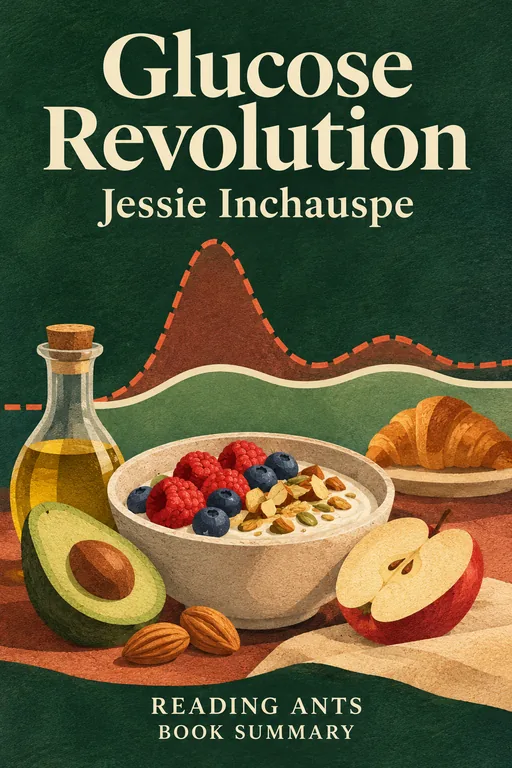
Glucose Revolution
Biochemist Jessie Inchauspe argues that sharp spikes in blood sugar harm our energy, mood and long-term health, and she offers simple food and habit "hacks" to flatten them without giving up the foods we love.
Overview
Glucose Revolution: The Life-Changing Power of Balancing Your Blood Sugar was published in 2022 by Jessie Inchauspe, a French biochemist who became popular on social media. She says that after wearing a device that tracks blood sugar, she became aware of how food and other habits change her levels, even though she does not have diabetes. The book explains what glucose is, how spikes may affect health, and how to reduce them through small changes. Inchauspe presents her ideas as practical tips for ordinary people, not a strict diet.
Full Summary
1. What glucose is and why spikes matter
The idea: Glucose is a type of sugar that the body uses for energy, and it comes mostly from carbohydrates, such as bread, rice, fruit and sweets. After a meal, blood sugar rises, and the body releases insulin to bring it down. Inchauspe says that eating fast-digesting, starchy or sugary foods on their own can cause a sharp rise and fall, and that these swings may cause tiredness, cravings and hunger. Over many years, she argues, repeated spikes could contribute to health problems.
In real life: A sugary breakfast may feel good at first, but you may be hungry and sleepy again by mid-morning.
2. What spikes may do to the body
The idea: The author discusses ways in which high blood sugar may damage the body over time, including a process called glycation, in which sugar sticks to proteins and may contribute to aging, and effects on skin, mood and energy. She also links high and unstable blood sugar to a higher risk of type 2 diabetes, heart disease and other conditions. She emphasizes that many people are affected, even if they have no diagnosis.
In real life: If you often feel an afternoon crash, it may be worth looking at what you ate at lunch.
3. Eat things in a better order
The idea: One of the best-known tips is to change the order in which you eat the parts of a meal. Starting with vegetables or fiber, then protein and fats, and finally starches and sugars, can slow how fast sugar enters the blood. A salad at the start of a meal can help. She also suggests having a savory breakfast, such as eggs, instead of a sweet one.
In real life: Eating the vegetables on your plate before the pasta is a simple way to try it.
4. “Clothe” your carbs and dress your dessert
The idea: Inchauspe recommends not eating carbohydrates on their own. She says that adding protein, fat or fiber to a starchy or sweet food slows digestion and softens the spike. She also suggests having sweets after a meal, not on an empty stomach, and enjoying them as dessert rather than as a snack. The aim is not to ban pleasures but to make them gentler on the body.
In real life: An apple with peanut butter affects blood sugar less than an apple eaten alone, according to this approach. That does not mean that an apple on its own is unhealthy, and a flatter glucose curve is not the only measure of a good meal.
5. Move after eating, and try vinegar
The idea: Other tips include a short walk or light activity after a meal, since muscles use glucose, and having a spoonful of vinegar in water before a meal. She cites studies suggesting that these can lower the peak in blood sugar. She says that even ten minutes of movement may help, and that a few simple actions can make a difference. A walk of ten to twenty minutes, or any light activity soon after eating, is enough to try.
In real life: Washing the dishes or walking around the block after dinner is easy to do.
6. A flexible approach, not a diet
The idea: The book stresses that you do not have to follow all the hacks, or all the time. Inchauspe says that you can pick the ones that suit you, and that most of the benefit comes from a handful of habits. She encourages readers to continue eating what they enjoy, and to treat the hacks as a toolbox. She also advises people with diabetes or other conditions to talk to their doctor.
In real life: Choosing just one habit, such as a vegetable starter, is a good way to begin.
Why It Matters
Glucose Revolution was a bestseller and helped to spread the idea of paying attention to blood sugar among people who do not have diabetes. Its short, practical tips and clear explanations suited social media, and the author built a large online following. The book encouraged many readers to think about how foods are combined and eaten, and to add vegetables and movement to their daily routine. It also drew attention to the growing popularity of wearable glucose monitors for healthy people. While experts differ about how much the ideas matter for healthy people, some of the book’s habits, such as eating more vegetables and fiber and being active, match common dietary advice. That does not confirm the author’s specific claims or her rules, such as always pairing carbohydrates with other nutrients.
Key Takeaways
- Blood sugar swings affect how you feel. Big spikes may lead to tiredness and cravings.
- Order and pairing matter. Eating fiber and protein first can soften the spike.
- Avoid naked carbs. Combine starches and sweets with other nutrients.
- A walk helps. Light movement after eating uses glucose.
- Be flexible. Small habits are better than strict rules.
What We Can Learn
Think about how you feel after different meals and snacks, and experiment gently. Starting a meal with vegetables, adding protein to breakfast and walking after dinner are healthy habits that do not need any special equipment. Notice when you reach for a sweet snack, and consider enjoying it after a meal. Be careful not to turn food into a source of fear or guilt. Anyone with diabetes, an eating disorder or another medical condition should speak with a doctor before making changes. This is a general summary, not medical advice.
Criticism and Counterpoints
Many dietitians and doctors say that the book overstates the dangers of normal blood sugar rises, which occur in healthy people after meals, and that evidence for some hacks comes from small studies, mostly in people who have diabetes or prediabetes. They caution that healthy people do not need glucose monitors, and that focusing on numbers can lead to anxiety or unhealthy eating. Some also note that the author is a biochemist, not a doctor, and that claims about aging and cravings go beyond the evidence. The advice is mostly reasonable, but the framing may be exaggerated.
Who Should Read It
This book is for adults who want simple ideas for healthier eating habits and who are curious about blood sugar. It is easy to read and practical. People with diabetes, those who have had an eating disorder, and anyone who is anxious about food should consult a medical professional, and readers who want careful scientific analysis should use other sources as well.
Want the whole book?
A summary is a taste, not the meal. Here is where to find the full book.
You reached the end 🎉
Nicely done. Mark this one as read, and we will suggest what to read next.
Read this next
The Obesity Code
Jason Fung
Dr. Jason Fung argues that obesity is mainly a problem of hormones, especially insulin, and not just of eating too many calories, and he recommends cutting sugar and refined carbohydrates and using periods of fasting.
🍎 Health
How Not to Die
Michael Greger with Gene Stone
Dr. Michael Greger reviews research on the main causes of early death and argues that a diet based on whole plant foods can prevent and even help to reverse many chronic diseases.
🍎 Health
In Defense of Food
Michael Pollan
Michael Pollan argues that modern nutrition science and the food industry have confused us, and that we eat better by choosing real food, not too much of it, mostly plants, in the traditional ways of eating.
🍎 Health
Ultra-Processed People
Chris van Tulleken
Doctor and broadcaster Chris van Tulleken argues that ultra-processed foods are industrial products designed to be eaten in large amounts, that they may harm our health, and that governments should treat them as seriously as other risks.
🍎 Health
Why We Sleep
Matthew Walker
Neuroscientist Matthew Walker argues that sleep is essential for memory, mood, health and long life, and that modern habits are causing a widespread and dangerous lack of it.
🧩 Mind & Psychology
Outlive
Peter Attia with Bill Gifford
To live longer and better, we should work early to prevent the chronic diseases that kill most people, by training the body with exercise, paying attention to nutrition and sleep, and caring for our mental health.
🍎 HealthWant something different?
Pick another topic and we will show you three books to start with.