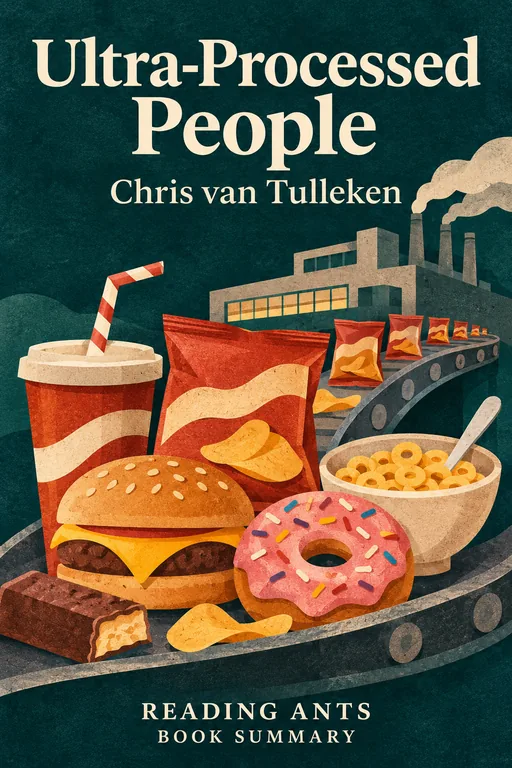
Ultra-Processed People
Doctor and broadcaster Chris van Tulleken argues that ultra-processed foods are industrial products designed to be eaten in large amounts, that they may harm our health, and that governments should treat them as seriously as other risks.
Overview
Ultra-Processed People: Why Do We All Eat Stuff That Isn’t Food... and Why Can’t We Stop? was published in 2023 by Chris van Tulleken, a British infectious disease doctor and television presenter. He begins from his own concern: a large share of what many people eat in countries such as the United Kingdom and the United States comes from packets and bottles with long lists of unfamiliar ingredients. The book explains what “ultra-processed food” means, reviews the evidence on its effects, describes how the industry works, and tells of a month in which the author ate mostly these foods as an experiment on himself.
Full Summary
1. What counts as ultra-processed
The idea: Van Tulleken explains a way of grouping foods, called NOVA, developed by researchers in Brazil. It puts foods in four groups: fresh or minimally processed foods, cooking ingredients such as oil and salt, processed foods such as cheese and canned vegetables, and ultra-processed foods, which are industrial formulations of substances extracted from foods plus additives such as flavors, colors and emulsifiers. Examples include many breakfast cereals, soft drinks, packaged snacks and some breads.
In real life: A homemade loaf has flour, water, yeast and salt, but many supermarket loaves contain a long list of other ingredients you would not find in a home kitchen.
2. Designed to be eaten fast and in large amounts
The idea: The author says that these foods are engineered to be very appealing and easy to eat, often soft, sweet, salty and fatty, so that people eat them quickly and do not feel full. He describes a carefully controlled study in which volunteers who were given ultra-processed meals ate more calories and gained weight, compared to when they ate a diet of unprocessed foods that matched in nutrients on paper.
In real life: It is much easier to eat a whole bag of crunchy snacks than a whole bag of raw carrots.
3. The author’s own experiment
The idea: Van Tulleken ate a diet of about 80 percent ultra-processed food for a month, a deliberately heavy intake, and took measurements before and after. He describes how it affected his body, his appetite hormones and his mood, and says that he felt unwell and anxious. This was one man’s experiment and not a scientific proof, but it helped to illustrate the research.
In real life: Trying something yourself for a short time can make an abstract risk feel more real, though it is not a replacement for a proper study.
4. What these foods may do to the body
The idea: The book surveys research linking higher intake of ultra-processed foods with obesity, type 2 diabetes, heart disease and some other conditions. The author explains possible reasons, such as the effects of additives like emulsifiers on the gut, the speed of eating and the high energy density of the foods. He is careful to say that much of the evidence is observational, but that the pattern across many studies is consistent and worrying.
In real life: If many different studies in different countries point the same way, the sensible response is to take the warning seriously, even without a final proof.
5. The power of the food industry
The idea: Van Tulleken describes how large companies dominate the market for packaged food, and how they use marketing and the funding of research to shape the debate. He tells the story of the aggressive promotion of infant formula in poorer countries in the 1970s, which drew accusations against a major food company, as an example of how corporate interests can harm health. He suggests that governments could learn from the way tobacco was regulated.
In real life: When an advertisement for a snack makes it look like a healthy choice, it helps to ask who is paying for the message.
6. What can be done
The idea: The author gives some advice for individuals, but he stresses that the problem is not simply a matter of personal willpower. He supports policies such as clearer warning labels, tighter limits on marketing, and stronger rules to keep corporate influence out of health research, and he says that real food should be easier and cheaper to buy, though he is wary of measures that make affordable food dearer. He also advises choosing less-processed versions of everyday foods and says that we should avoid shaming people who rely on convenient foods.
In real life: A school that serves fresh meals and bans advertising for junk food makes the healthy choice the easy one.
Why It Matters
Ultra-Processed People became a bestseller and added to a growing public debate about the foods that many of us eat every day. It brought the NOVA classification and the evidence about industrial food to a wide audience, and encouraged discussion of food policy rather than just personal choice. The book is also notable because the author is a doctor who looks at the issue from the perspective of public health and the power of corporations, not simply a diet. It has added to public discussion about rules on labeling and marketing. Whether or not all of its claims are borne out, it has made many readers more attentive to ingredient lists and to the politics of food.
Key Takeaways
- Not all processing is equal. Ultra-processed foods are industrial recipes, quite different from home cooking.
- They are easy to overeat. Texture, taste and speed encourage large amounts.
- The evidence is troubling. Studies link these foods with several diseases, although more research is needed.
- Industry has power. Marketing and lobbying shape what is available and affordable.
- Policy matters. Better choices need support from rules, prices and schools.
What We Can Learn
You can read ingredient lists and notice which foods contain many additives, and try to increase the share of meals that you or your family cook from simple ingredients. Do not blame yourself or others for relying on convenience foods, since time, money and access limit people’s choices. Share a meal with others, eat slowly and pay attention to when you are full. Ask what you can do in your school or community to make fresh food available. This summary is general information, not medical advice, and people with health conditions should consult a doctor.
Criticism and Counterpoints
Some nutrition scientists say that the NOVA classification is too broad, since it puts together foods that are very different, such as sugary drinks and wholegrain bread with additives, and that most evidence is observational, so that it may reflect other lifestyle differences. Others argue that the focus on processing risks making healthy, affordable and convenient foods seem like enemies, which could hurt low-income families. Some experts say that the case against particular additives is not proven. The author himself accepts uncertainty and calls for more research, while arguing for caution.
Who Should Read It
This book is for readers who want to understand the debate about processed food, as well as for parents, teachers and policymakers. It is lively, personal and easy to follow. People who want a strict, technical review of nutrition studies may prefer scientific papers, and those with a medical condition should discuss their diet with a professional.
Want the whole book?
A summary is a taste, not the meal. Here is where to find the full book.
You reached the end 🎉
Nicely done. Mark this one as read, and we will suggest what to read next.
Read this next
In Defense of Food
Michael Pollan
Michael Pollan argues that modern nutrition science and the food industry have confused us, and that we eat better by choosing real food, not too much of it, mostly plants, in the traditional ways of eating.
🍎 Health
The Obesity Code
Jason Fung
Dr. Jason Fung argues that obesity is mainly a problem of hormones, especially insulin, and not just of eating too many calories, and he recommends cutting sugar and refined carbohydrates and using periods of fasting.
🍎 Health
Glucose Revolution
Jessie Inchauspe
Biochemist Jessie Inchauspe argues that sharp spikes in blood sugar harm our energy, mood and long-term health, and she offers simple food and habit "hacks" to flatten them without giving up the foods we love.
🍎 Health
How Not to Die
Michael Greger with Gene Stone
Dr. Michael Greger reviews research on the main causes of early death and argues that a diet based on whole plant foods can prevent and even help to reverse many chronic diseases.
🍎 Health
The Blue Zones
Dan Buettner
Dan Buettner visits places around the world where people live unusually long, healthy lives and finds common habits in diet, movement, purpose and community that the rest of us can borrow.
🍎 Health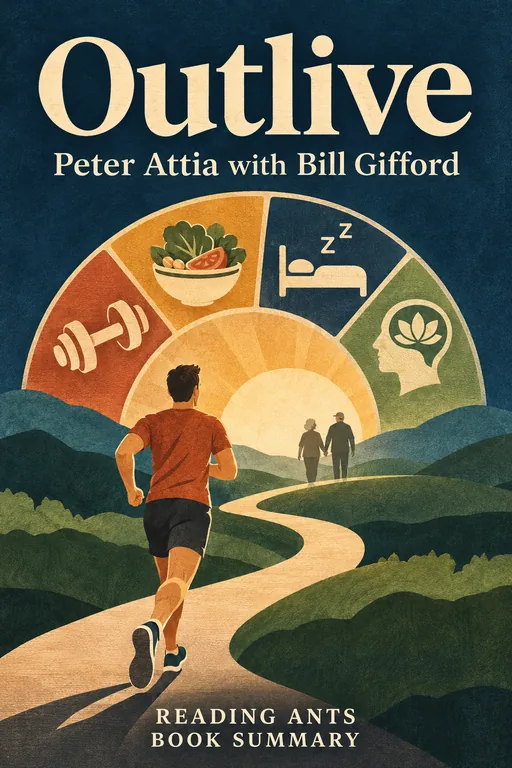
Outlive
Peter Attia with Bill Gifford
To live longer and better, we should work early to prevent the chronic diseases that kill most people, by training the body with exercise, paying attention to nutrition and sleep, and caring for our mental health.
🍎 HealthWant something different?
Pick another topic and we will show you three books to start with.