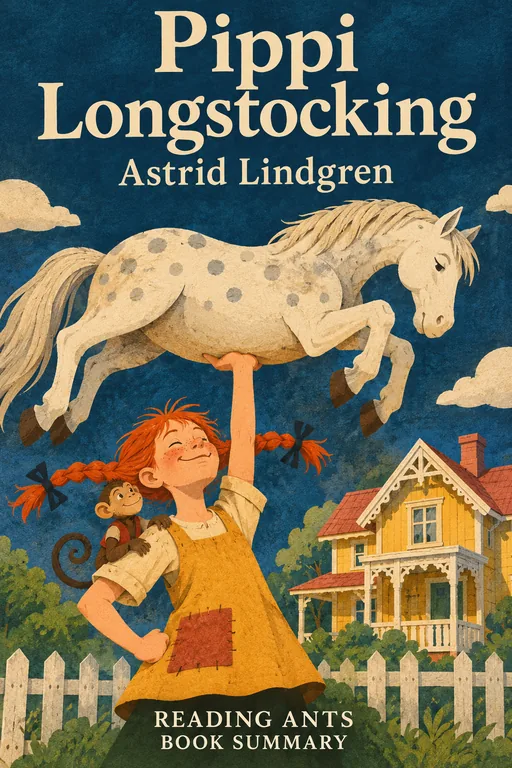
Pippi Longstocking
Original title: Pippi Långstrump
A nine-year-old girl who is incredibly strong, rich and free lives alone with a monkey and a horse, and turns every day into an adventure.
Overview
Pippi Longstocking is a children’s book by the Swedish writer Astrid Lindgren, published in 1945. It is set in a small Swedish town, in a house called Villa Villekulla, where Pippi lives without any grown-ups. The story is a collection of funny episodes. Pippi does not follow the rules of adults and invents her own. She is also kind, generous and brave, and she stands up for those who are weaker. The book has been loved by generations of children, and it is full of fun and a spirit of freedom.
Main Characters
- Pippi Longstocking: a nine-year-old girl with red braids that stick out, big shoes and enormous strength.
- Mr. Nilsson: Pippi’s pet monkey.
- The horse: Pippi’s horse, which she keeps on her porch and lifts up with ease.
- Tommy and Annika: the polite, well-behaved children next door, who become Pippi’s best friends.
- Captain Efraim Longstocking: Pippi’s father, who was lost at sea and who is now a king on an island in the South Seas.
Full Summary
A New Neighbor
Tommy and Annika, who live in a neat house, see a strange girl arrive at the empty house next door. Pippi has red braids that stick straight out, mismatched stockings and shoes that are twice too big. She is nine years old, and she lives alone, since her mother died when she was a baby and her father, a sea captain, was lost overboard in a storm.
Pippi insists that her father is not dead, but is the king of a cannibal island. She has a suitcase full of gold coins, and she can do whatever she likes.
Pippi’s Rules
Pippi sleeps with her feet on the pillow, and she cooks pancakes by throwing them in the air. She is strong enough to lift her horse, and she is not afraid of anyone. She makes friends with Tommy and Annika, who are amazed by her stories, many of which are tall tales.
When two police officers come to take her to a children’s home, they chase her up to the roof, where she easily outmaneuvers them, and they leave her alone. Pippi is polite, and she does not want to hurt anyone, but she will not be told what to do.
School and the Circus
Pippi goes to school for a day, but she finds the rules strange. She answers questions in unexpected ways, and she says that she has no need for school. At the circus, she joins the acts, rides the horse, walks the tightrope and defeats the strongest man in the world, a wrestler billed as unbeatable.
She has a heart that is as big as her strength. She gives away coins to children, and she buys candy for the whole village. She also buys many gifts for Tommy and Annika, and sends them home with their arms full.
Pippi often turns a grown-up’s lecture into a joke, and she answers rude questions with a long, silly story. The adults in the town are often puzzled or shocked by her, but the children love her, and they wish they could be as free.
Burglars and Bullies
One night, two burglars come to Pippi’s house. She is not afraid, and she lets them dance with her, and then she lifts them and puts them out. She even shares her gold with them in the end, for they say that they are poor.
Another day, she goes to a coffee party given by a neighbor, where she shocks the polite ladies with her table manners and her tall tales.
Another day, she stops a bully who is picking on a smaller boy, by throwing him up into a tree. She also rescues two children from a burning house, showing her bravery and quick action.
Pippi’s Party
Pippi’s birthday is celebrated with a party. She gives her friends gifts, and she has a picnic with them. At the end of the book, she is happy with her life.
She tells her friends that she does not want to grow up, and the story ends there. In the world of the book, she remains a child.
Why It Matters
Pippi Longstocking is one of the most famous children’s books in the world, and has been translated into dozens of languages. When it came out, it was considered shocking by some, because Pippi did not behave like a “proper” girl. It became a symbol of freedom and equality, and it influenced the way that girls were portrayed in children’s stories. Lindgren, who wrote many other beloved books, became one of the most widely read children’s authors ever. Pippi has been adapted for television, film and the stage. Readers often say that she is the kind of friend and hero a child dreams of having, someone who is stronger than any bully and who never makes a child feel small. Her story also helped to make children’s books in Sweden and beyond more playful and less preachy than they had been before.
Key Takeaways
- Be yourself. Pippi is proud of who she is, even when others are shocked.
- Strength should protect. She uses her power to help those who are weaker.
- Imagination is a gift. Her tall tales turn ordinary days into adventures.
- Generosity is joyful. She gives away her money and her time.
- Rules are not always right. Pippi questions customs that do not make sense.
What We Can Learn
Pippi shows children and adults that it is fine to be different, and that creativity and kindness are strengths. If someone is bullied or left out, we can be like Pippi and stand up for them. It also reminds us to find joy in play, even when we are busy.
At the same time, the book can lead to a thoughtful talk about rules. Some rules protect people, and children can think about which are worth following. Finally, Pippi’s loneliness, hidden beneath her bravado, reminds us that even the strongest need friends, and that kindness is always welcome.
Criticism and Counterpoints
Some parents and critics, in the past, worried that Pippi was a bad example, since she lies, does not go to school and disrespects authority. Her stories about the South Seas, and her father as a king, contain language and ideas about other peoples that are now seen as outdated and offensive, and newer editions have changed them. The episodic structure can also feel loose, and some adults feel that the humor is too noisy or silly. Still, most parents and teachers find that children enjoy the book very much, and it is easy to use it to start a talk about fairness, rules and how to treat people who are different.
Who Should Read It
This book is for children from about five or six, to be read aloud, and for those of eight and above to read alone. It is a good choice for children who love humor and adventure. Adults who enjoy classic, playful books will also find it delightful.
Want the whole book?
A summary is a taste, not the meal. Here is where to find the full book.
You reached the end 🎉
Nicely done. Mark this one as read, and we will suggest what to read next.
Read this next
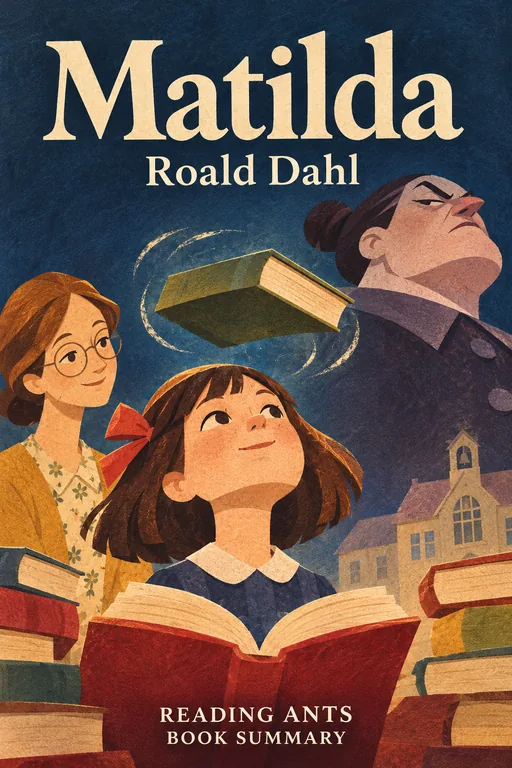
Matilda
Roald Dahl
A brilliant little girl with awful parents and a terrifying headmistress discovers she has magical powers, and uses her wits and her magic to help the one adult who truly cares for her.
🧸 Children's Books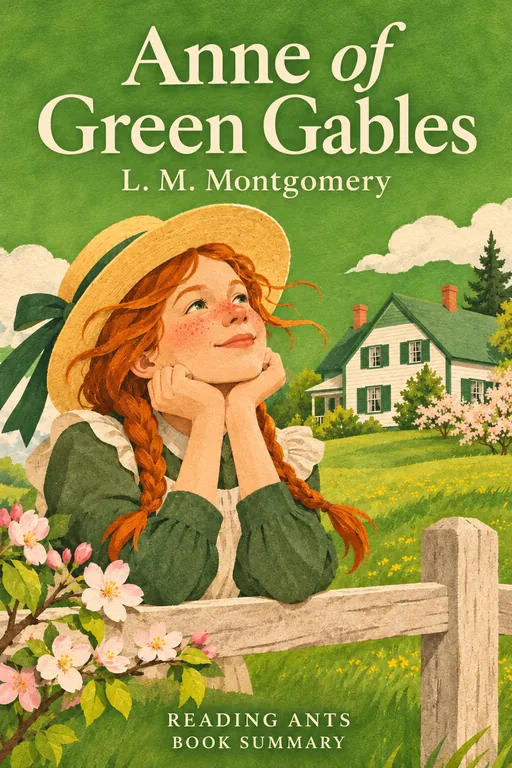
Anne of Green Gables
L. M. Montgomery
A talkative, imaginative red-haired orphan is sent by mistake to an elderly brother and sister who wanted a boy, and she wins their hearts and fills their quiet farm with life.
🧸 Children's Books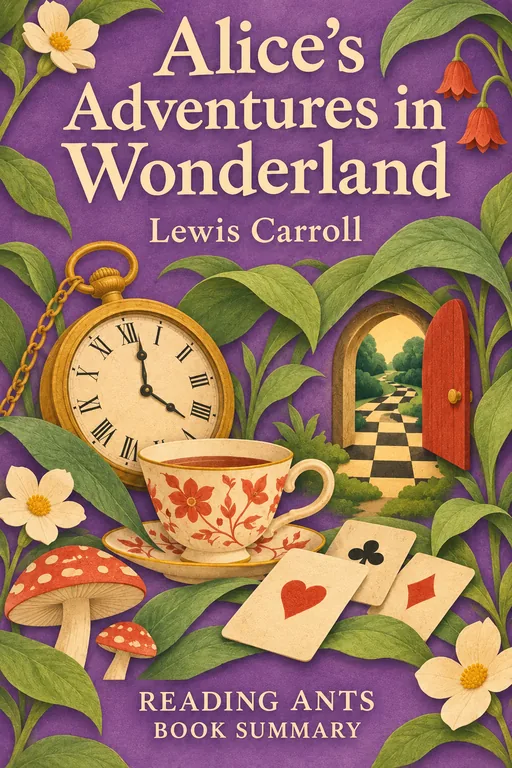
Alice's Adventures in Wonderland
Lewis Carroll
A curious girl follows a white rabbit down a hole into a crazy world where she keeps changing size, meets mad and marvelous creatures, and stands up to a furious Queen.
🧸 Children's Books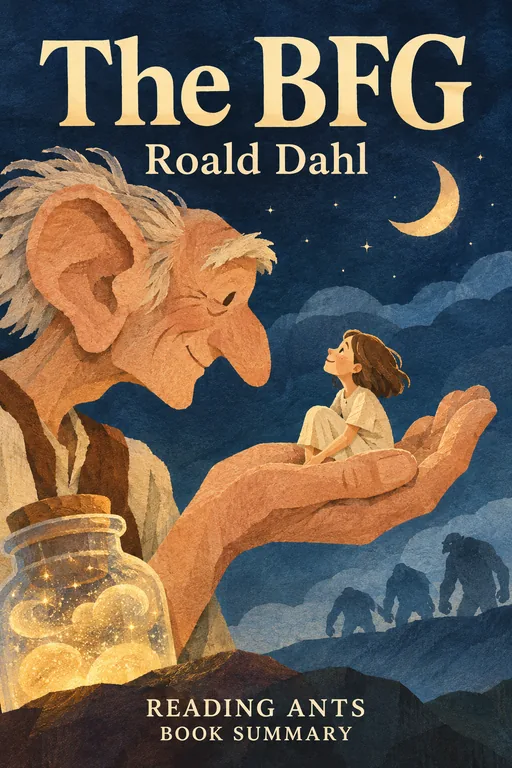
The BFG
Roald Dahl
A lonely orphan named Sophie is snatched by a giant who turns out to be gentle, and together they hatch a plan with the Queen of England to stop the bigger, man-eating giants.
🧸 Children's Books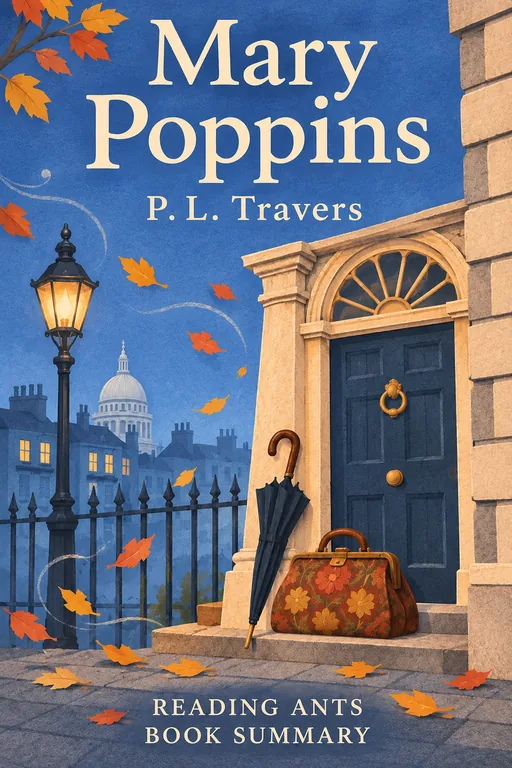
Mary Poppins
P. L. Travers
A stern, vain and magical nanny arrives on the east wind to look after the four Banks children in London, takes them on extraordinary outings, and leaves when the wind changes.
🧸 Children's Books
The Little Prince
Antoine de Saint-Exupery
A pilot stranded in the desert meets a small boy from a tiny planet, who teaches him that the most important things in life, like love and friendship, can only be seen with the heart.
🌍 World LiteratureWant something different?
Pick another topic and we will show you three books to start with.