 Reading Ants
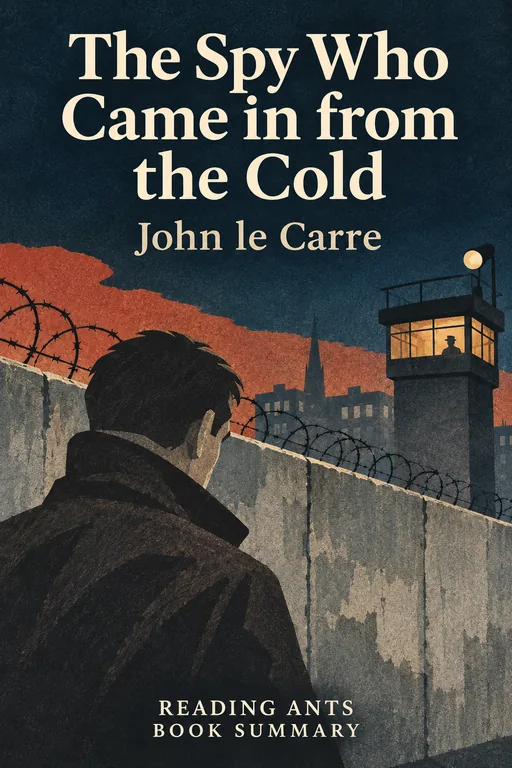
The Spy Who Came in from the Cold
A weary British agent named Alec Leamas pretends to defect to East Germany as part of a complicated plot, and discovers that the people on his side are as ruthless as their enemies.
Overview
The Spy Who Came in from the Cold is a novel by John le Carré, the pen name of David Cornwell, who had worked for British intelligence. It was published in 1963, and became a worldwide bestseller, making le Carré famous. It is set in the Cold War, shortly after the construction of the Berlin Wall, and presents espionage as a grubby, morally compromised business, not a glamorous adventure like the James Bond stories. The novel was adapted into a 1965 film starring Richard Burton. It is a short, tense and bleak book that is regarded as one of the best spy novels ever written.
Main Characters
- Alec Leamas: a tired, hard-drinking British intelligence officer who runs agents in Berlin.
- Control: the head of the British Secret Service, cold and calculating.
- Hans-Dieter Mundt: a ruthless East German intelligence officer.
- Jens Fiedler: Mundt’s deputy, a Jewish East German, who is a rival.
- Liz Gold: a young British librarian and Communist Party member, who falls in love with Leamas.
- George Smiley: a quiet British agent who is involved in the background.
- Ashe and Peters: agents on the East German side who recruit Leamas and pass him up the chain after his “fall.”
Full Summary
The Wall
The novel begins at Checkpoint Charlie in Berlin, where Leamas waits for his agent, Karl Riemeck, to cross from East to West. Riemeck is shot dead as he crosses toward the West, the last of many agents lost to Mundt, the head of East German counterintelligence. Leamas, who is exhausted, returns to London hoping to retire. But Control, his boss, asks him to stay for one last operation.
Leamas has a strict sense of duty and is bitter about the cost of his work. Watching agent after agent cut down, he is worn out by the struggle. The scene sets out the novel’s theme: the human price of a secret war.
The Plan
Control explains that Mundt is a danger to British agents, and proposes a plan to destroy him. Leamas will pretend to be a bitter, disillusioned agent who is willing to sell secrets, and let himself be recruited by the East Germans. He will hint at payments that seem to show Mundt is a British informer, so that Mundt’s deputy and rival, Fiedler, who already suspects him, will try to bring Mundt down. It is a plot that depends on a convincing performance, and, as the story shows, on what Leamas is not told.
Decline
Leamas begins to act the part of a failure. He takes a job in a library, where he meets Liz Gold, a young woman who falls in love with him, though he does not wish to hurt her. He drinks heavily, is dismissed from the service over missing money, and drifts into poverty. His fall is so convincing that even readers are unsure whether it is real. Liz, a gentle and idealistic young woman, grows close to him. He cannot tell her the truth, and this deception will have terrible results. He leaves her, assaults a shopkeeper, and serves a short prison sentence.
After his release, recruiters from the East German side, Ashe and then Peters, offer him money for information. He plays his part, and is taken to Holland, then East Germany.
The Interrogation
In East Germany, Leamas is interrogated by Fiedler, who is intelligent and suspicious. Fiedler, who hates Mundt, listens to Leamas’s account of a payment to a mysterious source, and becomes convinced that Mundt is a traitor. Leamas allows the idea to grow. Mundt suddenly arrests Fiedler and Leamas, but the regime then convenes a tribunal in which Fiedler’s case against Mundt is heard.
The Trial
Mundt is tried before a tribunal on Fiedler’s accusation. Leamas is brought in to give evidence, and, to his shock, so is Liz Gold, who has been invited to East Germany and who is made to tell how Smiley visited her, offered his help and paid the overdue rent on Leamas’s flat. Mundt’s defense, which turns the evidence against Fiedler, a sincere believer in the cause whom Mundt, an antisemite, despises, turns the case around, so that it is Fiedler who is condemned. Leamas realizes that the whole plan was designed to protect Mundt, who is a British source, and to destroy the man who was close to finding him out.
The Wall Again
Leamas understands that he has been used, and so has Liz. Mundt arranges for Leamas and Liz to escape across the Wall. At the border, with Smiley waiting on the western side, Leamas climbs up, but Liz is shot, and Leamas, who sees that she is dead, chooses to climb back down and to be shot too. The book ends with his death.
Why It Matters
The Spy Who Came in from the Cold changed the spy novel. Le Carré’s realistic, morally ambiguous world, in which agents on both sides are cynical and expendable, contrasted sharply with the adventure of Ian Fleming’s Bond. The book was named by Time in 2005 as one of the 100 best English-language novels since 1923, and made le Carré a major author. He later wrote the Smiley novels, including Tinker Tailor Soldier Spy.
It also shaped public perceptions of the Cold War, and the cost of secret operations.
Le Carré, who worked for MI5 and MI6 before turning to writing full time, drew on the culture of the Cold War secret services, and the novel’s success helped him to leave the service. Its moral questions about means and ends have kept it in print for generations.
Key Takeaways
- Espionage is morally gray. Both sides use people.
- Ends do not always justify means. Leamas questions the cost.
- Loyalty can be exploited. Leamas is used by his own service.
- Love can be destroyed by politics. Liz is sacrificed.
- Truth is hard to know. The plot hides its real purpose.
What We Can Learn
The novel invites us to ask whether any cause justifies deceiving and harming innocent people. Leamas’s final choice suggests that there is a limit.
It also warns us to be cautious about those who ask us to serve a greater good, and to consider who bears the costs.
Finally, it shows how easily individuals can be treated as pieces in a game.
It also shows that loyalty to an institution can conflict with loyalty to people, and that every person has a limit to what they will do for a cause.
Criticism and Counterpoints
Some readers find the plot too intricate, and the ending too bleak. Others find the characters cold, and the dialogue stylized. A few critics say that the book’s cynicism about Western intelligence is too extreme, and that it draws a false equivalence between the two sides. Some consider Liz a weak female character, who is mostly a victim.
Le Carré’s later books deepen these ideas. Still, the novel is widely admired.
Who Should Read It
This book suits mature teenagers and adults. It is short, with violence and a bleak outlook. It is a good choice for readers who like serious, atmospheric thrillers.
It is a short book that can be read in a weekend.
Want the whole book?
A summary is a taste, not the meal. Here is where to find the full book.
You reached the end 🎉
Nicely done. Mark this one as read, and we will suggest what to read next.
Read this next
Tinker Tailor Soldier Spy
John le Carre
Retired spymaster George Smiley is brought back in secret to find a Soviet mole who has been hiding for years at the very top of the British Secret Service, and sifts through the memories of his old colleagues to find the traitor.
🔍 Mystery & Thriller
The Quiet American
Graham Greene
In French colonial Vietnam in the early 1950s, a jaded British journalist, Thomas Fowler, watches an idealistic young American, Alden Pyle, cause harm with his good intentions, and must decide whether to betray him.
📜 Classics
The Day of the Jackal
Frederick Forsyth
In 1963, a cold, professional English assassin known as the Jackal is hired by a French extremist group to kill President Charles de Gaulle, and a dogged French detective, Claude Lebel, races to stop him.
🔍 Mystery & Thriller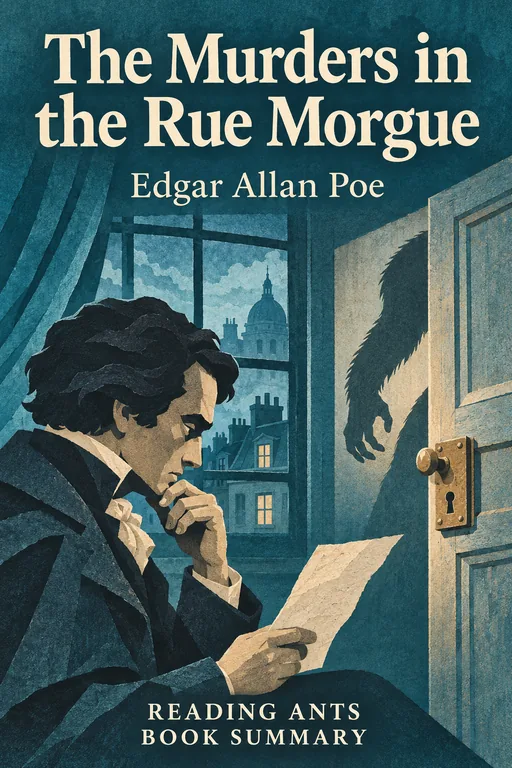
The Murders in the Rue Morgue
Edgar Allan Poe
In Paris, a brilliant amateur detective, C. Auguste Dupin, solves the baffling murder of a mother and daughter in a locked room by thinking carefully about what the evidence really shows, and reaches a startling conclusion.
🔍 Mystery & Thriller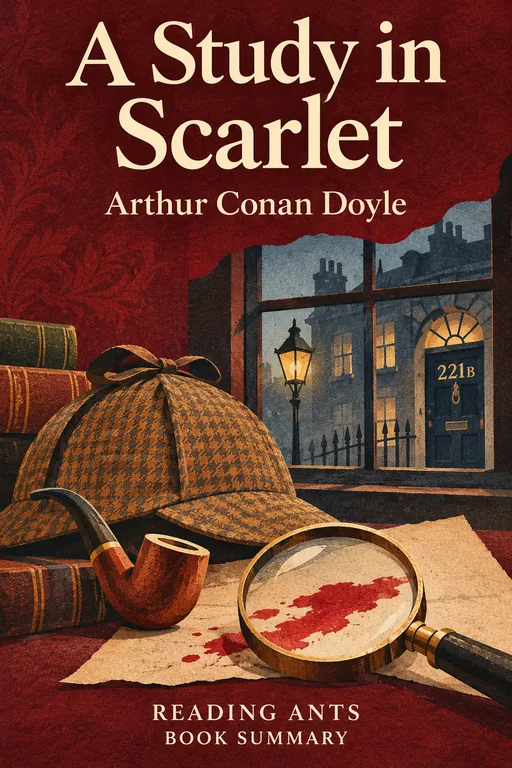
A Study in Scarlet
Arthur Conan Doyle
Dr. John Watson meets the eccentric consulting detective Sherlock Holmes and shares his rooms at 221B Baker Street, and together they investigate a mysterious murder in an empty London house, in the first Sherlock Holmes story.
🔍 Mystery & Thriller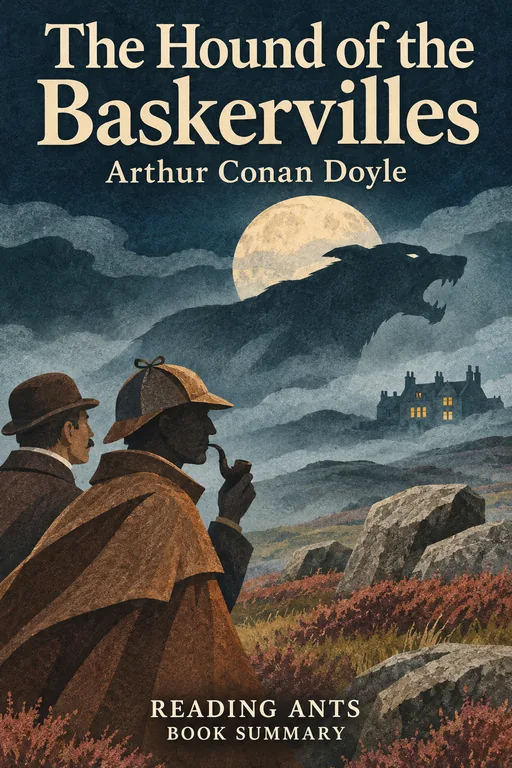
The Hound of the Baskervilles
Arthur Conan Doyle
Sherlock Holmes and Dr. Watson investigate a family curse involving a monstrous spectral dog on the dark, foggy moors of Devon, and discover that the legend is being used to cover a very human crime.
🔍 Mystery & ThrillerWant something different?
Pick another topic and we will show you three books to start with.